


Vintage Nesting End Tables
Vintage nesting end tables stack neatly together when floor space matters and separate easily when guests arrive.
Vintage Nesting End Tables
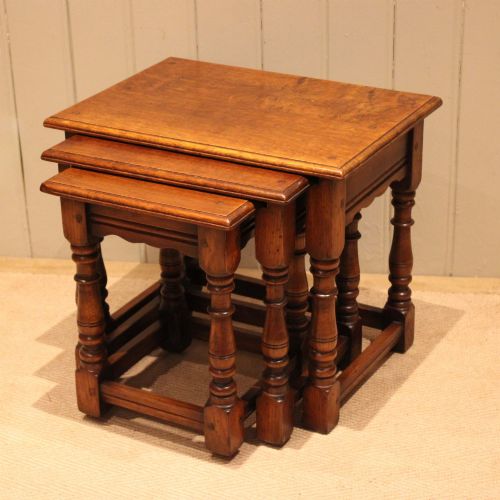
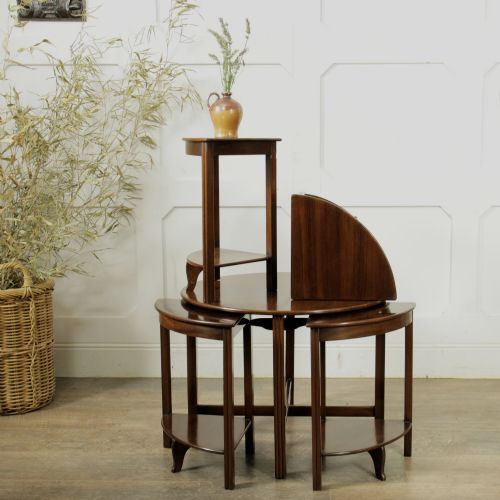
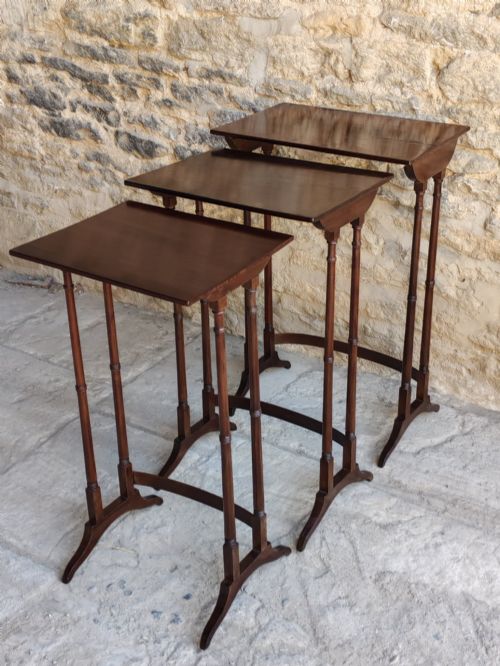
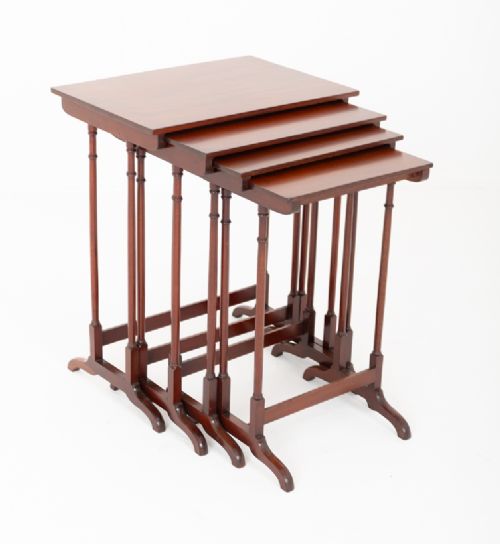
Vintage nesting end tables comprise sets of graduating tables designed to slide one beneath another. This arrangement offers multiple surfaces without crowding a room, making them practical for daily use.
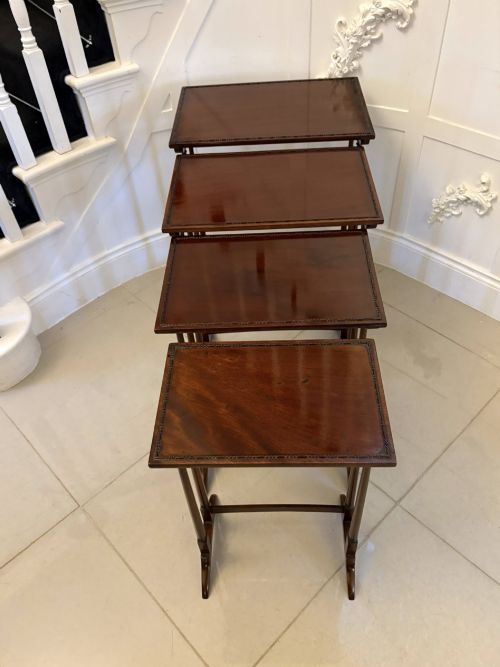
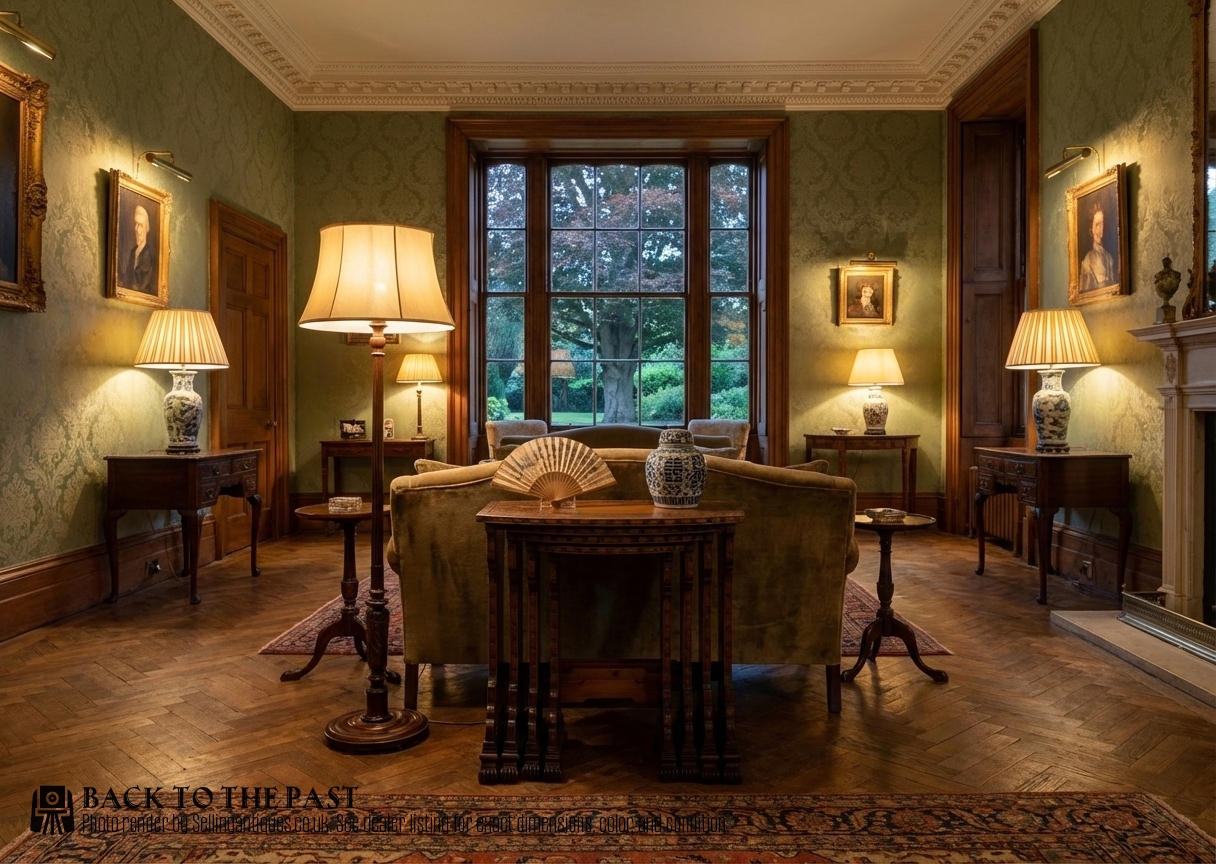
The versions met most frequently on this page date from the Edwardian era and the 1920s, constructed predominantly in mahogany with occasional examples in oak, walnut, and rosewood. Forms range from simple circular tiers to sets of four tables known as quartetto sets.
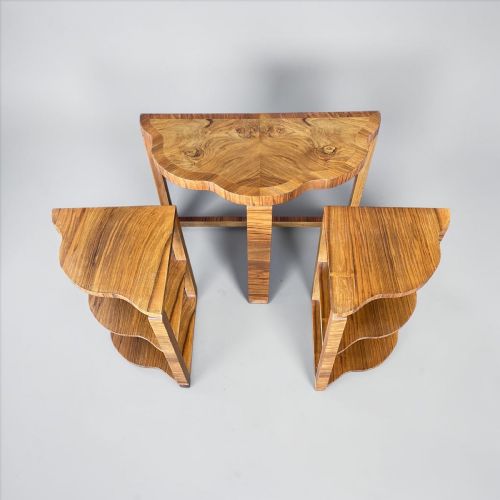
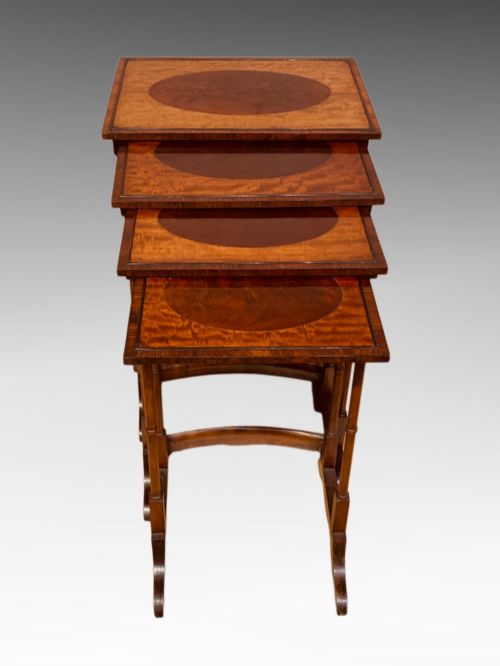
Stylistic influences span Georgian and Queen Anne revivals alongside Art Deco designs. Buyers encounter everything from plain hardwood frames to pieces decorated with satinwood inlay, parquetry, or embossed leather tops.
Materials and construction
Makers utilised solid hardwoods and selected veneers, with mahogany, oak, and walnut forming the structural core of most pieces. Decorative enrichment relied on contrasting timbers such as satinwood and boxwood, alongside parquetry and floral inlay.
Specialised techniques distinguish specific regional or period styles, including carved rosewood, embossed leather inserts, and gold leaf detailing. Structural supports vary from slender column legs to barley twist turned oak frames.
Vintage Nesting End Tables Retail Price Guide 2026
Typical asking prices for vintage nesting end tables among the pieces listed under this phrase on Sellingantiques today, from the lower quarter to the upper quarter. They describe what is for sale here now, not the wider market.
One set arrives complete with an embossed leather top, ready for confidential correspondence or very small tea parties.
What separates the tiers
Quality rests in the precision of the joinery and the snugness with which the smaller tables slide into the primary frame without binding. Superior examples maintain structural rigidity across all four tiers despite the slender proportions required to nest them.
The choice of timber and the execution of decorative elements determine the standing of a set. Finely figured mahogany, crisp inlay work, and balanced proportions set finer workshop productions apart from simpler utility pieces.
Waring & Gillow
The Vintage Nesting End Tables Glossary
- Quartetto
- A set of four nesting tables. This term appears frequently in Edwardian and nineteenth-century descriptions.
- Parquetry
- Geometric wood mosaic work used for decorative surface patterns. It creates a tiled visual effect on table tops.
- Chinoiserie
- European imitation of traditional Chinese artistic motifs and techniques. This style appears on lacquered or decorated table surfaces.
- Satinwood
- A durable exotic timber with a lustrous yellowish sheen. Makers utilised it for contrasting stringing and inlay details.
Vintage Nesting End Tables: Frequently Asked Questions
How were nesting tables used historically?
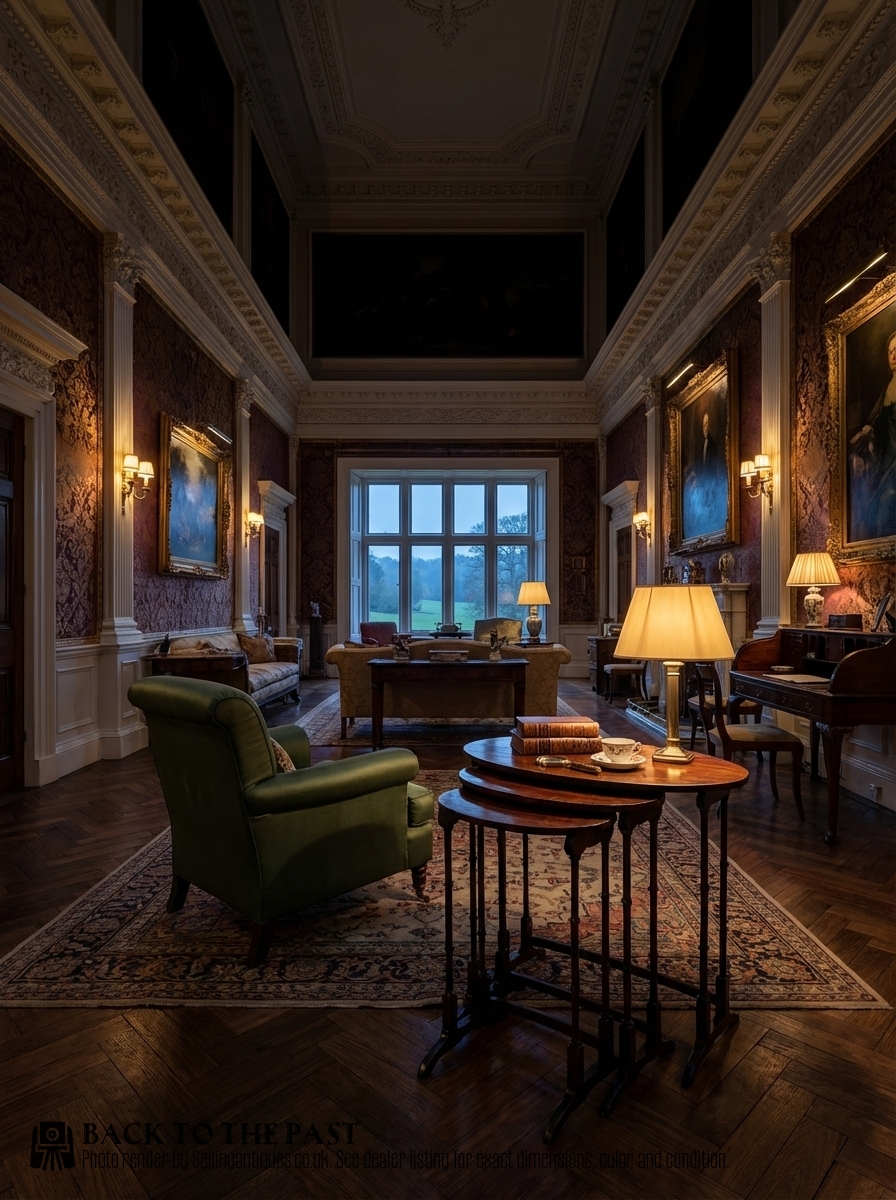
Owners pulled the smaller tables out around a room during afternoon tea or social gatherings to hold cups or reading materials. Once the guests departed, the tiers slid back into a single compact stack.
This space-saving design made them popular in Edwardian drawing rooms and later twentieth century sitting rooms alike.
How do I identify an Edwardian set?
Edwardian examples frequently feature lightweight mahogany frames with satinwood inlay or stringing, often configured as quartetto sets of four tables. Their proportions tend to be slender and refined.
They share characteristics with pieces from the 1900s and 1920s, though specific revival styles like Queen Anne or Jacobean provide additional clues to their age.
What is a quartetto nest?
A quartetto nest is a set comprising precisely four tables that graduate in size to fit inside one another. The term appears often in nineteenth-century and Edwardian records.
These sets offer maximum utility by expanding from a single footprint into four distinct surfaces.
How do I care for wooden nesting tables?
Keep the wood conditioned with appropriate polish and avoid placing them near direct heat sources that might dry out the timber or veneers. Lift each table carefully when separating them rather than dragging the frames.
Regular gentle dusting preserves the finish and protects inlaid details from wear.