




Vintage Nautical Artwork
Vintage nautical artwork captures centuries of maritime history through oil paintings, watercolours, and etchings spanning the nineteenth and twentieth centuries.
Vintage Nautical Artwork
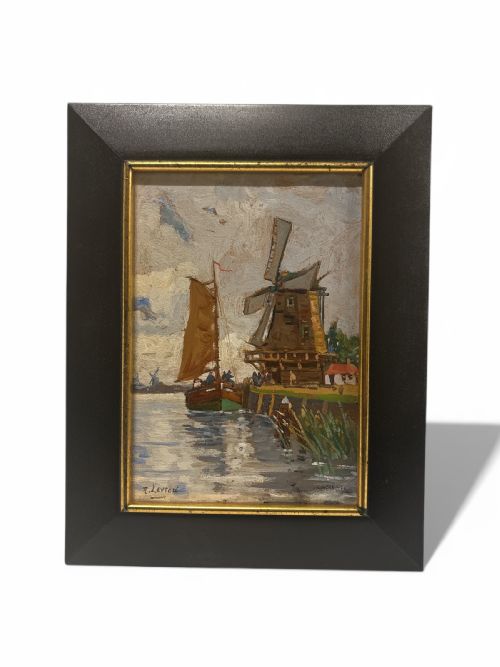
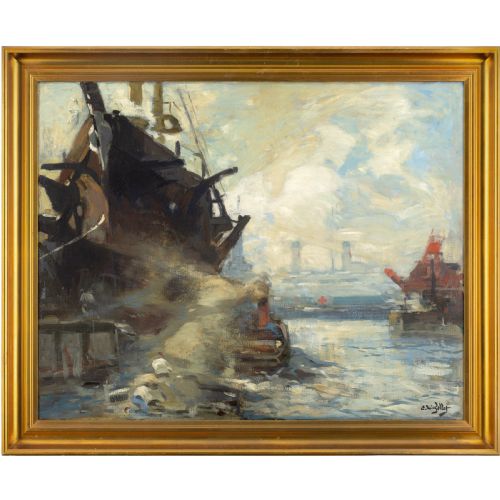
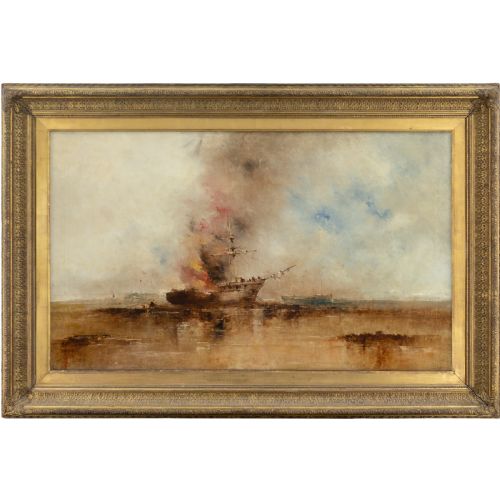
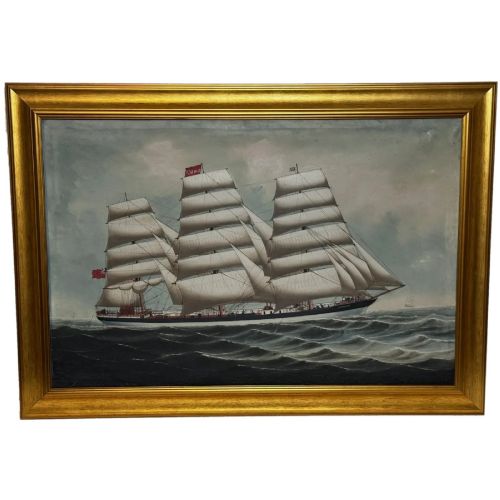
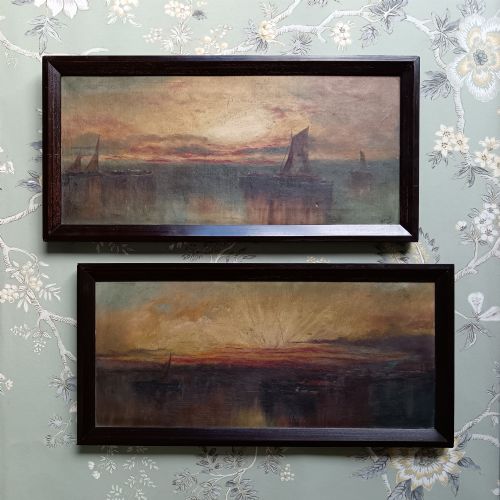
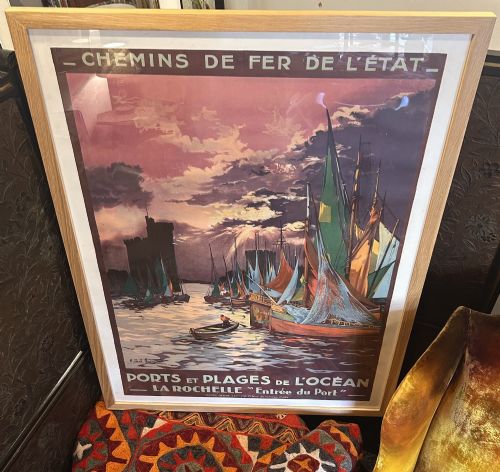
Vintage nautical artwork encompasses a diverse array of paintings, watercolours, and framed prints depicting marine landscapes, coastal harbours, and historic vessels. Buyers exploring vintage nautical artwork frequently encounter nineteenth-century canvases, Edwardian marine scenes, and mid-century interpretations of shipping trade.
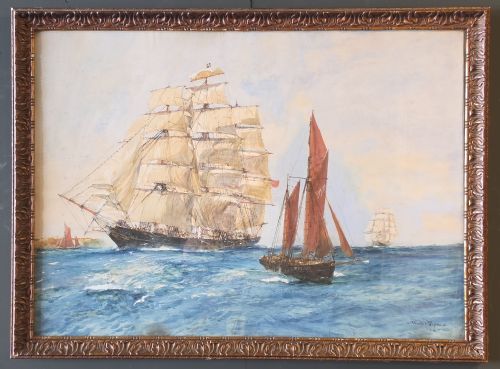
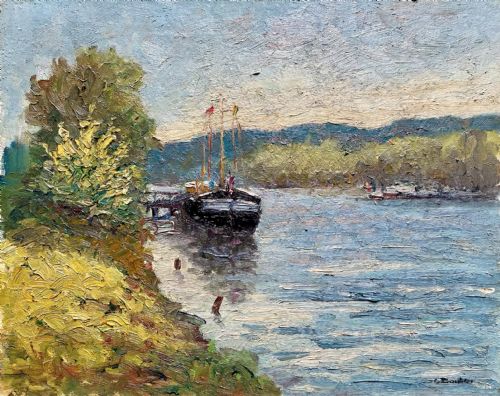
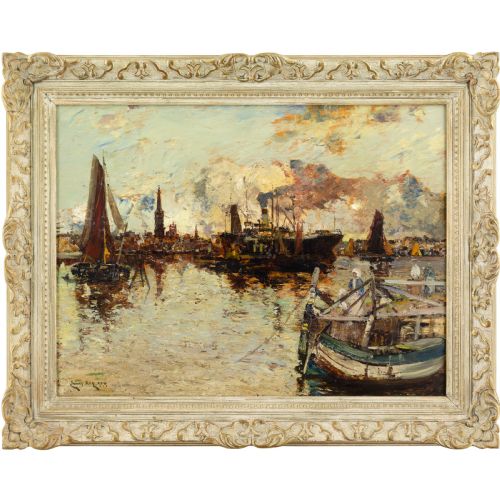
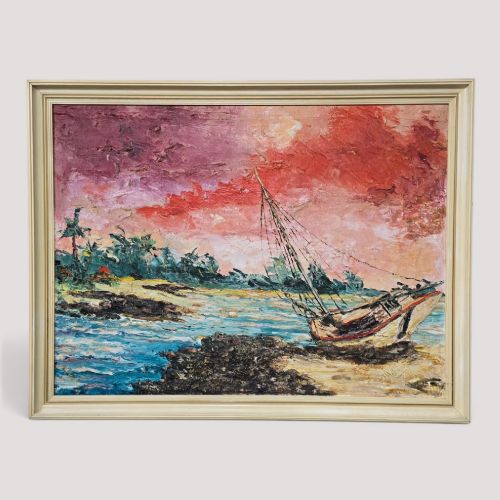
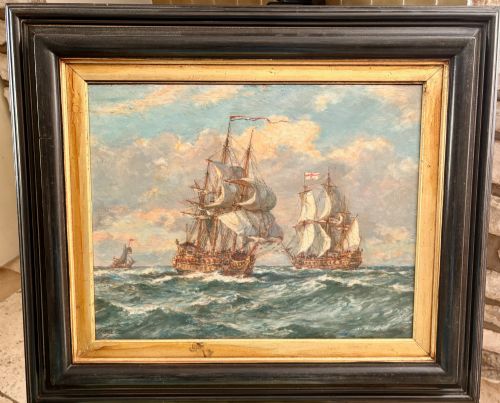
The selections on this page range from detailed portraits of steamships and three-masted barques to impressionist depictions of sailboats and quiet estuaries. Works span various origins, including British, French, and Dutch schools, reflecting both commercial shipping and naval history.
Materials and construction
The pieces utilise traditional supports such as canvas, wood boards, and heavy paper, paired with oil paint, watercolour, gouache, or pencil. Artists employed oil on canvas or board to capture turbulent seas and atmospheric coastal lighting, while watercolours provided delicate transparency for harbours and river scenes.
Framing frequently involves original or period gilt wood frames that complement the maritime subject matter. Etchings and prints utilise ink on paper, sometimes bearing pencil signatures from the printmakers.
The listings span from the mid-nineteenth century through to the 1960s, encompassing Victorian maritime scenes, Edwardian watercolours, and mid-century oil paintings.
Distinctions in quality
Quality in these works rests upon the artist's command of atmospheric perspective, accurate vessel rigging, and the handling of light on water. Finer examples display confident brushwork and precise topographical or nautical knowledge, distinguishing them from generic decorative paintings.
The preservation of the medium, whether oil paint, gouache, or watercolour, alongside the integrity of the original support and gilt framing, also dictates the standing of an individual piece.
Kenneth Cozens·Eugène-Louis Gillot·William McAlpine·Charles Edward Dixon·John E. Aitken·James Kay·William Lionel Wyllie·Frank William Scarbrough·Willem Bos·Abraham Hulk I·George Stanfield Walters
The Vintage Nautical Artwork Glossary
- Maritime
- Pertaining to the sea, navigation, and shipping. This term groups together naval engagements, harbour views, and coastal landscapes.
- Gouache
- An opaque water-based paint often combined with watercolour in maritime works to create solid highlights on churning waves and ship sails.
- Etching
- A printmaking process where lines are incised into a metal plate with acid before being inked and pressed onto paper.
- Barque
- A sailing vessel with three or more masts. Depictions of these ships often feature heavily in nineteenth-century maritime paintings.
- Post-Impressionism
- An art style following Impressionism that prioritised expressive forms and symbolic use of colour, seen in mid-century coastal scenes.
Vintage Nautical Artwork: Frequently Asked Questions
What subjects appear in vintage nautical artwork?
These pieces depict steamships, wartime hospital ships, fishing boats, and sailing barques navigating coastal waters and open seas. Harbour scenes and river views around London, Dublin, and European ports also feature prominently.
Artists frequently recorded specific historical vessels, such as steamships and clipper ships, alongside more general impressionistic seascapes and calm coastal inlets.
How do I date a maritime oil painting?
Dating relies on the ship types depicted, costume details of any figures, and the construction of the canvas or board support. Nineteenth-century works often show wooden sailing ships, while early twentieth-century pieces frequently record steamships and industrial tugs.
Signatures, artist dates, and framing styles provide further chronological clues to place the artwork within Edwardian or mid-century periods.
Where should I hang maritime art at home?
These works suit studies, living rooms, and hallways, where their historical subject matter can be viewed closely. Framed oil paintings and watercolours pair well with traditional interiors and wood-panelled spaces.
Placing pieces away from direct sunlight protects watercolours and gouache pigments from fading over time.
How do I distinguish watercolours from oil paintings?
Oil paintings utilise thick, textured paint applied to canvas or wood boards, often displaying visible brushstrokes and a glossy varnish layer. Watercolours and gouaches are executed on paper behind glass, presenting a flatter surface without canvas texture.
Examining the piece under magnification reveals the paper fibres of watercolours versus the woven threads of a painted canvas.