
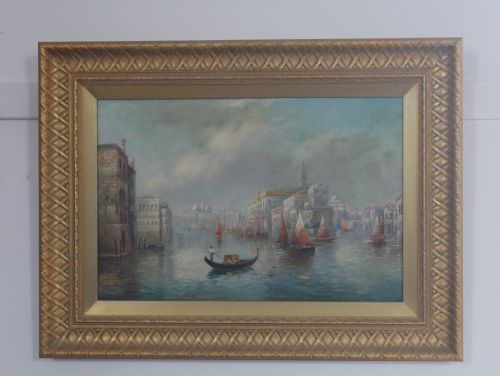


Venetian Canal Painting
Venetian canal painting captures the light, water and architecture of the lagoon through historic oil and watercolour works.
Venetian Canal Painting
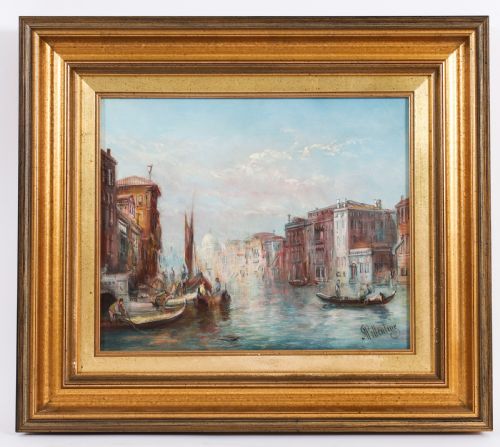
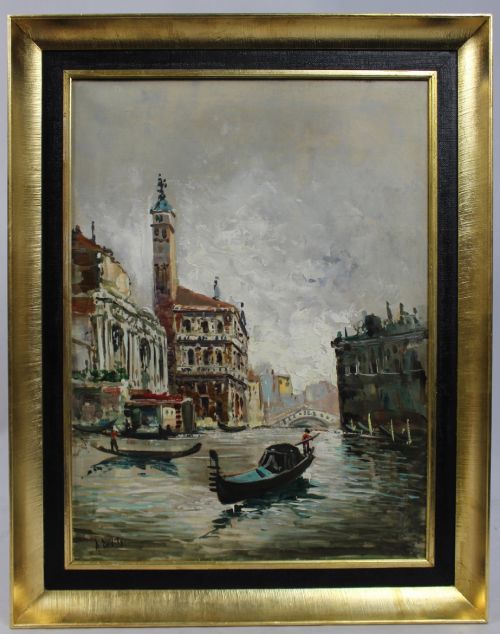
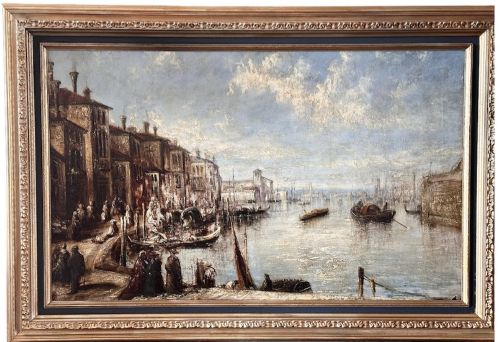
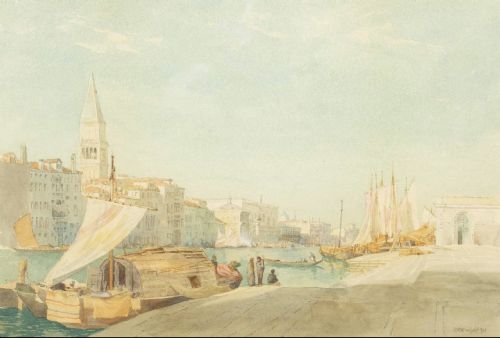
A venetian canal painting depicts the iconic waterways, palazzos and landmarks of Venice, ranging from the Grand Canal to quiet backwaters. These works capture the distinct light and atmosphere of the Italian lagoon across various eras.
The most common examples on this page date from the nineteenth century through the mid-twentieth century, encompassing both Victorian academic realism and later impressionistic treatments. They appear primarily as framed oils on canvas or delicate paper watercolours.
Subjects frequently centre on famous vistas such as the Santa Maria della Salute, the Doge's Palace and the Bridge of Sighs, often featuring gondoliers navigating the historic waterways.
Distinctions in quality
Quality rests upon the artist's ability to handle the shifting light and atmospheric haze peculiar to Venice, distinguishing a mechanical reproduction of architecture from a sensitive study of water and sky. Brushwork vitality and compositional balance separate standard topographical records from superior artistic interpretations.
The integrity of the original support and the preservation of the pigment layer significantly influence the standing of a piece. Finer examples retain their original framing and surface vibrancy without excessive restoration or overpainting.
Venetian Canal Painting Retail Price Guide 2026
Typical asking prices for venetian canal painting among the pieces listed under this phrase on Sellingantiques today, from the lower quarter to the upper quarter. They describe what is for sale here now, not the wider market.
Listings feature works spanning from the nineteenth century through the mid-twentieth century, executed in oil, watercolour, pastel and gouache.
Alfred Pollentine·Antoine Bouvard Senior·Jane Vivian·Francis Moltino·Antonietta Brandeis
The Venetian Canal Painting Glossary
- Grand Canal
- The main thoroughfare of Venice, lined with historic palazzos. It serves as the primary subject for many topographical artists.
- Giltwood
- Wood carved and treated with a thin layer of gold leaf. Frames made of this material often accompany nineteenth-century canvases.
- Impressionism
- An art style focused on accurate depiction of light in its changing qualities. Works in this vein emphasise loose brushstrokes over sharp architectural precision.
- Topographical
- Relating to the detailed depiction of particular places. These paintings accurately record specific Venetian landmarks and waterways.
- Gouache
- An opaque watercolour paint used by artists to add solid highlights. It frequently appears alongside pastel and ink in works on paper.
Venetian Canal Painting: Frequently Asked Questions
How do I date a venetian canal painting?
Dating relies heavily on stylistic clues, clothing styles of figures such as gondoliers, and framing materials. Nineteenth-century works often favour tighter academic realism, whereas mid-century examples lean towards impressionism.
Signatures, stretcher construction and labels on the reverse also provide reliable chronological markers when documentation is otherwise sparse.
Where should I hang a water colour?
Watercolours require careful placement away from direct, strong sunlight to prevent the fading of delicate pigments on paper. Hanging them in interior rooms with stable, moderate light preserves their colour integrity.
Proper framing behind protective glass ensures humidity fluctuations do not damage the paper substrate over time.
What is the difference between oil and watercolour?
Oil paintings utilise pigment suspended in drying oils on canvas or board, offering rich textures and deep colour saturation. Watercolours use water-soluble pigments on paper, creating translucent washes that capture luminous atmospheric effects.
Oils generally present a heavier, more robust surface, while watercolours rely on the bright white of the paper to shine through thin layers of paint.
How should I clean my painting?
Dust accumulated on frames and unglazed canvases should be gently removed using a soft, dry brush. Moisture and household chemical cleaners must be strictly avoided to prevent permanent damage to the paint layer.
Professional conservators should handle any deeper cleaning or removal of aged varnish on oil paintings.