
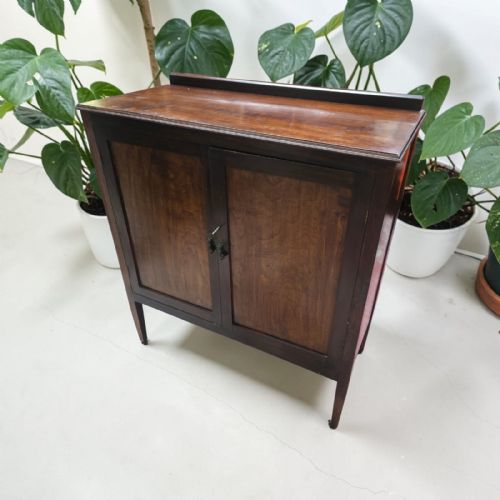
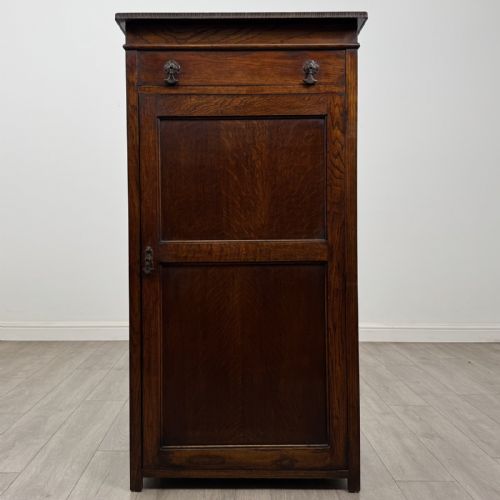
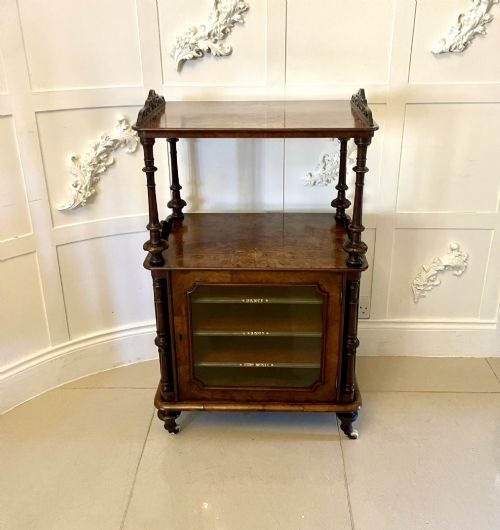
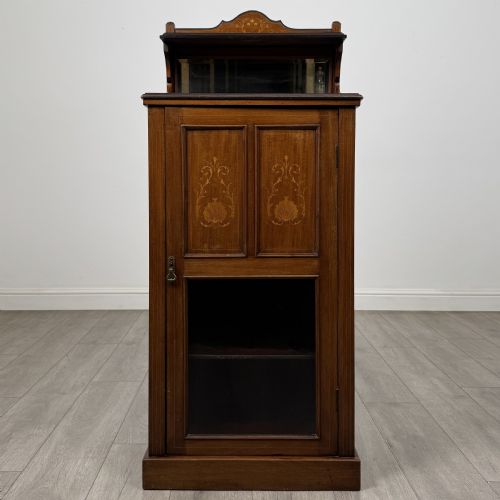

Vintage Music Cupboard
A vintage music cupboard keeps scores and sheets orderly while anchoring a room with period timber.
Vintage Music Cupboard
A vintage music cupboard provides dedicated storage for sheet music, folios and records, appearing across periods from the Victorian era through the Edwardian years and into the 1930s. These pieces take the form of narrow cabinets, pedestal units and side cupboards designed to fit domestic interiors without taking up excessive floor space.
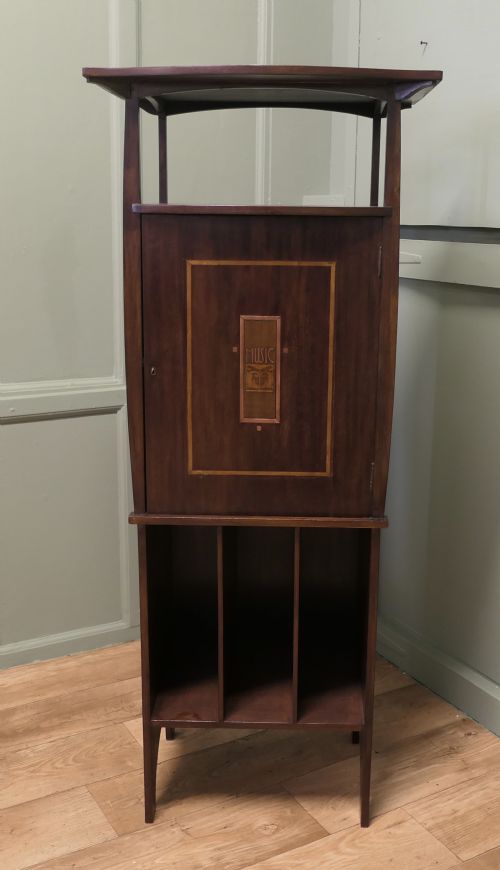
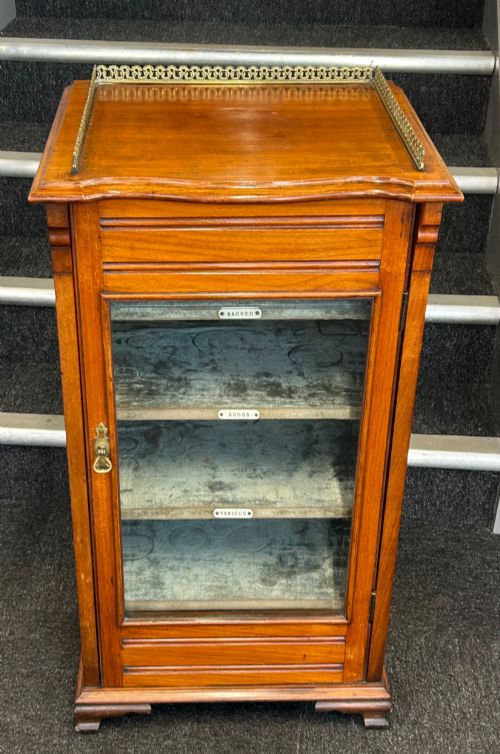
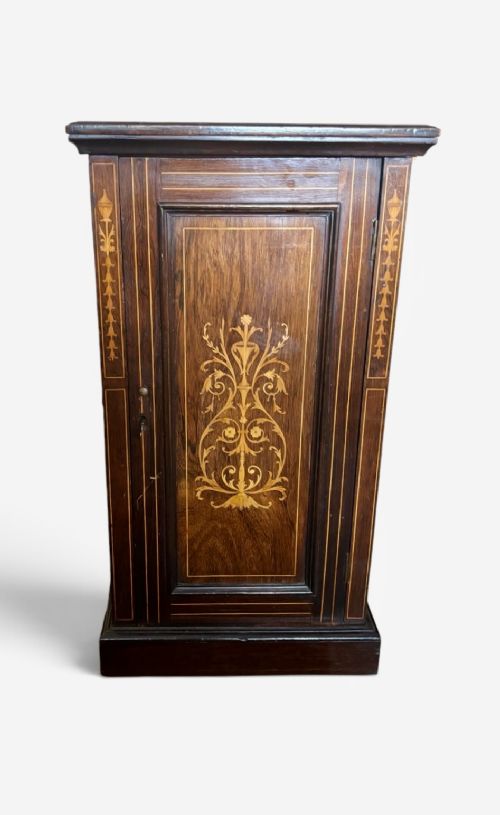
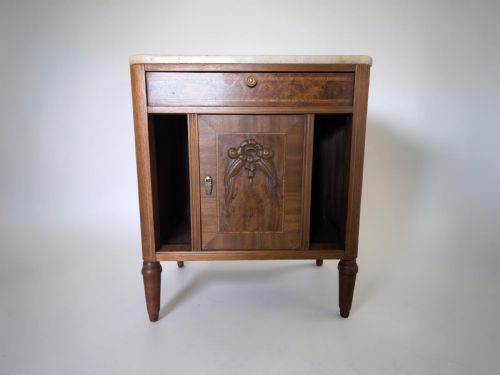
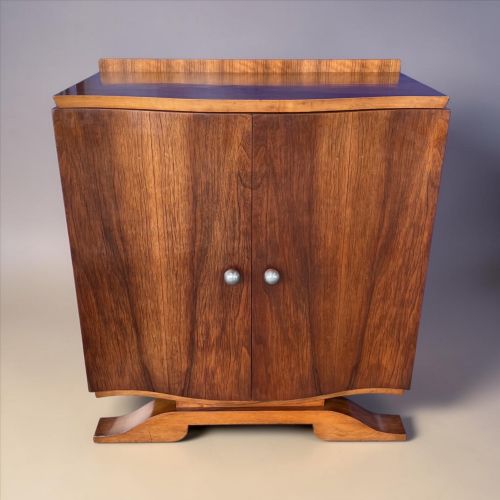
The most common examples on this page date from the Edwardian period, frequently rendered in mahogany with delicate satinwood inlay or straightforward walnut. Alongside these traditional forms, buyers encounter Arts and Crafts designs, Art Deco variations and sturdy oak filing pieces adapted for musical collections.
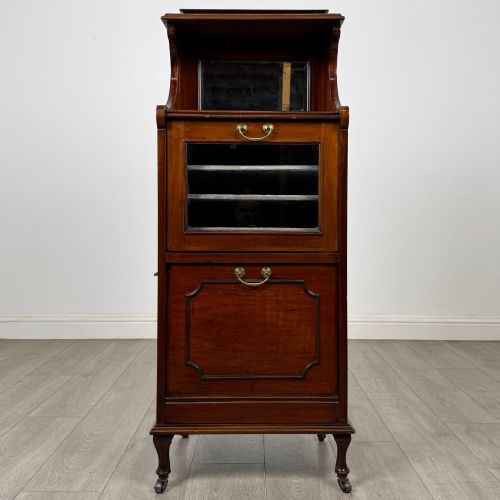
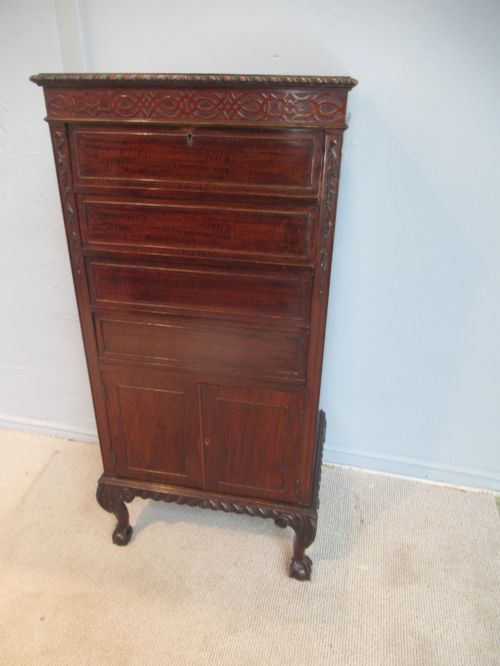
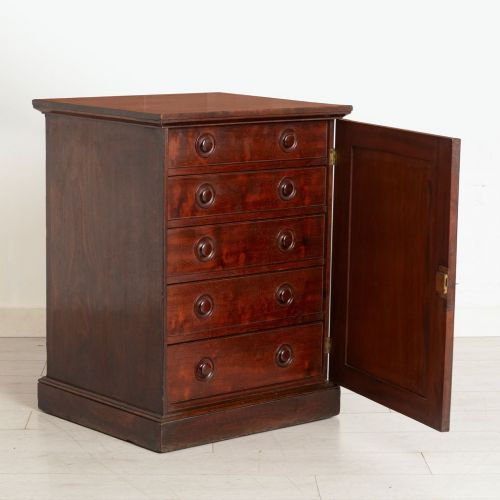
Originating as practical furniture for the Victorian and Edwardian parlour, many units feature internal shelving or drops specifically proportioned for paper sheets. Makers varied the heights and door configurations to suit the domestic storage of scores, leading to tall, narrow formats as well as lower side cabinets.
How they were made
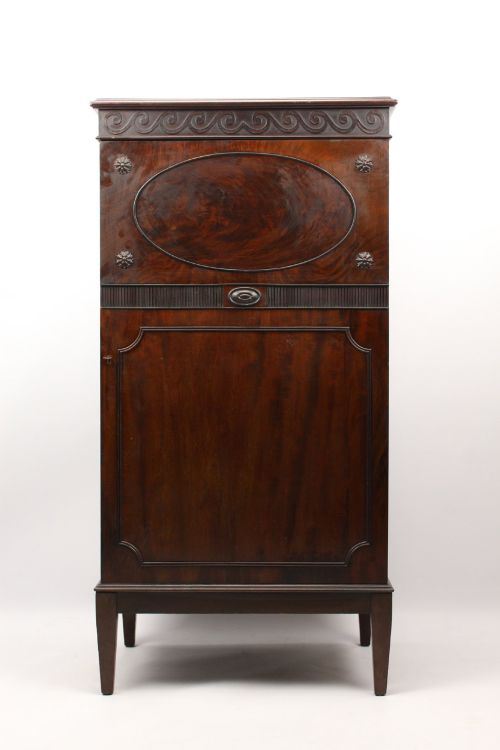
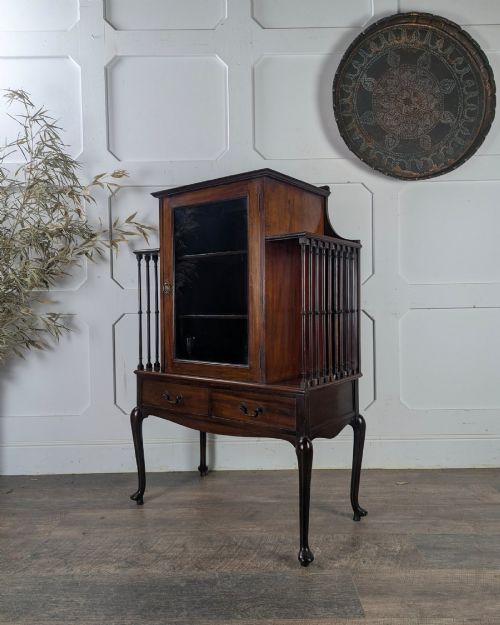
Cabinet makers relied primarily on mahogany, walnut and oak, often selecting figured veneers such as burr walnut or incorporating satinwood inlay and marquetry to decorate door panels. Brass handles, hinges and sometimes glass panes complete the construction of these refined timber pieces.
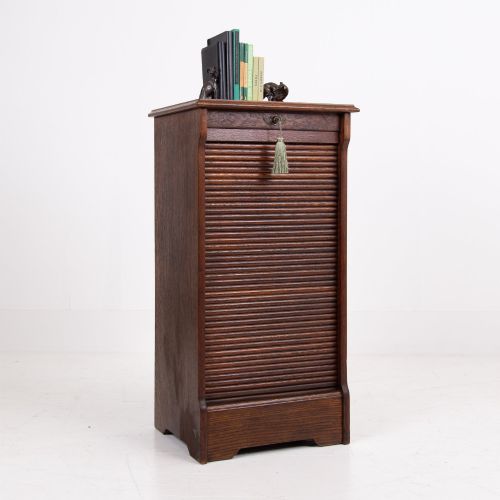
Construction techniques balanced domestic elegance with robust utility, utilising solid timber frames alongside veneered surfaces and specialised internal partitioning for paper storage. Tambour doors and fitted interiors appear among the joinery methods employed to manage sheet music efficiently.
Listings span multiple decades, incorporating Victorian, Edwardian, and 1930s examples constructed from mahogany, walnut, oak, and rosewood.
What varies in quality
The distinction between standard production and top tier work rests on timber selection, such as richly figured mahogany or burr walnut, matched with fine marquetry and satinwood inlay. Maker attribution also elevates a piece, with labelled items from established firms commanding particular attention.
Design ambition separates simple utility boxes from sophisticated examples reflecting Art Nouveau, Arts and Crafts, or Louis XVI Revival aesthetics. The integration of specialised hardware like brass mounts and working tambour mechanisms further marks out superior manufacture.
GM Elwood for JS Henry·Denby & Spinks·Collinson & Lock London·Keeble London
The Vintage Music Cupboard Glossary
- Marquetry
- Decorative woodwork where pieces of veneer are fitted into a background to form intricate patterns or pictures. This technique often ornaments the door panels of Victorian and Edwardian pieces.
- Satinwood inlay
- Contrasting pale exotic timber inserted into a darker carcase timber like mahogany or rosewood. It defines the linear detailing on Edwardian furniture.
- Tambour door
- A flexible door constructed from narrow vertical strips of wood glued to a canvas backing, allowing it to slide smoothly around a curved track. This mechanism appears on select oak cabinets.
- Pedestal cabinet
- A tall, freestanding unit with a narrow footprint designed for compact spaces. These forms provide vertical storage without dominating a room.
Vintage Music Cupboard: Frequently Asked Questions
What is a vintage music cupboard used for?
These cabinets were originally manufactured to store sheet music, folios and scores neatly in the home. The internal compartments and drop-front drawers kept paper items flat and organised.
Today, collectors use them to house sheet music, vinyl records, or as general narrow storage units in living rooms and bedrooms.
How do I identify an Edwardian music cupboard?
Edwardian examples typically feature mahogany or walnut timber often enhanced with satinwood inlay or marquetry. They lean towards lighter, refined proportions compared to earlier Victorian furniture.
Look for characteristics like slender legs, bow fronts, and interior shelving specifically proportioned for paper sheets, frequently dating around 1900 to 1910.
Can I store vinyl records in them?
Many vintage music cupboards suit modern vinyl LP storage well, particularly the later Art Deco and 1930s variations designed for larger formats. The internal depth and shelf spacing often accommodate modern record sleeves.
Buyers should check the internal dimensions of individual cabinets to ensure standard LP records clear the door frames and internal partitions.
Where should I place a music cabinet at home?
Because of their narrow, upright proportions, these cabinets fit easily into alcoves, hallways, or beside a piano. They serve well as bedside units or compact side cabinets in smaller rooms.
Their polished timber surfaces and decorative inlay also allow them to function as display furniture for ornaments and small collections.