
Brown Mahogany Furniture
Brown mahogany furniture spans centuries of cabinet-making, offering rich timber tones and solid construction for daily use.
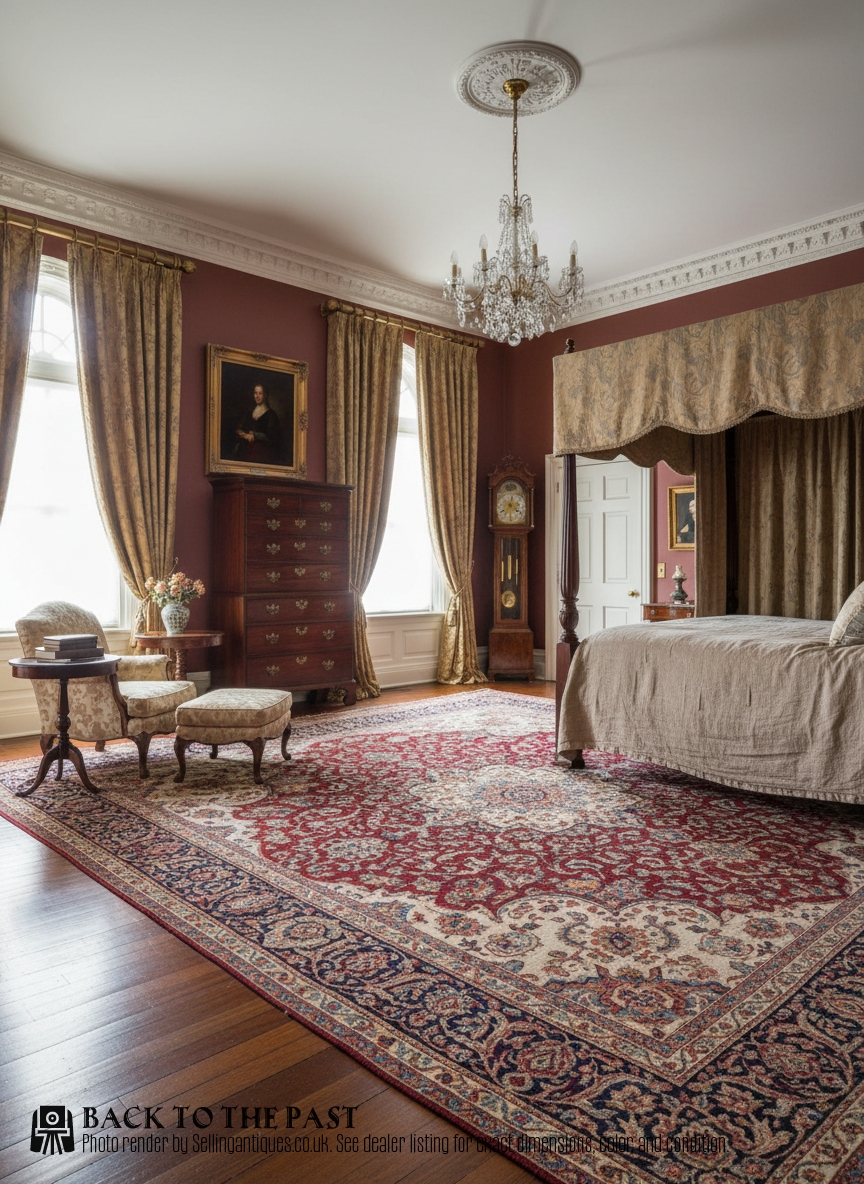
Brown Mahogany Furniture
Brown mahogany furniture encompasses a diverse range of domestic and utilitarian objects designed for storage, writing, and dining. Pieces span the eighteenth, nineteenth, and early twentieth centuries, reflecting changing domestic needs across Georgian, Regency, Victorian, and Edwardian periods.
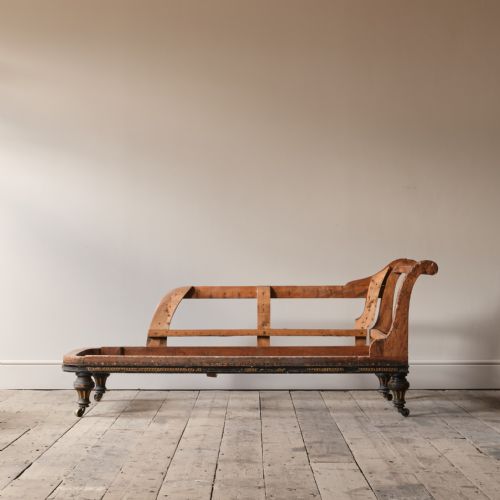
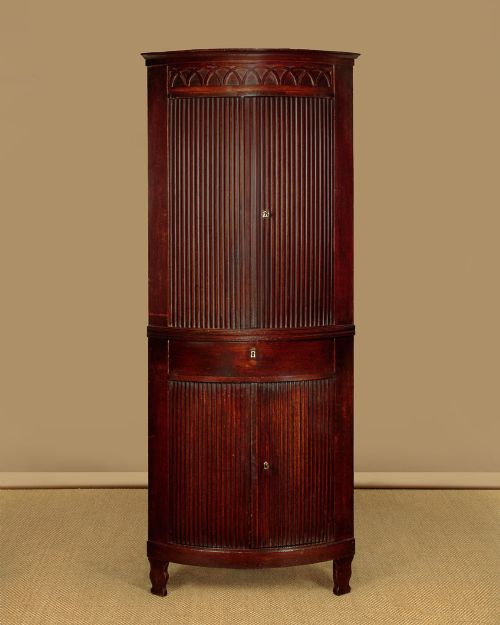
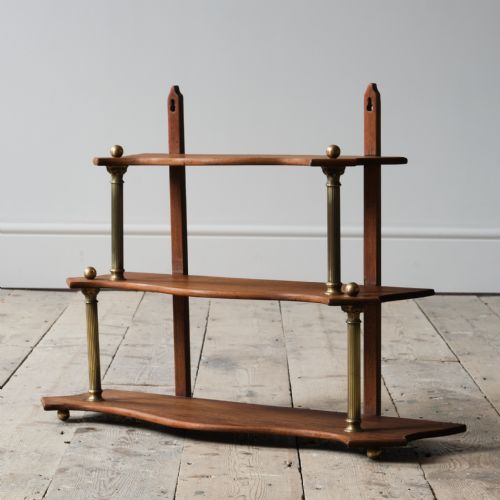
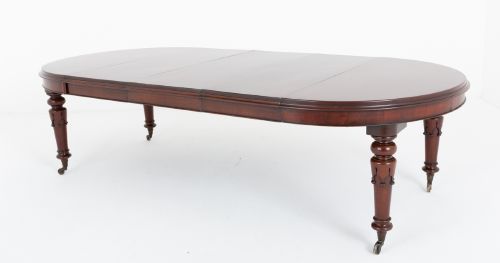
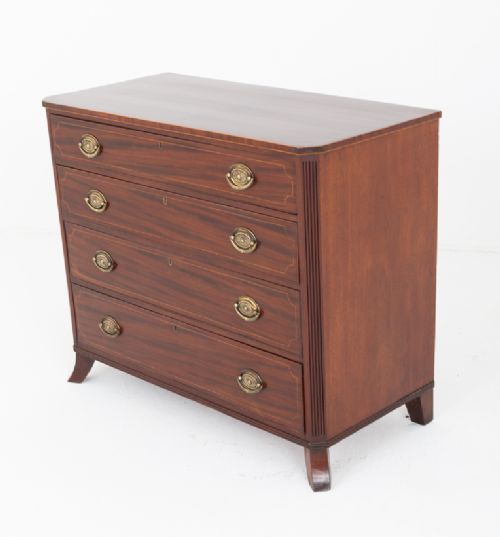
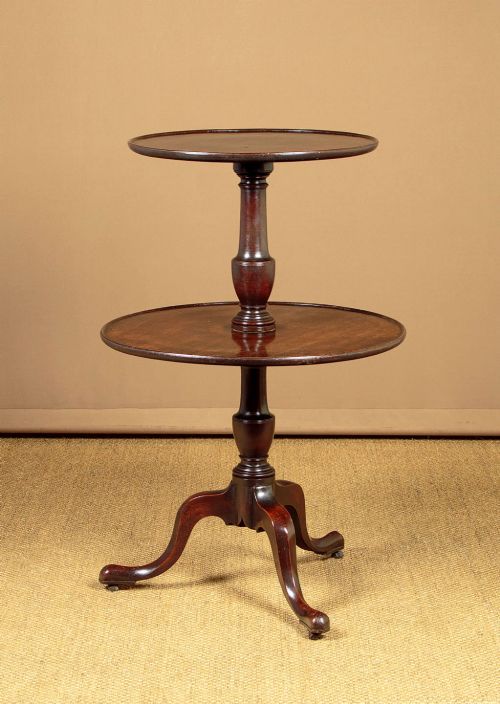
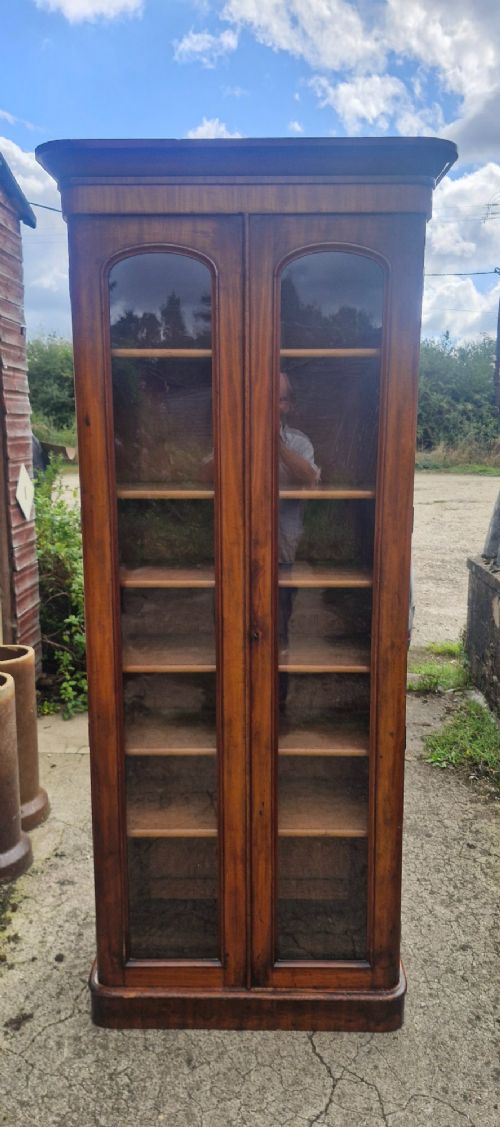
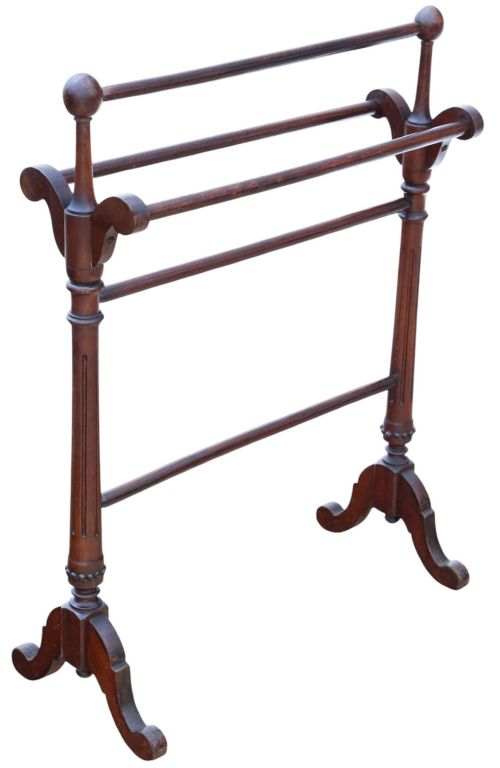
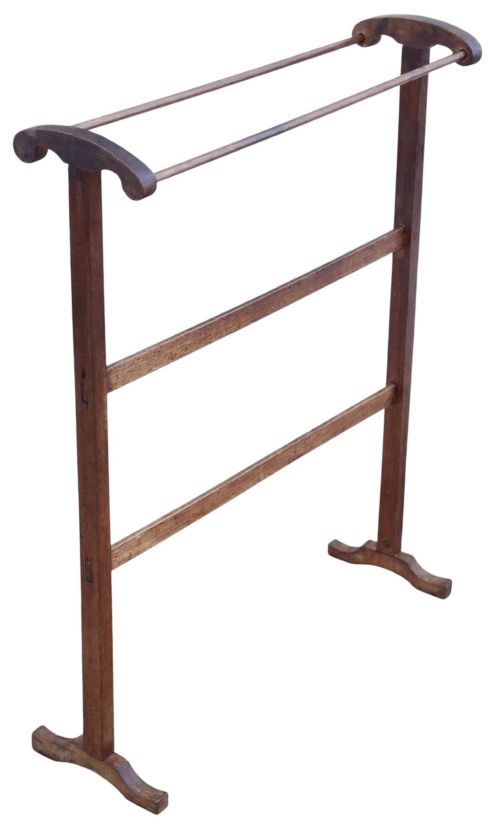
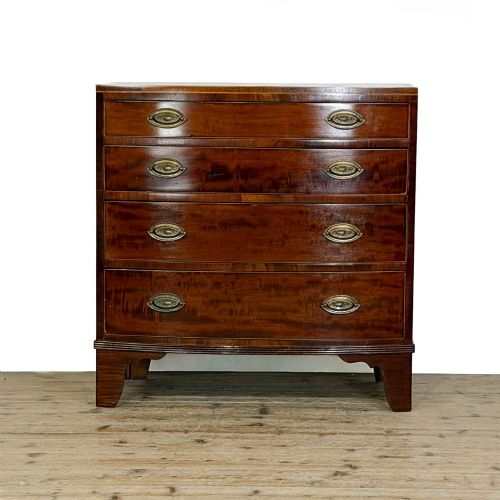
The selections on this page are dominated by practical storage forms, particularly chests of drawers in bow front and straight configurations, alongside larger items such as bookcases, pedestal desks, and dining tables. Smaller pieces like occasional tables, towel rails, and wall shelves also appear frequently.
Origins include English workshops, Scottish makers, and Dutch cabinet-makers working with imported tropical hardwoods. The aesthetic moves from restrained eighteenth-century proportions through the bolder figured grains of the William IV era to Edwardian inlaid designs.
Timber Construction and Surface Techniques
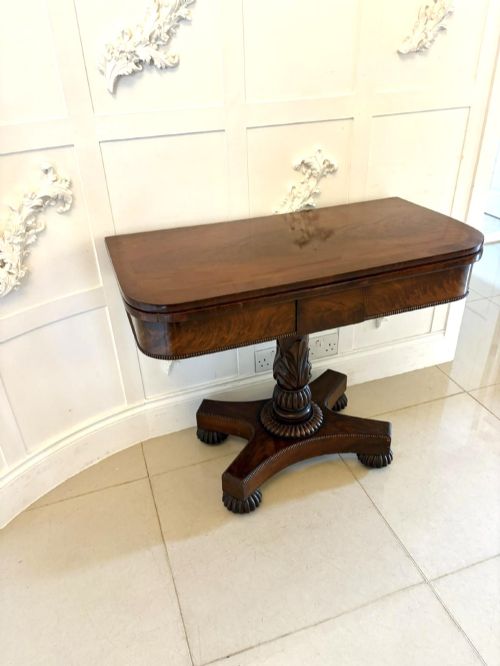
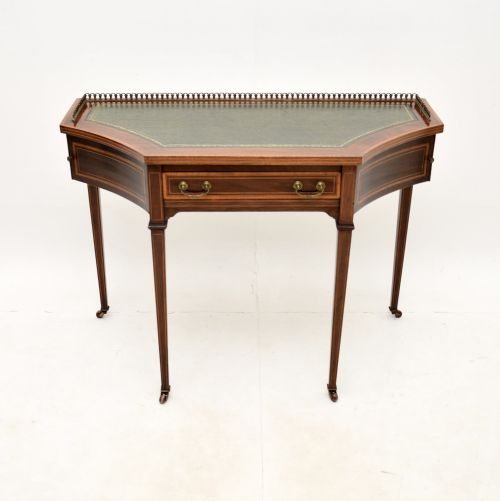
Construction relies heavily on solid mahogany and flame mahogany veneer applied to secondary woods, often combined with structural elements of oak and fruitwood. Cabinet-makers utilised brass for handles, hinges, and casters, while leather inserts appeared on writing surfaces and card tables.
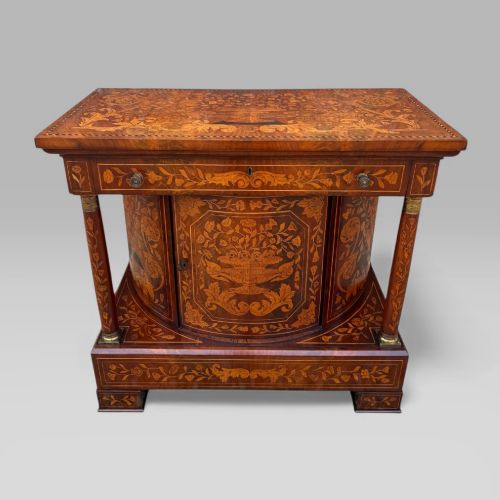
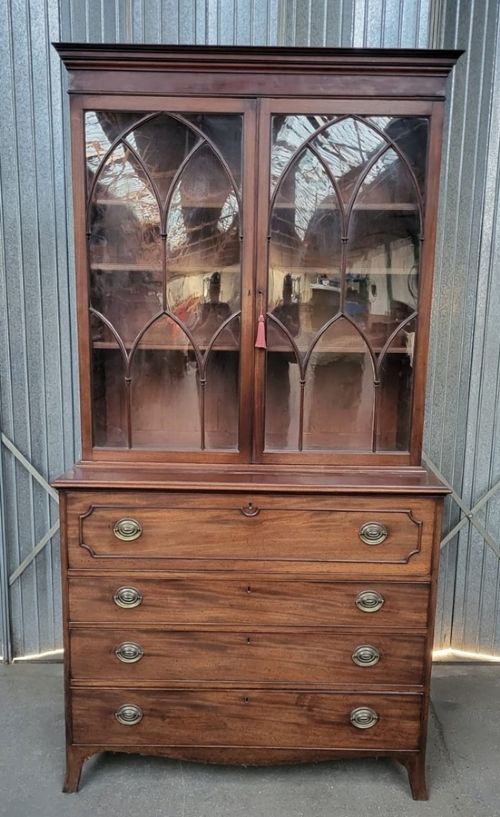
Surface enrichment frequently involved marquetry and satinwood inlay, particularly in Dutch baroque and Edwardian pieces, adding contrasting botanical motifs to the dark timber ground. Glass doors on bookcases and display cabinets were glazed to showcase contents while protecting them from dust.
Assessing Timber Selection and Joinery
Quality in brown mahogany pieces depends heavily on the choice of timber and how the grain is displayed across primary surfaces. Figured mahogany and flame veneer require skilled matching by the cabinet-maker to create balanced visual patterns across drawer fronts and table tops.
Structural integrity is dictated by traditional joinery methods, such as dovetailed drawer construction and the stability of internal framing. Secondary woods like oak used in drawer linings and carcases indicate the original standard of manufacture, whilst the retention of original brass hardware and glass adds significant merit.
Trevor Page & Co·Hewetsons London·Trollope & sons
The Brown Mahogany Furniture Glossary
- Bow Front
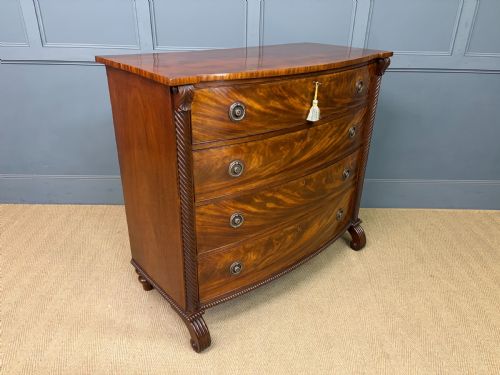
- A convex curved front on a chest of drawers or sideboard. This shape softens the corners of case furniture and became particularly popular during the Regency period.
- Flame Mahogany
- A veneer cut from the fork of the mahogany tree where the branch meets the trunk. It creates a distinctive, flickering flame-like pattern across the timber surface.
- Marquetry
- Decorative patterns formed by fitting together small pieces of different coloured veneers. It is frequently seen in floral or geometric designs on Dutch and Edwardian pieces.
- Partners Desk
- A large double-sided pedestal desk designed for two people to work opposite one another. These typically feature drawers and cupboards on both faces.
- Secretaire
- A cabinet or desk incorporating a fitted writing drawer with a drop-front. The interior usually contains small pigeonholes and letter drawers.
Brown Mahogany Furniture: Frequently Asked Questions
How do I identify a Georgian chest of drawers?
Georgian chests of drawers usually feature solid mahogany construction with hand-cut dovetails on the drawer sides and cedar or oak linings. The proportions tend to be heavy yet balanced, often resting on bracket feet or short ogee feet.
Drawer configurations vary, sometimes incorporating a sliding shelf above the primary drawers for folding linen. Look for original brass swing handles and backplates, which help confirm the period.
What is flame mahogany?
Flame mahogany is a highly decorative wood veneer obtained from the junction where a branch joins the main trunk of the tree. The grain swirls in a dramatic, flickering pattern that resembles fire.
Cabinet-makers prized this veneer for prominent surfaces like drawer fronts and table tops. It requires careful application to prevent lifting over time.
How should I care for a mahogany desk?
Keep mahogany furniture away from direct sunlight and heat sources to prevent the timber from drying out and the veneer from cracking. Dust regularly with a soft, dry cloth rather than applying silicone-based polishes.
Leather writing surfaces benefit from occasional neutral wax conditioning to maintain flexibility. Spills should be wiped away immediately to protect the polished finish.
Are Edwardian tables different from Georgian ones?
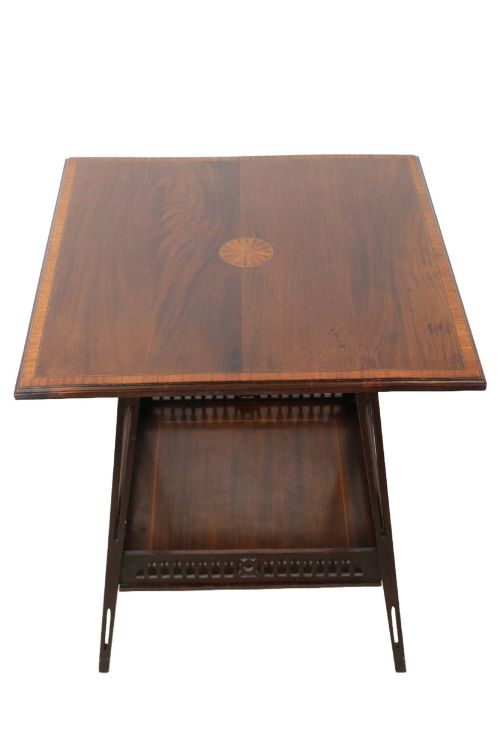
Edwardian tables often revive earlier eighteenth-century styles, such as Chippendale or Sheraton designs, but can be distinguished by lighter construction and machine-assisted joinery. They frequently incorporate satinwood inlay and delicate tapering legs.
Georgian tables rely entirely on hand-cut joinery and solid timber construction with heavier proportions. The choice of secondary woods also helps separate the two eras.