


Vintage Millinery Block
A vintage millinery block is a foundational tool of hat-making, prized by collectors and interior designers for its sculptural form and utilitarian history.

Vintage Millinery Block
A vintage millinery block encompasses hat blocks, millinery moulds, hat stretchers, and sculptural millinery forms used in shaping headwear. Buyers searching for a vintage millinery block will encounter a variety of forms ranging from functional wooden stretchers to specialised aluminium moulds.
The selection spans multiple periods, featuring pieces from the Georgian era, the Victorian period, and the early decades of the twentieth century. Forms include carved wooden heads, oak and walnut hat forms, fruitwood display stands, and heavy metal industrial units.
Origins vary across English workshops, French provincial sources, and London makers such as those operating on Regent Street. This diversity means buyers can select pieces ranging from folk art carved heads to utilitarian industrial haberdashery equipment.
Materials and construction methods
Makers shaped these pieces primarily from solid hardwoods, including beech, fruitwood, oak, and walnut, often utilising carved wood techniques to create human head contours and specialised hat shapes. Some items incorporate iron, cast iron, and aluminium components, particularly in twentieth-century production moulds.
Traditional woodworking methods involved hand-carving and turning timber to withstand the pressure of stretching and steaming hats. Metal variants relied on casting techniques to produce durable moulds for series production in hat factories and military outfitters.
Materials documented across these listings include aluminium, cast iron, hardwood, fruitwood, and carved wood.
Assessing quality in hat blocks
Wear and patina accumulated through active use in workshops contribute to the character of each piece. Items retaining original maker marks, London addresses, or specialised functions such as military bearskin cap forms represent distinct tiers of craftsmanship.
Regent Street London
The Vintage Millinery Block Glossary
- Millinery mould
- A solid form used by hatters to shape and dry felt or straw hats. These blocks dictate the final silhouette of the headwear.
- Hat stretcher
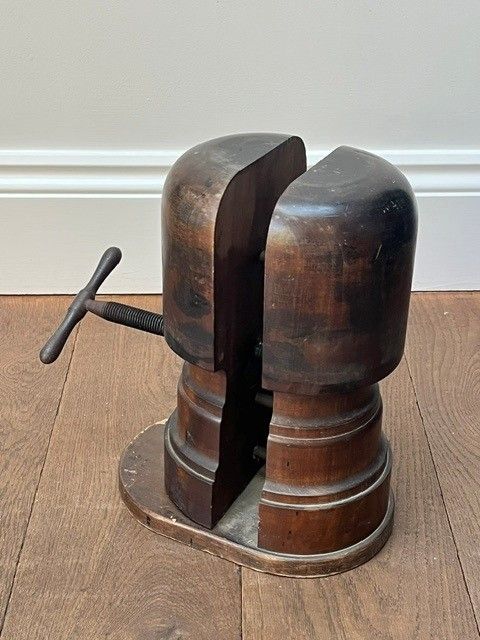
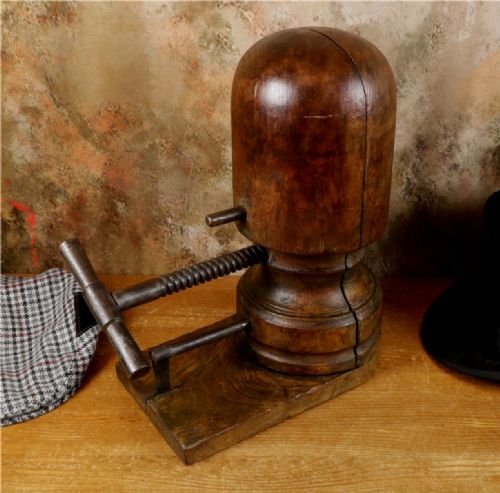
- A mechanical device inserted into a hat to expand or maintain its circumference. They often feature wooden segments adjusted by a central screw mechanism.
- Fruitwood
- Dense, fine-grained timber sourced from fruit-bearing trees. It was favoured by turners and carvers for its smooth finish and durability.
- Haberdashery
- The trade and equipment associated with sewing, tailoring, and millinery supplies. Items from this category reflect commercial workshop use.
- Folk art
- Objects created by self-taught or traditional artisans outside formal academic traditions. In this context, it describes vernacular carved wooden heads with unique character.
Vintage Millinery Block: Frequently Asked Questions
What were vintage millinery blocks used for?
Millinery blocks served as the physical forms upon which hatters shaped, steamed, and trimmed felt, straw, and fabric hats. Each block provided the precise contours required for specific hat sizes and fashion styles.
Beyond active hat production, these wooden and metal forms were utilised in shops for displaying finished millinery and wigs to customers.
How do I display a hat block at home?
These sculptural objects require minimal staging and sit well on bookshelves, sideboards, or mantelpieces as standalone sculptural art. Their combination of utilitarian design and aged timber grain complements various interior styles.
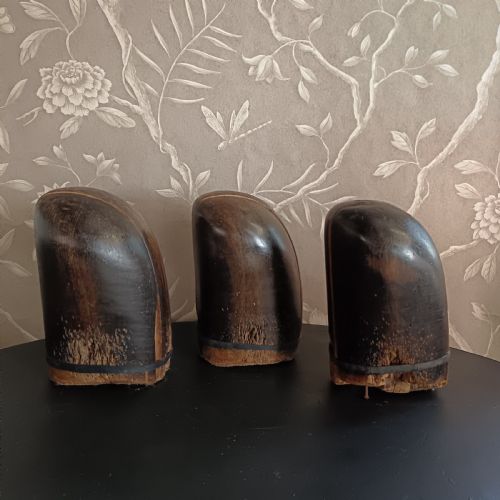
Grouping several aluminium moulds or mixing wooden heads with metal stretchers creates a focal point that highlights their industrial history.
Are aluminium hat blocks as old as wooden ones?
Aluminium hat blocks generally date from the early twentieth century, reflecting industrial manufacturing shifts towards metal moulds in hat production. Wooden blocks span a much wider timeline, including nineteenth-century and Georgian examples.
While wood was hand-carved for individual bespoke needs, aluminium was cast to meet the demands of twentieth-century factory production.
How can I tell a French hat block from an English one?
French pieces often utilise fruitwood and feature distinct regional turning styles associated with provincial workshops. English examples frequently display dense hardwoods like beech, oak, or walnut, sometimes bearing stamps from London makers.
Examining the timber species and any workshop inscriptions helps determine the geographic origin of the piece.