




Industrial Hat Form
An industrial hat form is a workshop relic shaped for shaping headwear, prized today for its sculptural presence.
Industrial Hat Form
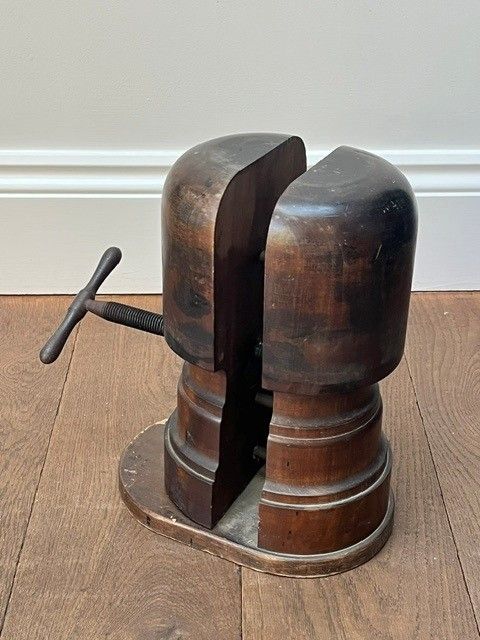
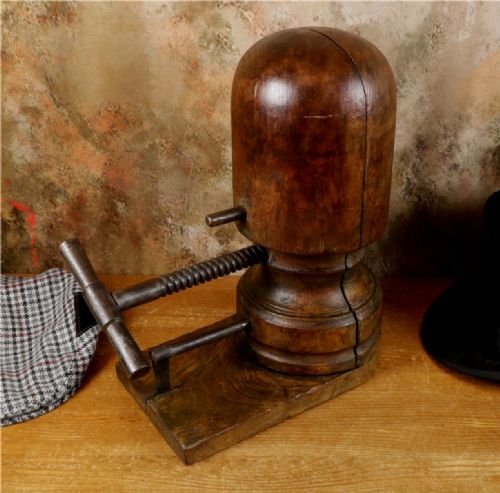
When you search for an industrial hat form, you encounter practical workshop equipment once used by milliners and hatters to shape headwear. These pieces range from utilitarian millinery equipment to decorative objects that retain the strong utility of their origins.
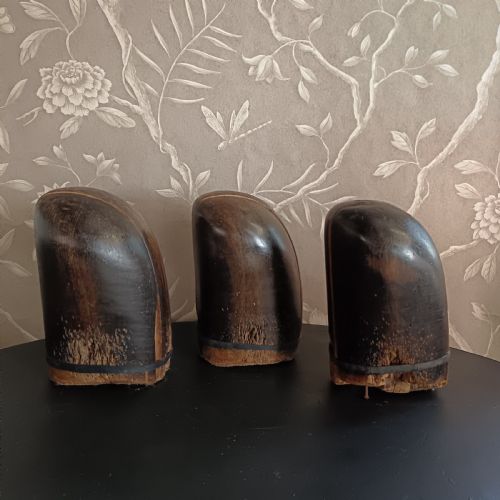
You are most likely to meet wooden hat stretchers, wooden hat blocks, and cast aluminium milliners hat block moulds on this page. These items date from the early twentieth century and the late nineteenth century, reflecting the industrial and Victorian industrial styles of their working life.
How they were made
Makers fashioned these pieces using carved hardwood, plain wood, and cast aluminium or cast iron. Hardwood items show the marks of hand carving and turning, designed to withstand daily pressure and steam in the milliner's workshop.
Metal components utilise cast aluminium and iron, often finished with simple mounts or threaded adjustment mechanisms for stretchers and sizers. These robust materials ensured durability in commercial hat production.
The listings on this page span the 1900s, 1910s, and 1920s, featuring both French and British workshop origins.
What varies in quality
Quality rests in the sculptural form, the tactile quality of the surface finish, and the clarity of any mechanical adjustment parts. Pieces intended for specific military headwear, such as bearskin caps, often display more substantial proportions and specialised geometry.
The degree of original workshop wear also shapes the character of each piece. Aluminium moulds with clean, crisp casting lines sit alongside timber blocks bearing the dents and patination of active millinery use.
The Industrial Hat Form Glossary
- Hat block
- A solid form carved from wood or cast in metal over which a hat is shaped and blocked during manufacture. These objects dictate the final silhouette of the millinery.
- Hat stretcher
- A mechanical device inserted into a hat to expand the circumference and adjust the fit. They typically feature wooden segments operated via a central screw mechanism.
- Millinery mould
- A hollow metal form, often cast in aluminium, used in volume hat production. These moulds provide precise and repeatable geometry for commercial output.
- Haberdashery
- Items and equipment associated with the trade of dealing in small articles of dress and sewing. In an industrial context, this covers the heavier machinery and tooling of the trade.
Industrial Hat Form: Frequently Asked Questions
What is an industrial hat form used for today?
Today these objects serve as sculptural display pieces and decorative focal points in domestic interiors. Collectors use them to mount hats, wigs, or simply display them as examples of utilitarian design.
Their strong geometric shapes and honest materials fit naturally into industrial and modernist interior schemes.
How do I date a wooden hat block?
Dating relies on the style of the timber, the presence of maker stamps, and the tool marks left by the maker. Pieces from the Victorian and Edwardian periods often display hand-turned construction and heavier timbers.
Later examples from the early twentieth century frequently incorporate cast aluminium or standardised metal fittings.
Are wooden and aluminium hat forms cleaned?
Most examples retain their original workshop surface patination, wax, and dye stains acquired during active use. Cleaning is generally limited to gentle dusting to preserve the historical skin.
Scrubbing or stripping the surface removes the traces of trade history that collectors value.
What is the difference between a stretcher and a block?
A hat block is a solid or sectional form designed to shape the entire crown of a hat from damp material. A stretcher is an adjustable tool specifically engineered to alter or maintain the inner circumference of a finished hat band.
Stretchers feature mechanical components like screws or wedges, whereas blocks are rigid.