


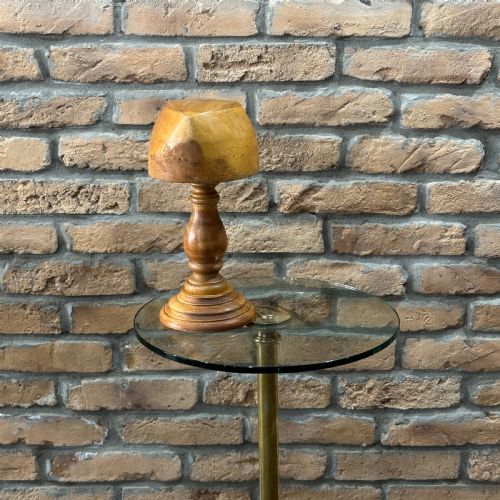

Vintage Millinery Equipment
These pieces of vintage millinery equipment are the utilitarian tools used to shape hats, and collectors prize them for their sculptural industrial forms.
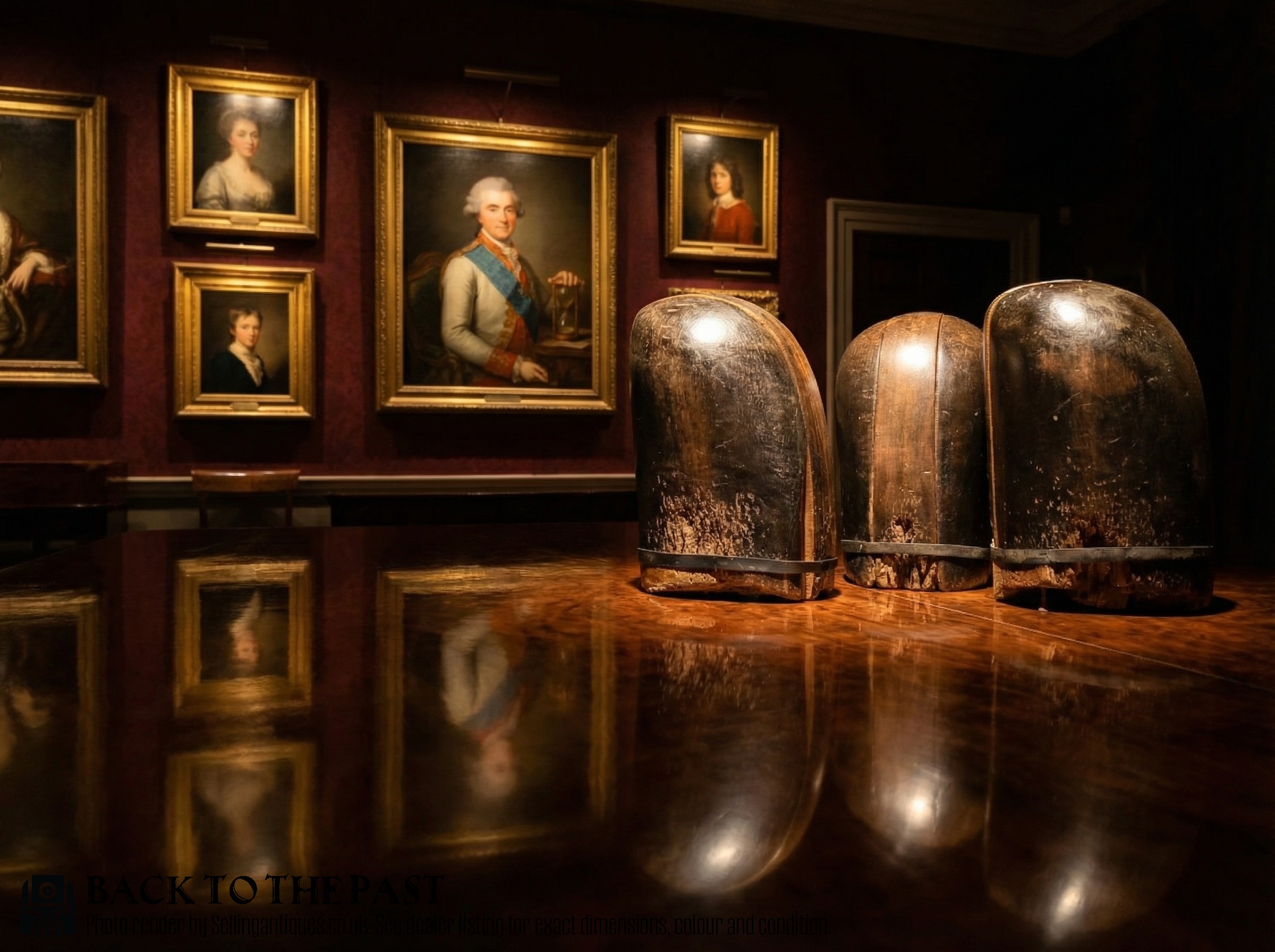
Vintage Millinery Equipment
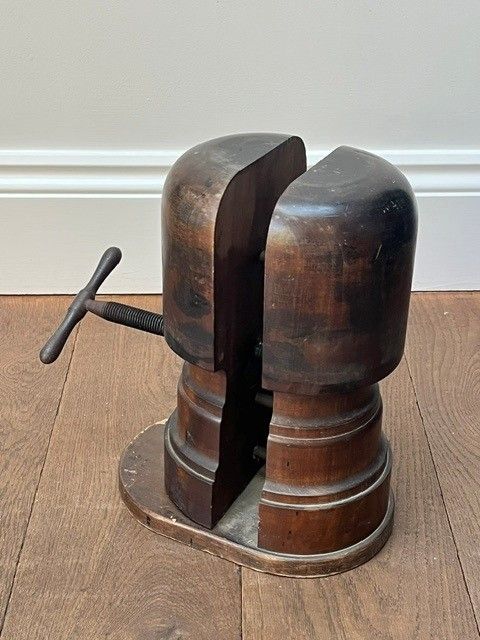
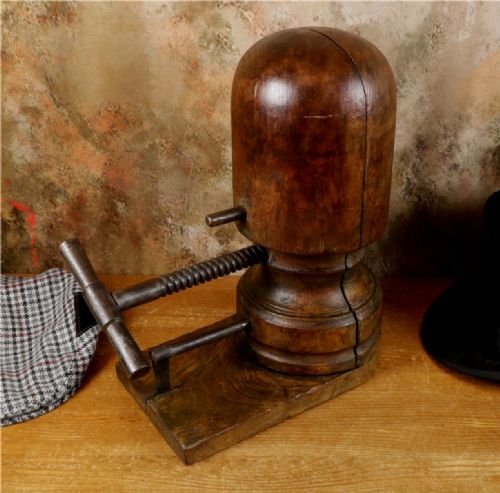
When you search for vintage millinery equipment, you encounter the wooden and metal blocks and stretchers that once shaped headwear in commercial workshops. These items range from utilitarian hat stretchers to specific moulds designed for forming felt and fabric.
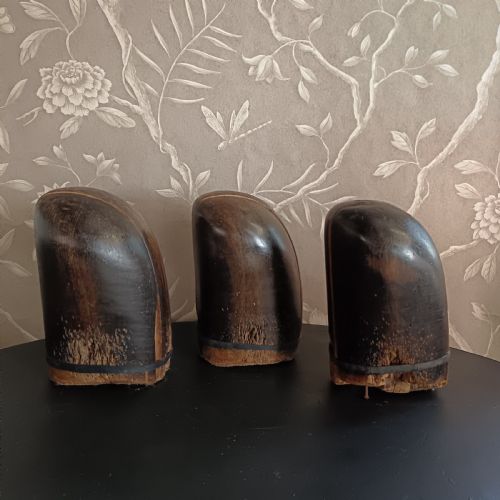
The pieces listed on this page span the Victorian era through the 1920s and 1930s, showing both French and American origins. You will frequently find solid beech and carved hardwood hat blocks alongside cast iron and aluminium moulds.
Industrial haberdashery tools and wig display stands also appear within this category. These forms served practical functions in hat manufacture before finding new life as decorative objects in modern interiors.
How they were made
Makers shaped these objects using dense hardwoods such as beech, carving them to exact human head measurements for daily workshop use. Woodworkers selected these heavy timbers to withstand the constant pressure and moisture involved in blocking hats.
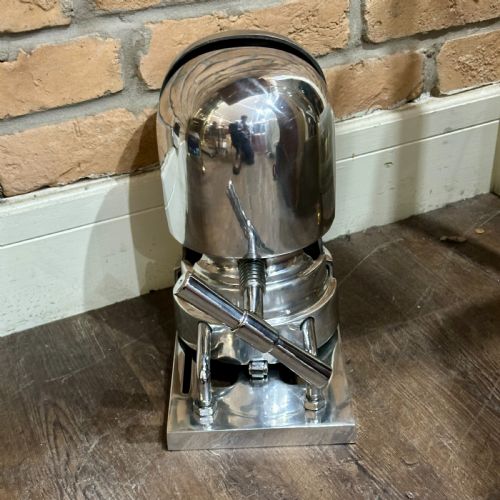
Metal versions utilised cast iron and aluminium to create durable moulds and stretchers that resisted the rigours of industrial production. Manufacturers also incorporated nickel plating on tools like rotary irons to provide a smooth, rust-resistant surface.
Vintage Millinery Equipment Retail Price Guide 2026
Typical asking prices for vintage millinery equipment among the pieces listed under this phrase on Sellingantiques today, from the lower quarter to the upper quarter. They describe what is for sale here now, not the wider market.
One aluminium mould is specifically numbered fifteen, ready to stamp out the exact head size of an forgotten customer.
What varies in quality
The distinction between ordinary workshop tools and exceptional pieces lies in the precision of the carving and the integrity of the material. Hardwood blocks with complex contours or specialist military applications demonstrate superior craftsmanship compared to basic utility forms.
Condition and originality dictate the standing of each piece within its period. Examples that retain their original surfaces and mechanical adjustment mechanisms command greater attention from collectors than heavily altered items.
The Vintage Millinery Equipment Glossary
- Hat block
- A solid wooden form carved in the shape of a human head or crown over which a hat is shaped. These blocks are foundational to traditional millinery.
- Hat stretcher
- A mechanical tool inserted into a hat crown to expand or adjust the size. They often feature wooden segments operated by a central screw mechanism.
- Millinery mould
- A metal form, typically cast in aluminium or iron, used under heat and pressure to shape hat bodies. They offer precise geometric consistency.
- Rotary hat iron
- A specialised tool heated and applied to smooth and finish hat materials. The rotating head allows the operator to glide across curved brims.
Vintage Millinery Equipment: Frequently Asked Questions
What were hat blocks used for?
Hat blocks served as the primary solid forms upon which wet felt or straw was pulled, shaped, and dried during hat manufacture.
Craftspeople relied on these wooden or metal moulds to ensure every finished hat conformed to exact standard head sizes and current fashion silhouettes.
How do I date wooden hat blocks?
Dating these items requires examining the type of wood, the tool marks left by the maker, and the overall wear patterns from workshop use.
Victorian and early twentieth-century pieces often display hand-turned construction methods and denser hardwoods that differ from later mass-produced manufacturing.
Are aluminium hat moulds authentic?
Aluminium moulds gained popularity during the early twentieth century, particularly by the 1920s and 1930s, for their durability in industrial hat production.
These metal forms were manufactured alongside traditional wooden blocks to handle specific pressing and steaming techniques required by modern materials.
How can I display these at home?
Collectors frequently display these sculptural objects on shelves, tables, or mantelpieces as focal points in industrial or eclectic interiors.
Their striking geometric forms and patinated surfaces allow them to function naturally as standalone decorative sculptures without requiring additional mounting.