


Vintage Milliners Block
These vintage milliners blocks are solid forms once used to shape hats, prized today as sculptural objects with a distinct industrial past.
Vintage Milliners Block
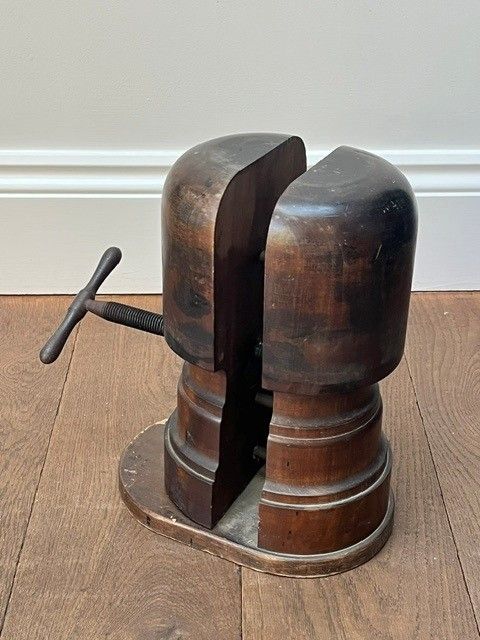
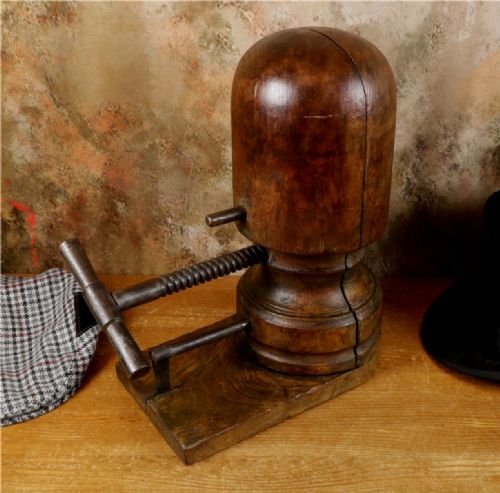
When you search for a vintage milliners block, you are looking at functional workshop equipment used in hat making from the nineteenth century through the early twentieth century. The forms range from simple wooden shaping blocks to specialised military headwear moulds and adjustable stretchers.
The most common examples on this page include turned wooden blocks, carved forms, and later metal moulds from the nineteen-twenties. These pieces served a purely practical trade before finding a second life as decorative objects in modern interiors.
How they were made
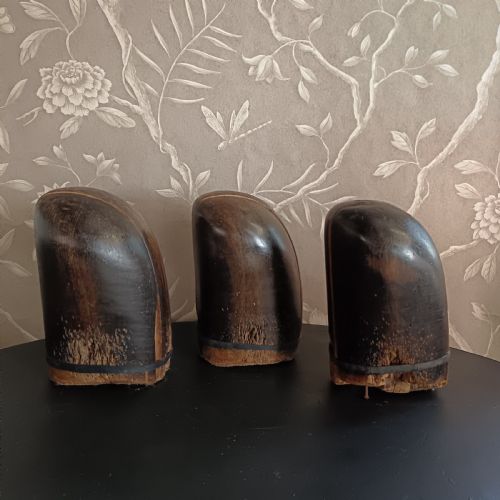
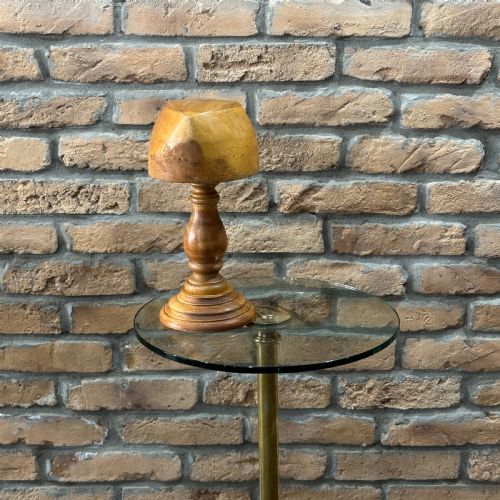
Traditional pieces are shaped from solid timbers including oak, walnut, beech, and fruit wood, often turned on a lathe or carved by hand to precise anatomical or geometric proportions. Makers also utilised durable metals such as aluminium, iron, and cast iron for industrial moulds produced in series.
The construction reflects the heavy demands of hat manufacturing, joining sections of hardwood to withstand the pressure of steaming and stretching felt and straw.
What varies in quality
The distinction between ordinary workshop tools and finer examples lies in the character of the carving and the choice of material, such as finely grained fruit wood or rich walnut over standard utility timber. Sculptural presence also depends on the complexity of the form, from simple geometric shapes to detailed carved folk art heads.
The presence of maker marks, retail stamps, or specific London addresses adds historical depth, while metal pieces vary according to the precision of their casting and the completeness of their moulding components.
Bretton·Regent Street London
The Vintage Milliners Block Glossary
- Hat block
- A solid wooden or metal form used by hatters to shape and dry hats during manufacture. These forms determine the final silhouette of the millinery.
- Hat stretcher
- A mechanical tool inserted into a hat to expand the circumference and adjust the fit. They typically feature wooden segments operated by a central screw mechanism.
- Millinery mould
- A hollow metal form, often cast in aluminium, used for pressing and shaping hats under heat or pressure. They are frequently found in numbered series.
- Folk art style
- A descriptor for handmade objects created outside traditional academic art conventions, often displaying distinctive individual carving and character. These pieces emphasise rustic charm over strict industrial standardisation.
Vintage Milliners Block: Frequently Asked Questions
What is a milliners block?
A milliners block is a solid form made of wood or metal that hat makers used to shape felt, straw, and fabric into finished hats.
Today, these utilitarian objects are collected as sculptural pieces of industrial art and displayed in homes.
How were wooden hat blocks used?
Hatters dampened hat bodies and pulled them tightly over the wooden block to set the crown shape and dry the material.
They were essential tools in hat shops and workshops before mass production changed the industry.
How do I date a hat block?
Dating relies on the materials used, the manufacturing style, and any visible stamps or labels from the maker or workshop.
Nineteenth-century examples are typically carved from heavy hardwoods, while nineteen-twenties pieces often introduce aluminium and solid beech.
How do I display a hat block?
Hat blocks look striking placed on shelves, mantelpieces, or tables as standalone sculptural objects.
Their simple geometric forms and aged patinas complement both modern and traditional interiors.