





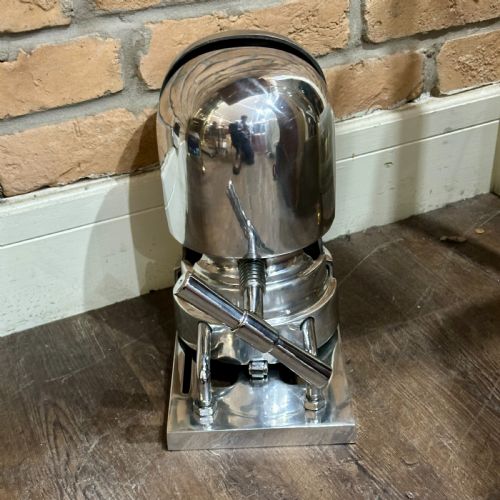


Industrial Hat Block
An industrial hat block offers sculptural utility and raw material honesty, drawing collectors who appreciate utilitarian workshops of the past.
Industrial Hat Block
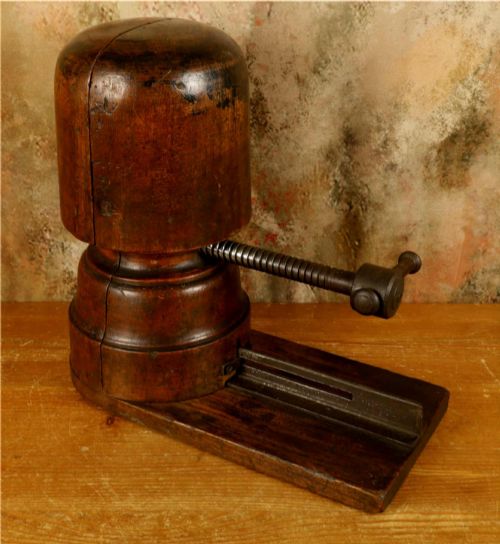
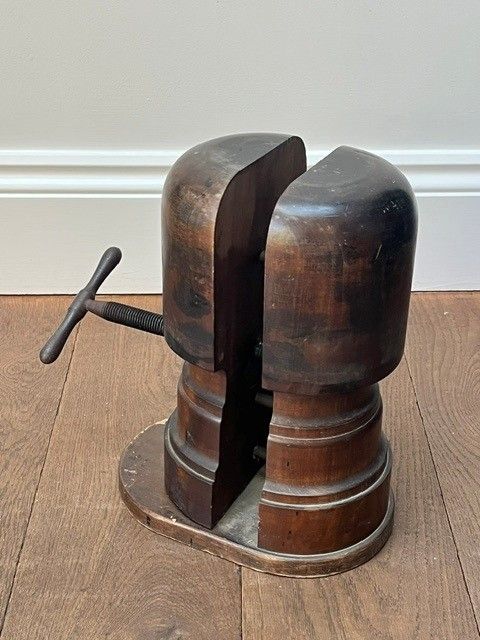
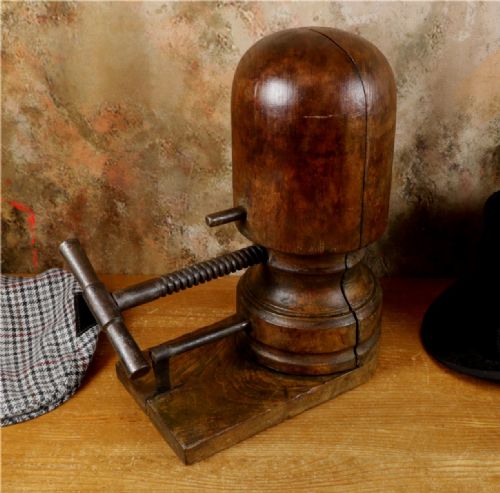
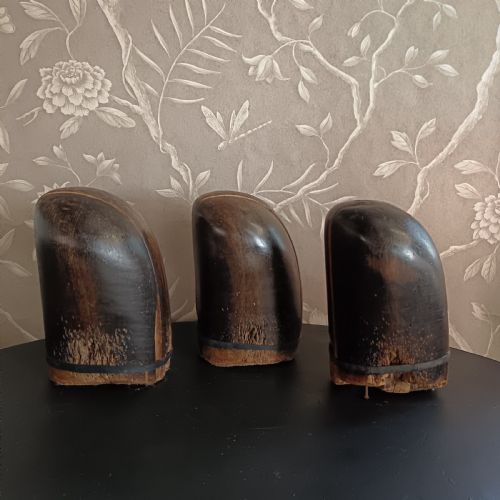
An industrial hat block serves as a sculptural form used in the creation and shaping of historical headwear. These items range from simple wooden carvings to mechanical aluminium apparatuses designed for trade use.
The versions most frequently encountered on this page date from the early twentieth century, spanning the 1900s through the 1930s. They encompass specialised equipment such as millinery moulds, hat stretchers, and wig display stands.
Makers produced these objects for functional millinery workrooms rather than domestic display. Their forms reflect the specific demands of hat manufacture, including military bearskin caps and traditional millinery shapes.
How they were made
Production relied heavily on durable materials capable of withstanding heavy workshop use, such as carved hardwood, aluminium, and cast iron. Wood sections were shaped by hand or lathe, while metal versions utilised casting techniques to achieve precise industrial contours.
Mechanical elements on stretchers and sizers incorporated functional metal components alongside wooden bodies. The resulting construction combined raw industrial metals with traditional timber crafting.
Industrial Hat Block Retail Price Guide 2026
Typical asking prices for industrial hat block among the pieces listed under this phrase on Sellingantiques today, from the lower quarter to the upper quarter. They describe what is for sale here now, not the wider market.
Military precision meets haberdashery in the specific blocks designed solely for shaping oversized bearskin caps.
What varies in quality
Quality rests upon the integrity of the material and the complexity of the form. Solid carved hardwood exhibits superior grain handling, whereas cast aluminium examples depend on the crispness of the original mould.
The presence of functional mechanical parts on stretchers introduces another distinction in execution. Pieces retaining their original adjusting mechanisms or specialised military configurations demonstrate greater workshop utility.
The Industrial Hat Block Glossary
- Hat block
- A solid form moulded to shape or stretch a hat during its creation. These objects define the final silhouette of historical headwear.
- Hat stretcher
- A mechanical device used to increase the internal circumference of a hat. They often feature wooden sections expanded by internal metal screws.
- Millinery mould
- A hollow form used in hat production to press materials into specific contours. They are frequently constructed from cast aluminium.
- Milliner
- A maker and designer of hats. Their workshops utilised specialised timber and metal forms for every stage of production.
Industrial Hat Block: Frequently Asked Questions
What is an industrial hat block?
An industrial hat block is a functional workshop tool utilised in the shaping and manufacturing of historical headwear.
These pieces were constructed from durable materials like hardwood and cast aluminium to endure heavy daily use in trade environments.
How were hat stretchers used?
Hat stretchers were inserted into finished hats to adjust or maintain their inner circumference.
Operators turned internal metal mechanisms to expand the wooden segments outward against the hat band.
What materials are common?
Common materials include carved hardwood and cast aluminium, often paired with iron components.
Earlier examples tend to utilise timber, while later twentieth-century iterations frequently employ cast metal.
How do I date these blocks?
Dating relies on the materials used, stylistic indicators, and manufacturing methods recorded in the piece.
Early twentieth-century examples often show distinct cast aluminium construction or turn-of-the-century timber turning techniques.