


Vintage Hat Block
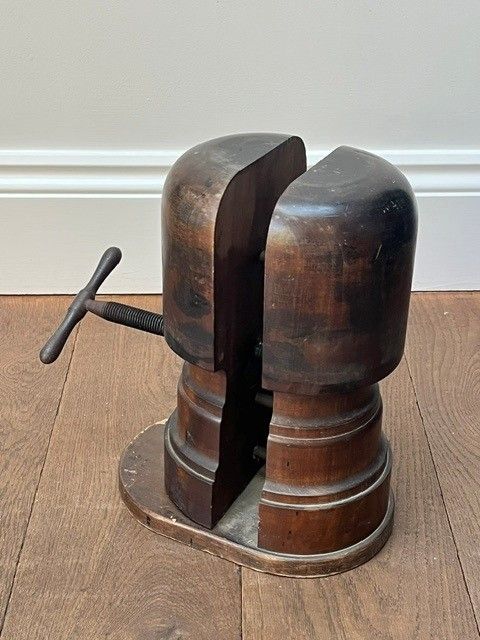
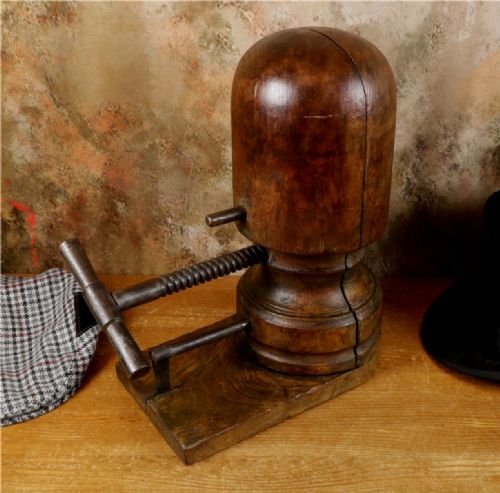
These vintage hat block examples are sculptural workshop tools shaped from wood and metal to form headwear, prized today as striking decorative objects.
Vintage Hat Block
A vintage hat block serves as a solid sculptural form used historically by milliners to shape and size hats. When searching for this phrase, buyers encounter various forms including wooden hat blocks, millinery moulds, and adjustable stretchers.
The selection ranges from traditional nineteenth-century French and English wooden specimens to industrial aluminium moulds from the early twentieth century. Wig stands and millinery heads also appear frequently among these utilitarian workshop objects.
Materials and construction methods
Carved wooden examples utilise traditional timber varieties such as hardwood, fruitwood, beech, oak, walnut, and yew. Skilled makers shaped these dense woods by hand to withstand the pressure of hat-making.
Industrial examples employ metal construction, specifically cast iron and aluminium, providing durable moulds for production. These materials reflect the transition from individual craft workshops to more industrial methods.
Listings span periods from the Georgian era through Victorian times to the 1930s, featuring timber, fruitwood, aluminium, and cast iron.
Factors that distinguish quality
The sculptural presence and integrity of the carving determine the distinction between everyday workshop tools and finer decorative pieces. Hand-carved wooden heads and folk art examples display greater individual character than standard industrial production moulds.
The choice of timber and the preservation of original surface patination influence the character of each piece. Hardwoods and richly grained fruitwoods retain distinct signs of working use that enhance their visual appeal.
The Vintage Hat Block Glossary
- Hat block
- A solid form made of wood or metal used to shape or maintain the crown of a hat. These objects bear the marks of intensive workshop use.
- Millinery mould
- A hollow form utilised in the commercial production of headwear. They often appear in durable metals like aluminium.
- Hat stretcher
- A mechanical device inserted into a hat to expand or adjust the size. They typically feature expanding wooden sections operated by a central screw.
- Treen
- Small handmade wooden domestic objects and tools. Collectors use this term to describe vintage turned and carved wooden items.
- Wig stand
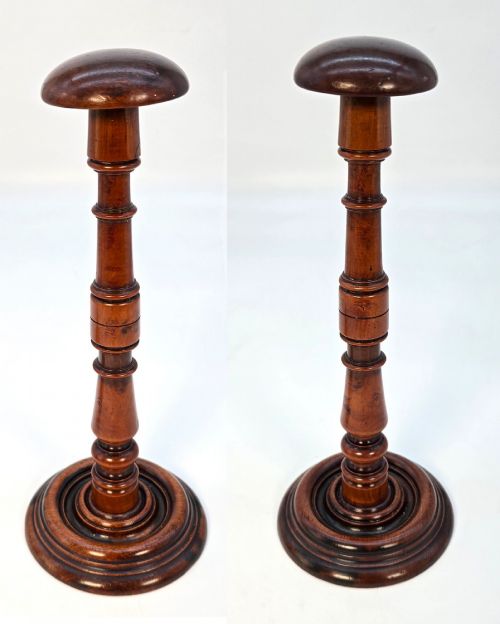
- A carved head or pedestal designed to support and display wigs. These pieces share similar forms and periods with millinery equipment.
Vintage Hat Block: Frequently Asked Questions
How were vintage hat blocks used?
Milliners used these wooden and metal forms to shape wet felt or straw into specific hat designs. Hatters stretched and pinned material tightly over the contours while drying.
They also served to maintain the correct size and structure of finished headwear during storage or retail display.
How do I display a hat block at home?
These sculptural objects require minimal setup and suit placement on bookshelves, sideboards, or mantelpieces. Their organic wooden forms and metallic industrial finishes complement various interior styles.
Many collectors group multiple blocks together on stands to showcase different shapes and heights as decorative art.
Are wooden or aluminium blocks older?
Wooden hat blocks appear across the eighteenth, nineteenth, and early twentieth centuries, shaped by hand from timbers like fruitwood and beech. These traditional forms reflect older craft practices.
Aluminium moulds emerge primarily in the twentieth century, representing industrial manufacturing methods adopted later in millinery workshops.
What is the difference between a block and a stretcher?
A hat block is a solid, fixed form designed to create the exact shape of a specific hat crown. It remains rigid during the shaping process.
A hat stretcher is an adjustable mechanical tool with expanding segments designed to alter or maintain the interior circumference of finished headwear.