




Milliners Hat Mould
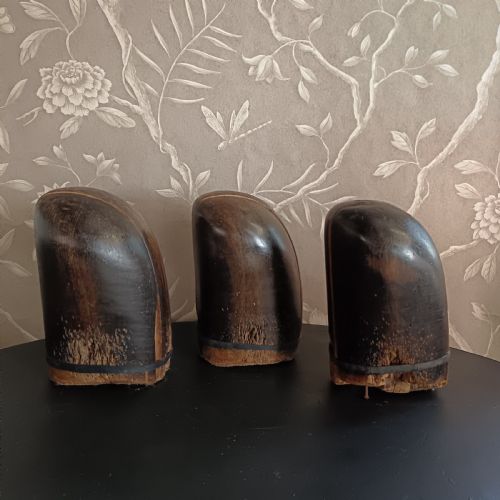
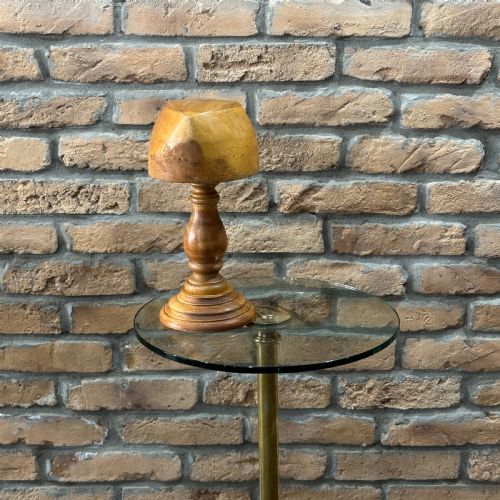
These milliners hat mould blocks are sculptural forms once used to shape headwear, prized by collectors for their striking industrial and folk art presence.
Milliners Hat Mould
A milliners hat mould is a solid form used historically to shape and dry hats during manufacture. When you search for this phrase, you encounter functional studio equipment that now serves as decorative sculpture.
The versions most commonly met on this page span the nineteenth century up to the nineteen-twenties. They appear as human head shapes, simpler crown blocks, and specialised forms like military bearskin cap blocks.
Makers produced these objects in workshops using durable materials designed to withstand repeated pressing and steaming. Today, interior decorators use them as display busts and sculptural art objects.
Materials and construction
Carved wood provides the traditional medium for these pieces, utilising timbers such as oak, walnut, beech, and fruitwood. Craftsmen shaped these natural materials by hand to create smooth contours for hats.
Later examples incorporate cast metal and aluminium, reflecting industrial developments in millinery workrooms. These metallic moulds offer rigid durability and distinct textures compared to timber blocks.
Listings feature items dated from eighteen-fifty through to the nineteen-twenties, constructed in both timber and cast aluminium.
Judging quality in a milliners hat mould
Patina and evidence of working use distinguish better examples. Original tool marks and accumulated traces of dye or glue enhance the historical integrity of the piece.
The Milliners Hat Mould Glossary
- Hat block
- A solid form over which a hat is shaped. These wooden or metal blocks determine the final size and style of the headwear.
- Millinery form
- A generic term for any block or bust used in hat making. They range from simple crown shapes to detailed human head sculptures.
- Folk art style
- A descriptor for objects made by traditional craft methods outside academic art training. These pieces often display charming irregularity and direct workmanship.
- Haberdashery
- Items connected with the trade of selling hats, ribbons, and sewing materials. Surviving shop equipment forms a distinct collecting category.
Milliners Hat Mould: Frequently Asked Questions
How were milliners hat moulds used?
Milliners stretched damp felt or straw over the solid wooden or metal form to shape the hat. The material remained pinned on the block until it dried into the desired profile.
Workers used specialised blocks for different components, including crowns, brims, and military caps. The blocks endured daily exposure to steam, moisture, and stretching pressure.
Are these hat moulds still usable for hat making?
Many vintage blocks retain their structural integrity and can still serve modern millinery workrooms. Hat makers prize older timber and aluminium blocks for traditional hat blocking techniques.
Collectors should check that the dimensions match contemporary sizing requirements before attempting active hat production.
How do I date an antique hat block?
Dating relies on material choice, manufacturing marks, and style evolution. Nineteenth-century examples typically feature hand-carved timber, while nineteen-twenties pieces often introduce cast aluminium.
Examining the base and fastening points also helps determine the era. Fasteners and fixings changed significantly from the Victorian period to the interwar years.
How should I display a hat mould at home?
These sculptural forms work well placed on shelves, sideboards, or desks as standalone art objects. Their strong silhouettes suit industrial, traditional, and modern interior schemes alike.
Keep wooden blocks away from direct heat sources and dramatic humidity changes to prevent timber splitting. A simple wipe with a dry cloth maintains the surface patina.