




Industrial Millinery Block
An industrial millinery block shapes headwear with utilitarian strength, offering tactile history and striking sculptural presence to modern interiors.
Industrial Millinery Block
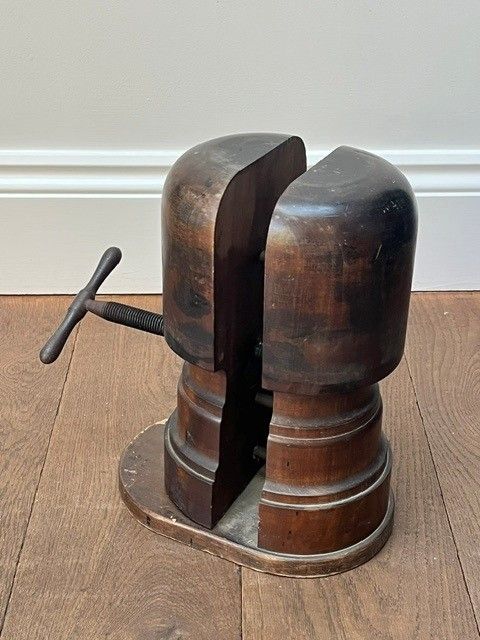
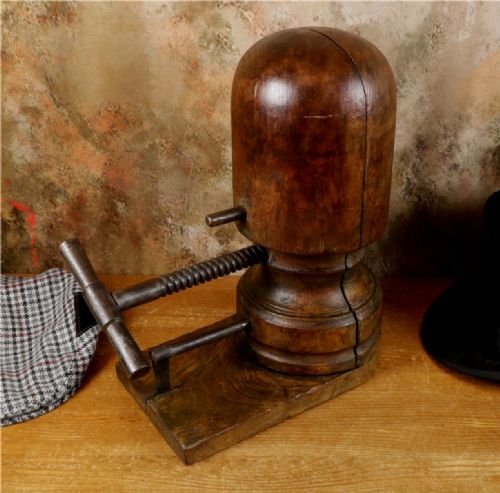
An industrial millinery block comprises heavy-duty moulds, stretchers, and forms designed to manufacture and size headwear during the nineteenth and twentieth centuries. These functional workshop tools include specialised items for military bearskin caps alongside standard hat sizers and wig display stands.
The versions most commonly met on this page span the 1900s, 1910s, 1920s, and 1930s periods. They originate from French workshops as well as general industrial haberdashery environments, reflecting the practical demands of hat production.
Collectors encounter these objects catalogued under various terms such as millinery moulds, hat blocks and forms, and millinery equipment. Each piece serves as both a relic of trade craftsmanship and a decorative object.
Materials and construction methods
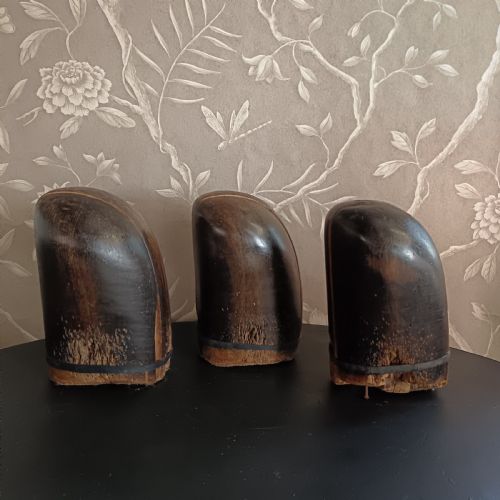
Makers utilised durable materials capable of withstanding heavy workshop use, predominantly selecting hardwood, carved hardwood, and plain wood. These wooden elements were shaped to precise anatomical contours for forming and stretching felt and straw.
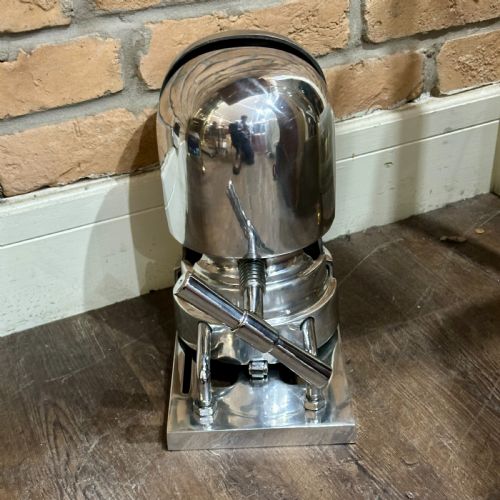
Metal components formed another vital category of production, incorporating aluminium, cast aluminium, cast iron, iron, and cast metal. Aluminium moulds provided lightweight yet robust alternatives to traditional timber, whilst iron mechanisms drove adjustable stretchers.
Materials represented across the selection include both organic timber and industrial metals like aluminium and cast iron.
Assessing quality and condition
The standard of a piece rests upon the integrity of its material and the complexity of its form, ranging from simple wooden shapes to intricate mechanical stretchers. Carved hardwood items demonstrate superior artisan input compared to basic utilitarian moulds.
Preservation of original surfaces and mechanical movement separates functional survivals from heavily altered examples. Traces of historical workshop use add authenticity, whereas clumsy repairs detract from the integrity of the design.
The Industrial Millinery Block Glossary
- Millinery
- The manufacture and sale of hats and headwear. This trade relied on specialised wooden and metal forms to achieve exact sizing.
- Hat stretcher
- A mechanical device used to increase the circumference of headwear. These tools typically feature wooden segments expanded by internal metal screws.
- Haberdashery
- The trade and merchandise of small articles in sewing and clothing. Millinery equipment formed a distinct branch of this commercial sector.
- Mould
- A hollow form used to shape material pressed into or over it. In hat making, these dictated the crown height and brim angle.
Industrial Millinery Block: Frequently Asked Questions
What is an industrial millinery block?
An industrial millinery block is a solid form or mould used by hatters to shape, size, and dry headwear during production.
These workshop tools were made from robust materials like wood and aluminium to withstand heavy daily use in commercial trades.
How were these blocks used?
Hatters stretched damp felt or straw over the wooden or metal forms to set the crown and brim dimensions correctly.
Adjustable stretchers were also employed to alter existing hats to specific head measurements.
How do I display them at home?
These sculptural objects sit naturally on shelves, sideboards, or desks as standalone decorative pieces of industrial history.
Their striking metallic and wooden forms complement both modern minimalist rooms and traditional interior schemes.
How can I tell the period?
Dating relies on the primary material, manufacturing technique, and stylistic traits associated with specific decades.
Cast aluminium pieces typically point towards the 1920s and 1930s, whilst carved hardwood examples often reflect earlier nineteenth-century French origins.