


Antique Hat Block
These antique hat blocks are sculptural forms of carved wood and cast metal that bring industrial character and workshop history to any room.

Antique Hat Block
When you search for an antique hat block, you encounter functional millinery equipment that shaped everything from Victorian bonnets to 1930s cloches. The pieces listed on this page span the mid-nineteenth century through to the early decades of the twentieth century, reflecting the peak era of traditional hat-making. You mostly meet wooden forms carved from fruitwood, oak, beech, and walnut, alongside utilitarian metal versions.
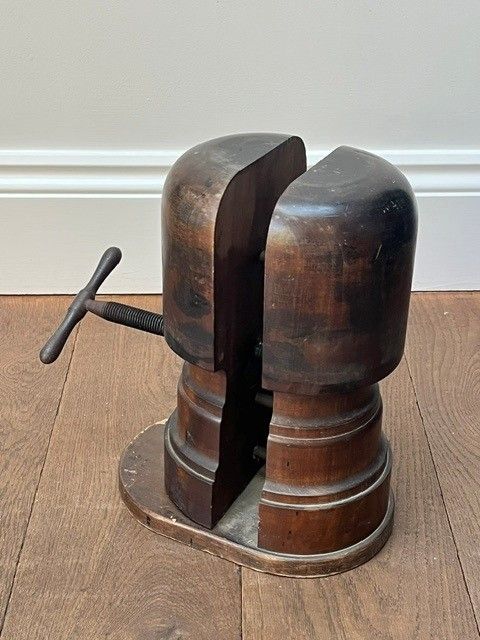
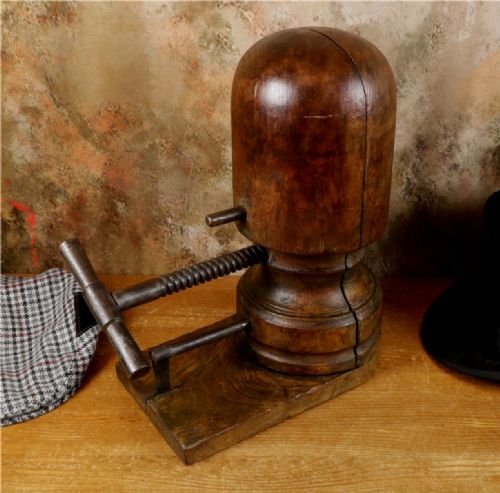
Workshop tools take several distinct shapes, from solid carved wooden head moulds to adjustable hat stretchers and mechanical sizers. Milliners used these pieces to press, dry, and store hats in proper proportions. Some examples rest on original stands or feature integrated metal mechanisms designed for expanding the block.
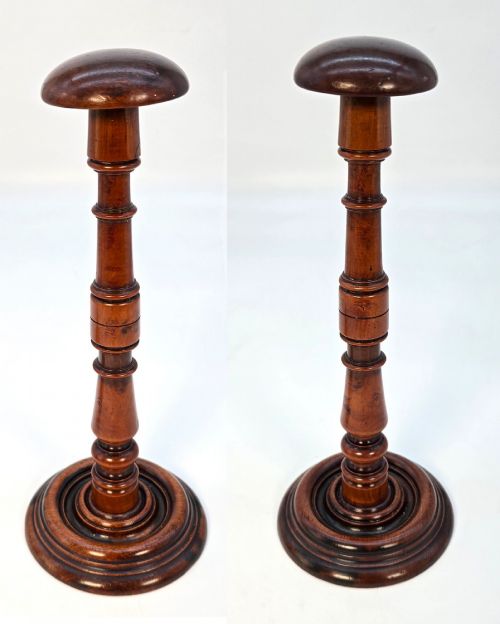
Origins range from English makers working on Regent Street to French provincial workshops and industrial manufacturers. The forms vary from abstract geometric domes to detailed carved wig stands and anthropomorphic millinery heads. Each piece retains the marks of pins, steam, and daily use from its working life in a haberdashery.
Materials and construction methods
Makers carved traditional blocks from dense hardwoods like fruitwood, oak, walnut, and beech to withstand the damp heat of steam blocking. Artisans selected these timbers for stability and grain tightness, often shaping them on lathes or carving the contours by hand. The surfaces frequently show tool marks and peg joints where multi-piece blocks were joined together.
Twentieth-century examples introduced industrial manufacturing techniques, utilising cast aluminium and iron for durability and precision. Metal stretchers incorporated mechanical screw threads and articulated levers to adjust the sizing of hats. These materials provided a robust alternative to wood, handling constant tension in commercial millinery workrooms.
Antique Hat Block Retail Price Guide 2026
Typical asking prices for hat block among the pieces listed under this phrase on Sellingantiques today, from the lower quarter to the upper quarter. They describe what is for sale here now, not the wider market.
Many wooden blocks still retain tiny pinpricks left behind by milliners securing felt with haberdashery pins.
Distinguishing quality and character
The degree of surface wear tells its own story about workshop utility. Pieces retaining original maker stamps, paper labels, or traces of historical hat linings offer greater historical context. The balance between honest working wear and structural integrity defines the desirability of each block.
Reslaw
The Antique Hat Block Glossary
- Hat block
- A solid form made of wood or metal used by milliners to shape and size hats during manufacture. Traditional versions were carved from single blocks of timber or built up in sections.
- Millinery
- The design, manufacture, and sale of hats. Workshops relied on specialised haberdashery tools to construct headwear for men and women.
- Hat stretcher
- A mechanical tool inserted into a hat to expand or maintain the circumference. These objects often feature wooden segments connected by metal screws and hinges.
- Haberdashery
- The trade and materials associated with sewing and dressmaking. Equipment from this trade forms the core of these listings.
- Patina
- The surface sheen and colour developed through years of handling, exposure to air, and workshop use. This ageing process highlights the grain of the wood.
Antique Hat Block: Frequently Asked Questions
How were hat blocks used?
Milliners stretched damp felt or straw over the wooden or metal forms to set the crown and brim of a hat. The block held the correct dimensions while the material dried.
Adjustable stretchers were also utilised to alter or maintain hat sizes in retail shops and workshops.
How do I style a hat block at home?
These pieces sit well on bookshelves, sideboards, or desks as sculptural focal points. Their industrial forms and aged wooden surfaces contrast effectively with contemporary interiors.
Many collectors display them individually or group several aluminium and wooden moulds together on tables.
How do I date an antique hat block?
Dating relies on the materials, manufacturing methods, and stylistic contours of the piece. Nineteenth-century examples typically feature hand-carved wood and pegged construction.
Twentieth-century versions often incorporate cast aluminium components, mechanical screws, and industrial markings that point to later workshop use.