
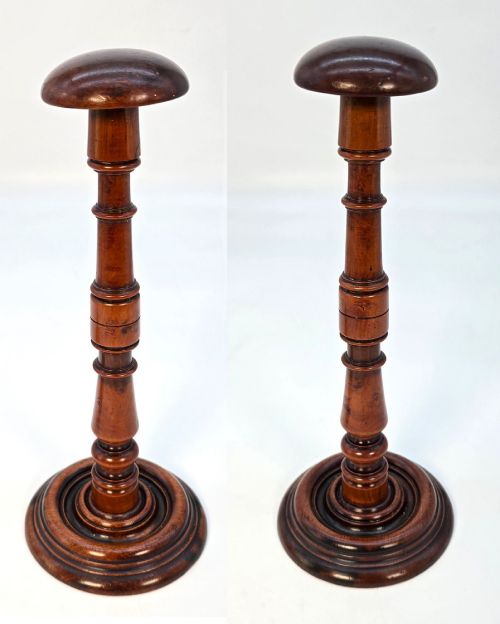


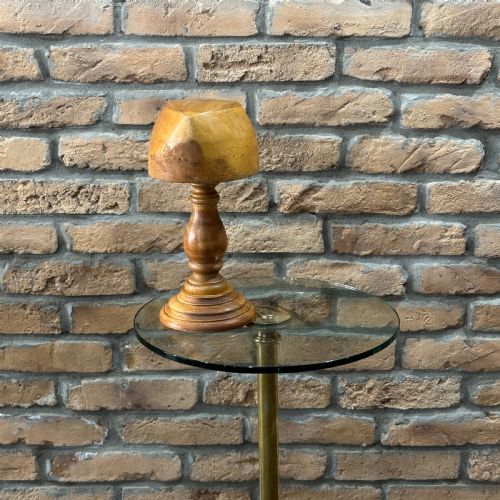

Hat Making Block
These hat making block pieces are sculptural wooden and aluminium tools that shape historic millinery, bringing genuine industrial character and traditional haberdashery into modern interiors.

Hat Making Block
When you search for a hat making block, you are looking at functional moulds and forms designed to shape millinery during manufacture. These objects range from early Georgian wig stands to industrial forms from the 1920s.
The versions you are most likely to meet on this page span the eighteenth century, nineteenth century, and the 1920s. They appear as standalone millinery moulds, wig stands, and combined forms created in various woods and metals.
Origin and period dictate the character of these items, with French provincial and traditional English examples forming the core of the selection. Each piece reflects the specific workshop demands of historic hatters and wigmakers.
How they were made
Makers shaped these objects from dense timbers including yew, oak, walnut, beech, and fruitwood, selecting woods that could withstand sustained pressure and manipulation. Woodturners worked these materials on lathes to achieve precise sculptural contours.
Twentieth-century production introduced cast aluminium mouldings, offering a clean industrial finish that replaced traditional timber for certain manufacturing tasks. These metal pieces utilise robust casting techniques suited to high-volume commercial production.
Hat Making Block Retail Price Guide 2026
Typical asking prices for hat making block among the pieces listed under this phrase on Sellingantiques today, from the lower quarter to the upper quarter. They describe what is for sale here now, not the wider market.
Aluminium hat moulds from 1920 are often numbered on top like heavy metal biscuits.
What varies in quality
The distinction between ordinary and superior examples lies in the complexity of the turnery and the integrity of the material. Dense hardwoods like yew and fruitwood display finer grain patterns and crisper definition than standard utility timbers.
Age and original workshop use impart a distinct patina that elevates certain pieces above standard workshop equipment. The smoothness of the sculptural surface and the balance of the form dictate visual success.
The Hat Making Block Glossary
- Millinery
- The design, manufacture, and sale of hats. This trade relied heavily on specialised wooden and metal blocks to achieve correct sizing.
- Haberdashery
- Small articles associated with sewing and hat making. Traditional pieces from this category often accompany antique workspace displays.
- Turnery
- Objects shaped on a lathe by a woodturner. This process created the symmetrical rounded contours essential for hat blocks.
- Patina
- The surface sheen and colour developed through age and handling. A rich patina indicates long-term use in a working environment.
Hat Making Block: Frequently Asked Questions
What is a hat making block?
A hat making block is a solid form used by milliners to shape and dry hats during production. These tools ensure consistent sizing and form for historical headwear.
Today, these objects function as decorative sculptural sculptures and display pieces in domestic interiors.
How were antique hat blocks used?
Hatters stretched damp felt or straw over the wooden or aluminium form to set the crown and brim. Once dried, the hat retained the exact geometry of the block.
Workshop use often left distinct pinholes and surface marks recording decades of active millinery production.
Are aluminium hat blocks authentic?
Aluminium hat blocks represent the industrial transition in 1920s manufacturing. Factories adopted metal casting to improve durability and precision in commercial hat production.
These pieces bring a distinct industrial aesthetic that contrasts with traditional wooden forms.
How do I date an old hat block?
Dating relies on material choice, manufacturing method, and surface wear. Eighteenth-century pieces typically feature dense native timbers like yew, while nineteenth-century examples often utilise fruitwood or oak.
Twentieth-century items frequently employ cast aluminium or machined beech associated with art deco industrial production.