



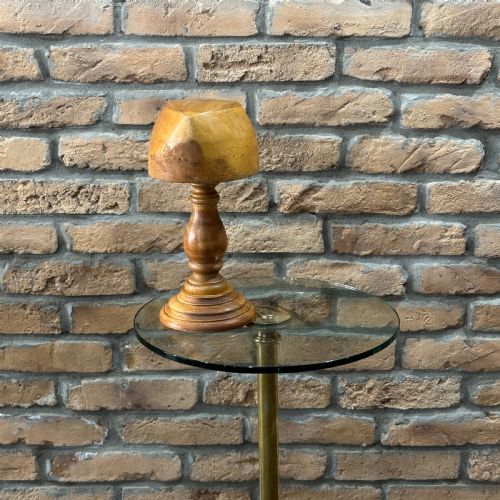


Wooden Hat Display
A wooden hat display serves as practical shop equipment and sculptural folk art, bringing period character to any room.
Wooden Hat Display
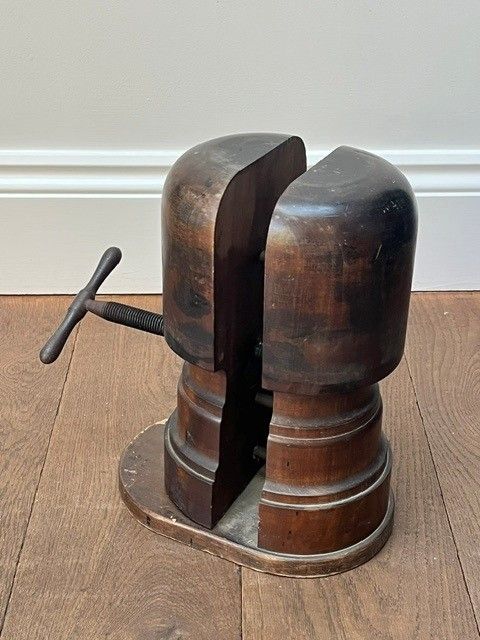
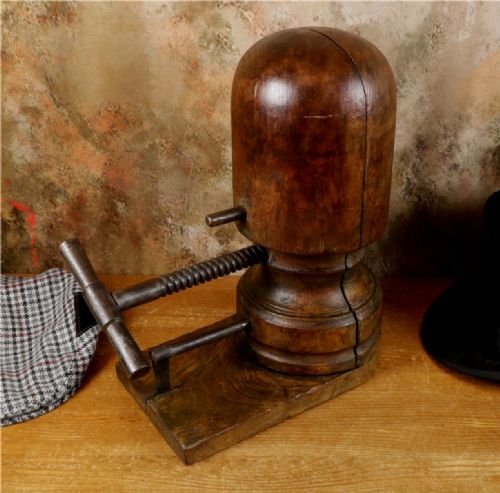
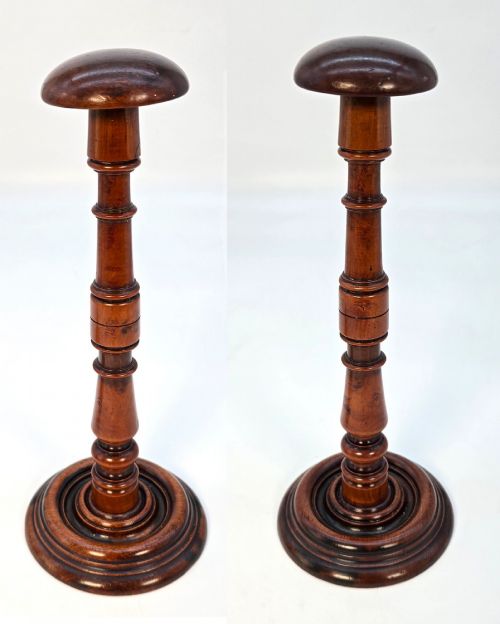
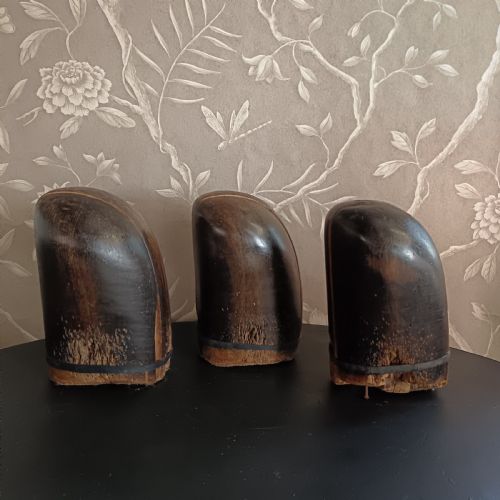
A wooden hat display encompasses utilitarian millinery equipment and shop fittings designed to shape, size, and showcase hats. Buyers examining this category encounter hat stands, wig stands, millinery heads, and adjustable hat stretchers.
The pieces on this page span several centuries, reaching back to the Georgian era through Victorian industrial designs and early twentieth century French provincial workshops. Turned wood stands and carved wooden heads form the core of what remains available.
Makers originally produced these items for working shops and domestic dressing rooms alike. Today, collectors utilise them primarily for interior display and the preservation of vintage millinery.
Materials and construction methods
Craftsmen shaped these items using dense timbers such as oak, beech, yew, walnut, and fruitwood. Turned wooden components appear frequently alongside carved wooden heads and adjustable iron mechanisms.
Joinery and turning techniques reflect the functional demands of workshop use. Hat blocks and stretchers required robust construction to withstand daily haberdashery work.
The listings feature items fashioned from oak, beech, yew, fruitwood, and walnut across the eighteenth, nineteenth, and twentieth centuries.
Judging quality and character
Quality rests in the sculptural presence of the carving and the warmth of the timber grain. Pieces with visible tool marks and rich patination command greater interest than plain utility items.
Original working mechanisms on stretchers and hat sizers dictate the desirability of functional equipment. Structural integrity matters alongside the visual appeal of the turned wooden surfaces.
The Wooden Hat Display Glossary
- Milliner
- A maker and seller of hats. These professionals utilised specialised wooden blocks and display forms.
- Hat stretcher
- A mechanical device used to adjust the size of headwear. These timber tools often feature metal screws.
- Wig stand
- A turned wooden support designed to hold wigs or hats. They frequently appear in pairs.
- Hat block
- A solid wooden form used in the creation of hats. Milliners shaped felt and straw over these carved surfaces.
Wooden Hat Display: Frequently Asked Questions
What is a wooden hat display used for?
These pieces served as practical equipment in millinery shops and domestic dressing rooms for shaping, sizing, and showcasing hats or wigs.
Today, collectors utilise them as sculptural interior objects to display vintage headwear or simply as standalone decorative pieces.
How do I date a wooden hat stand?
Dating relies on timber selection, tool marks, and turning styles associated with periods like the Georgian era or the Victorian epoch.
Examining the construction methods and any remaining workshop labels helps narrow down the decade of manufacture.
Are these pieces made of solid wood?
Most items in this category are fashioned from solid hardwoods like oak, beech, yew, fruitwood, and walnut.
Turned and carved construction ensures durability for handling heavy materials during millinery work.
How should I clean a vintage hat block?
Gentle dusting with a dry cloth preserves the original surface patination and accumulated workshop wax.
Avoid harsh liquid cleaners that might strip the historic finish from the timber grain.