




Hat Block Stand
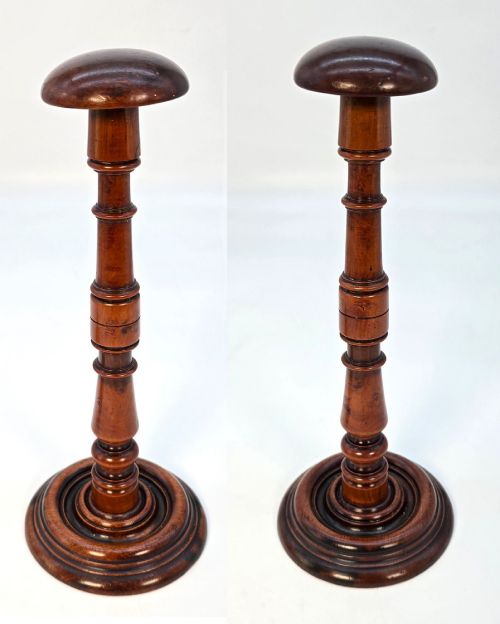
These hat block stand pieces are practical workshop forms and display items that hold hats, wigs, and millinery creations.
Hat Block Stand
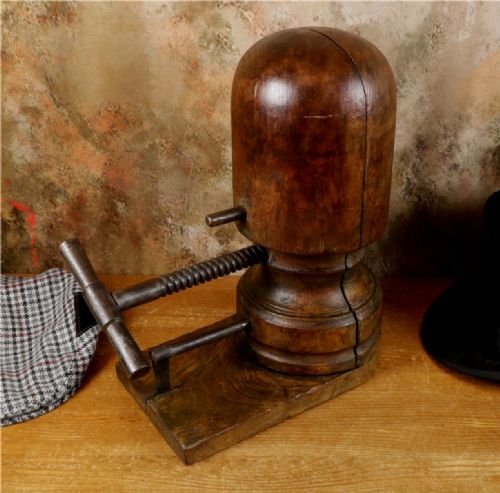
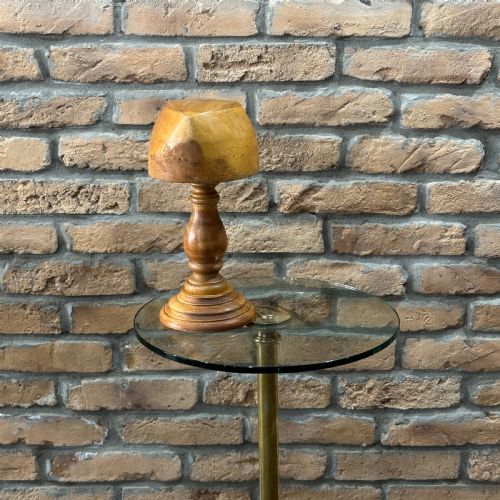
A hat block stand combines functional millinery equipment with sculptural shop display pieces. These objects include wig stands, hat stretchers, and carved folk art style milliner heads originating from domestic and commercial workshops.
The pieces appearing here span several centuries, reaching from the Georgian period through the Victorian industrial era and into the 1920s. French provincial examples appear alongside English pieces, showing how hat makers shaped millinery across different regions.
Most items combine a shaped wooden block or head form with a supporting stem and base. Buyers encounter simple wooden hat sizers alongside turned wig display stands and dedicated shop display supports.
Construction and Materials
Wood serves as the primary material for these objects, with makers selecting fruitwood, beech, oak, walnut, yew, and mahogany. Turners shaped solid timbers on lathes to create cylindrical stems and rounded display heads.
Certain pieces incorporate iron and cast iron components alongside wood to provide structural weight and stability. Artisans shaped these metals into bases and mechanical stretching mechanisms for adjustable forms.
The documented periods span the eighteenth century, the Georgian era, the nineteenth century, and the 1920s Art Deco period.
Quality Variations
Quality rests in the precision of the woodturning and the character of the carved form. Finely sculpted heads show careful attention to facial contours, whereas utilitarian blocks rely on clean functional lines.
The choice of timber creates distinct grades of work, with dense hardwoods like yew, walnut, and mahogany demonstrating greater durability than softer commercial fruitwoods and beech.
The Hat Block Stand Glossary
- Milliner
- A maker and designer of hats. These pieces originate directly from their workshops.
- Hat stretcher
- A mechanical tool used to increase the internal circumference of a hat. These wooden devices often feature internal expansion screws.
- Wig stand
- A carved wooden form or turned pedestal designed to hold perukes and artificial hair. Eighteenth-century examples frequently employ dense timbers like yew.
- Fruitwood
- Timber sourced from fruit-bearing trees such as apple or pear. French makers utilised this smooth-grained wood extensively for display forms.
- Folk art style
- An unvarnished, vernacular approach to carving. These pieces display direct hand-tool marks rather than refined factory finishing.
Hat Block Stand: Frequently Asked Questions
What is a hat block stand used for?
These pieces served as functional equipment in hat shops and millinery workrooms for shaping, sizing, and displaying headwear. Hat makers used them to form wet felt or straw over solid wooden shapes.
Today, collectors utilise them as sculptural decorative objects in domestic interiors to display vintage hats and wigs.
How do I date an antique hat block stand?
Dating relies on timber selection, tool marks, and overall turning style. Georgian and eighteenth-century examples often use yew or mahogany with hand-turned joinery.
Later Victorian and twentieth-century pieces frequently display industrial iron components or stamped beech construction typical of commercial haberdashery.
Are French hat stands different from English ones?
French examples frequently employ fruitwood with distinct provincial turning profiles associated with continental shop displays. English pieces often feature oak, beech, or mahogany reflecting domestic workshop traditions.
Both national traditions produced both utilitarian workroom blocks and finished shop display stands.
How should I display these in my home?
These objects function well as standalone sculptural pieces on plain surfaces, shelves, or tables. Their neutral wood tones complement both traditional and modern interiors.
Avoid placing them in direct sunlight or near heat sources to prevent the seasoned wood from splitting or drying out.