




Antique Millinery Tools
These antique millinery tools are the functional wooden and metal shapers used to create historical headwear, prized for their striking industrial forms.
Antique Millinery Tools
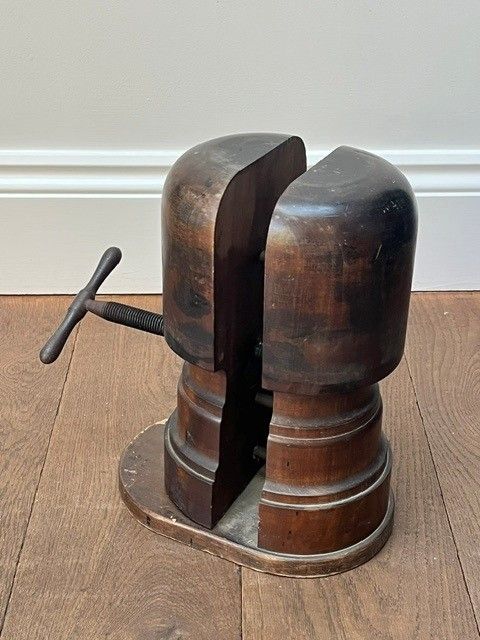
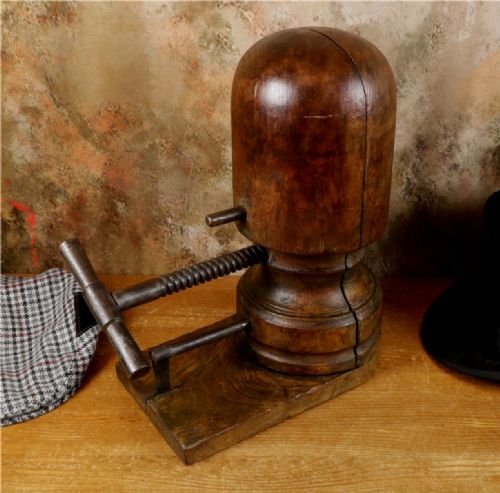
When you search for antique millinery tools, you encounter the robust equipment once used by hatters and makers to shape, size, and finish headwear. The selection on this page centres primarily on hat stretchers, blocks, moulds, and sizers spanning the Victorian era through to the nineteen thirties.
You are most likely to meet turned wooden forms and cast metal stretchers originating from French and British workshops. These pieces range from simple display stands to specialised equipment designed for military bearskin caps and domestic felt hats.
The objects reflect the utilitarian needs of traditional haberdashery and industrial workshops. Their survival offers a direct connection to the skilled labour of historical milliners.
How they were made
Makers fashioned these pieces from durable materials chosen to withstand pressure and moisture during hat production. Hardwoods such as oak, walnut, fruitwood, and unspecified turned woods provide the dense grain required for carved hat blocks and solid forms.
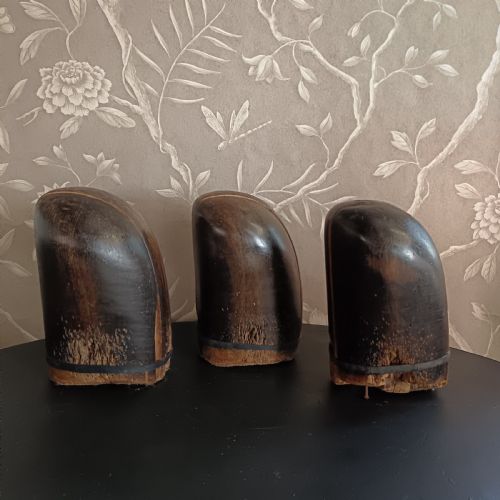
Some sturdy specimens once laboured exclusively to shape oversized military bearskin caps.
What varies in quality
The distinction between standard utility items and finer examples lies in the precision of the turning and the choice of timber. Finely grained fruitwoods and hardwoods display smoother surfaces and tighter joinery than utility workshop pieces.
Mechanical complexity also separates the ranges, seen in the intricate articulation of expanding wooden and metal stretchers compared to static solid blocks. Maker marks, such as specific regional attributions, add another layer of distinction to individual tools.
McDonald's
The Antique Millinery Tools Glossary
- Hat block
- A solid wooden form carved to the exact shape required for forming the crown of a hat. These were essential for wet-shaping felt and straw.
- Hat stretcher
- A mechanical tool with expanding segments used to increase the circumference of a finished hat. They employ wooden or metal mechanisms operated by a central screw or lever.
- Millinery mould
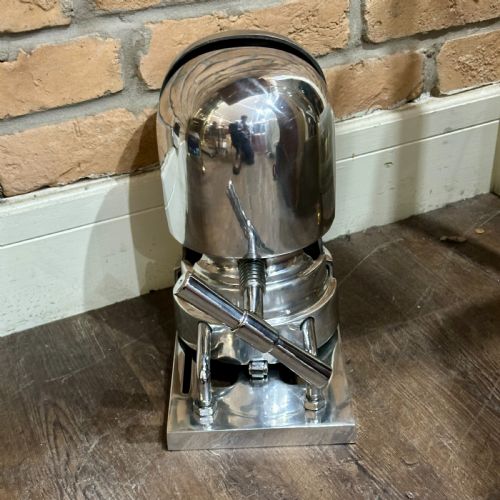
- A hollow form, often cast in aluminium, used to press or shape specific sections of headwear. They appear frequently in twentieth-century workshop contexts.
- Haberdashery
- The trade and merchandise associated with small articles of sewing and dressmaking. Millinery tools form a specialised branch of this broader category.
- Fruitwood
- Dense timber derived from fruit-bearing trees such as pear or apple. Makers favoured it for its fine, splinter-resistant grain.
Antique Millinery Tools: Frequently Asked Questions
What were hat stretchers used for?
Hat stretchers were utilised by hatters and outfitters to adjust the inner circumference of finished hats. By turning the handle, the wooden or metal segments expand outward to gently stretch the material.
This process ensured a comfortable fit for the wearer without damaging the structural integrity of the crown or sweatband.
How do I identify a hat block period?
Dating relies heavily on the materials, manufacturing marks, and stylistic profiles of the piece. Victorian examples typically feature heavy turned hardwoods and traditional joinery.
Later pieces from the nineteen twenties and thirties frequently incorporate aluminium and industrial cast components reflecting modern production methods.
Are wooden blocks suitable for display?
Wooden hat blocks and wig display stands make striking decorative objects for modern interiors. Their sculptural forms and aged patinas complement both industrial and traditional display settings.
Collectors often group multiple blocks together to showcase the variety of historical headwear shapes.
What is the difference between a block and a mould?
A hat block is generally a solid, three-dimensional form representing the entire crown or head shape over which material is pulled. A mould is often a segmented or hollow tool designed for pressing specific parts.
Both served distinct stages in the traditional hat-making process.