


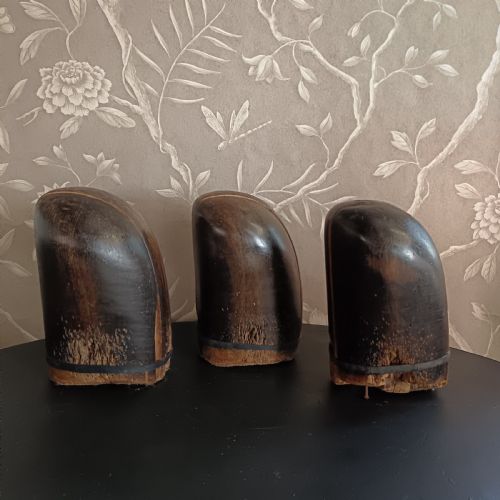


Industrial Millinery Mould
These industrial millinery mould pieces are practical workshop survivors that bring sculptural, utilitarian form straight into a modern interior.
Industrial Millinery Mould
Most examples you meet on this page date from the early twentieth century, spanning from the nineteen hundreds through the nineteen twenties. They appear in industrial, Victorian industrial, and industrial modern styles.
These items served a purely functional trade purpose in hat-making workshops before finding a second life as decorative objects in homes and studios. Their sculptural presence makes them striking focal points on shelves or tables.
Materials and construction
Makers shaped these pieces from robust materials designed to withstand heavy daily use in hat production. The evidence shows items constructed from aluminium, cast aluminium, cast metal, iron, and carved hardwood.
Surfaces often retain traces of original paint, showing the wear and tear of active workshop life. The combination of cast metals and carved timber gives each piece a distinct textural weight and industrial integrity.
Some aluminium moulds still bear stamped numbers, ready to whisper secrets from a bustling hat factory floor.
What separates the best from the rest
Quality in these workshop pieces lies in the crispness of the casting and the integrity of the carved timber forms. Superior examples retain clear numbering, smooth metallic finishes, or undisturbed original paint surfaces that tell the story of their trade use.
Pieces showing heavy distortion from intense workshop heat or clumsy modern alterations sit lower down the scale. A strong silhouette and honest, uncleaned patination elevate a simple shaping tool into a compelling decorative object.
The Industrial Millinery Mould Glossary
- Hat block
- A solid form used by milliners to shape and size hats during manufacture. These were carved or cast to exact anatomical proportions.
- Millinery mould
- A tooling device utilised for pressing or moulding hat materials into specific contours. They often come numbered to indicate size or matching sets.
- Hat stretcher
- A mechanical workshop tool designed to expand hats to the correct fit. They feature adjustable mechanisms built from robust metals and wood.
- Cast aluminium
- A lightweight yet durable metal poured into moulds to create precise industrial shapes. It appears frequently in twentieth-century millinery equipment.
Industrial Millinery Mould: Frequently Asked Questions
What are industrial millinery moulds?
These are durable workshop tools originally utilised by hat makers to shape and form headwear. They were produced in various metals and timber to withstand heavy production demands.
Today, they are collected and displayed as striking industrial sculptures in modern interiors.
How were these moulds used?
Hatters stretched, pressed, and pinned damp felt or straw materials over these solid forms to dry them into precise shapes. Specialised versions were even built for specific military headwear like bearskin caps.
The process required sturdy materials that could endure constant pressure and moisture.
How do I date an industrial mould?
Dating relies on the materials used, manufacturing techniques, and stylistic traits associated with the early twentieth century. The evidence here spans from nineteen hundred to nineteen twenty.
Examining the type of metal casting or the style of carved hardwood helps place a piece within this timeline.
How do I display them at home?
Their sculptural forms mean they require very little styling to make an impact on a shelf, mantel, or side table. Grouping multiple numbered aluminium blocks together creates an impressive display of industrial repetition.
Allow the honest patination and original paint traces to take centre stage in your room.