



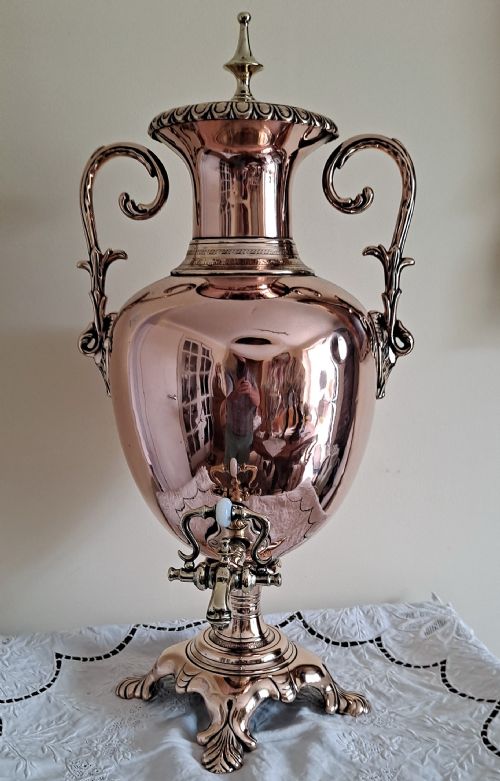


Vintage Metal Tea Urn
A vintage metal tea urn brings warmth and historic gravity to a room, serving as both a functional centrepiece and a striking decorative vessel.
Vintage Metal Tea Urn
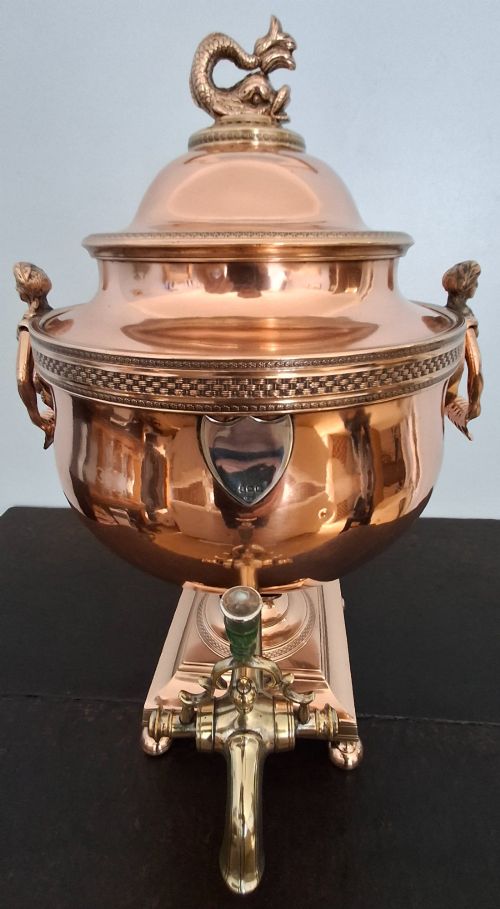
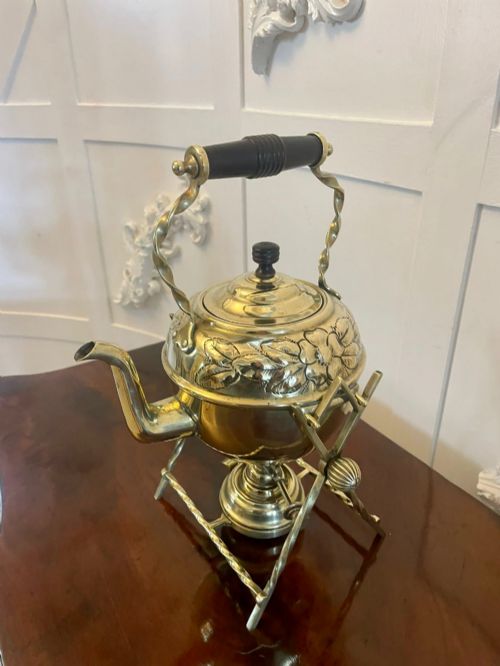
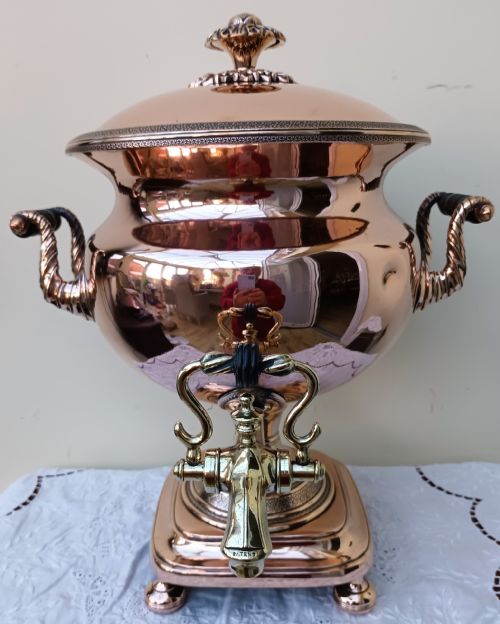
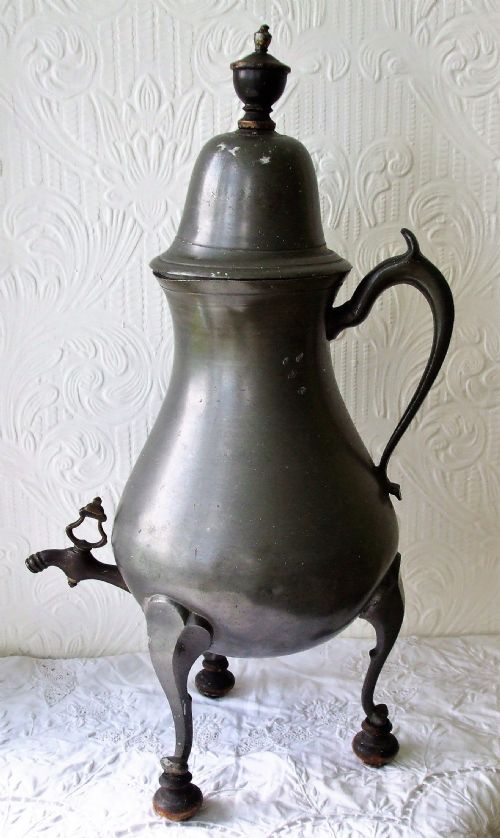
A vintage metal tea urn encompasses large samovars, table kettles on stands, and coffee urns spanning the Georgian, Regency, Victorian, and Edwardian periods. These vessels were designed for heating and dispensing hot water in domestic settings, often taking prominent places in the dining room or drawing room during large gatherings.
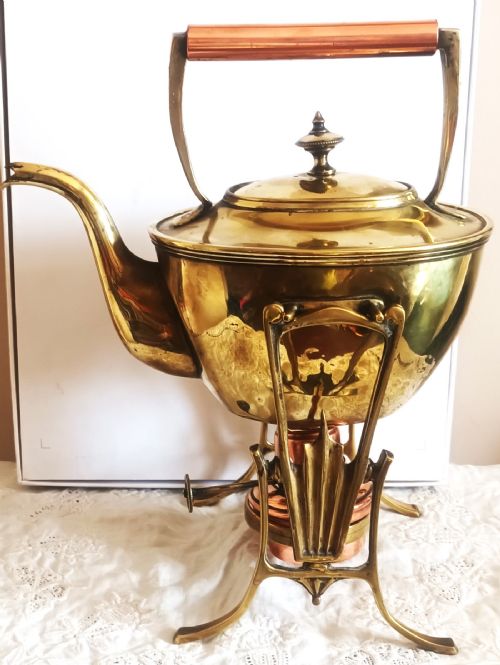
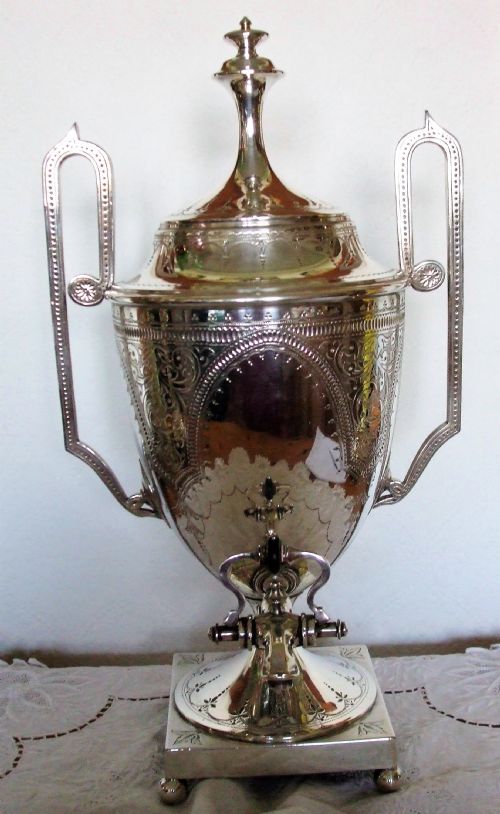
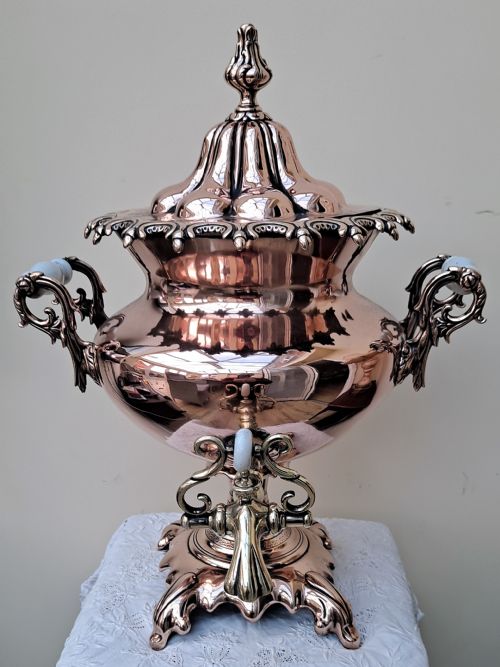
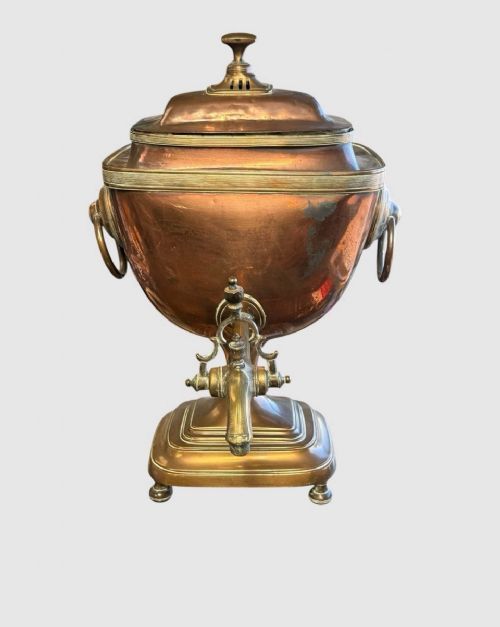
The pieces appearing here are predominantly constructed from copper and brass, frequently incorporating silver plating, bronze, or wrought iron details. Forms range from classical Georgian urns with architectural proportions to ornate Victorian samovars and simpler Arts and Crafts hanging kettles.
Buyers seeking a vintage metal tea urn will find examples dating from the late eighteenth century through to the early twentieth century. The selection leans heavily towards nineteenth-century Victorian and earlier George III pieces, reflecting the traditional domestic centrality of tea preparation.
Assessing quality
Quality rests heavily on the weight of the metal, the crispness of the cast mounts, and the integrity of the original construction. Superior examples display substantial gauge metal that resists flexing, alongside well-proportioned handles and finely cast spigots that integrate harmoniously with the body.
The presence of complete original stands, burners, and matching lids elevates a piece significantly. Finer specimens show deliberate attention to decorative detail, such as engraved heraldic motifs, elegant gadrooning, or balanced classical forms true to their period.
Vintage Metal Tea Urn Retail Price Guide 2026
Typical asking prices for vintage metal tea urn among the pieces listed under this phrase on Sellingantiques today, from the lower quarter to the upper quarter. They describe what is for sale here now, not the wider market.
Listings feature pieces spanning the 18th century, 19th century, and early 20th century, including George III, Regency, Victorian, and Edwardian periods.
William Soutter & Sons·Walker & Hall
The Vintage Metal Tea Urn Glossary
- Spirit Kettle
- A kettle mounted on a dedicated metal stand above a small spirit burner. This arrangement kept water hot at the table during extended tea services.
- Silver Plate
- A thin layer of silver fused or electroplated onto a base metal such as copper or brass. This technique offered the appearance of solid silver at a lower production cost.
- Gadrooning
- A decorative carved or chased ornamental band of radiating curves or flutes found along the edges of metal vessels. It reflects neoclassical and Georgian design influences.
- Ebonised Wood
- Timber treated with a dark stain or finish to imitate ebony. It appears frequently on the handles and finials of metal urns for contrast and heat insulation.
Vintage Metal Tea Urn: Frequently Asked Questions
How were samovars used originally?
Samovars served as the central water-heating station during formal tea service, allowing hosts to keep water hot throughout a meal or gathering. Water was drawn directly from the spigot into teapots as needed.
In domestic life, they represented hospitality and social status, often remaining on the sideboard or tea table during visits.
Can these urns still heat water?
Most antique urns are treated today as decorative objects or historic artefacts rather than working appliances. Internal tin linings may have degraded, and original burners require careful handling.
Buyers intending to use them functionally should have the internal surfaces and joints professionally inspected and tested for leaks and safety.
How do I identify the period of an urn?
Period identification relies on form, decorative motifs, and manufacturing techniques visible on the piece. Georgian and Regency urns often display classical urn shapes and restrained neoclassical detailing.
Victorian examples tend toward heavier ornamentation, while Arts and Crafts pieces favour simpler hand-beaten copper textures and exposed structural rivets.