


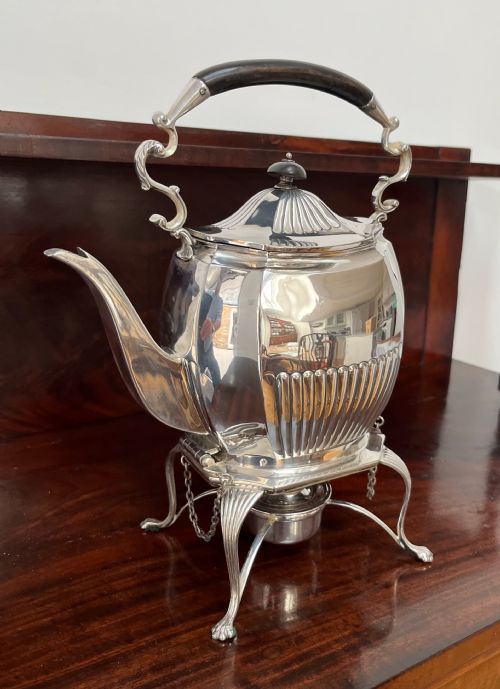


Antique Tea Kettle Urn
When you handle an antique tea kettle urn, you hold the social centre of the Georgian and Victorian parlour.
Antique Tea Kettle Urn
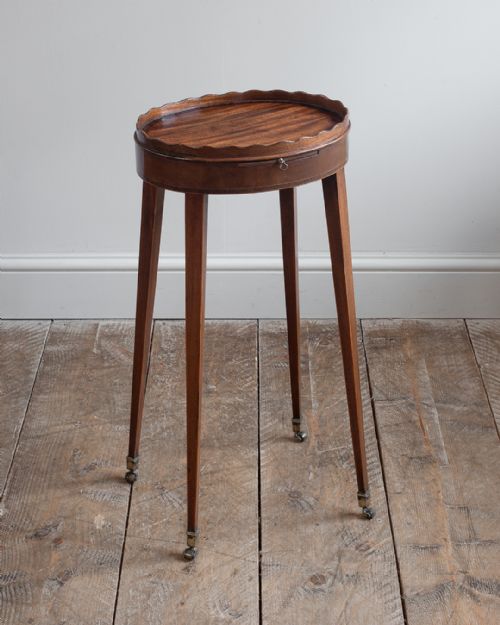
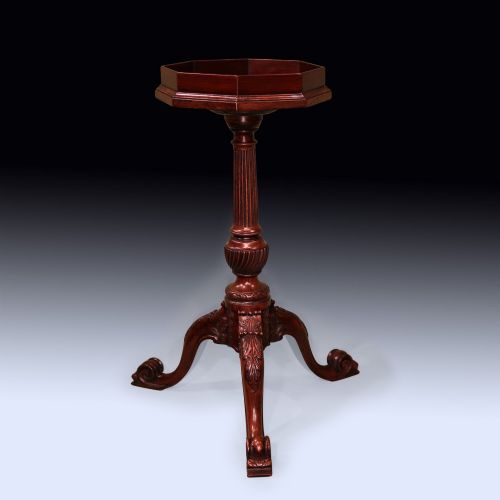
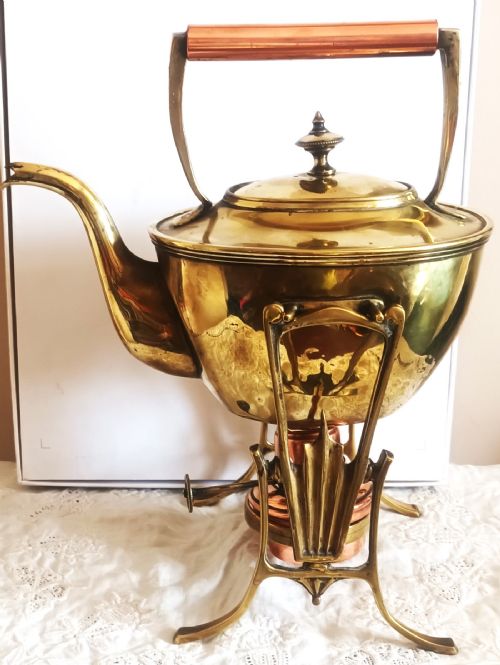
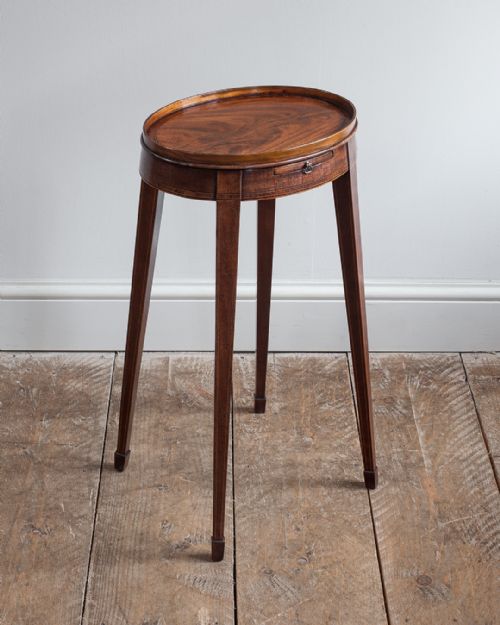
An antique tea kettle urn encompasses vessels and stands designed for the preparation and service of hot water, spanning spirit kettles, samovars and dedicated tables. The selection ranges from copper and brass heating vessels equipped with burners to mahogany support stands from the eighteenth century.
The objects derive from Georgian, Victorian and Edwardian domestic interiors where tea hospitality required specialised metal containers and polished wood furniture. Spirit kettles on stands and large copper samovars with taps appear frequently alongside Chinese Chippendale and Sheraton stands.
The form developed across the eighteenth and nineteenth centuries to meet the demands of formal entertaining, evolving from timber kettle stands to metal water urns. Surviving examples demonstrate the shift from George III mahogany tables to late Victorian copper and silver-plated heating vessels.
Materials and construction
The metal heating vessels rely primarily on copper, brass and silver plate, often combined with bronze mounts, wooden handles and bone or ebony insulators. Makers shaped sheet copper and brass into heavy-gauge samovars and spirit kettles, incorporating working taps and internal heating chambers.
The support furniture utilises solid timbers including mahogany, satinwood and occasional inlaid woods, constructed with carved cabriole legs, square tops and galleried edges. Joinery and carving reflect Georgian and Sheraton design traditions, employing polished wood surfaces alongside applied brass and bronze components.
Keep a spirit burner handy for tea service, provided you do not mind guests watching the tiny flame flicker beneath the copper.
Standards of execution
The distinction between standard domestic items and superior examples lies in the weight of the metal, the crispness of the timber carving and the completeness of the original stands and burners. Finely cast brass taps, heavy-gauge copper bodies and detailed mahogany carving signal superior workshop production.
Design sophistication separates basic utility vessels from pieces influenced by specific stylistic movements such as Chippendale, Arts and Crafts or the Aesthetic Movement. The integration of matched stands, spirit burners and decorative secondary woods like satinwood or ebony elevates the standing of an individual piece.
William Soutter & Sons·Walker & Hall
The Antique Tea Kettle Urn Glossary
- Spirit kettle
- A metal kettle mounted upon a dedicated metal stand above a small spirit burner for maintaining water temperature at the table.
- Samovar
- A large heated metal container used to boil and heat water for tea, traditionally fitted with a spigot tap near the base.
- Kettle stand
- A small occasional table, frequently mahogany or satinwood, designed specifically to support a tea kettle or urn during service.
- George III
- The design period spanning the reign of George III from seventeen sixty to eighteen twenty, noted for classical proportions and mahogany furniture.
- Silver plate
- A manufacturing technique applying a thin layer of silver over a base metal such as copper or brass to simulate solid silver.
Antique Tea Kettle Urn: Frequently Asked Questions
What is an antique tea kettle urn?
An antique tea kettle urn is a metal heating vessel or wooden stand designed for boiling water and serving tea in period interiors. These objects include copper samovars with taps and spirit kettles on metal stands.
They reflect the formal hospitality of Georgian and Victorian households, serving both a functional role in water preparation and a decorative purpose within the parlour.
How did people use spirit kettles?
Spirit kettles were placed on dedicated metal stands above small spirit burners to keep water hot throughout a tea service. They allowed hosts to maintain water temperature without returning to the kitchen.
The inclusion of a burner and stand made these vessels portable elements of the tea table during the Victorian and Edwardian eras.
How do I distinguish a samovar from a kettle?
A samovar is typically a larger, upright metal urn fitted with a spigot tap near the base for dispensing water directly into cups or teapots. They are usually constructed from heavy copper or brass.
In contrast, a spirit kettle is a smaller vessel mounted on a pivot or a separate stand that tilts or lifts to pour water, often accompanied by a distinct burner.