
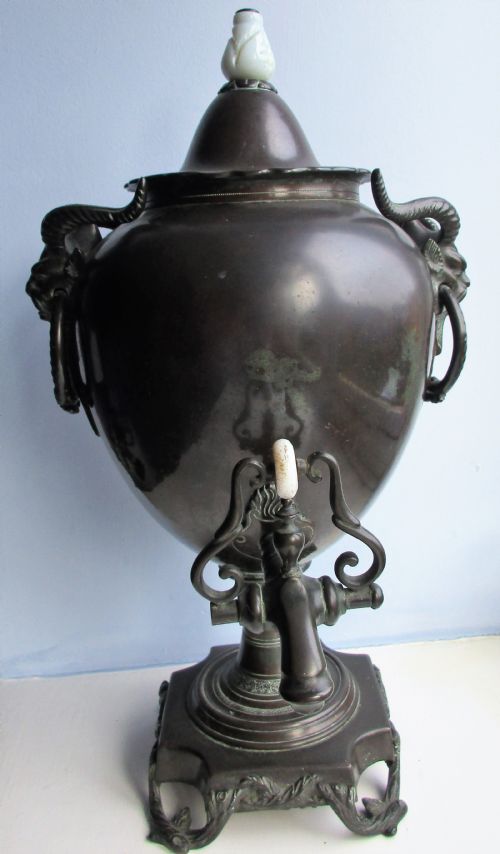


Brass Hot Water Urn
A brass hot water urn provides the table with steaming water for tea, combining robust utility with handsome metalwork.
Brass Hot Water Urn
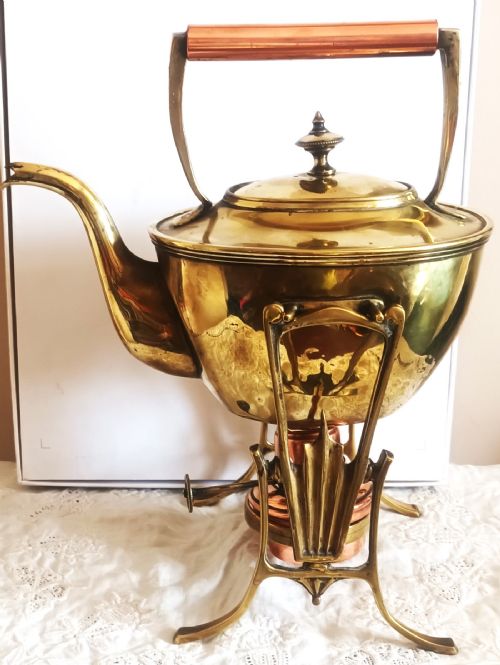
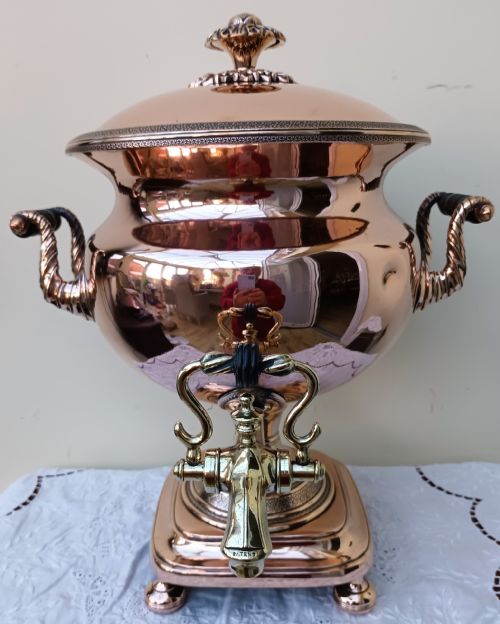
A brass hot water urn functions as a central vessel for dispensing heated water during tea service, originating primarily across the Georgian, Regency and Victorian periods. Buyers seeking these items encounter variations that include samovars, spirit kettles on stands and traditional tea urns.
The objects span the nineteenth century, with Victorian examples appearing most frequently alongside earlier Georgian and Regency designs. Makers constructed these pieces using combinations of brass, copper and patinated metal to serve both domestic hospitality and decorative display.
Materials and Construction
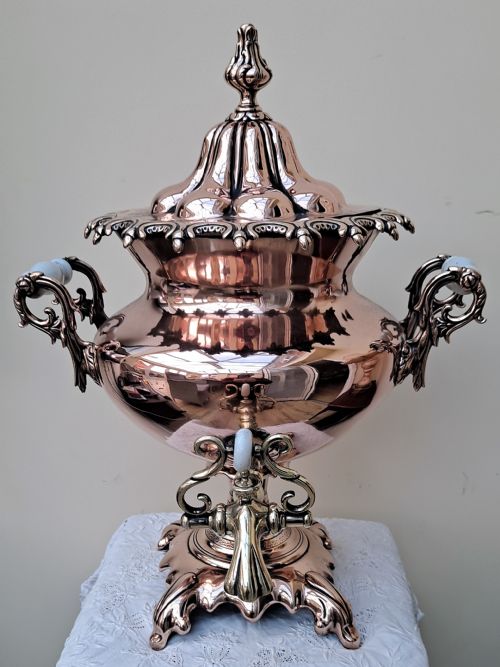
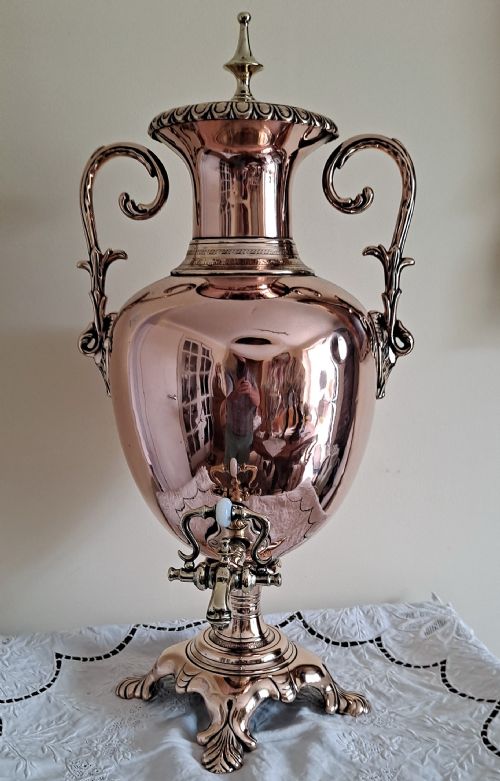
Craftsmen shaped sheet copper and brass into bulbous or pedestal bodies, often incorporating cast brass handles, spigots and original fittings. Many examples integrate contrasting details such as turned wood, bone or ebonised wood handles to manage heat transfer during use.
Makers applied patinated metal and bronzed copper finishes to achieve deep surface tones on specific models. Interior components typically utilised secure riveting and soldered joints to withstand boiling water over decades of domestic service.
Markers of Quality
Superior examples display crisp casting work on handles and tap spigots, alongside harmonious proportions between the vessel body and its supporting stand or base. The presence of original fittings, including internal heating cylinders and matching taps, elevates the integrity of a piece.
Makers demonstrated finer skill through heavy-gauge metal construction and refined surface finishing rather than plain utility. Pieces bearing documented maker marks or attributed to known firms generally reflect higher standards of period craftsmanship.
William Soutter And Sons·Benetfink And Co
The Brass Hot Water Urn Glossary
- Samovar
- A heated metal container traditionally used to boil and heat water in Russia and Britain. These vessels often feature an internal vertical tube containing burning charcoal or a heated metal cylinder.
- Spirit Kettle
- A small kettle mounted on a metal stand with an integrated spirit burner underneath. This setup kept water hot directly at the tea table.
- Bell Metal
- An alloy of copper and tin traditionally used for casting bells and durable vessel fittings. It yields a resonant tone and strong corrosion resistance.
- Pontypool Ware
- Japanned metalware produced in Wales from the eighteenth century onwards. It involves applying layered varnishes to metal surfaces to create a smooth, glossy finish.
- Ebonised Wood
- Timber treated to resemble expensive ebony through staining and polishing. Makers utilised this material for contrasting handles and knobs on metal vessels.
Brass Hot Water Urn: Frequently Asked Questions
What is a brass hot water urn?
A brass hot water urn is a historic metal vessel designed to hold and dispense boiling water for tea service. These pieces typically feature a spigot near the base and carrying handles on the sides.
Many incorporate internal heating elements or stands with spirit burners to maintain water temperature during gatherings.
How were samovars used historically?
Historical households used samovars to supply continuous hot water for large gatherings and formal tea ceremonies. Servants heated the water using internal cylinders or external burners before bringing the vessel to the parlour.
Guests or hosts operated the front tap to fill individual teapots as needed throughout the meal.
How do I distinguish Georgian from Victorian urns?
Georgian and Regency urns frequently display neoclassical urn shapes, pedestal bases and refined proportions typical of late eighteenth and early nineteenth-century design. These pieces often emphasise clean architectural lines and classical ornamentation.
Victorian examples tend toward heavier ornamentation, incorporating varied metal tones, Arts and Crafts influences or elaborate cast handles.
How do I care for antique brass and copper?
Maintain antique metal surfaces by dusting regularly with a soft, dry cloth to prevent accumulation. Avoid harsh chemical cleaners that strip historical patination and age.
Keep the vessels in stable indoor environments away from excessive moisture to preserve the underlying metal and wooden components.