

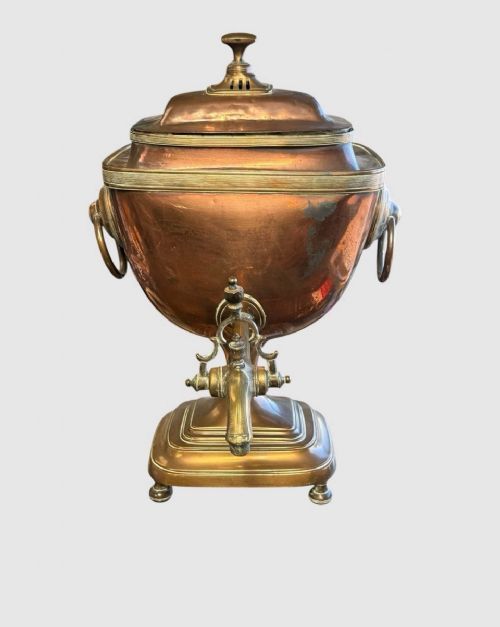
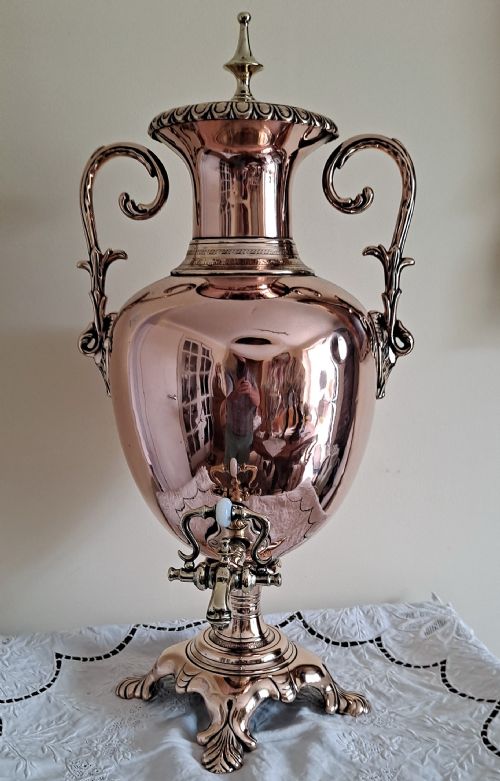


Victorian Copper Hot Water Urn
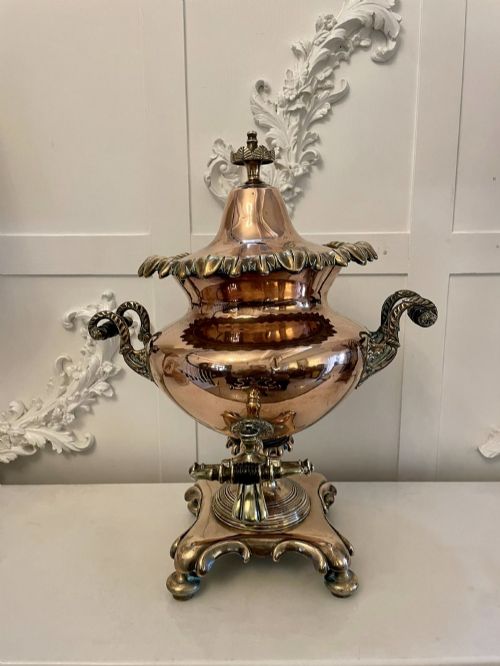
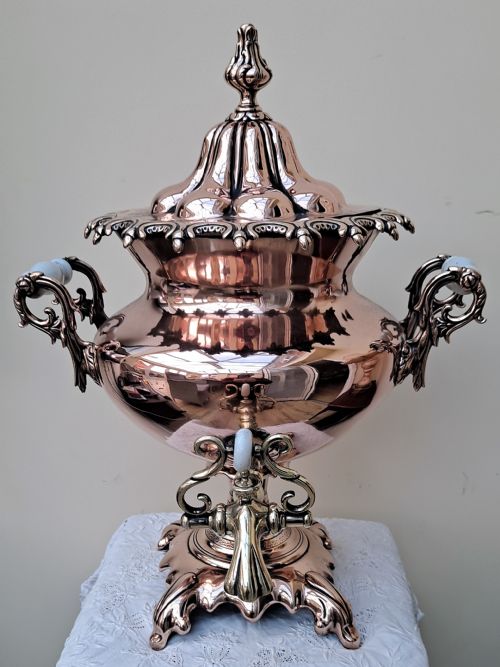
A victorian copper hot water urn brings weight and warmth to a sideboard, holding boiling water for tea through heavy brass taps and handles.
Victorian Copper Hot Water Urn
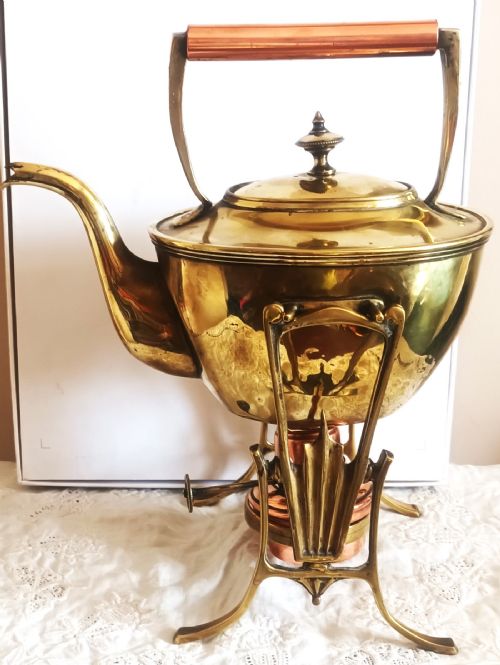
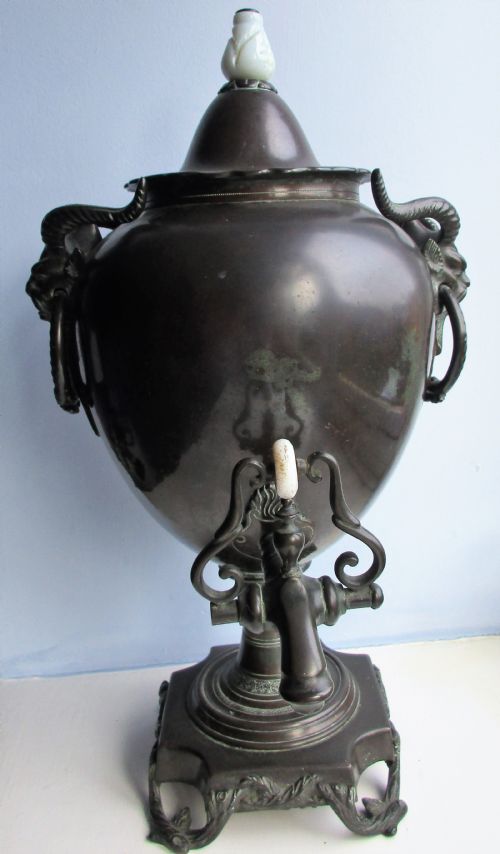
A victorian copper hot water urn is a substantial vessel designed to supply boiling water for tea, appearing frequently as samovars or spirit kettles on stands across nineteenth-century dining rooms. These pieces combine deep metal bodies with contrasting brass fittings, and occasional examples display japanned finishes known as Pontypool ware.
Most items on this page belong securely to the nineteenth century, with specific dates spanning from eighteen fifty to eighteen eighty alongside broader Victorian and Georgian attributions. Forms range from dedicated tea urns and samovars to spirit kettles with stands, all reflecting domestic hospitality during the period.
Materials and construction
These vessels rely on sheet copper formed into substantial bodies, paired with cast brass taps, handles, and feet that provide structural contrast and durability. Artisans incorporated secondary materials such as bone, wood, ceramic, and ebonised wood for insulation on handles and spouts, preventing burns during use.
Specialised techniques include japanning on metal surfaces, creating glossy dark finishes seen in Pontypool ware examples. Metal components are joined with clean soldering and riveting, ensuring the vessels held boiling water securely over spirit burners or internal heating chambers.
Victorian Copper Hot Water Urn Retail Price Guide 2026
Typical asking prices for victorian copper hot water urn among the pieces listed under this phrase on Sellingantiques today, from the lower quarter to the upper quarter. They describe what is for sale here now, not the wider market.
Judging quality in these vessels
Quality rests in the heaviness of the metal gauge and the crispness of cast brass mounts like spigots and handles. Superior pieces show careful attention to internal heaters, spirit stands, and insulating details in bone or wood.
Makers' marks or specific attributions to known London firms elevate certain examples above unmarked utility pieces. The integration of decorative finishes, such as japanned Pontypool surfaces, also separates standard copper bodies from more ambitious workshop productions.
William Soutter & Sons·Benetfink & Co
The Victorian Copper Hot Water Urn Glossary
- Samovar
- A heated metal container traditionally used to boil and heat water in Russian and British households. These large urns often feature an internal vertical metal tube for charcoal or a solid heater.
- Pontypool ware
- Japanned metalware produced in Wales, known for its durable and glossy dark lacquer finish. This technique created smooth decorative surfaces on tea urns.
- Spirit kettle
- A portable kettle mounted on a metal stand above a small spirit burner. These pieces allowed hot water to be maintained at the table.
- Japanned metal
- Metal finished with a heavy, glossy black or dark resinous lacquer mimicking Asian varnish work. It protects the underlying metal while offering a refined appearance.
Victorian Copper Hot Water Urn: Frequently Asked Questions
What is the difference between a samovar and a tea urn?
A samovar typically incorporates an internal vertical heating tube or cylinder, allowing solid fuel or charcoal to keep the water boiling continuously. Tea urns generally rely on external heat sources or simply store pre-boiled water hot for service.
Both forms served the same domestic function in nineteenth-century drawing rooms, providing a central station for pouring hot water into individual teapots.
How do I clean antique copper?
Light dusting and occasional gentle wiping with a soft, dry cloth preserve the natural aged patina that collectors value. Avoid harsh modern chemical dips or abrasive scouring pads that strip the historical surface.
If polishing is necessary, use a mild, traditional metal polish specifically formulated for copper and brass, applying it sparingly away from any japanned or ebonised parts.
How do I date these pieces?
Dating relies on stylistic clues, construction methods, and any stamped maker marks or retailer stamps found on the brass taps or bases. Pieces marked with specific nineteenth-century decades reflect the manufacturing styles of firms active during those years.
General Victorian design shifts from heavier Georgian-influenced proportions toward more ornate mid-century forms, helping narrow down the period of manufacture.