

Vintage Metal Stick Stand
A vintage metal stick stand brings practical elegance to a hallway, keeping umbrellas and walking canes contained with genuine period character.
Vintage Metal Stick Stand
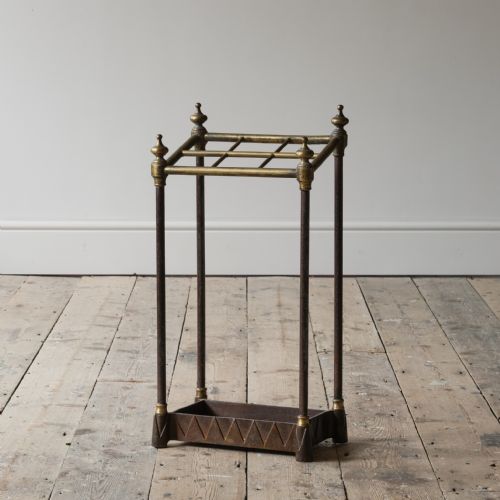
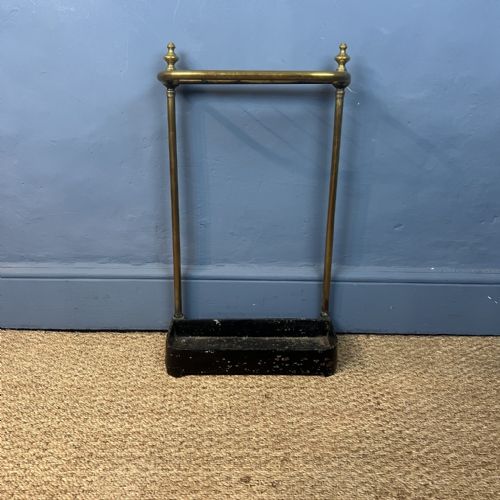
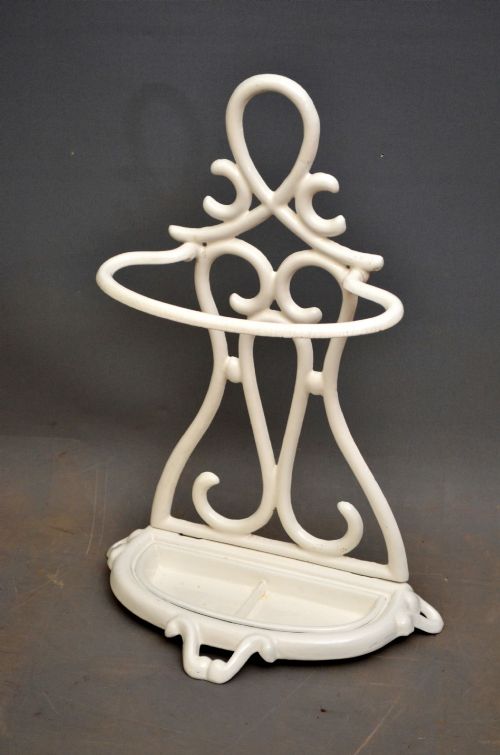
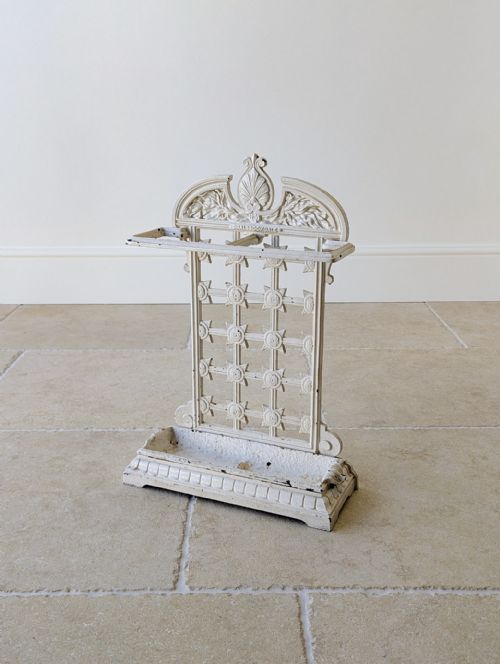
When you search for a vintage metal stick stand, you encounter heavy functional hall furniture designed to manage wet weather gear in nineteenth and early twentieth century homes. These pieces range from robust Victorian cast iron frames to sleek Art Deco nickel-plated designs.
The domestic hall required hard-wearing items that resisted moisture from umbrellas and walking sticks. Consequently, makers utilised durable metals combined with built-in drip trays to protect wooden floors.
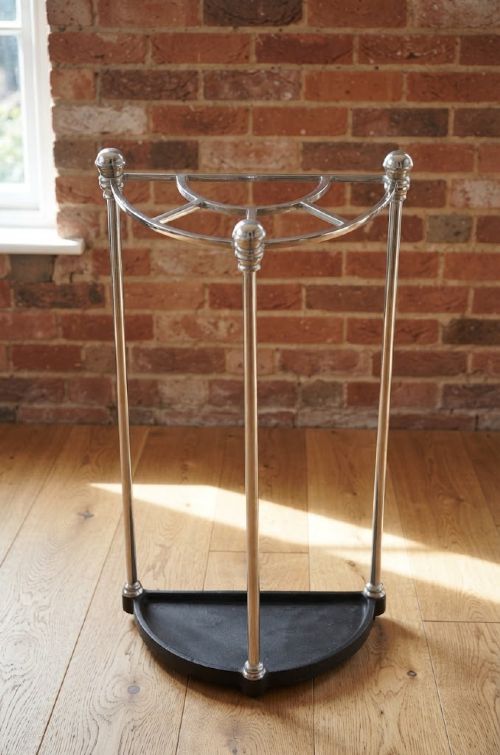
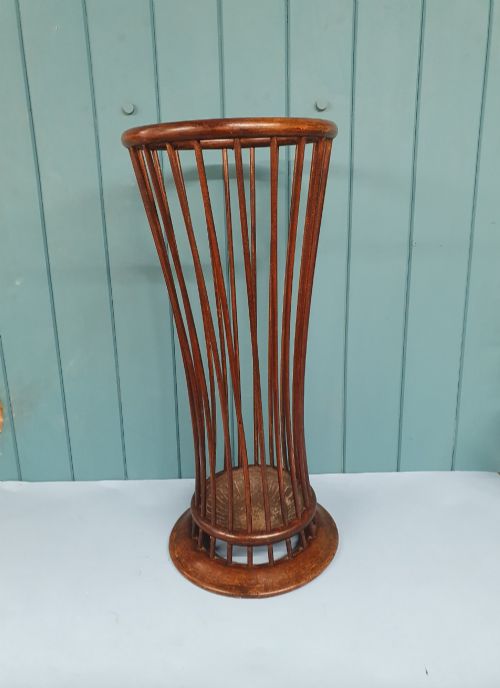
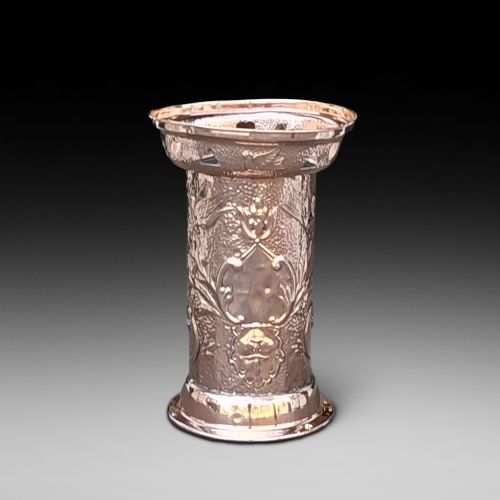
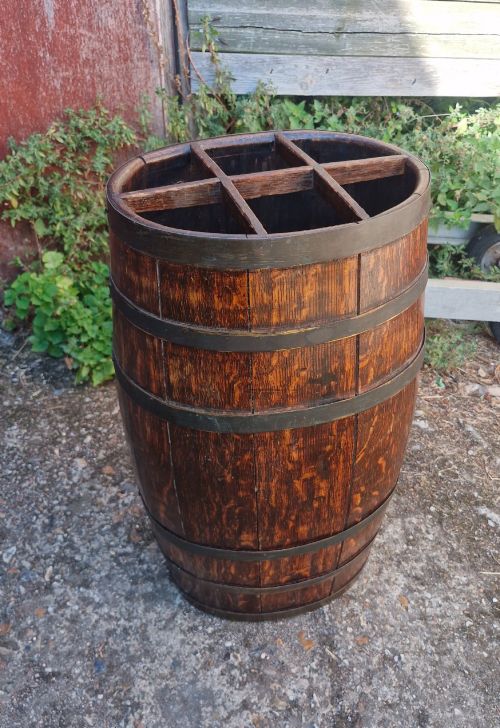
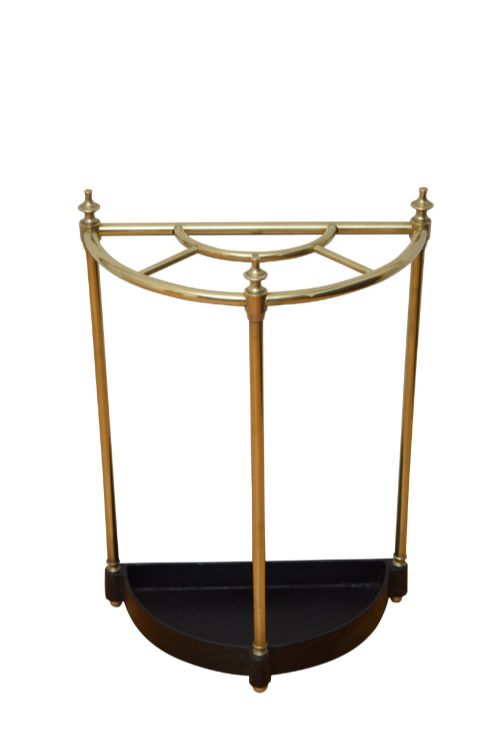
Demi-lune and cylindrical profiles dominate the selection, fitting flush against hallway walls or standing independently in vestibules. Each configuration reflects the architectural proportions of its period, from ornate Victorian castings to geometric 1930s forms.
Materials and construction methods
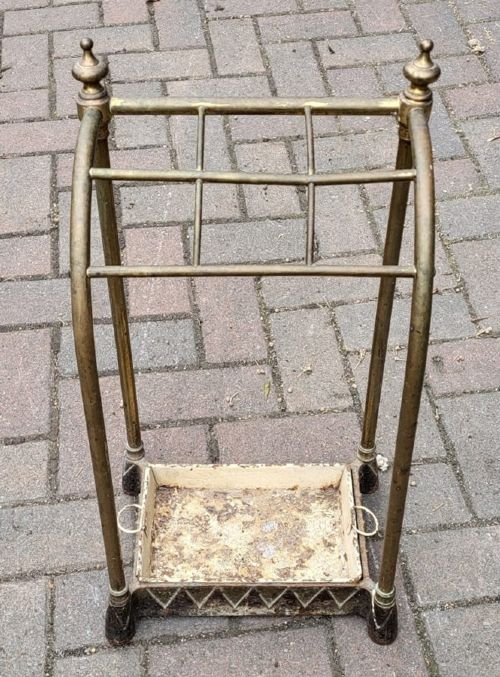
Cast iron and brass form the structural backbone of these hall accessories, often shaped through sand casting to achieve intricate decorative motifs or clean architectural lines. Copper and nickel plating appear frequently to provide corrosion resistance and a polished finish.
Foundries utilised sheet metal for cylindrical bodies alongside heavy cast bases to ensure stability when loaded with damp umbrellas. Enamel finishes and applied patination provided both colour and protection against oxidation.
Current listings feature items spanning the Victorian era through the 1930s, constructed primarily from cast iron, brass, and copper.
Assessing quality and craftsmanship
Quality rests in the crispness of the casting detail and the structural integrity of the frame. Finer examples display sharp relief work on cast iron panels without the blurring common in later reproductions.
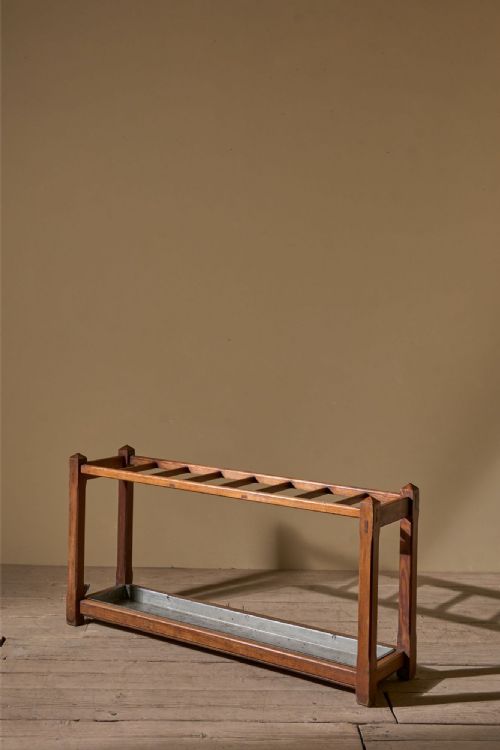
The presence of original components, particularly the zinc or tin drip tray situated at the base, distinguishes a well-preserved piece from one that has lost its utilitarian core. Heavier gauge metals and robust rivet construction signify superior workshop output.
Coalbrookdale
The Vintage Metal Stick Stand Glossary
- Demi-lune
- A half-moon shape designed to stand flat against a wall. This profile maximises floor space in narrow hallways.
- Drip tray
- A removable metal basin positioned at the base of the stand. It catches rainwater running off wet umbrellas to protect flooring.
- Cast iron
- An iron-carbon alloy poured into moulds to create rigid forms. It provides the heavy weight necessary to prevent tipping.
- Nickel-plated
- A thin coating of nickel applied over base metals to prevent tarnishing. This finish imparts a bright, silver-like sheen popular in twentieth-century design.
Vintage Metal Stick Stand: Frequently Asked Questions
Where should I place a metal stick stand?
Position the stand in an entrance hall or porch where damp umbrellas and walking sticks accumulate upon entry. Its slim profile allows it to sit neatly against a wall without obstructing passageways.
Ensure there is sufficient clearance above the stand for longer walking canes and golf umbrellas to be lifted in and out easily.
How do I maintain the metal finish?
Dust the surface regularly with a dry cloth and avoid harsh chemical cleaners that strip historical patination. Brass and copper benefit from occasional gentle polishing if a bright finish is desired.
Keep the internal drip tray clean and dry to prevent rust accumulation from trapped rainwater.
How do I distinguish Victorian from Art Deco stands?
Victorian examples tend to feature heavy cast iron with ornate floral motifs, scrolling foliage, and dark painted surfaces. They prioritize robust utility and elaborate decoration.
Art Deco pieces, produced around the 1930s, favour geometric lines, smooth nickel plating, and demi-lune configurations that reflect modernist industrial aesthetics.
Are original drip trays important?
The original metal drip tray preserves the structural integrity and historical completeness of the piece. Finding a stand with its matching tray is preferable for collectors.
Replacements function adequately for daily use, but original trays confirm the piece remains unaltered.