



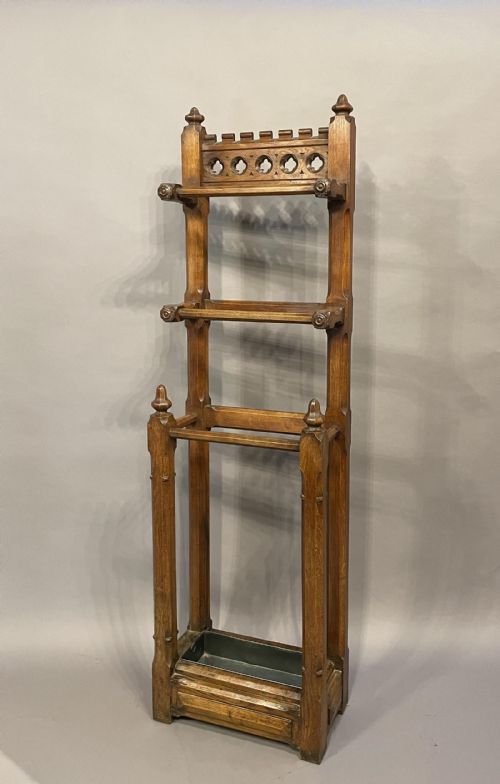


Gothic Umbrella Rack
A gothic umbrella rack brings the imposing vertical lines and historic ornament of nineteenth-century architecture straight into the hallway.
Gothic Umbrella Rack
A gothic umbrella rack serves to keep hallway floors clear of wet weather gear while establishing a distinct period architectural aesthetic. These hallway furnishings emerge predominantly across the Victorian era, spanning various decades of the nineteenth century from eighteen sixty through to nineteen hundred.
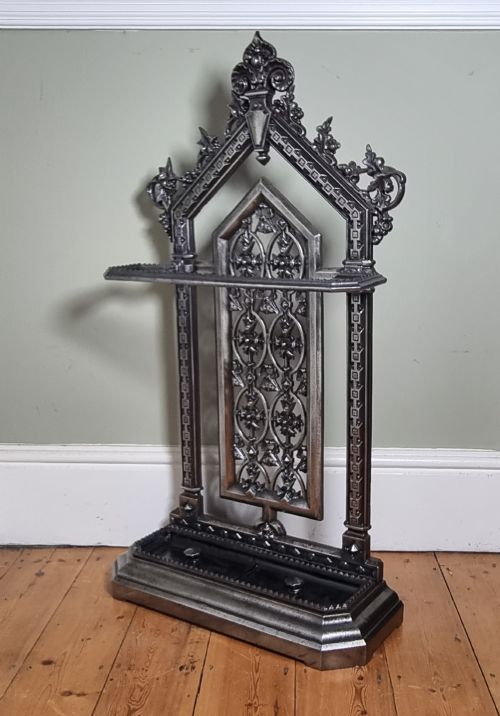
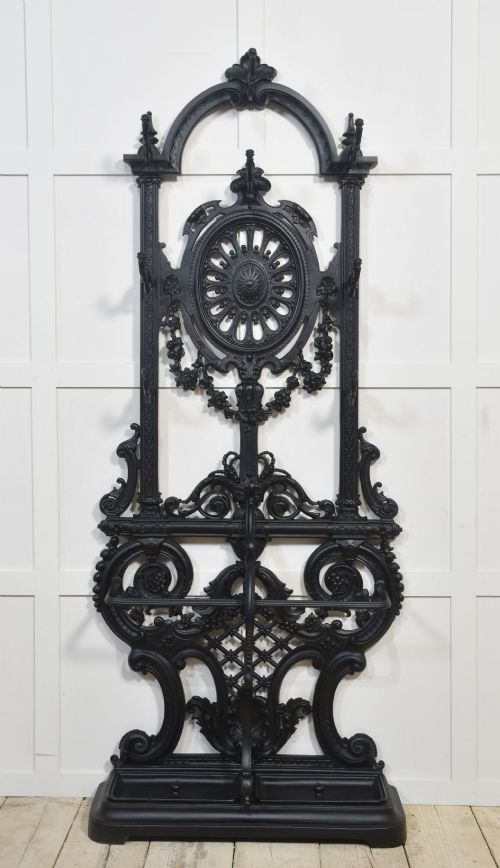
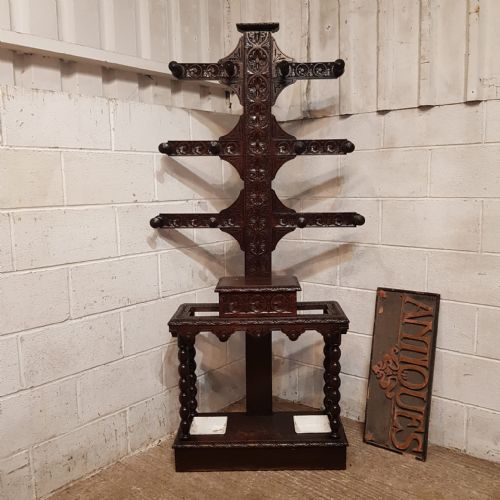
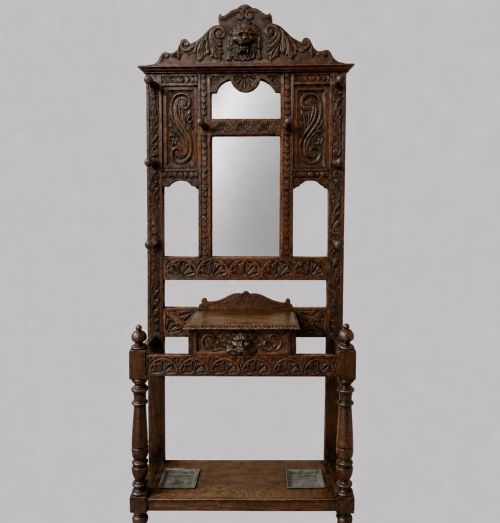
Buyers seeking a gothic umbrella rack will encounter two main material branches on this page. One path leads to heavy cast iron metal structures, often pierced with intricate gothic tracery or ring configurations, whilst the other leads to substantial carved oak timber hall stands integrating mirrors and umbrella wells.
Design and Execution
Quality separates standard utilitarian hall furniture from superior examples through the crispness of the casting or the depth of the timber carving. Finer cast iron pieces display sharp, clean tracery without distortion, while better oak examples exhibit confident, detailed hand-carving rather than shallow, mechanical shaping.
The architectural ambition of the design dictates distinction within this category. Pieces demonstrating substantial scale, pairs, or named foundry attributions stand apart from smaller, plain utility stands through presence and complexity of form.
One exceptional wooden hall stand is formed entirely from three crossed halberds and pikes.
Coalbrookdale·Falkirk Foundry
The Gothic Umbrella Rack Glossary
- Gothic Revival
- An architectural and decorative style drawing inspiration from medieval forms, pointed arches, and heavy structural ornament. This aesthetic dominates the nineteenth-century pieces found within this category.
- Hall Stand
- A multifaceted hallway furnishing combining a stick and umbrella rack with coat hooks, a central mirror, and a drip tray. These large wooden pieces anchor entrance halls.
- Cast Iron
- An iron-carbon alloy poured into moulds to create rigid, highly detailed decorative frames. It serves as the primary material for heavy nineteenth-century umbrella stands.
- Greenman
- A sculptural architectural motif depicting a human face disgorging foliage, commonly found carved into Victorian oak hall stands. This pagan symbol experienced a major revival during the nineteenth century.
- Drip Tray
- A shallow metal or zinc basin positioned beneath umbrella rings to catch runoff moisture from wet sticks. It protects surrounding flooring from water damage.
Gothic Umbrella Rack: Frequently Asked Questions
What materials are these umbrella racks made from?
The listings predominantly feature heavy cast iron or carved oak timber. Metal versions often incorporate zinc trays and brass elements.
Wooden variants typically utilise solid oak construction, frequently integrating mirrors and brass or iron coat hooks into the overall hall stand design.
How do I date a Victorian hall stand?
Dating relies on stylistic clues, registered design marks, or foundry stamps cast directly into the ironwork. Many pieces carry specific dates from the eighteen sixties onwards.
Oak examples often exhibit carving styles typical of the late nineteenth century, particularly the aesthetic movement and gothic revival trends popular around eighteen eighty.
Where should I place a heavy cast iron stand?
These robust metal racks suit entrance halls and boot rooms where their weight provides stability for long walking sticks and heavy umbrellas. Their weather-resistant metal construction handles damp items securely.
Ensure the floor surface, such as flagstones or hardwood, can support the substantial weight of cast iron before positioning the piece permanently.