


1930s Stick Holder
These 1930s stick holder pieces bring striking Art Deco design and practical function to a home.
1930s Stick Holder
When you search for a 1930s stick holder, you encounter items designed for practical household use and entertaining during the early twentieth century. The selection spans umbrella stands, coat and hat stands, and clever cocktail stick sets.
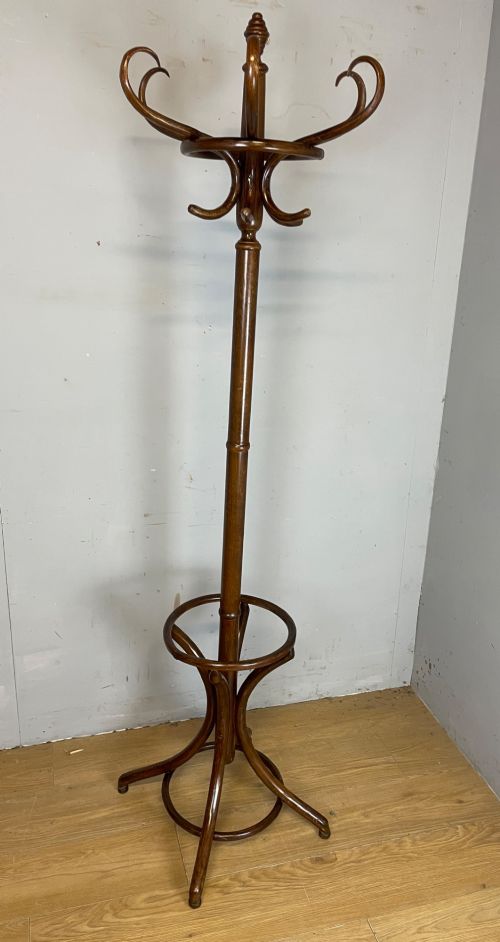
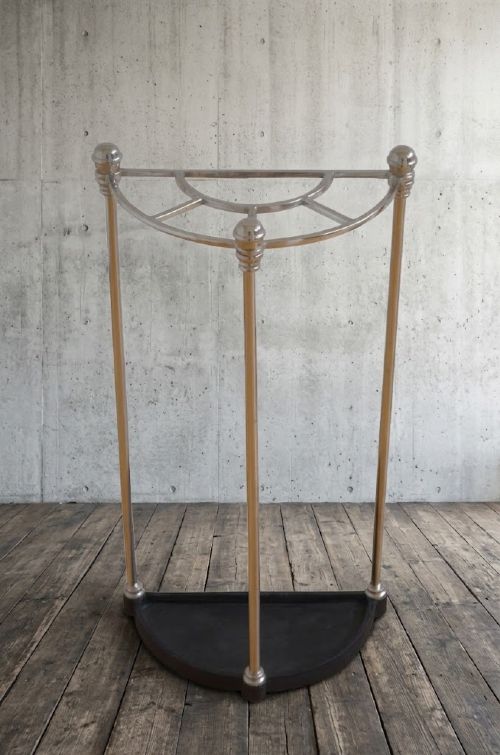
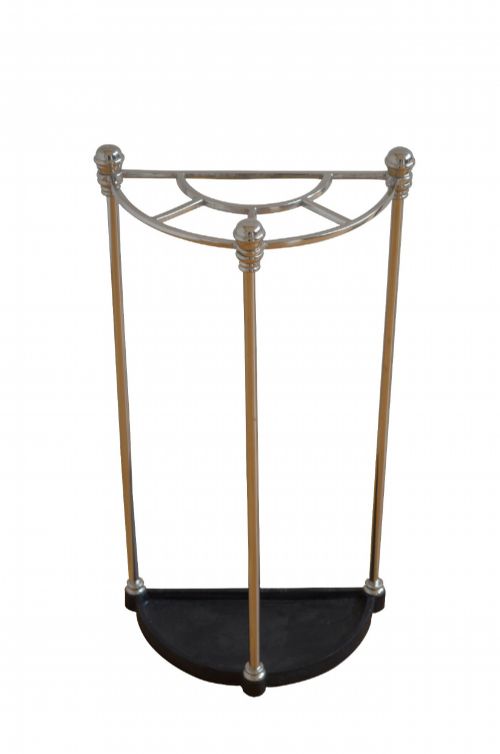
Umbrella stands from this period often take a demi-lune form with metal divisions to keep items organised in an entrance hall. Bentwood hat and stick stands offer a taller architectural presence for hallways.
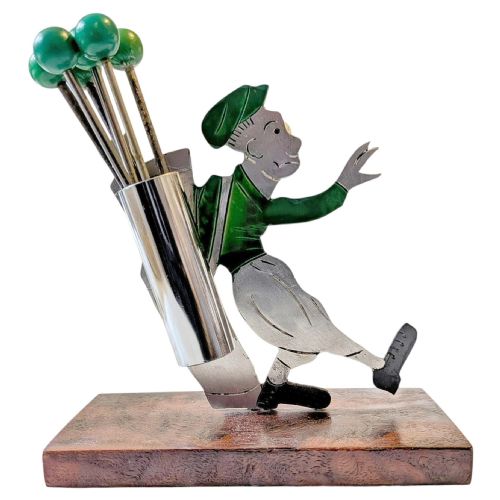
Cocktail stick sets represent the smaller scale of this category, featuring novelty figures in Bakelite, chrome, and enamel. These entertaining accessories reflect the social habits of the 1930 era.
How they were made
Manufacturers of the 1930 period utilised a mix of traditional materials and modern industrial substances. Wood appears in bentwood furniture forms, while metals such as chrome, nickel plating, cast iron, bronze, and sterling silver shape stands and holders.
Bakelite, plastic, and enamel introduce vibrant colour and durable modern finishes to novelty cocktail stick sets. Cut glass also appears alongside silver for bespoke holding vessels.
Listings feature items predominantly from the Art Deco style, spanning the 1920 and 1930 periods in wood, chrome, Bakelite, and sterling silver.
What varies in quality
The standard of a piece depends on the crispness of the Art Deco styling and the preservation of its original materials. Items combining multiple distinct elements, such as Bakelite handles with chrome frames, rely on secure construction.
Makers employing precious metals like sterling silver or fine bronze demonstrate superior craftsmanship compared to standard plated wares. Complete sets with matching components retain greater integrity than partial groups.
Sudre
The 1930s Stick Holder Glossary
- Art Deco
- A design style characterised by sleek geometric shapes, streamlined forms, and modern industrial materials popular during the 1920 and 1930 periods.
- Bakelite
- An early synthetic plastic known for its durability and rich colour palette, frequently utilised for handles and novelty figures.
- Bentwood
- Wood heated and bent into curved structural forms, commonly seen in hallway stands from the early twentieth century.
- Demi-lune
- A half-moon shape often utilised for umbrella stands designed to sit flat against an entrance hallway wall.
- Sterling silver
- A silver alloy containing high purity content, often stamped with hallmarks indicating the assay office and year of creation.
1930s Stick Holder: Frequently Asked Questions
How were umbrella stands used?
Umbrella and stick stands were placed in entrance halls to store wet umbrellas and walking canes neatly out of the way. Divided metal frames kept individual items upright.
Their demi-lune shapes allowed them to fit snugly against hallways without obstructing walkways.
What materials are common?
Makers utilised a diverse array of materials typical of the 1930 period, including wood, chrome, nickel plating, cast iron, and bronze. Sterling silver and enamel also appear on select items.
Synthetic materials like Bakelite and early plastics feature heavily in tabletop entertaining accessories.
How do I style them at home?
Hall stands integrate well into traditional and modern entryways to provide functional storage for everyday accessories. Their architectural forms anchor a hallway space.
Tabletop cocktail stick sets add a decorative touch to home bars or sideboards, celebrating the social entertaining style of the era.