




Black Cast Iron Tray
These functional black cast iron tray items combine utilitarian strength with period design, offering a durable hallway anchor for wet umbrellas and muddy boots.
Black Cast Iron Tray
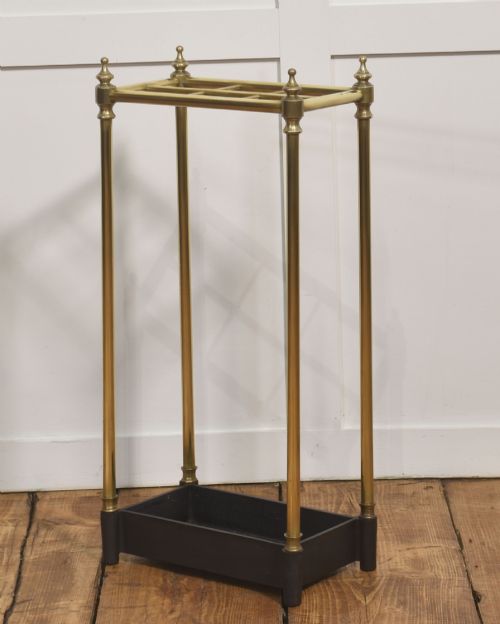
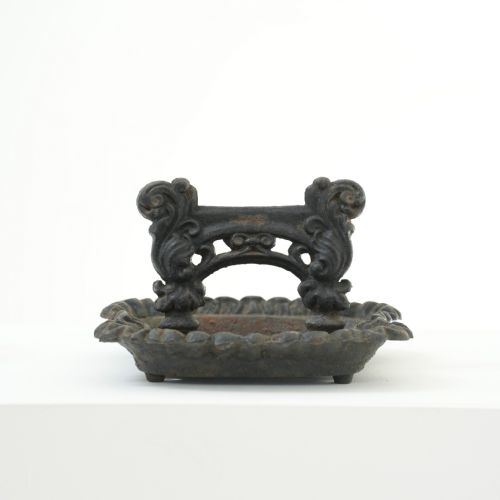
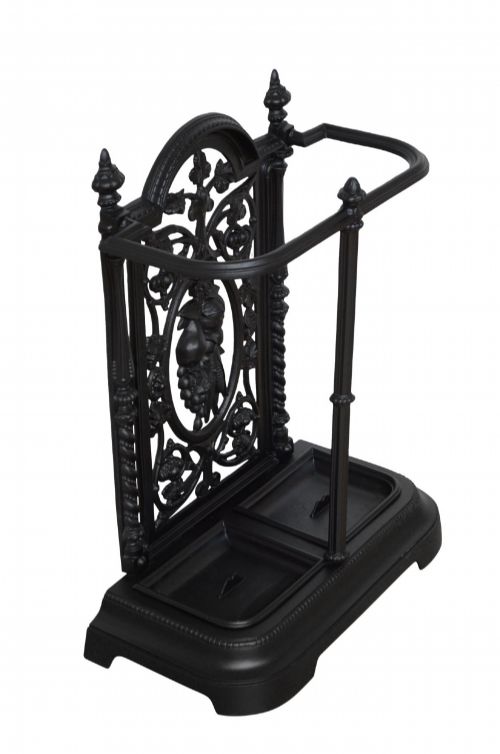
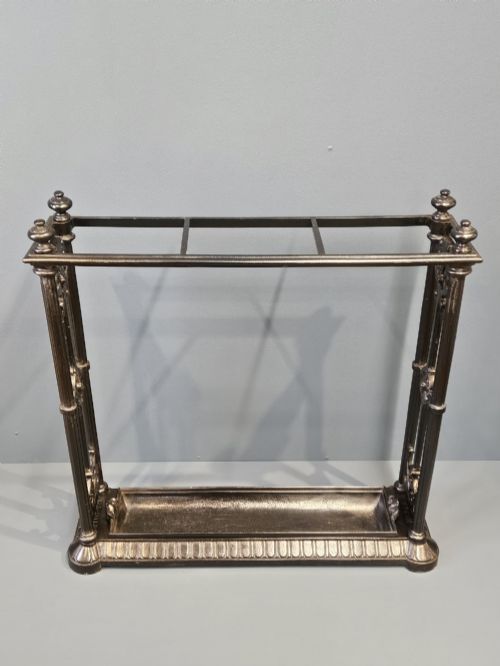
A black cast iron tray serves primarily as the drip pan or base for umbrella stands, stick stands, and entryway boot scrapers. When you search for a black cast iron tray, you encounter the robust bottom reservoirs of heavy hallway furniture rather than standalone flat platters.
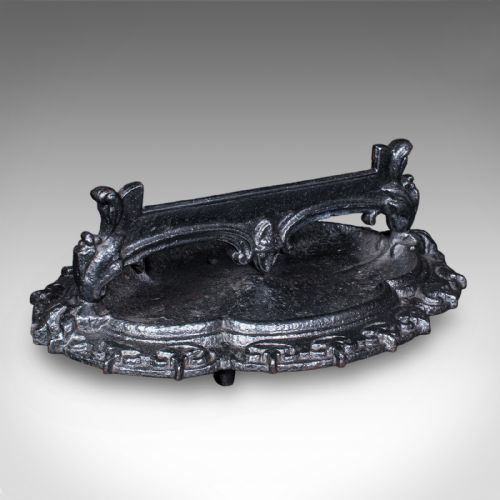
The pieces appearing on this page date principally from the Victorian and Edwardian eras, stretching into the Art Deco period of nineteen thirty. Alongside hall stands, the listings include occasional tables and heavy entrance shoe cleaners featuring integrated metal basins.
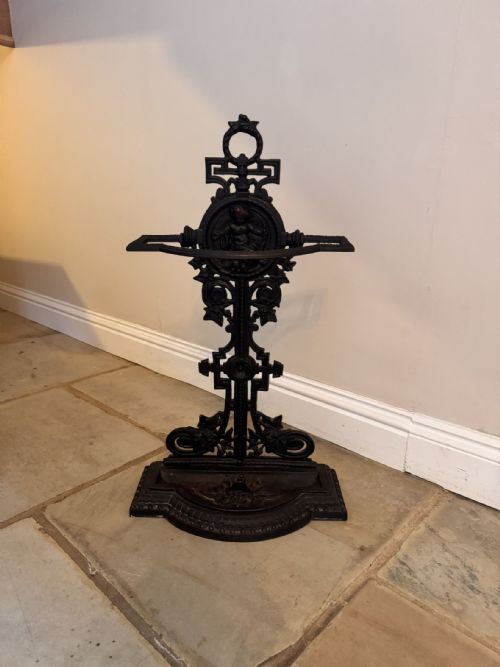
Victorian examples dominate the selection, often rendered in the Gothic Revival style or cast after designs by the Coalbrookdale foundry. These utilitarian trays were cast to catch rainwater and mud in grand country houses and urban townhouses alike.
Casting and finishing techniques
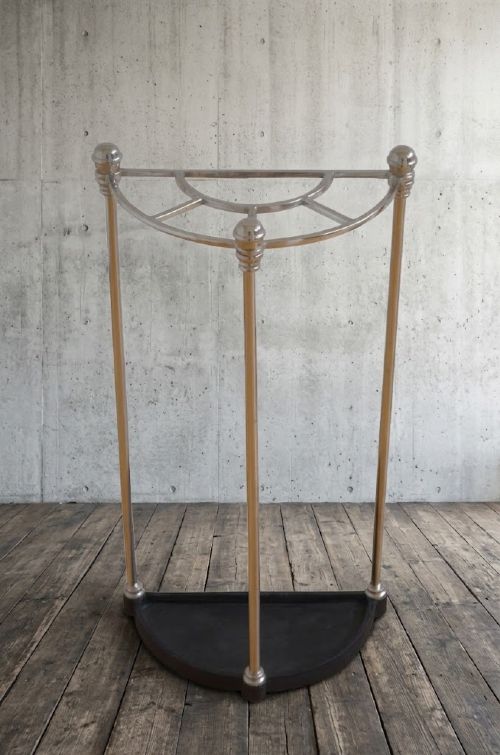
Foundries poured molten metal into sand moulds to form the heavy basins, incorporating decorative divisions, ring patterns, and faux bamboo detailing directly into the iron. Many examples combine this cast iron base with brass elements, nickel plating, or tubular metal frames.
Surface protection typically involved black paint applied to prevent oxidation in damp hallways. Some variants paired the iron foundation with wrought iron components or wooden sections, creating functional furniture built to withstand heavy daily use.
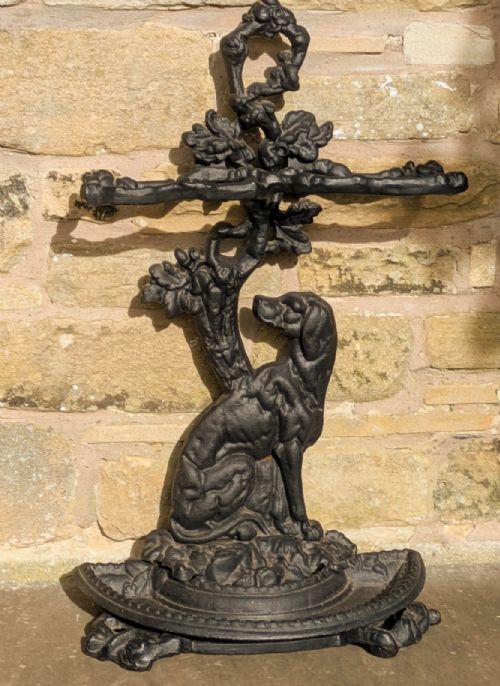
Some nineteenth-century trays sit beneath whimsical subjects like Jack and the Beanstalk or faithful gun dogs.
Distinctions in execution
Quality in these foundational trays rests upon the crispness of the casting detail and the complexity of the surrounding framework. Fine specimens exhibit sharply defined decorative motifs, such as botanical patterns or figurative elements like the gun dog and Jack and the Beanstalk designs.
The integrity of the ironwork and the retention of original structural components determine the standing of a piece. Heavier gauge casting and sophisticated stylistic styling, whether Gothic Revival or Art Nouveau, separate standard utility items from more ambitious foundry work.
Coalbrookdale·Falkirk
The Black Cast Iron Tray Glossary
- Cast iron
- An iron-carbon alloy poured into a mould while molten. This heavy material provides the sturdy weight needed for umbrella stands and boot scrapers.
- Demi-lune
- A half-moon shape. Such trays and stands fit flush against an entryway wall to save floor space.
- Gothic Revival
- An architectural and decorative style popular in the nineteenth century. It utilises pointed arches, quatrefoils, and medieval motifs.
- Coalbrookdale
- A famous Shropshire ironworks known for ornate cast iron garden and hall furniture. Their decorative designs influenced numerous later foundry pieces.
- Boot scraper
- An outdoor or threshold iron blade paired with a tray or base. It allows visitors to scrape mud from footwear before entering the house.
Black Cast Iron Tray: Frequently Asked Questions
What is a black cast iron tray used for?
These trays function primarily as integrated drip pans at the base of umbrella and stick stands. They catch water running off wet parasols and prevent mud from reaching hallway floors.
They also appear as part of heavy entrance boot scrapers designed to clean footwear at the threshold.
How do I clean a cast iron tray?
Dust the surface regularly with a dry cloth and remove accumulated dirt from corners using a soft brush. Avoid harsh chemical cleaners that might strip the historic black painted finish.
If moisture leads to light surface oxidation, treat the affected area gently with a light oil and a soft cloth.
Are these trays waterproof?
Cast iron is non-porous and naturally holds standing water without leaking. However, historic pieces may have minor pitting or surface wear from decades of damp use.
Placing a protective pad underneath or ensuring the room remains well-ventilated helps preserve the metal.
How do I date a cast iron tray?
Dating relies on stylistic clues such as Victorian Gothic ornamentation, Edwardian proportions, or Art Deco geometric lines. Foundry marks and registration numbers cast into the metal can also point to specific decades.
The complexity of the casting and associated materials like nickel plating help narrow down the period of manufacture.