
Vintage Marquetry Nightstands
These vintage marquetry nightstands combine intricate wood inlay with practical bedside storage, offering French style and period character for the bedroom.
Vintage Marquetry Nightstands
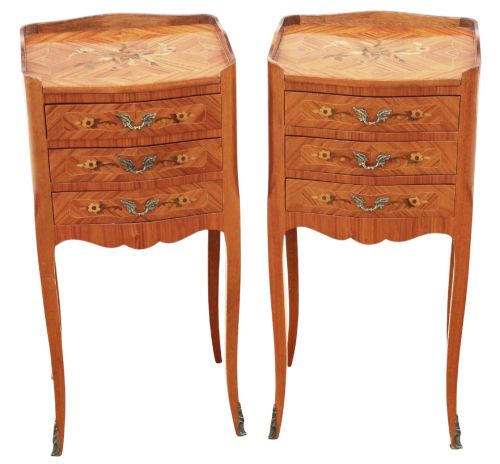
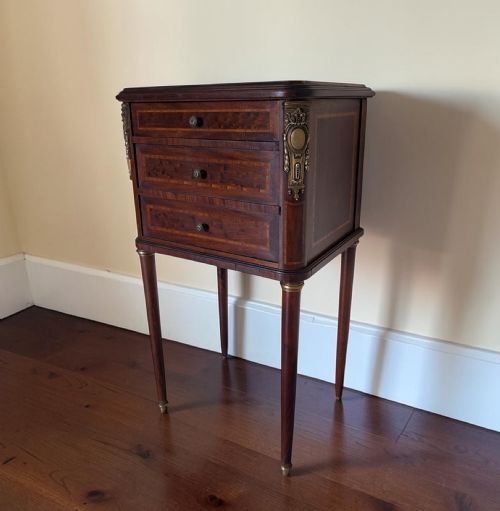
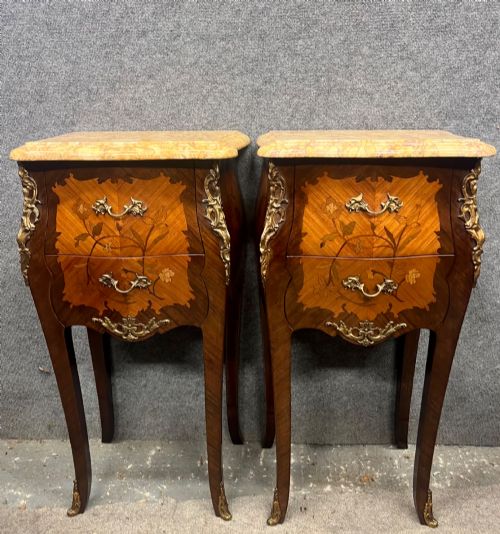
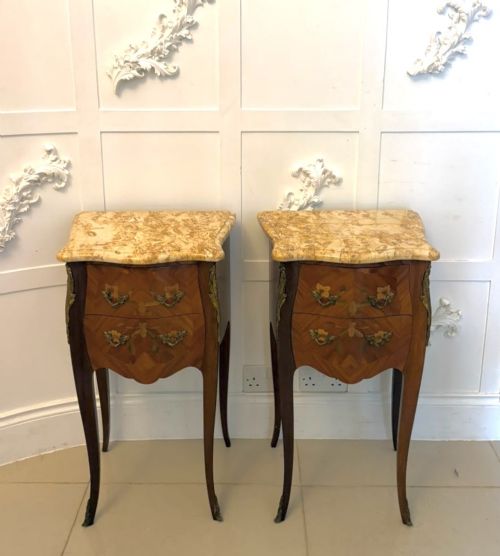
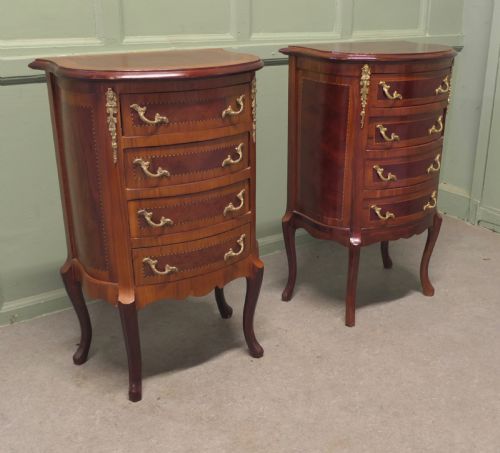
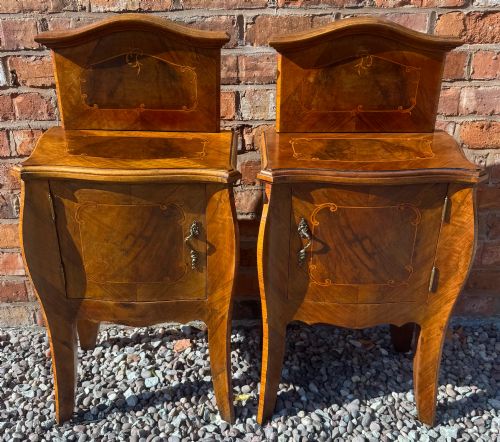
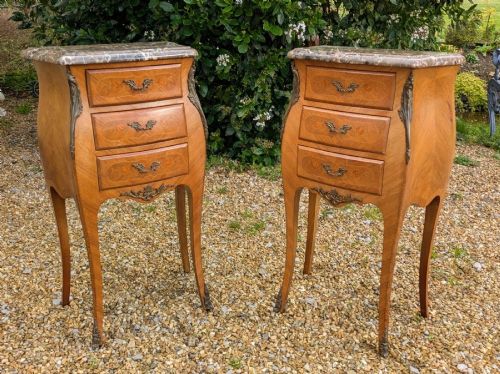
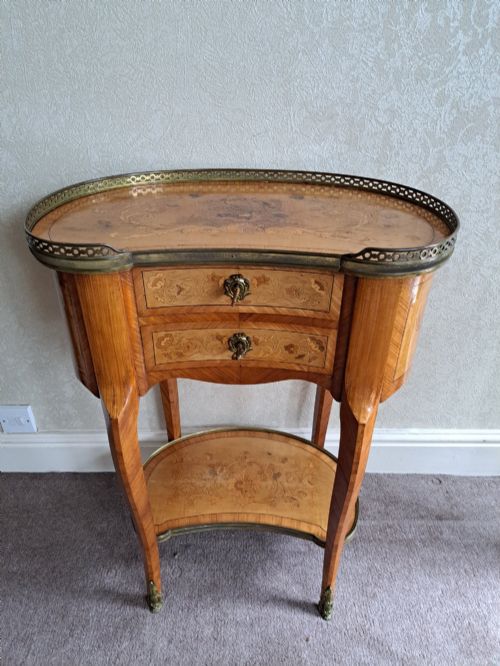
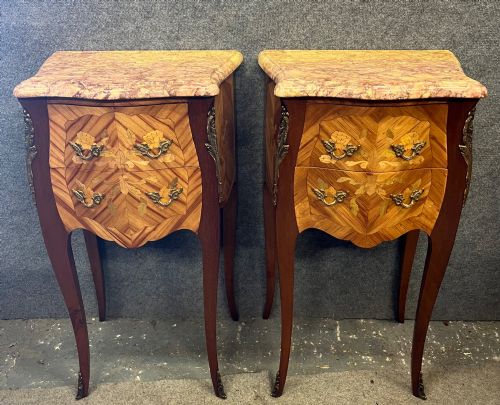
When searching for vintage marquetry nightstands, buyers encounter small bedside tables, cabinets, and chests of drawers originating primarily from the nineteenth and early twentieth centuries. These pieces frequently appear in French Louis XV and Louis XV Revival styles, often featuring shaped fronts, marble tops, and decorative inlays.
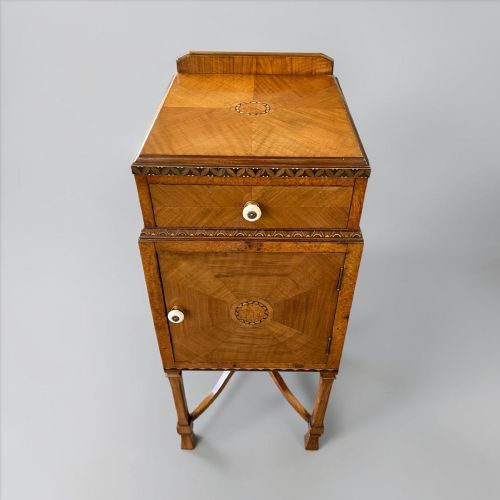
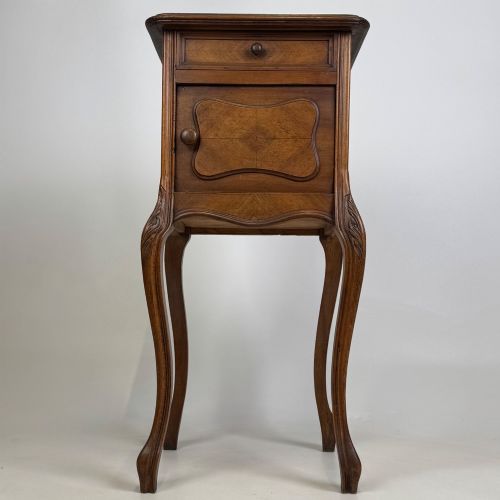
The selection on this page spans periods from the Victorian and Edwardian eras through to the 1920s and 1930s. The most common forms are enclosed bedside cabinets and small lamp tables designed to sit alongside a bed.
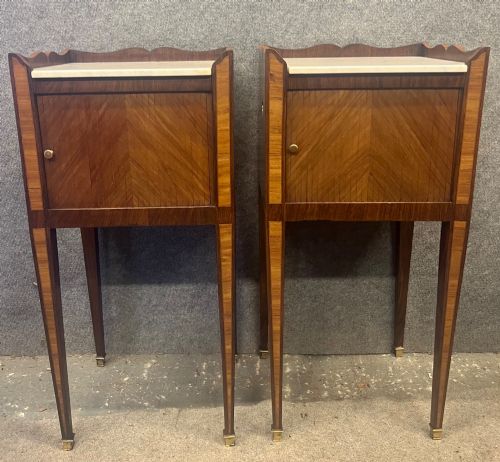
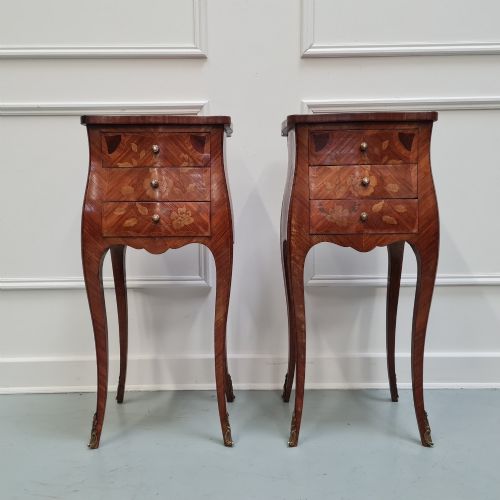
Many examples are offered as matched or near pairs, constructed in walnut, kingwood, mahogany, and satinwood. Their origins trace largely to continental workshops and revival movements that favoured ornate floral and geometric patterns.
How they were made
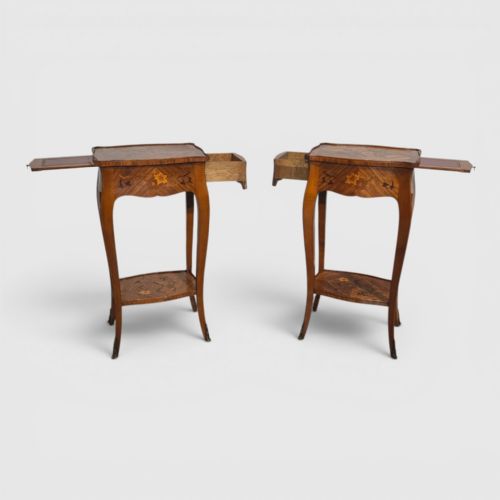
Cabinetmakers constructed these tables using a hardwood carcase overlaid with fine veneers of walnut, kingwood, rosewood, and satinwood. Artisans then cut contrasting woods into pictorial or geometric floral patterns to create the characteristic marquetry surface.
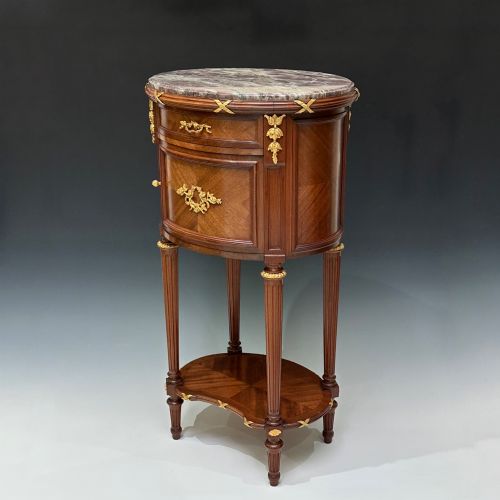
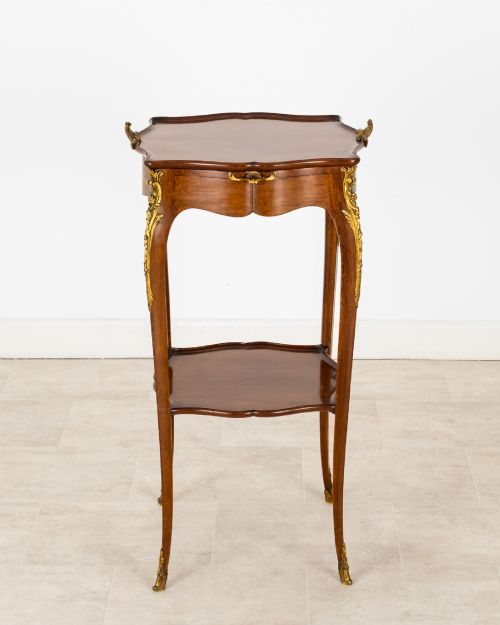
Many pieces incorporate heavy use of cast ormolu mounts, brass handles, and polished marble tops. These stone slabs were fitted precisely to the shaped wooden surfaces of the cabinets.
Joinery techniques followed traditional cabinetmaking standards of the period, utilising dovetailed drawer construction and mortise and tenon joints to ensure stability in daily use.
Listings feature pieces spanning the nineteenth century through the 1930s, constructed in walnut, kingwood, mahogany, and satinwood.
What varies in quality
The standard of a piece rests heavily on the precision of the marquetry cutting and the choice of timbers used for the contrasting veneer work. Finer examples display tight, complex floral motifs with minimal filler, whilst simpler items use repeating geometric parquetry.
Hardware and secondary materials also distinguish the range, as seen in the weight of the ormolu mounts and the thickness of the fitted marble slabs. Master workshops employed detailed cast bronze mounts rather than lighter, simpler brass pressings.
Structural execution, such as the neatness of bow fronts and the smooth action of drawers, separates standard production furniture from pieces attributed to notable makers like François Linke.
François Linke
The Vintage Marquetry Nightstands Glossary
- Marquetry
- A decorative technique where small pieces of contrasting veneer are assembled into pictures or patterns on a wood surface. This forms the primary visual feature of the top and sides.
- Parquetry
- A geometric mosaic of wood pieces used for floors and furniture surfaces. It appears frequently alongside floral marquetry on these tables.
- Ormolu
- Gilded bronze mounts applied to furniture edges, feet, and corners for decoration. It provides a bright metallic contrast to dark woods.
- Kingwood
- A dense, richly grained tropical timber used extensively in high-end cabinetmaking. Its dark brown and golden tones provide a striking background for inlay.
- Serpentine
- A furniture front or top shaped with a double curve, convex in the centre and concave at the ends. This contour requires skilled carpentry to execute correctly.
Vintage Marquetry Nightstands: Frequently Asked Questions
How were these nightstands used historically?
These small cabinets served beside the bed to hold chamber items, books, and lamps within easy reach. Their enclosed cupboards and drawers kept personal belongings tidy out of sight.
In finer bedrooms, matching pairs flanked the bed to create a symmetrical arrangement. The marble tops provided a durable surface resistant to spilled liquids from water jugs or candlesticks.
Are these tables sturdy enough for daily use?
Most of these cabinets are constructed from solid hardwoods with robust internal framing designed for heavy domestic service. Their traditional joinery holds up well to modern bedside requirements.
Care should be taken with the polished wood surfaces and marble tops to prevent moisture rings or scratches. Using coasters and protective pads helps preserve the antique finish.
How do I identify the period of a nightstand?
Dating relies on examining the timber species, construction methods, and stylistic revival cues visible on the piece. Victorian and Edwardian examples often feature heavier mahogany or walnut, while 1920s pieces frequently lean into lighter French styling.
Hardware styles, dovetail construction inside the drawers, and the complexity of the marquetry also offer clues to the decade of manufacture.
What is the difference between marquetry and parquetry?
Marquetry involves cutting diverse veneers to form pictorial scenes, scrolls, or floral arrangements across the wood surface. It requires artistic precision to fit the various coloured woods together.
Parquetry uses geometric shapes like squares, triangles, or cubes to create repeating mathematical patterns. Both techniques often appear together on the same piece of furniture.