





Vintage Maritime Landscape Painting
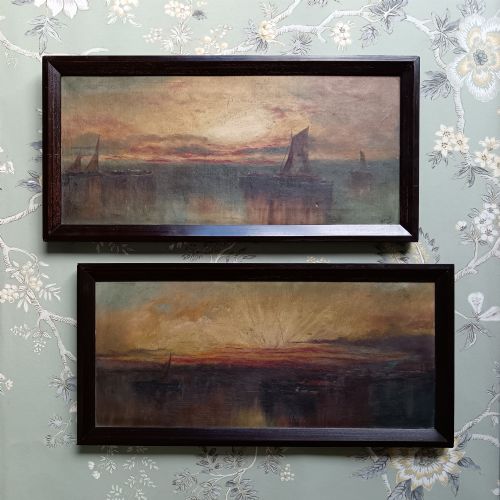
When you search for a vintage maritime landscape painting, you find works capturing coastal scenes, busy harbours, and open water across the nineteenth and twentieth centuries.
Vintage Maritime Landscape Painting
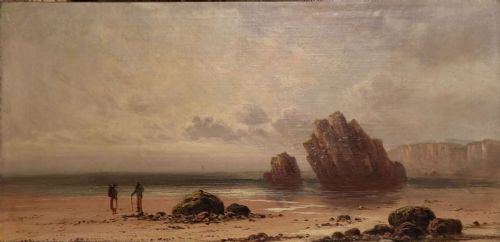
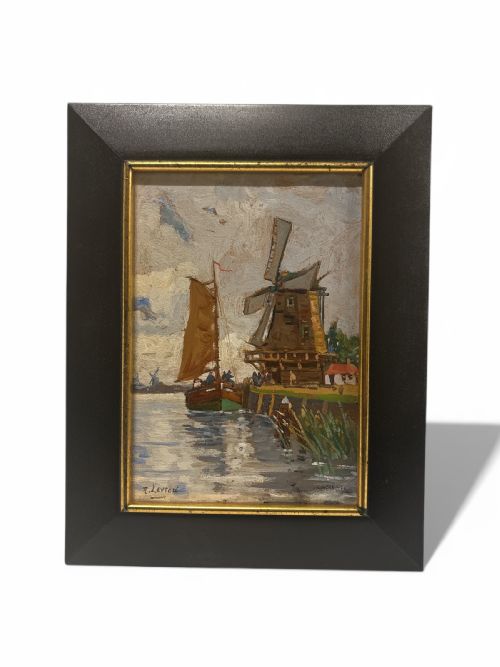
A vintage maritime landscape painting bridges terrestrial scenery and open water, recording harbours, estuaries, and coastal villages alongside working vessels and pleasure craft. You encounter works spanning the nineteenth century through the Edwardian period and mid-twentieth century, reflecting changing artistic approaches to the sea.
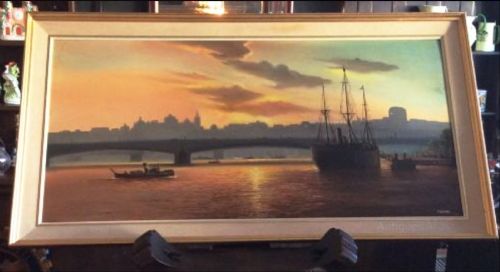
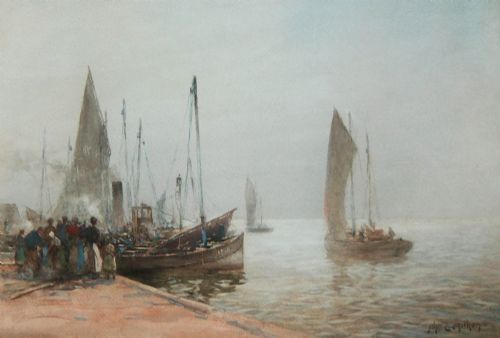
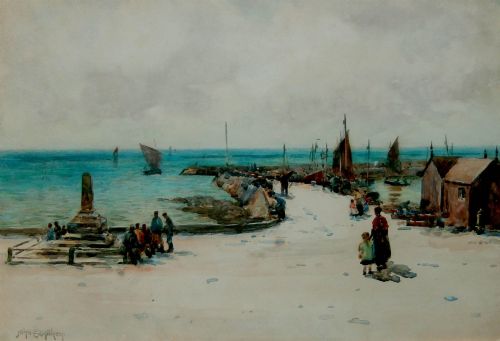
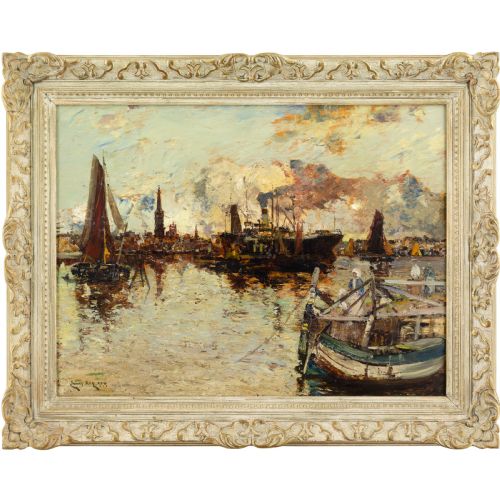
The selections on this page range from intimate watercolours of Cornish fishing ports to substantial oil paintings on canvas or board depicting major rivers, bridges, and foreign quaysides. Many examples place human activity - such as shipping, docking, and boat building - at the centre of coastal topography.
Makers recorded in the evidence demonstrate a strong British and European tradition, with coastal views from Yorkshire, Cornwall, and Scotland appearing alongside scenes from Venice, Palermo, and the Venetian lagoon. These pieces capture specific geographic coordinates and maritime operations through the distinct lenses of Victorian, Edwardian, and mid-century modern movements.
Materials and Technique
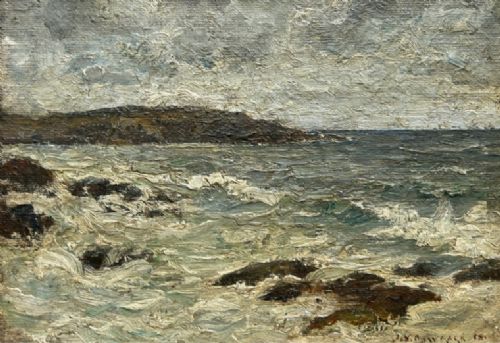
Artists working within this category employed oil paint, watercolour, and occasionally woodblock print methods applied to canvas, paper, or prepared board. Oil paintings frequently utilise heavier impasto layers to build texture on the sea and sky, while watercolours rely on the luminous white of the paper to render light on water and harbour walls.
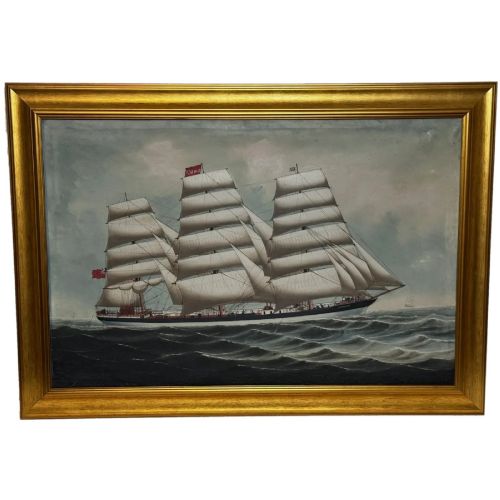
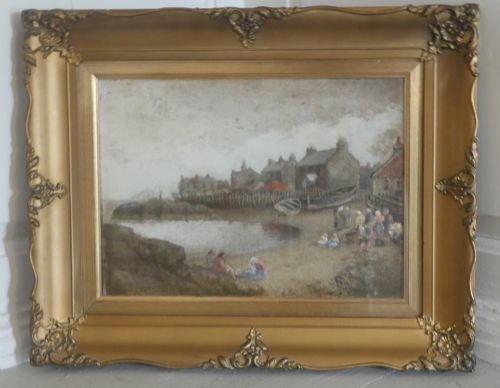
Frames form an integral part of the physical object, with period gilt wood mouldings frequently accompanying nineteenth-century and Edwardian canvases to enclose the composition. Support structures vary from traditional stretched canvas to sturdy wooden boards used by mid-century painters working outdoors.
Several artists clearly preferred getting their boots muddy, recording low tide at St Ives when the boats are left listing in the harbour mud.
Distinctions in Execution
Quality rests upon the artist's command of atmospheric light, handling of water movement, and structural perspective within coastal architecture. Superior pieces demonstrate confident brushwork or transparent washes that convey weight in vessel hulls and motion in coastal tides.
Provenance and documentation also distinguish individual works, where clear signatures, legible location inscriptions, and original gilt framing preserve the historical context of the coastal view. The precision of maritime detail - such as rigging accuracy and hull construction - separates standard decorative output from accomplished fine art.
Reginald Arthur Borstel·James E. Aitken·John E. Aitken·William Banks Fortescue·James Kay·Thomas William Morley·Peter Brannan·Paul Bret·Bernard Benedict Hemy·Willem Bos·Thomas Maidment·Cecil Allan Mould·George Stanfield Walters·Frank Kelsey·Walter Goodin·William Frederick Settle·Alfred George Morgan·William Edward Webb·Edward Matthew Elliott
The Vintage Maritime Landscape Painting Glossary
- Impasto
- Paint applied thickly to a canvas or board so that it stands proud of the surface and retains the marks of the brush or palette knife. This technique adds tactile dimension to turbulent seas and choppy waters.
- Watercolour
- A painting method in which the pigments are suspended in a water-soluble vehicle, typically applied to paper. It allows for translucent washes of colour that capture soft coastal light.
- Board
- A rigid flat support made from wood or compressed material used by artists as an alternative to stretched canvas. Many portable marine paintings utilise boards for outdoor sketching.
- Gilt Wood
- Wood carved and coated with gold leaf or a gold-coloured finish to form a decorative picture frame. These frames complement the warm tones often found in traditional oil paintings.
- Seascape
- A type of fine art that depicts the sea, ships, and coastal views. It forms the primary subject matter for the paintings gathered under this category.
Vintage Maritime Landscape Painting: Frequently Asked Questions
What subjects appear in these paintings?
These works depict harbours, estuaries, coastal cliffs, and busy quaysides populated by fishing boats, sailing ships, and working barges. Locations range from British coastal ports like St Ives and Whitby to European waters including Venice and Palermo.
Artists focused heavily on the interplay between land and sea, recording the daily routines of maritime communities alongside changing weather conditions and tidal movements.
How do I date a vintage maritime painting?
Dating relies on stylistic clues, artists' active working periods, framing materials, and inscriptions left by the painter on the reverse or front of the work. Victorian and Edwardian pieces often feature traditional academic or early impressionist brushwork, while mid-century examples show broader modernist tendencies.
Signatures, exhibition labels, and written place names on watercolours or canvas backs frequently provide direct links to the exact decade of creation.
Where should I hang a coastal artwork?
These paintings suit spaces with steady ambient light away from direct, harsh sunlight that could fade watercolours or damage paper supports. Rooms with neutral wall colours allow the tones of the sea and the texture of gilt wood frames to stand out.
Because many pieces feature horizontal compositions of bridges, rivers, and coastlines, they sit well above mantelpieces, sideboards, or along long hallways.
Are watercolours different from oil paintings?
Waterworks utilise transparent pigments on paper and are typically protected behind glass within a mount and frame, preserving their delicate luminosity. Oil paintings employ heavy pigments suspended in medium on canvas or board, presenting a textured surface that does not require glass protection.
Both mediums capture marine subjects but offer entirely different visual weights, with oils showing rich impasto depth and watercolours offering fluid transparency.