
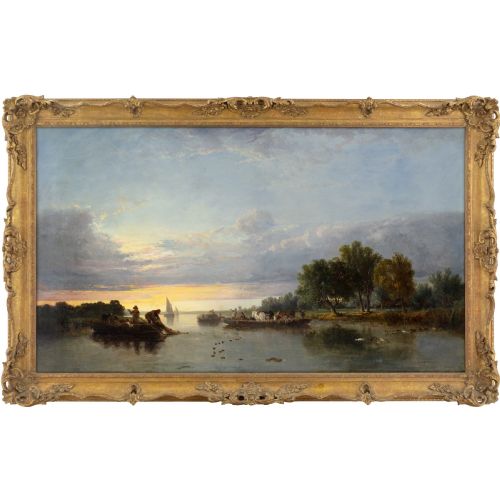
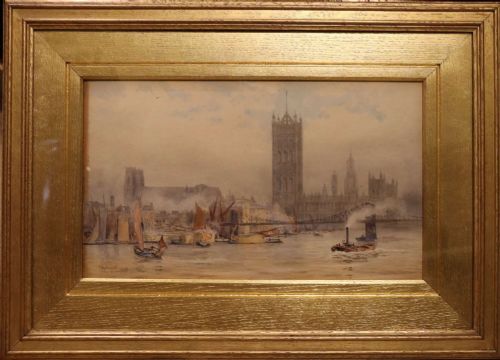
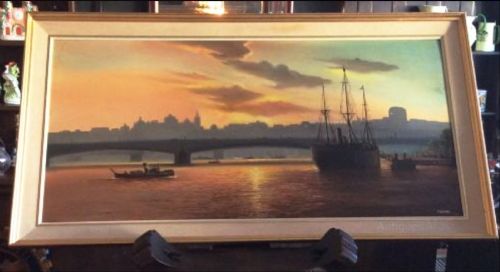
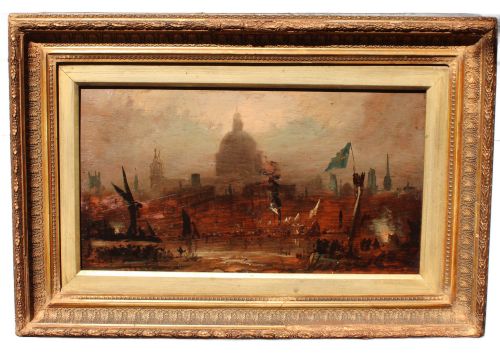


River Thames Maritime Painting
A river thames maritime painting captures the bustling waters and iconic architecture of London through the eyes of traditional artists.
River Thames Maritime Painting
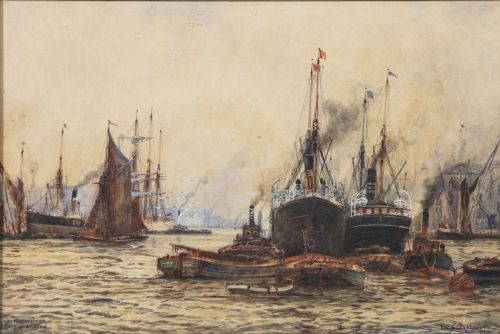
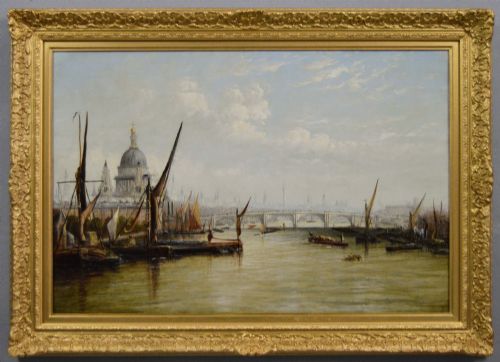
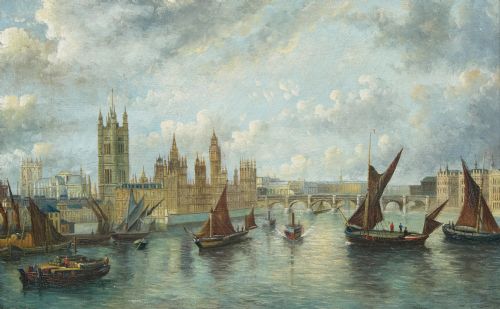
A river thames maritime painting depicts the historic waterways, bridges, and shipping of London from early periods up to the twentieth century. These works document the changing architecture of the capital, including landmarks such as St Paul's Cathedral, the Houses of Parliament, and London Bridge.
Most examples found here date from the nineteenth century, the Victorian era, and the Edwardian period. The subjects range from panoramic views of the Upper Pool and Lower Pool to detailed scenes of barges and shipping.
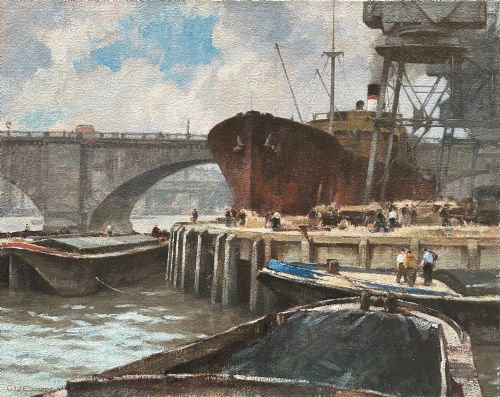
Compositions often feature notable crossing points like Blackfriars Bridge and Westminster Bridge alongside everyday river traffic. Buyers encounter both accomplished watercolours on paper and substantial oil paintings on canvas.
How They Were Made
Artists worked primarily in oil on canvas or applied watercolour to paper, frequently framing their finished pieces with wood and gold leaf under glass for protection. These traditional media allowed painters to capture the atmospheric light, smoke, and water reflections characteristic of the London river environment.
Many works were executed en plein air or developed from detailed preparatory sketches made directly along the riverbanks and bridges. The physical materials reflect the standard studio practices of nineteenth and twentieth century British fine art.
The listings show a concentration of nineteenth century works utilising oil on canvas and watercolour on paper.
What Varies in Quality
Quality rests upon the artist's command of atmospheric perspective and the specific topographical accuracy of the London landmarks portrayed. Stronger examples demonstrate a confident handling of light upon water and the bustling activity of maritime traffic.
The distinction between standard works and finer pieces lies in the subtlety of the brushwork and the preservation of the original paper or canvas support. Context, provenance, and the inclusion of recognizable historical vessels elevate certain compositions above routine topographical records.
H. Medlycott·Frank William Scarbrough·Francis Moltino·Charles William Wyllie·Edward Henry Eugene Fletcher·Walter Duncan·William A. Macdonald·Jacob Knyff·Hubert Thornley
The River Thames Maritime Painting Glossary
- Watercolour
- A paint consisting of pigment suspended in a water-based solution, typically applied to paper in translucent washes. It allows for rapid sketching of atmospheric river effects.
- Oil on Canvas
- Pigment mixed with a drying oil, applied to a stretched cloth surface that provides rich texture and depth. This medium dominates the larger historical marine scenes.
- Pool of London
- A historically significant stretch of the River Thames running from London Bridge to Limehouse. It served as the main port area crowded with shipping.
- Gold Leaf
- Hammered gold beaten into extremely thin sheets, used historically to gild wooden picture frames. It enhances the visual presentation of Victorian and Edwardian fine art.
River Thames Maritime Painting: Frequently Asked Questions
What periods do these paintings cover?
The available selection spans from seventeenth century depictions through the nineteenth century, Victorian, and Edwardian eras, extending into mid twentieth century examples.
Most pieces date from the Victorian and Edwardian periods, reflecting the height of commercial activity on the river.
Which London landmarks appear most often?
Artists frequently recorded St Paul's Cathedral, London Bridge, Blackfriars Bridge, and the Houses of Parliament. Tower Bridge and the busy shipping pools also feature prominently.
These structures help date the views and establish the exact topographical setting of each composition.
What is the upper pool?
The upper pool refers to the congested commercial stretch of the Thames near London Bridge and the Tower of London. It was crowded with sailing barges and trading vessels.
Painters were drawn to this area for its dynamic mix of maritime traffic and dense urban architecture.
How should I frame these works?
Historic watercolours require conservation framing with mounts that keep the paper from touching the glass. Oil paintings on canvas benefit from traditional wooden frames, often highlighted with gold leaf.
Proper framing protects the original support from environmental damage while maintaining the historical character of the piece.