




Vintage Marine Coastal Art
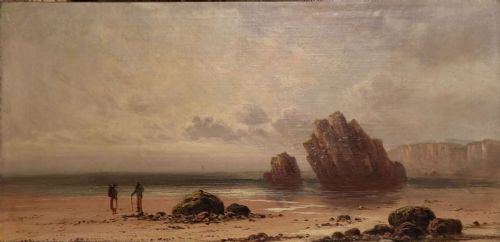
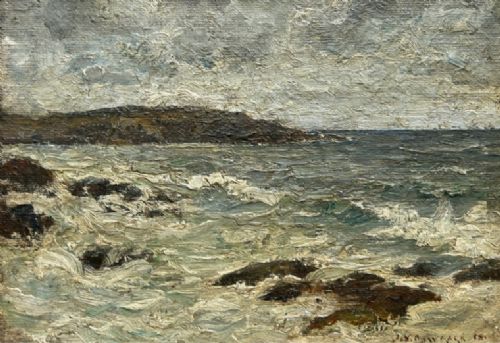
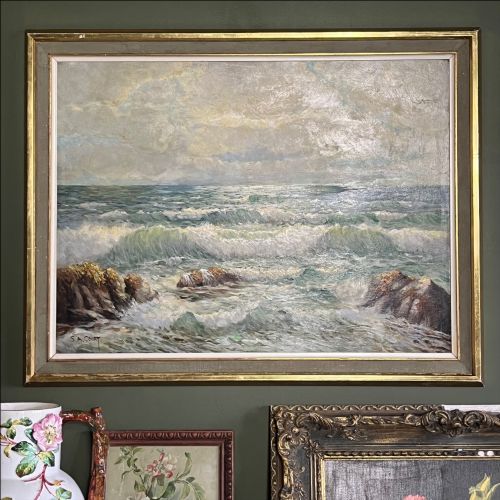
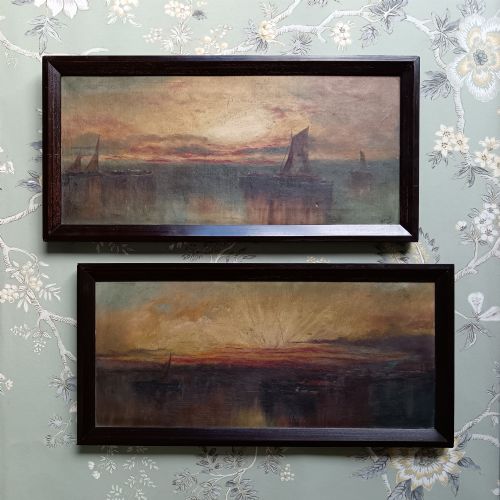
When you search for vintage marine coastal art, you encounter oil paintings, watercolours and framed wall art capturing harbours, shipping and shores.
Vintage Marine Coastal Art
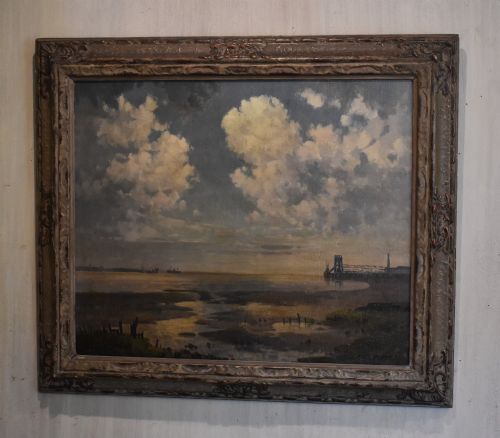
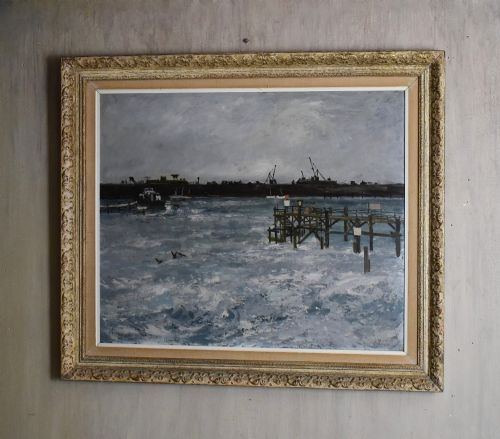
Vintage marine coastal art encompasses original paintings and framed artwork depicting maritime scenes, coastal landscapes and harbour views. When searching for vintage marine coastal art, buyers meet works spanning the nineteenth century through the mid-twentieth century, capturing sea views, fishing ports and shipping lanes.
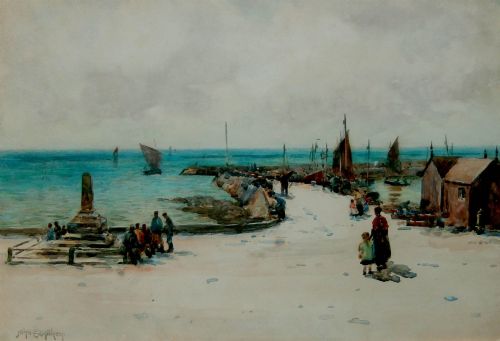
The selections on this page feature British and European locations, from Cornish harbours and Yorkshire bays to Italian ports and French coastlines. These pieces range from traditional nineteenth-century watercolours to mid-century modern oil paintings on board or canvas.
Materials and techniques
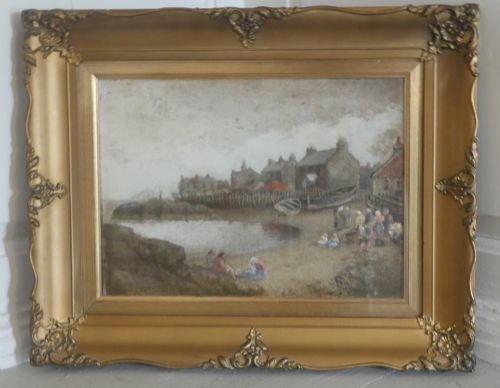
Artists painted these scenes using oil paint, watercolour and oil on canvas or board, applied to traditional supports such as paper, canvas and wood. Many pieces are housed in their original gilt wood frames, reflecting the framing styles of their respective periods.
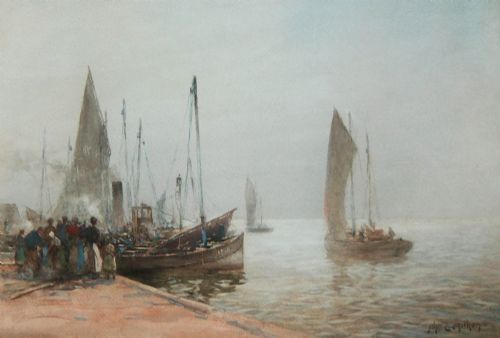
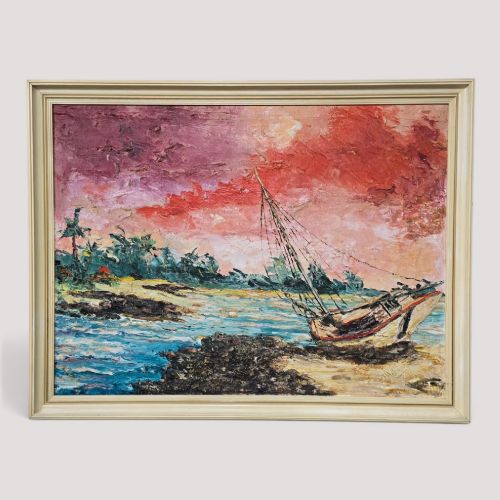
Techniques vary from detailed Victorian maritime watercolours and impasto oil painting to en plein air studies that capture immediate atmospheric conditions by the water.
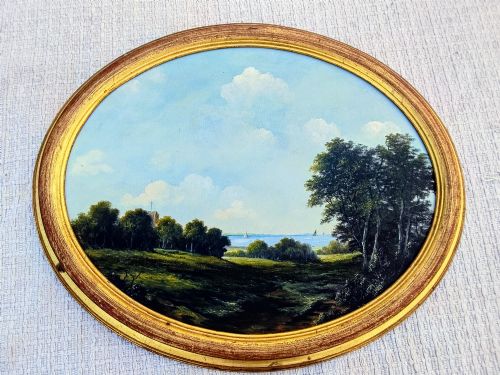
Listings feature works spanning from the nineteenth century through the 1960s, executed in oil and watercolour on canvas, board and paper.
Distinctions in quality
Quality in these coastal works rests on the artist's handling of light, atmosphere and maritime architecture, alongside the strength of composition in capturing movement on the water. Works that convey the specific texture of sea air and the structural rigour of vessels demonstrate superior execution.
The integration of the painting with its period frame, the clarity of signature or provenance, and the stability of the canvas or paper surface further separate the finer examples from standard decorative pieces.
Kenneth Cozens·Clifford Hanney·Sidney A Court·B Nash·Edward Mills·James E Aitken·John E Aitken·William Banks Fortescue·Clive Browne·Peter Brannan·Paul Bret·Bernard Benedict Hemy·William Henry Williamson·John Holland·Frank Kelsey·Walter Goodin·Abraham Hulk I·F A Roylance·William Frederick Settle·Alfred George Morgan·Lionel Horsnell·John Bedloe Goddard·William Edward Webb·Charles Napier Hemy·Richard Harry Carter
The Vintage Marine Coastal Art Glossary
- En plein air
- Painting outdoors to capture direct observations of light and weather in the coastal landscape.
- Impasto
- Paint applied thickly to the canvas or board, leaving prominent brush or knife marks that add texture and relief.
- Gilt wood
- Wood frames treated with gold leaf or metallic finish, commonly used to frame Victorian and Edwardian paintings.
- Watercolour
- Paint consisting of transparent pigment suspended in a water-based solution, frequently used on paper for coastal views.
Vintage Marine Coastal Art: Frequently Asked Questions
What periods do these coastal paintings cover?
The works span from the nineteenth century through the Edwardian era and into the mid-twentieth century.
This broad timeline includes Victorian maritime traditions, early twentieth-century realism and mid-century modern interpretations of coastal life.
Are these works original paintings?
The selection consists of original oil paintings, watercolours and works on paper or canvas rather than modern reproductions.
Many bear the signatures of known British and European artists who specialised in marine and landscape subjects.
How should I hang and care for these artworks?
Keep framed oil paintings and watercolours away from direct sunlight and excessive humidity to protect the canvas, paper and gilt wood frames.
Ensure wall placement maintains a stable indoor climate to preserve the integrity of the paint layers and backing materials.
How can I identify the subject of a coastal painting?
Many listings identify specific locations such as Cornish harbours, Yorkshire bays, or international ports in the titles and signatures.
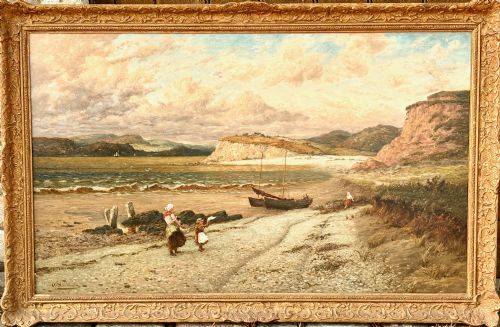
Examining the style of shipping vessels, architectural details and clothing of figures often helps pinpoint the geographic setting and era.