





Earthy Tone Watercolour Painting
An earthy tone watercolour painting brings muted hues and subtle washes of natural pigment straight to your walls.
Earthy Tone Watercolour Painting
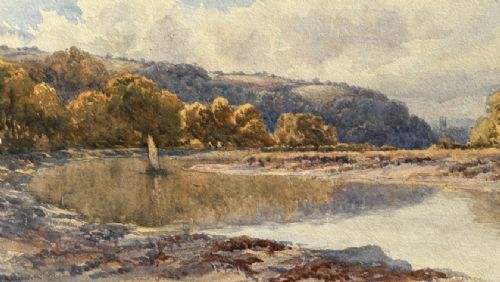
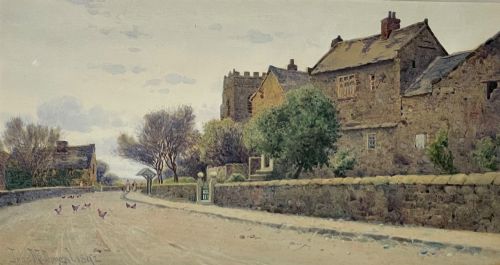
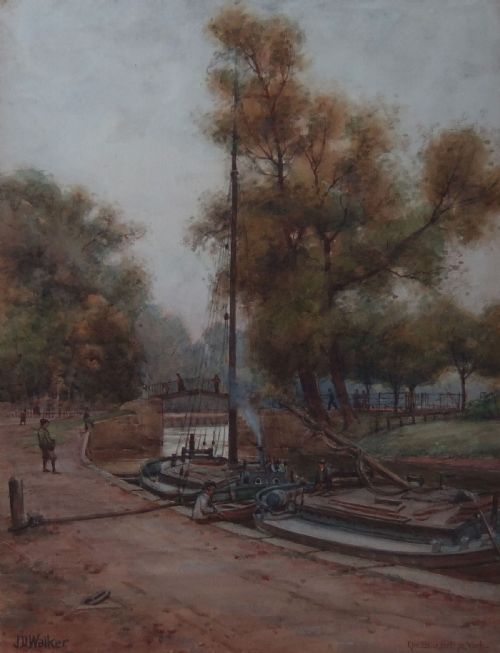
An earthy tone watercolour painting typically presents natural landscapes, village scenes, and rural yards rendered in subdued, organic palettes. When you search for this phrase, you meet works spanning from the Victorian period through to the mid-twentieth century.
The selections on this page encompass British Impressionism, Edwardian landscapes, and post-impressionist interpretations. These paintings capture quiet country moments, from Scottish river banks to Spanish village squares.
Materials and technique
Artists deployed watercolour pigment and ink on paper to build these delicate compositions. The absorbent surface held washes of colour that dried to create soft transitions and atmospheric depth.
Framed works frequently include wood and glass to protect the paper substrate from moisture and handling. Pigments were applied with various brush techniques to capture the natural light of rural scenes.
Earthy Tone Watercolour Painting Retail Price Guide 2026
Typical asking prices for earthy tone watercolour painting among the pieces listed under this phrase on Sellingantiques today, from the lower quarter to the upper quarter. They describe what is for sale here now, not the wider market.
Listings feature works created on paper using watercolour pigment and ink, spanning the Victorian period up to the 1940s.
Judging the work
The top of the range is distinguished by confident brushwork and a sure handling of tone that gives depth to landscapes and interiors. Lesser examples can feel flat, where the pigment sits heavily without capturing light.
Compositional strength and the artist's ability to render atmosphere using a restrained palette set finer pieces apart. The integration of paper texture into the final design shows a practiced hand.
David Law·John McDougal·James Hayllar·James Tower·John Atkinson·G Villiers Stuart·Charles H Poingdestre·Rowland Henry Hill·Francis William Topham·Maurice Asselin·Fred C Jones·John D Walker·William Kay Blacklock·Fred Lawson·George Soper
The Earthy Tone Watercolour Painting Glossary
- Watercolour
- A paint consisting of a pigment suspended in a water-based solution. It is applied to paper in transparent washes.
- British Impressionism
- A late nineteenth and early twentieth-century painting style characterised by visible brushstrokes and an emphasis on light. Artists captured everyday rural and urban subjects outdoors.
- Gouache
- An opaque watercolour paint that includes a binding agent like chalk, allowing for solid blocks of matte colour. It is sometimes used alongside traditional transparent watercolours to add highlights.
Earthy Tone Watercolour Painting: Frequently Asked Questions
How do I hang a watercolour painting?
Watercolours are sensitive to direct sunlight, so choose a wall in your home that receives indirect, ambient light to prevent the pigments from fading over time.
Ensure the frame is properly sealed with glass and backing board to protect the paper from humidity changes in the room.
What periods do these paintings cover?
The available selection spans from the nineteenth century through the Edwardian era and into the 1920s, 1930s, and 1940s.
Victorian and Edwardian works often focus on traditional rural landscapes, while later twentieth-century pieces lean towards post-impressionist interpretations.
How do I spot a genuine watercolour?
Look closely at the surface under a magnifying glass to check for the characteristic texture of paper fibres beneath transparent washes of pigment.
You will see the subtle pooling of colour at the edges of brushstrokes, which distinguishes a true painted work from a modern print reproduction.
Where were these scenes typically painted?
Many artists captured British countryside views, including Yorkshire villages, Scottish rivers, and Cheshire rural settlements.
Other works record foreign travels, featuring scenes from Spanish landscapes, Italian settings, and Kashmiri gardens.