

Vintage Marble Bedside Cabinets
Vintage marble bedside cabinets bring solid stone tops and rich timber frames together for bedside storage.
Vintage Marble Bedside Cabinets
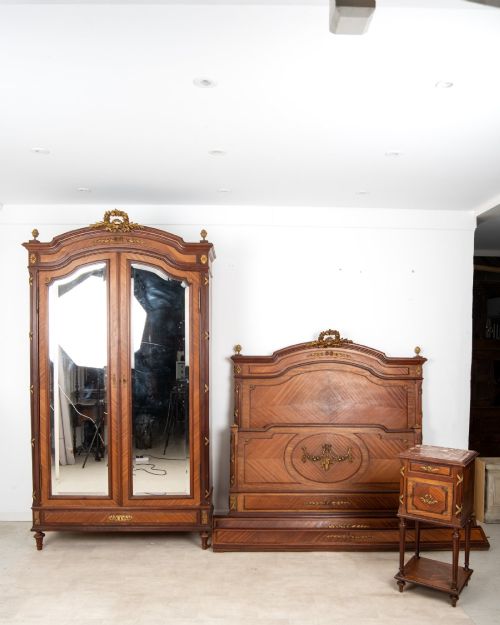
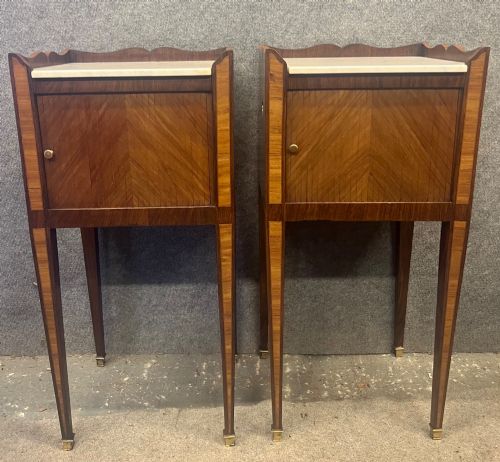
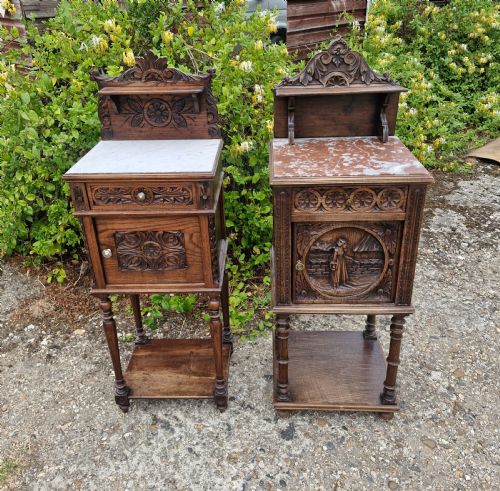
Vintage marble bedside cabinets combine enclosed storage with stone surfaces, serving bedrooms as functional tables. Most pieces meet on this page span the late nineteenth century through the early twentieth century, originating primarily from French workshops.
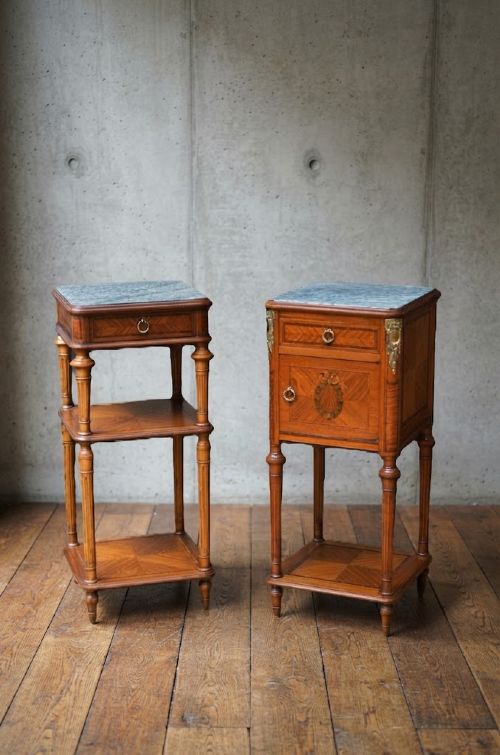
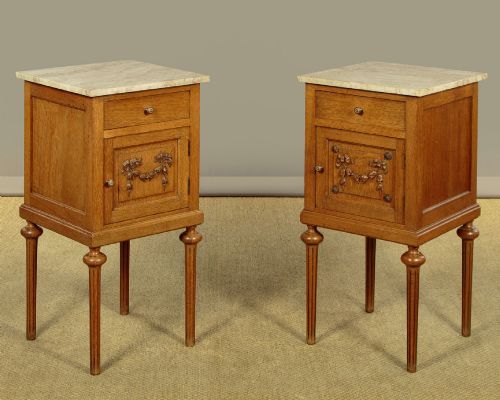
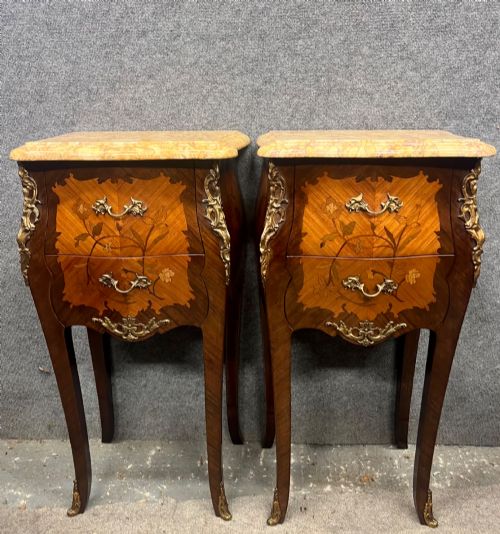
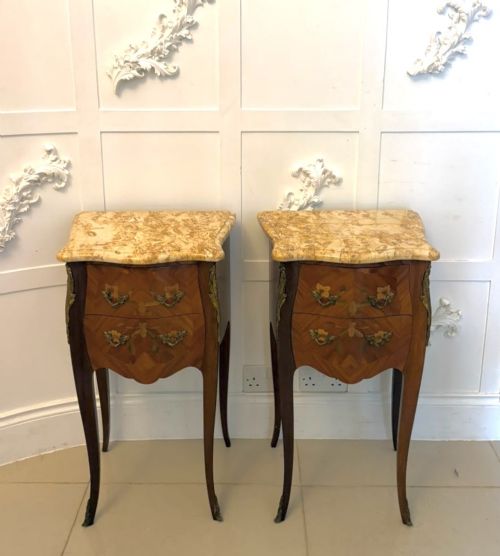
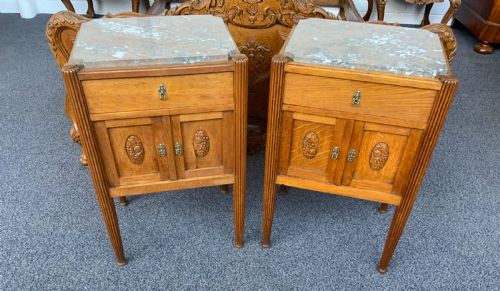
The selection ranges from simple oak cupboards to highly decorated marquetry and inlaid chests. Buyers encounter single items as well as matching pairs designed to sit on either side of a bed.
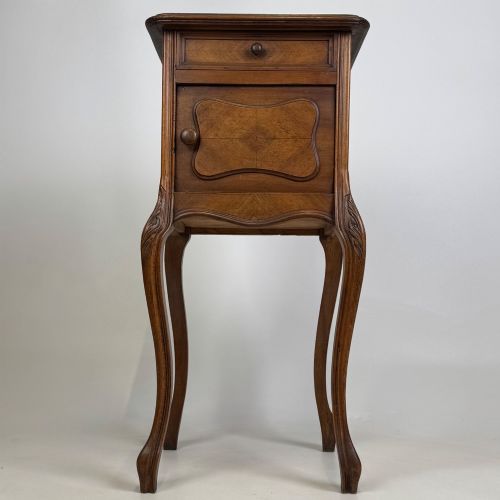
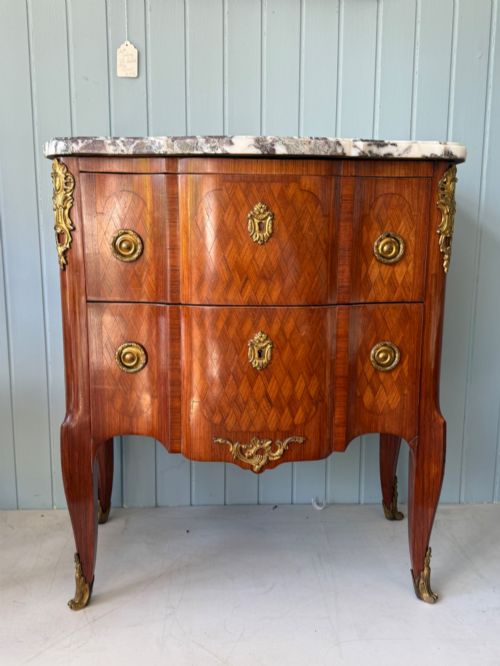
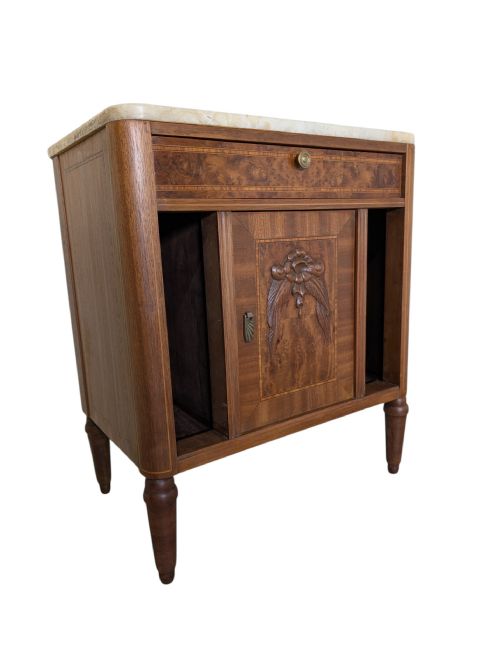
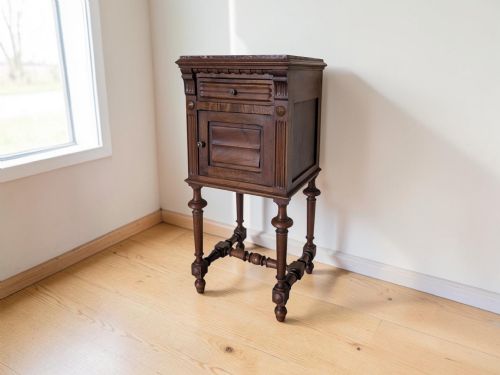
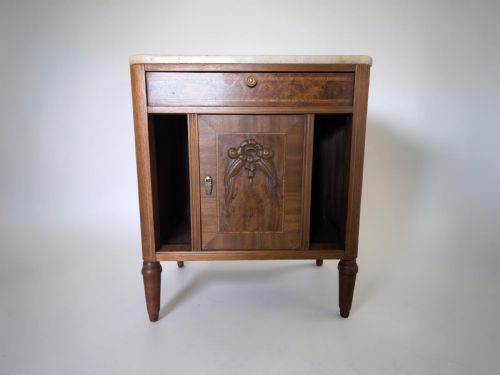
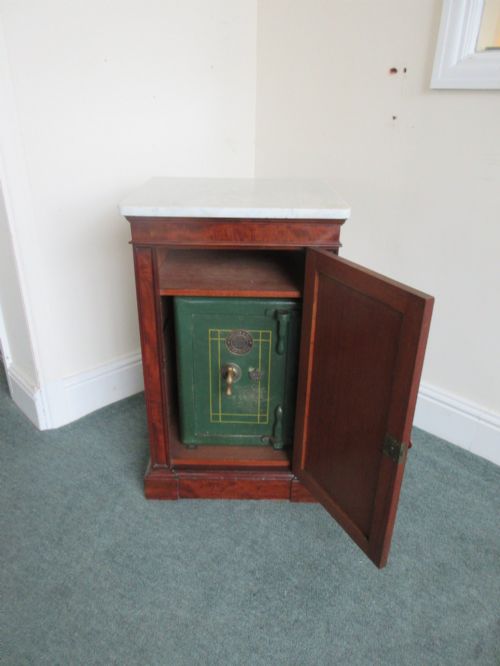
Forms include traditional bedside cabinets, side cabinets, and small commodes or tables with marble tops. Walnut, oak, mahogany, and fruitwood form the primary timber bodies supporting the heavy stone surfaces.
Materials and construction methods
Cabinet makers utilised dense hardwoods including walnut, mahogany, oak, and kingwood for the structural carcasses and drawer assemblies. Finer examples display intricate marquetry, satinwood, and burr fruitwood veneers across the doors and sides.
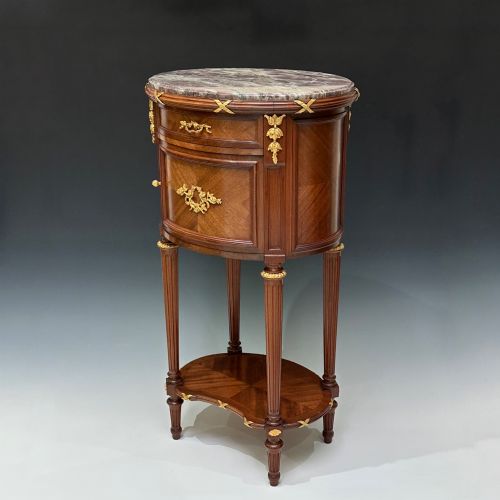
Slabs of polished marble form the functional tops, chosen for durability and resistance to water or cosmetics. Mounts in brass and ormolu often accent the corners, handles, and feet of French revival pieces.
Some petite cupboards secretly doubled as music cabinets while holding your midnight glass of water.
Assessing quality in construction and finish
Quality rests in the precision of the timber joinery, the depth of the veneer work, and the weight of the stone. Superior cabinets display hand-carved details, matched veneer grains, and tightly fitted marble slabs without excessive bedding compound.
The distinction between standard bedroom utility pieces and top-tier workshop output lies in the hardware and secondary woods. Fine mounts, substantial ormolu, and well-chosen kingwood or satinwood elevate individual examples above plain oak or painted pine.
François Linke
The Vintage Marble Bedside Cabinets Glossary
- Marquetry
- The art of applying decorative pieces of veneer to a structure to form intricate patterns. Craftsmen use various coloured woods to build pictorial designs.
- Ormolu
- Gilded bronze used for decorative furniture mounts and ornaments. This technique appeared frequently on nineteenth-century French furniture.
- Commode
- A low chest of drawers with legs or a cupboard base. These pieces often doubled as bedside storage in European bedrooms.
- Serpentine
- A furniture front or marble top curving inward centrally and outward at the ends. This shape requires skilled timber cutting and stone shaping.
- Kingwood
- A dense, dark wood with light and dark streaks utilised for high-end decorative veneers. Cabinet makers favoured it during the eighteenth and nineteenth centuries.
Vintage Marble Bedside Cabinets: Frequently Asked Questions
Are these cabinets sold as pairs?
Many listings offer matched pairs suitable for placing on opposite sides of a bed. Single cabinets also appear frequently for smaller spaces.
Buyers seeking symmetry should check individual listings to confirm whether pieces are sold together or separately.
What timber types should I expect?
Frames consist primarily of European hardwoods like walnut, oak, mahogany, and kingwood. Veneers such as burr walnut and fruitwood add decorative surface pattern.
Some examples feature painted finishes or faux bamboo construction reflecting late nineteenth-century preferences.
How do I date these cabinets?
Dating relies on stylistic clues, construction methods, and recorded periods ranging from the Victorian era through the Art Deco movement. French revival styles often reference Louis XV or Louis XVI designs.
Edwardian and 1930s pieces introduce cleaner lines alongside traditional marquetry and inlaid details.
How heavy are the marble tops?
The stone slabs add substantial weight to the top of each wooden cabinet. Most marble tops rest unattached on the timber frame for easy removal during transport.
This loose placement allows the stone and wood to expand and contract independently without cracking.