
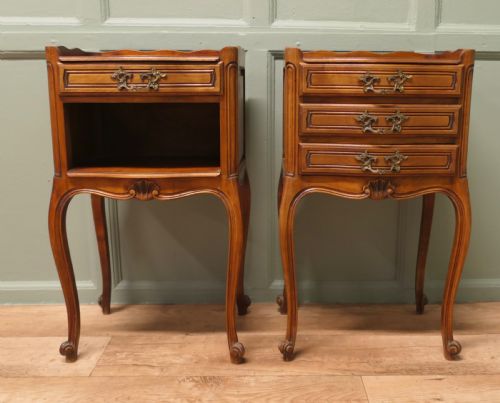
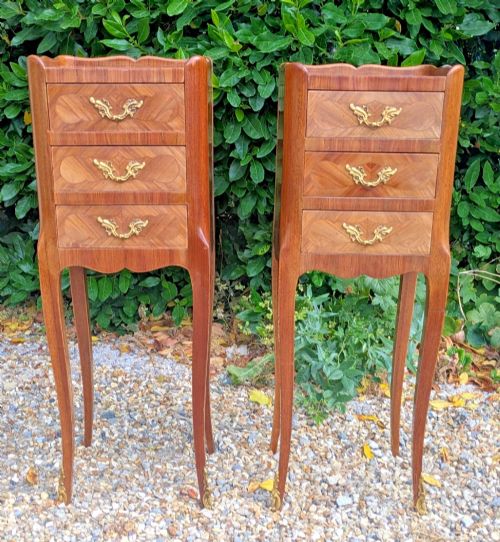
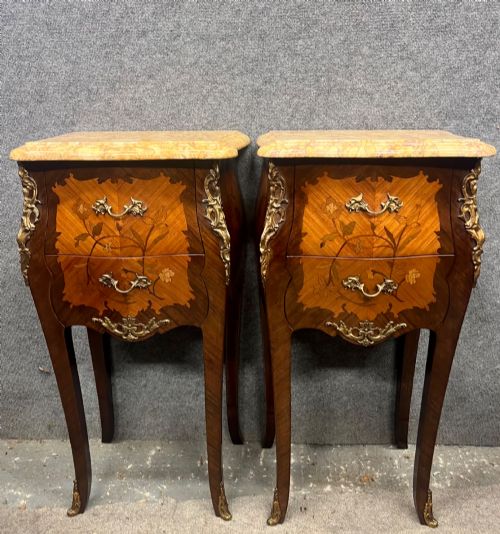
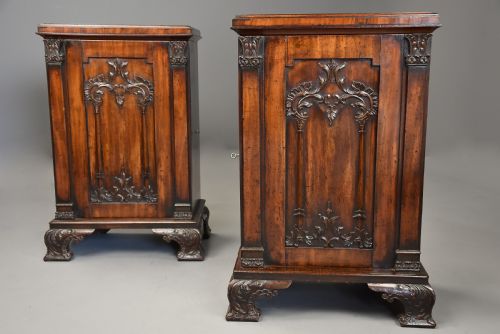


Rococo Nightstands Pair
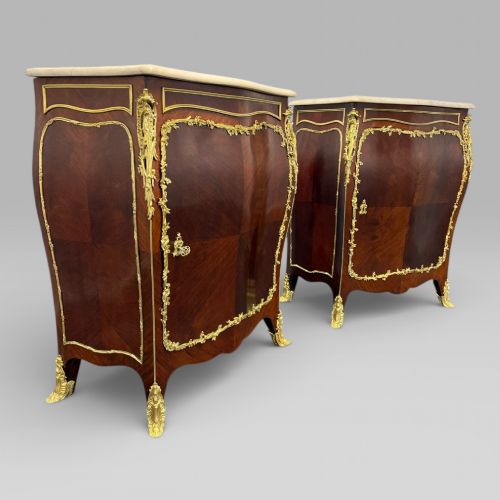
These rococo nightstands pair curved walnut, kingwood and marble forms originating from the eighteenth century through to the twentieth.
Rococo Nightstands Pair
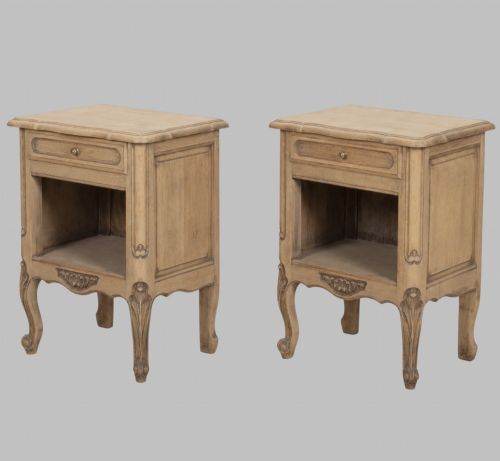
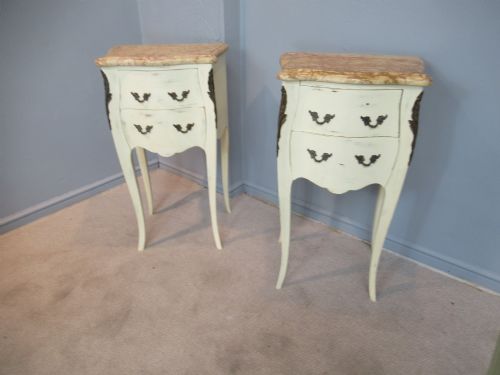
A rococo nightstands pair brings ornate French and Italian styling directly to the bedside, functioning as compact storage or lamp tables. These matching items take the form of miniature commodes, bombe cabinets, and pedestal cupboards designed with characteristic asymmetry and movement.
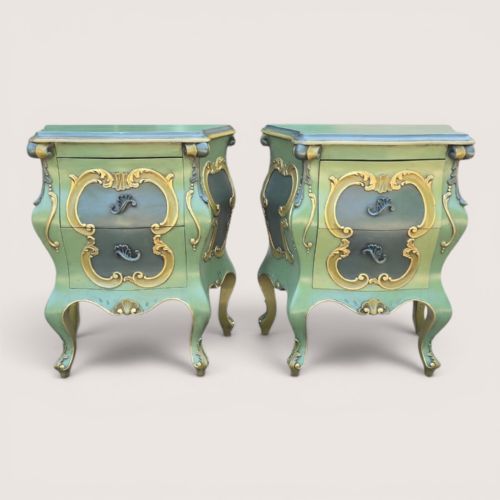
Most examples found here date from the late nineteenth and early twentieth centuries, drawing heavily on Louis XV revival aesthetics rather than strictly originating in the 1700s. Makers produced these matching sets in walnut, kingwood, and painted finishes to satisfy period interior tastes.
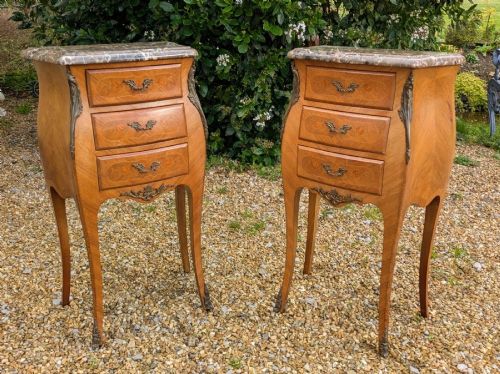
Bedside cabinets and chests appear frequently alongside lamp tables and side cabinets, often topped with fitted marble slabs. The assortment ranges from compact Italian walnut pieces to highly decorative marquetry designs.
How they were made
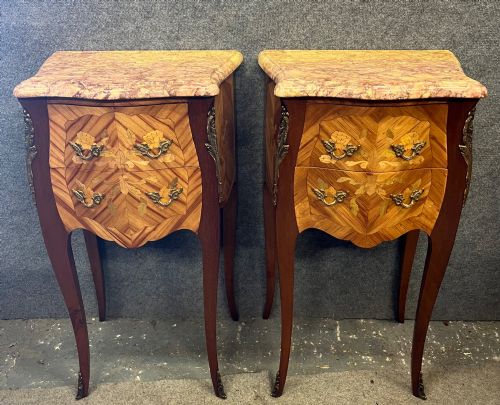
Cabinet makers utilised dense hardwoods including walnut, mahogany, and kingwood as foundations for intricate marquetry and floral inlay work. Carved wooden frames frequently received painted, gilded, or polished treatments to enhance the flowing curves typical of the style.
Slab marble tops, cut to follow the serpentine and bombe contours of the woodwork, were fitted directly to the cabinets to provide durable surfaces. Cast or gilt bronze mounts, known as ormolu, accent handles, corners, and legs on the finer Continental specimens.
Construction methods relied on traditional joinery paired with veneered panels laid over softer secondary timbers to achieve complex curved silhouettes without warping. Brass hardware and hinges secure doors and drawers shaped with distinct rococo profiles.
Listings feature items dated from the 18th Century through to 1930, utilising walnut, marble, kingwood, and ormolu.
What varies in quality
The precision of the marquetry inlay and the selection of figured veneers establish the visual merit of an individual set. Cabinets utilising matched kingwood, burr walnut, or detailed floral patterns demonstrate superior workshop execution compared to simpler painted or plain timber versions.
The integration of heavy marble tops and substantial cast ormolu mounts distinguishes finer examples from standard production pieces. Smooth drawer movement, tight joinery, and the weight of the hardware indicate the original tier of manufacture.
E. Kahn
The Rococo Nightstands Pair Glossary
- Bombe
- A bulging, outward-curving commode or cabinet shape swelling on the front and sides. This silhouette requires advanced veneering and carpentry techniques.
- Marquetry
- Decorative patterns formed by fitting together thin slices of various coloured woods, veneers, and shell. Craftsmen arrange these elements to create floral or geometric scenes across drawer fronts and tops.
- Ormolu
- Gilt bronze mounts and decorative trimmings applied to furniture. These cast metal elements highlight corners, apron mounts, and drawer pulls.
- Kingwood
- A dense, heavily figured tropical timber prized in cabinet making. Its dark grain patterns made it a favored choice for French revival furniture.
- Louis XV Style
- An eighteenth-century design movement characterised by asymmetry, natural motifs, and scrolling curves. Revival pieces borrow these exact ornamental vocabularies.
Rococo Nightstands Pair: Frequently Asked Questions
What periods do these bedside cabinets come from?
The listings span from the eighteenth century up through the early twentieth century, with the majority representing later revivals.
Craftsmen in the late 1800s and 1920s frequently reproduced earlier French and Italian designs for contemporary homes.
Are both tables in a pair identical?
Matching pairs generally mirror one another in proportion, materials, and decorative motifs rather than being strict mirror images of internal construction.
Marquetry patterns and marble veining vary naturally due to the handmade nature of the timber and stone preparation.
How were these cabinets used originally?
Bedside chests and lamp tables served to hold lighting, books, and personal items within bedrooms and private chambers.
Enclosed cupboards and small drawers kept intimate accessories out of sight while complementing grand bed frames.
What materials predominate in these designs?
Walnut, kingwood, and painted wood form the primary structural and decorative surfaces across the available selection.
Many examples incorporate fitted marble tops and brass or ormolu mounts to complete the traditional aesthetic.