



Vintage Makeup Vanity Desk
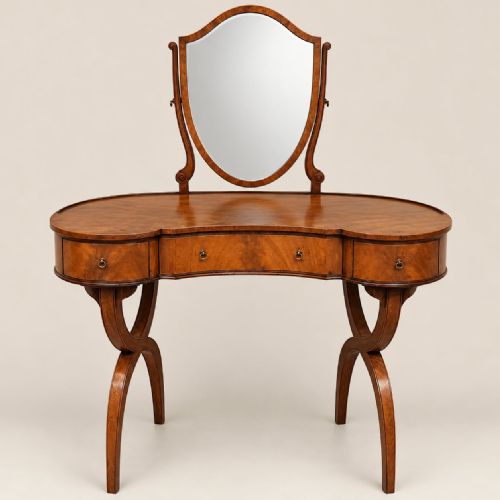
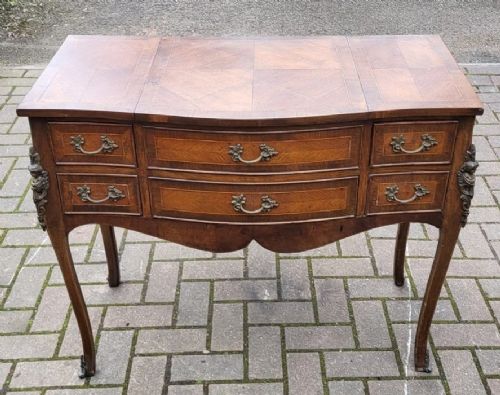
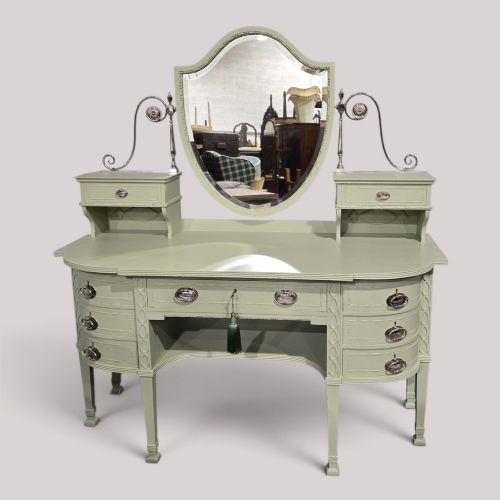
A vintage makeup vanity desk brings a structured place for personal preparation into a bedroom, combining practical mirrors with fitted timber surfaces.
Vintage Makeup Vanity Desk
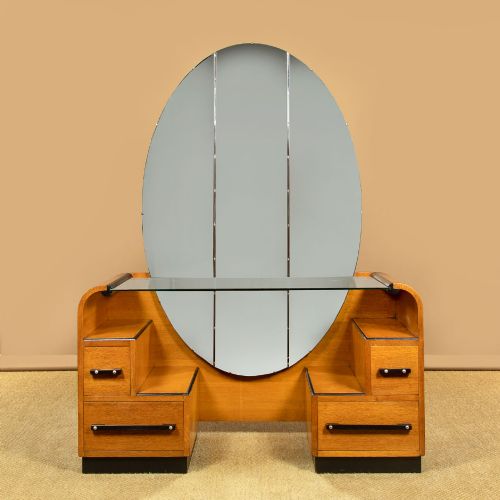
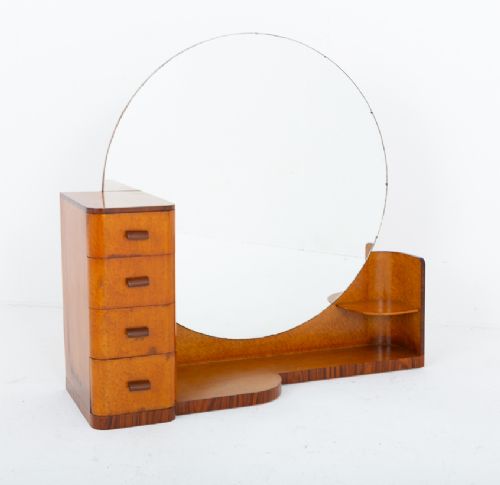
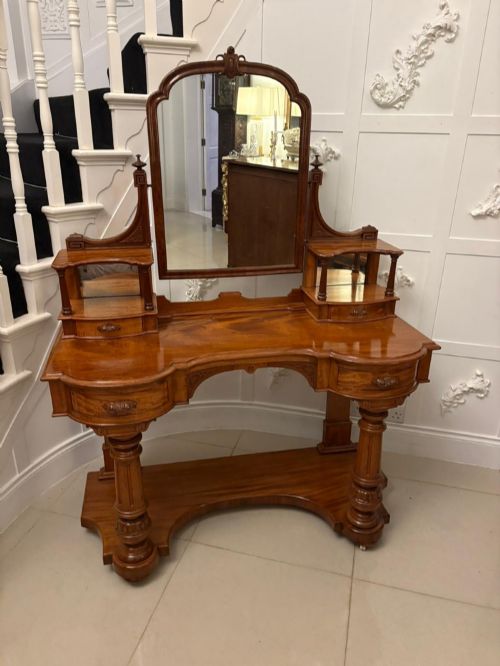
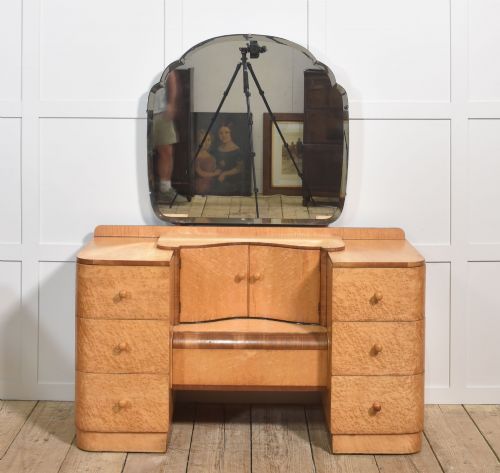
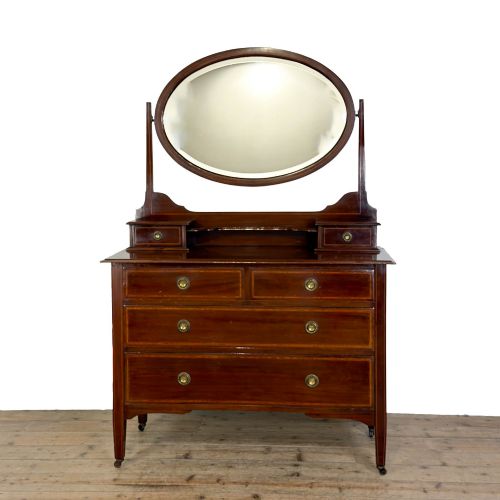
A vintage makeup vanity desk serves primarily as a domestic dressing table equipped for grooming and personal care. The pieces gathered under this heading span from nineteenth century Victorian examples to nineteen-thirties Art Deco designs.
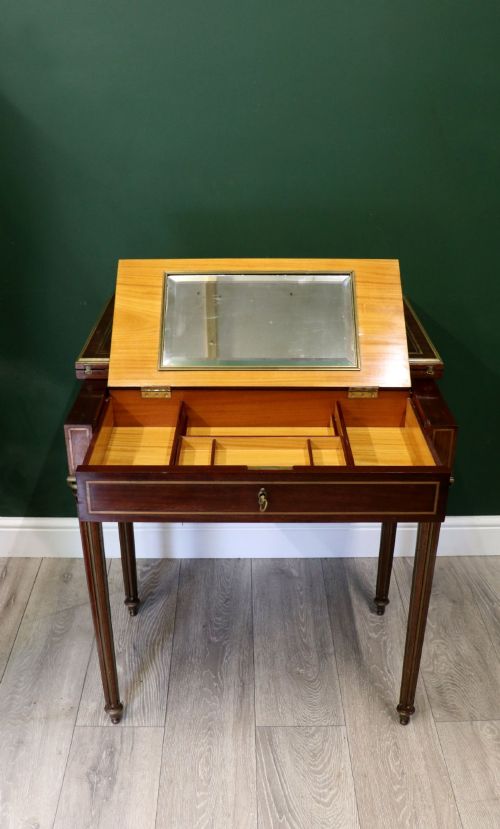
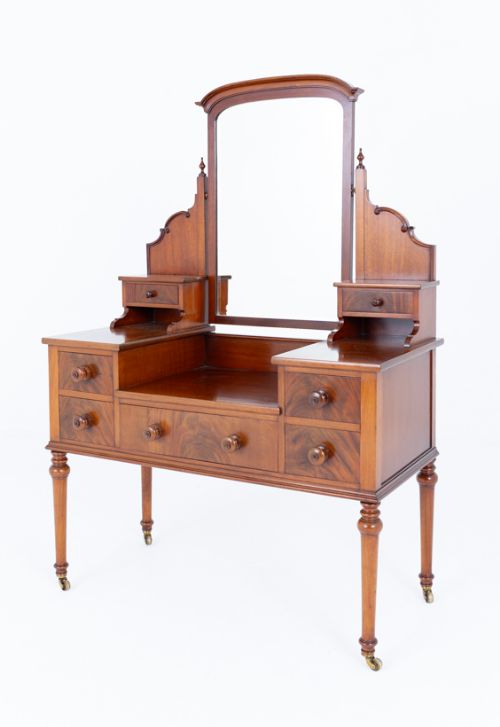
Buyers will encounter substantial walnut and mahogany pedestal dressing tables alongside lighter maple, satinwood, and lacquered Chinoiserie forms. Many retain their original tilting or fixed mirrors, forming the central feature of the dressing station.
The selection ranges from revival styles such as Sheraton and Louis XVI through to clean lined geometric nineteen-thirties interpretations. Oak and burr walnut variants offer heavier proportions, whilst inlaid satinwood and mahogany provide a more refined domestic presence.
Materials and construction methods
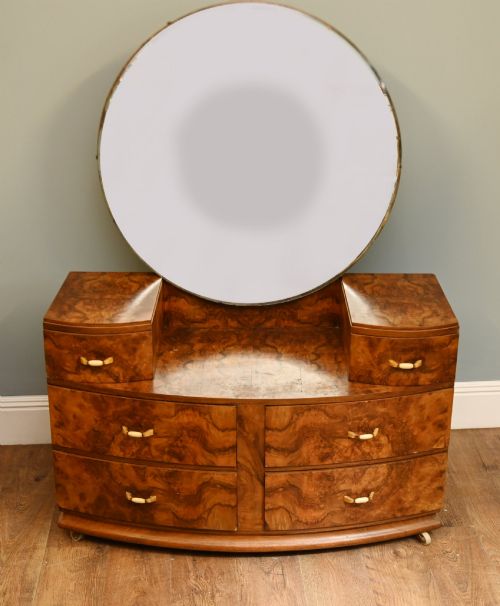
Cabinetmakers utilised solid timbers including mahogany, walnut, and oak for structural carcasses, often applying figured veneers such as burr walnut and birdseye maple to primary display surfaces. Inlaid banding in lighter woods frequently defines the edges of tops and drawer fronts.
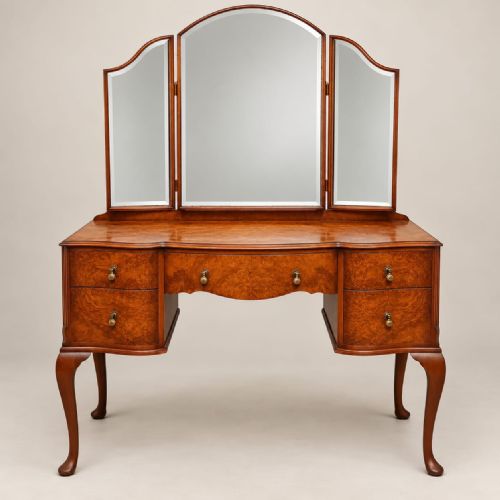
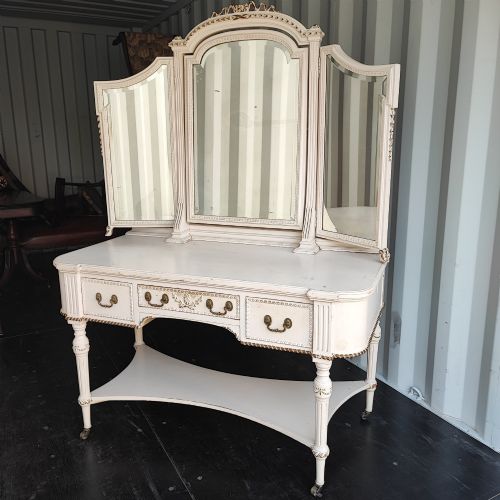
Mirrors incorporated into these tables rely on heavy plate glass, sometimes held in carved wooden frames or integrated into triple mirror arrangements with brass hardware. Surface finishes range from traditional French polish to specialist lacquering and original painted schemes.
Vintage Makeup Vanity Desk Retail Price Guide 2026
Typical asking prices for vintage makeup vanity desk among the pieces listed under this phrase on Sellingantiques today, from the lower quarter to the upper quarter. They describe what is for sale here now, not the wider market.
Listings feature dressing tables spanning the Victorian era, the Edwardian period, and the nineteen-thirties Art Deco movement.
Distinctions in craftsmanship and finish
The degree of refinement in timber selection separates standard items from exceptional pieces, particularly where figured veneers and matching grain patterns are employed across multiple drawers. Superior examples display careful timber preparation where grain continuity is maintained across the front elevation.
Hardware execution and structural joinery define the upper tiers of manufacture, seen in well fitted drawer linings and robust framing that supports heavy mirror assemblies. The integration of specialised maker details or specialised workshop branding elevates particular tables above standard commercial production.
Maples·Betty Joel·Rowley Gallery
The Vintage Makeup Vanity Desk Glossary
- Pedestal dressing table
- A form featuring banks of small drawers on either side of a central kneehole space, supporting a large mirror above.
- Burr walnut
- A highly figured timber veneer taken from the root growths of walnut trees, prized for its swirling grain patterns on table surfaces.
- Triple mirror
- An arrangement of three hinged looking glasses that allows the user to view angles from the side during grooming.
- Inlay
- The technique of fitting contrasting strips or pieces of wood into recessed portions of the primary timber to form decorative borders.
- Chinoiserie
- A decorative style employing simulated Chinese motifs, often rendered in lacquer upon wood surfaces.
Vintage Makeup Vanity Desk: Frequently Asked Questions
How do I care for a walnut vanity?
Keep wooden surfaces away from direct heat sources and strong sunlight to prevent the timber veneers from drying out or splitting.
Apply traditional paste wax sparingly and buff gently with a soft cloth to maintain the lustre of the polished finish without building up residue.
Are the mirrors original?
Original mirrors often display subtle signs of age such as light foxing, minor silvering loss, or slight distortion within the glass plate.
Replacement glass is sometimes fitted during restoration, so inspect the mirror backing and retaining clips to assess whether the component dates from the same period as the table.
How do I identify Art Deco pieces?
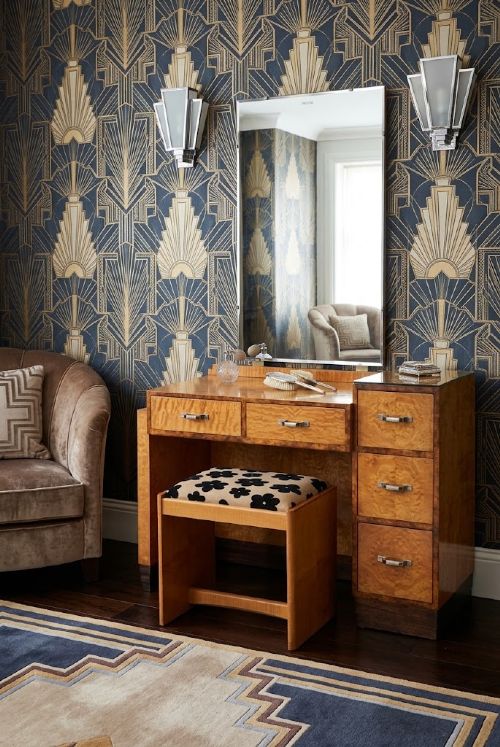
Nineteen-thirties examples typically display streamlined geometric forms, symmetrical drawer arrangements, and extensive use of figured maple or walnut veneers.
Decoration is minimal compared to earlier Victorian or Edwardian models, relying instead on the natural grain of the wood and the clean silhouette of the pedestal structure.
Can I use a vanity desk as a writing table?
Many dressing tables offer adequate knee clearance and surface depth to function comfortably as small writing desks within a bedroom or study.
Consider the height of the kneehole space and the placement of internal small drawers to ensure your seating and legroom requirements are met.