




Carved Walnut Vanity Mirror
A carved walnut vanity mirror brings warmth and reflective depth to a room, offering period charm through rich wood grain and careful hand-shaping.
Carved Walnut Vanity Mirror
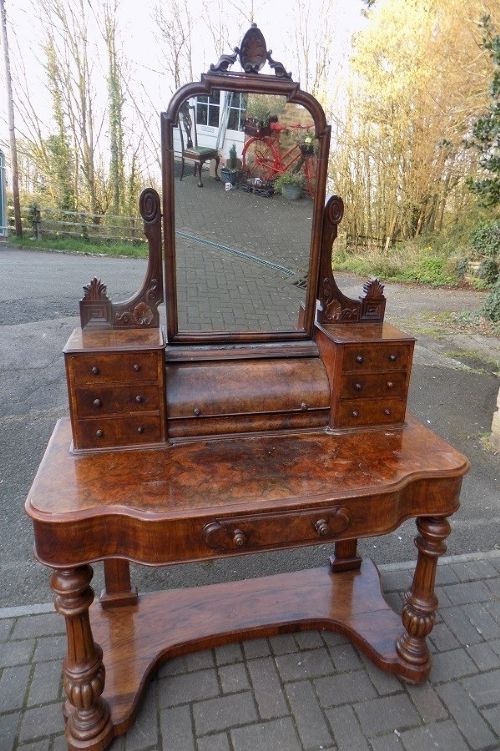
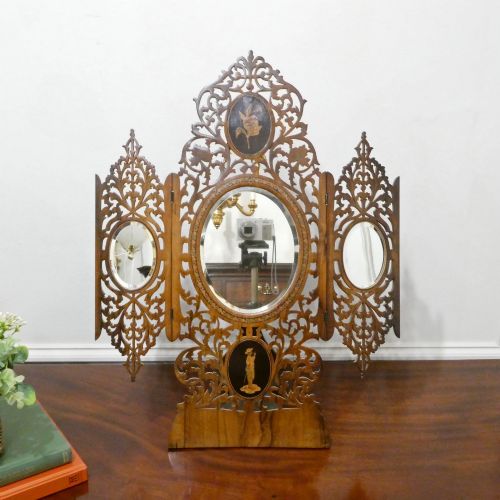
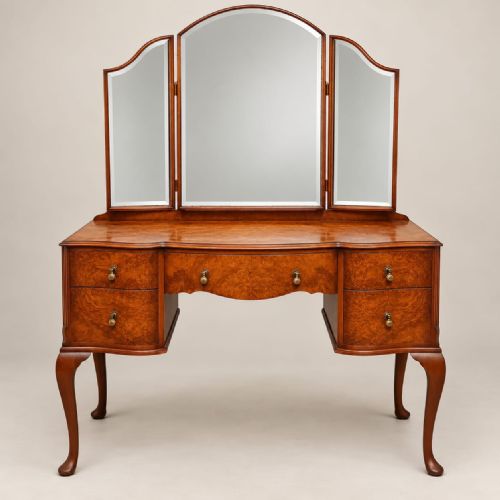
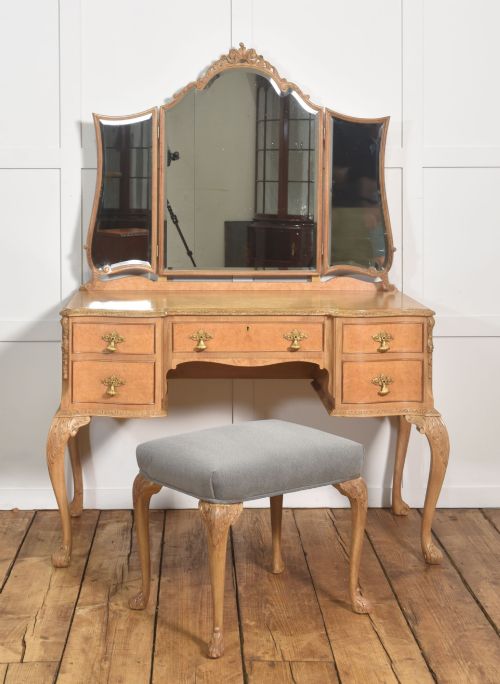
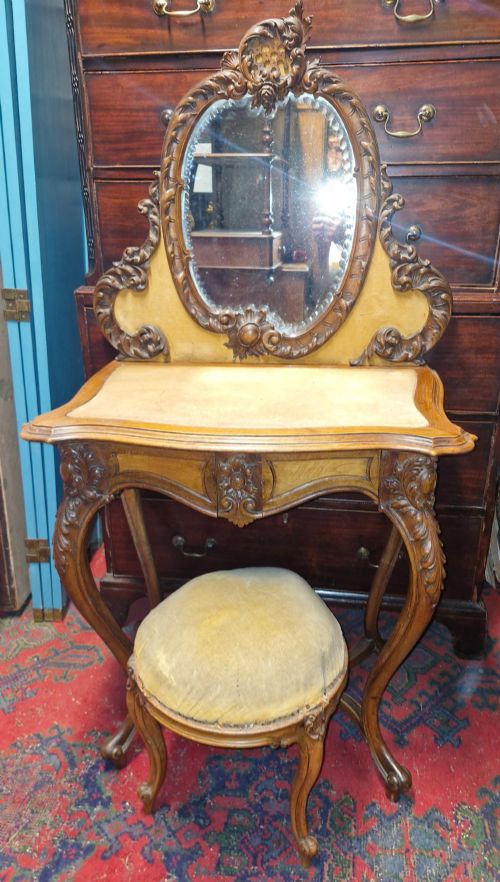
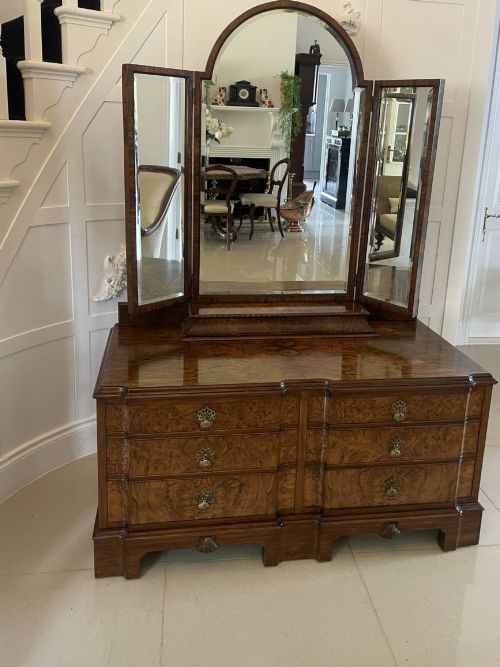
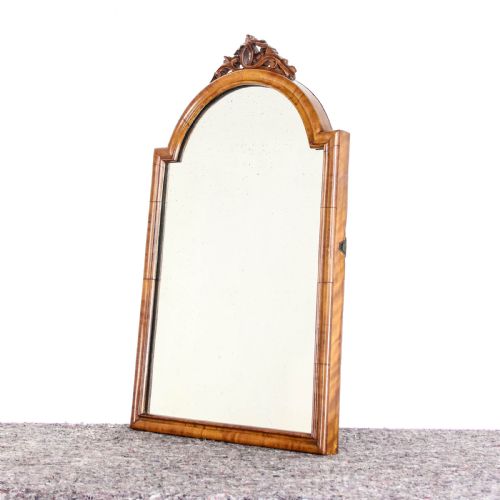
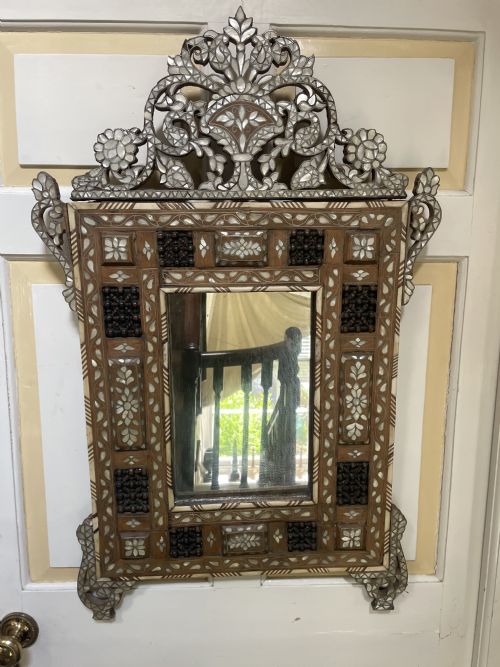
When you search for a carved walnut vanity mirror, you encounter pieces designed for tabletop placement, wall hanging, or integration into larger dressing furniture. The selection ranges from compact Georgian toilet glasses to larger Victorian duchess dressing tables featuring adjustable pivoting plates.
The materials span plain timber and decorative burr veneers, accompanied by original mirror glass and occasionally parcel gilt accents or brass hardware. Influences stretch across Queen Anne, Georgian, Victorian, and Art Deco styles, showing how makers adapted the form across different centuries.
How they were made
Cabinetmakers utilised solid walnut and figured burr walnut veneers applied to secondary woods, bringing out the natural grain patterns through polishing. Frames often incorporated hand-carved details, fretwork silhouettes, or applied gilding to enhance the decorative outline.
Mirrors relied on heavy plate glass, sometimes bevelled at the edges, secured into movable frames with brass pivot screws or mounted onto supportive upright standards above small drawer bases.
Carved Walnut Vanity Mirror Retail Price Guide 2026
Typical asking prices for carved walnut vanity mirror among the pieces listed under this phrase on Sellingantiques today, from the lower quarter to the upper quarter. They describe what is for sale here now, not the wider market.
Listings span from the 18th century through to the 1930s, featuring walnut, burr walnut, glass, brass, and giltwood across diverse historical revivals.
What varies in quality
The distinction between ordinary and exceptional pieces lies in the choice of timber and the crispness of the carving. Richly figured burr walnut veneers and deeply carved architectural mouldings separate high-status examples from simpler utilitarian items.
Proportion and originality dictate lasting appeal, where surviving mercury glass plates, intact brass fixtures, and untouched period surfaces command greater respect among collectors.
The Carved Walnut Vanity Mirror Glossary
- Burr walnut
- A prized veneer sliced from irregular growths on the walnut tree, showing swirling, highly decorative grain patterns. It was frequently utilised on high-end furniture fronts and mirror frames.
- Toilet mirror
- A smaller tabletop mirror, often fitted with small drawers beneath, designed for grooming rather than full-length viewing. These pieces sat atop chests of drawers or dedicated dressing tables.
- Fret mirror
- A wall-hanging glass featuring an intricately pierced wooden frame, often executed in a silhouette associated with the Georgian period. The fretwork required precise hand-cutting.
- Parcel gilt
- A decorative technique where specific carved details or mouldings on a wooden frame receive a thin layer of gold leaf while the surrounding walnut remains exposed.
Carved Walnut Vanity Mirror: Frequently Asked Questions
How do I date a walnut mirror?
Dating relies on examining the construction methods, the bevelling of the glass, and the specific decorative style. Eighteenth-century pieces often feature distinct cabinet joinery and thinner mirror plates.
Later Victorian and revival interpretations incorporate heavier frames and machine-cut screws, reflecting the manufacturing shifts of the nineteenth and twentieth centuries.
Are these mirrors meant for walls or tables?
The selection includes both hanging wall mirrors and tabletop dressing glasses. Tabletop versions usually feature upright supports and small drawer bases.
Wall-hanging variants rely on secure rear brackets or brass rings intended for direct mounting on a plaster surface.
What is a duchess dressing table?
A duchess dressing table is a large nineteenth-century form that incorporates a prominent pivoting mirror flanked by smaller trinket drawers. The overall structure often includes a curved front and substantial pedestal supports.
These elaborate pieces served as both functional dressing stations and primary decorative focal points in Victorian bedrooms.
How should I care for old walnut wood?
Maintenance requires keeping the timber away from direct sunlight and extreme humidity fluctuations to prevent veneer cracking. Gentle dusting with a dry, soft cloth preserves the polished finish.
Avoid silicone-based sprays, opting instead for traditional wax formulations when the surface requires nourishment.