


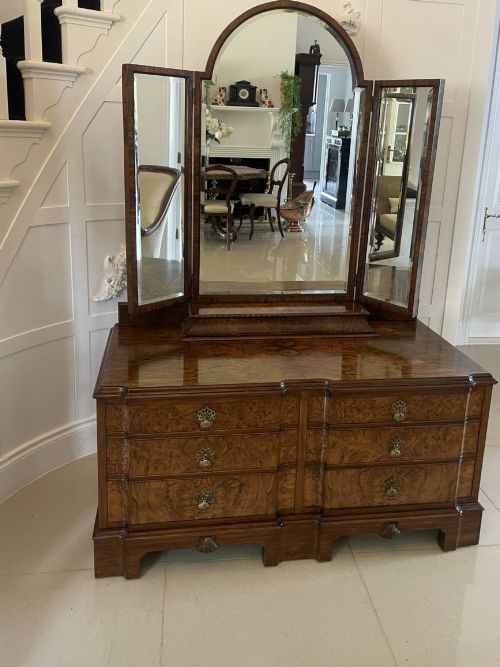
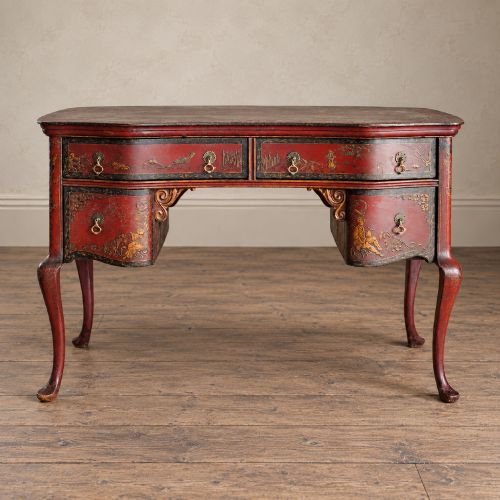
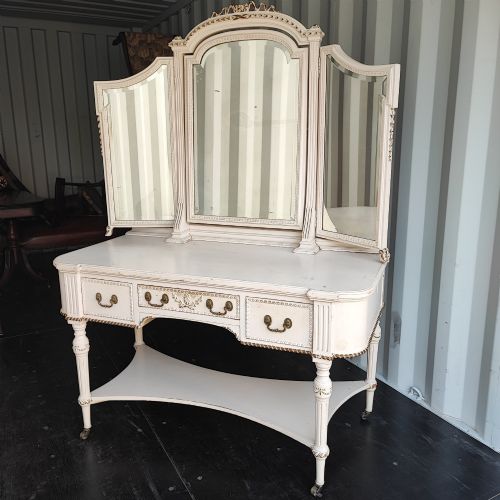
Edwardian Style Dressing Table
An Edwardian style dressing table brings refined proportion and polished timber to the bedroom, combining period elegance with practical surface space.
Edwardian Style Dressing Table
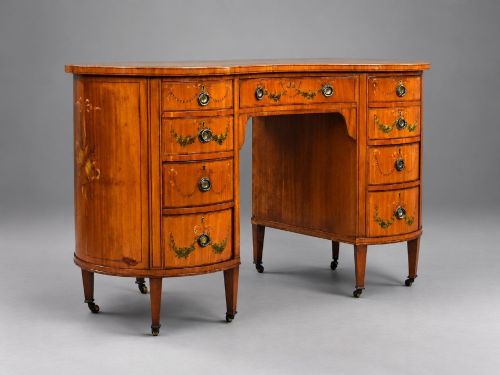
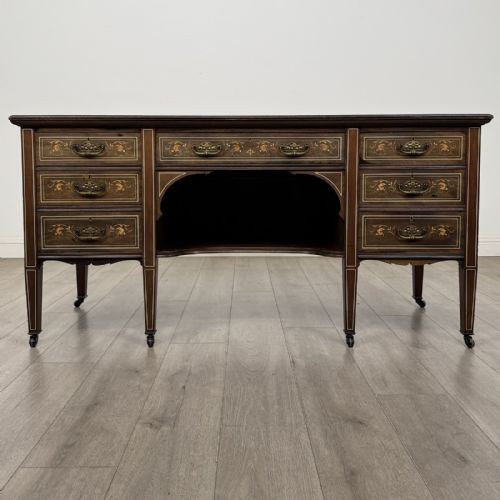
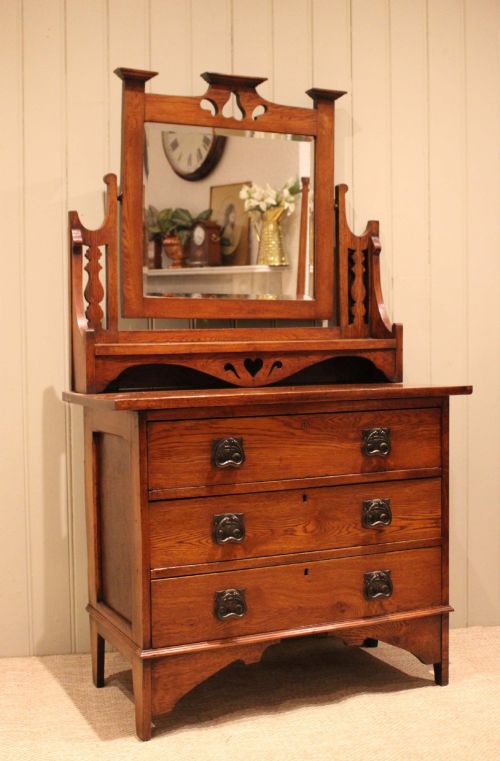
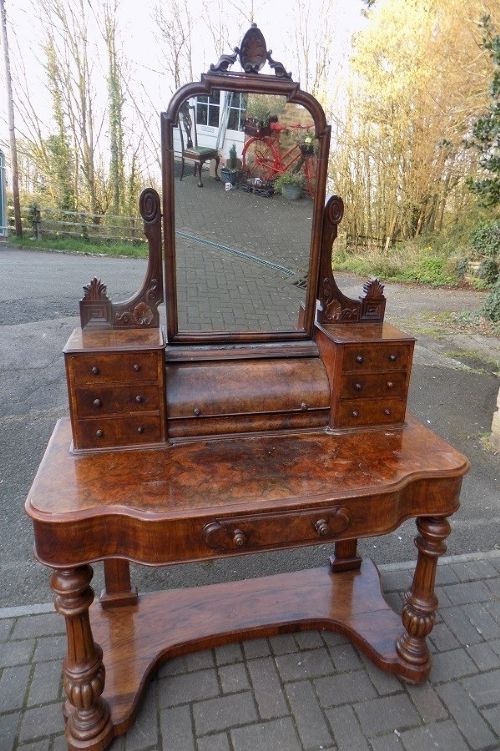
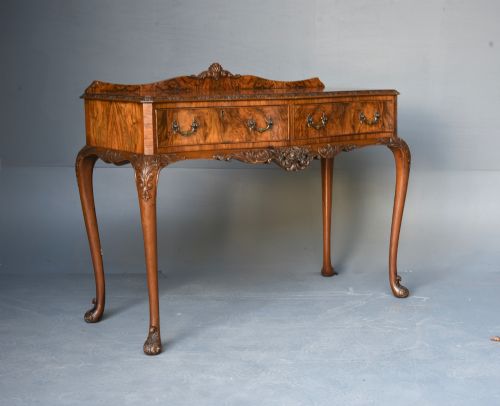
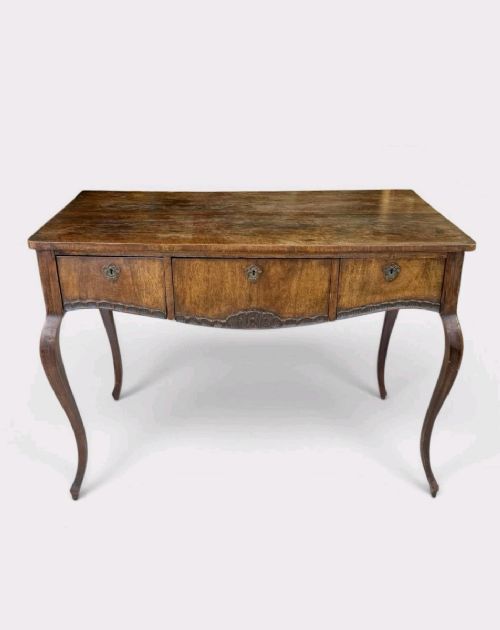
An Edwardian style dressing table represents the sophisticated furniture design of the early twentieth century, drawing heavily on earlier Georgian and Sheraton forms. These pieces often feature kneehole layouts, multi-drawer arrangements, or attached mirrors designed for personal grooming.
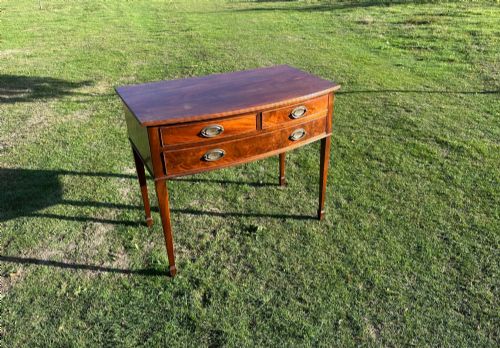
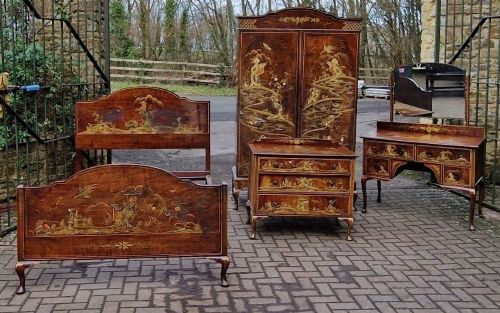
The versions most commonly found here date from the Edwardian period and the surrounding decades, constructed in rich timbers like mahogany, walnut, and satinwood. Many incorporate revivalist aesthetics, blending classical symmetry with the lighter proportions favoured at the turn of the century.
How they were made
Cabinet makers constructed these dressing tables using solid hardwoods and decorative veneers, applying mahogany, burr walnut, and satinwood over stable secondary timbers. Drawer linings frequently employ pine or oak, joined with traditional dovetailing to ensure durability.
Surface ornamentation relied on fine line inlay, cross-banding, and hand-polished finishes that highlighted the natural grain of the timber. Brass hardware, including swing handles and key escutcheons, completed the construction alongside bevelled mirror glass in pivoting frames.
Edwardian Style Dressing Table Retail Price Guide 2026
Typical asking prices for edwardian style dressing table among the pieces listed under this phrase on Sellingantiques today, from the lower quarter to the upper quarter. They describe what is for sale here now, not the wider market.
Listings feature periods spanning from the Victorian era through the Edwardian years and into the nineteen thirties.
What varies in quality
The standard of a dressing table rests on the selection of timber veneers and the precision of the cabinet work, particularly around curved drawer fronts and inlaid stringing. Superior examples display continuous grain matching and crisp, hand-carved details rather than cast resin ornaments.
Secondary elements such as the clarity of the original mirror glass, the weight of the brass mountings, and the intactness of interior drawer divisions distinguish finer workshops from mass-produced commercial output.
Maples of London and Paris·Wylie and Lochhead Glasgow·Maple and Co·William Comyns
The Edwardian Style Dressing Table Glossary
- Kneehole
- A recessed central space beneath a desk or dressing table designed to accommodate the user's legs. It is flanked by banks of smaller drawers.
- Satinwood
- A durable, highly figured exotic timber displaying a golden lustre and smooth sheen. It was frequently used for fine Edwardian ladies writing desks and dressing tables.
- Sheraton Revival
- A late nineteenth and early twentieth century design movement that reinterprets the classical, restrained furniture forms of Thomas Sheraton. Pieces often feature delicate inlay and tapering legs.
- Stringing
- A narrow strip of contrasting wood inlaid into the surface of a piece to create decorative borders. This technique is typical of finer Edwardian cabinetry.
- Superstructure
- A set of small drawers, shelves, or a mirror attached to the top surface of a desk or dressing table. It adds vertical interest and extra storage.
Edwardian Style Dressing Table: Frequently Asked Questions
What is an Edwardian style dressing table?
An Edwardian style dressing table is a wooden vanity piece originating from the early twentieth century, known for its lighter proportions and classical revival details.
These tables frequently incorporate mirrors, multiple small drawers, and polished mahogany or walnut surfaces designed for bedroom use.
How do I date an Edwardian dressing table?
Dating relies on examining construction methods, timber choices, and hardware styles. Edwardian pieces often use machine-sawn internal components alongside hand-dovetailed drawers.
Makers' marks, brass lock stamps, and paper labels can also provide specific periods of manufacture between eighteen eighty and nineteen thirty.
Are mirrors original to these dressing tables?
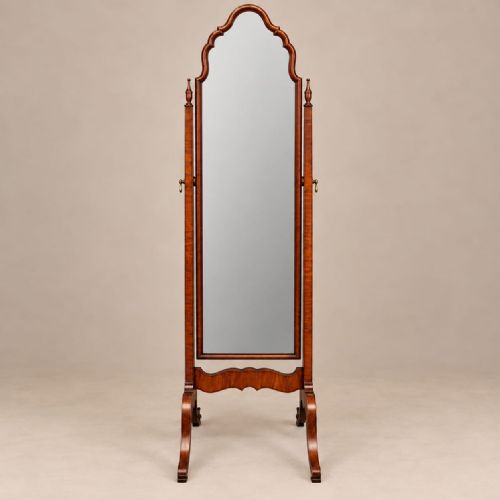
Many dressing tables retain their original pivoting swing mirrors, held within matching timber frames and supported by upright arms.
Over time, mirror glass can develop silvering degradation or replacement, so inspecting the bevel and backing helps determine authenticity.
Where should I place a dressing table?
These tables suit bedrooms and dressing rooms, positioned near a natural light source to make best use of the mirror.
They pair well with low stools or chairs that fit neatly beneath the kneehole space when not in use.