
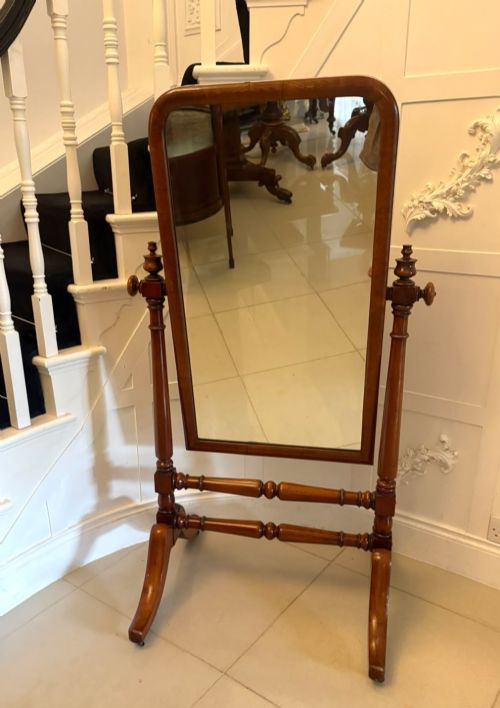
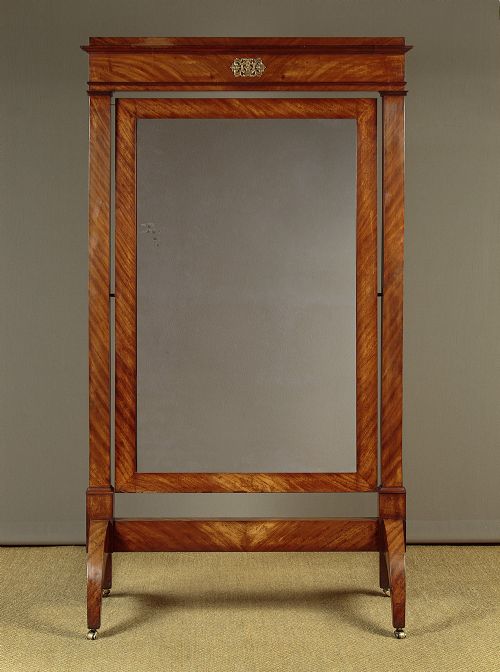
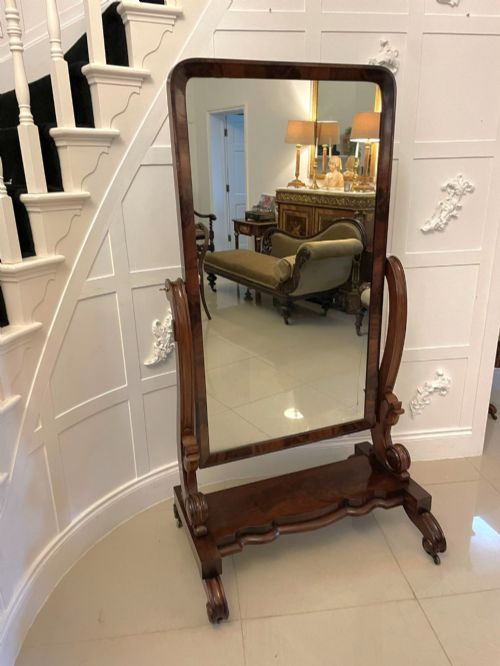
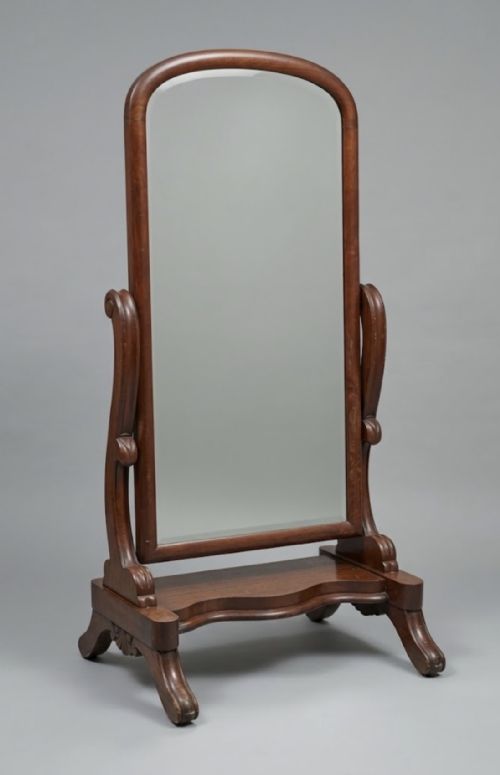
Vintage Mahogany Cheval Mirror
A vintage mahogany cheval mirror gives a room a full-length reflection framed in rich timber.
Vintage Mahogany Cheval Mirror
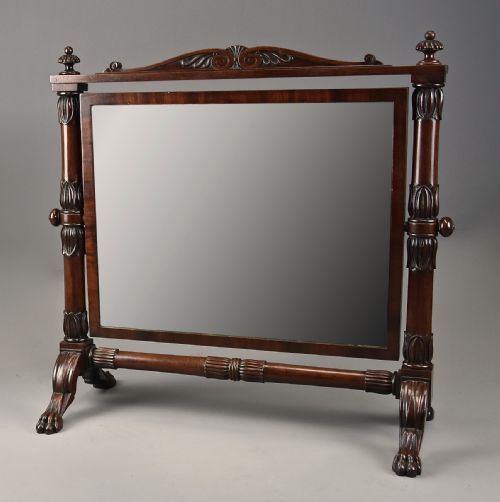
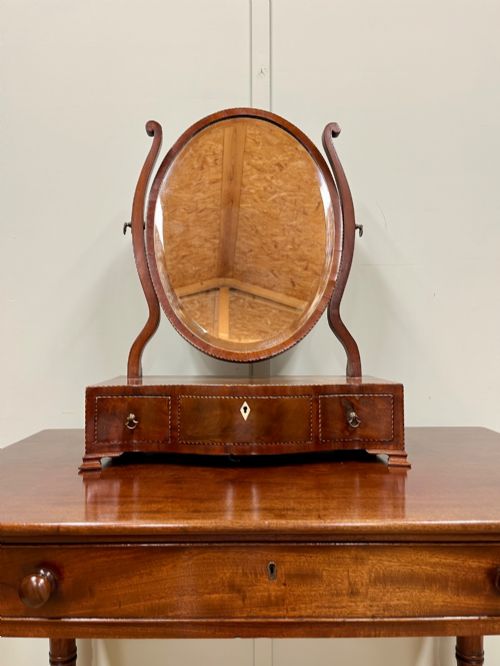
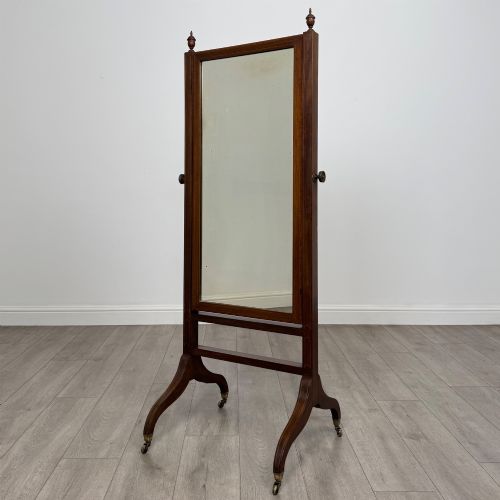
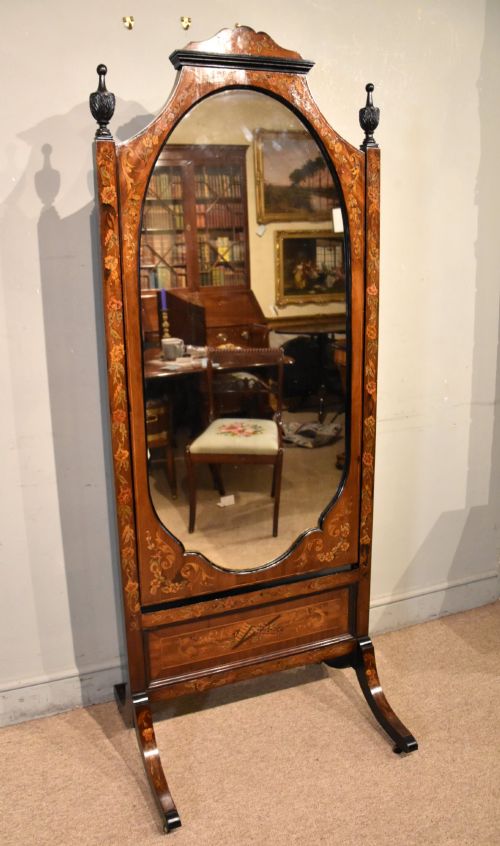
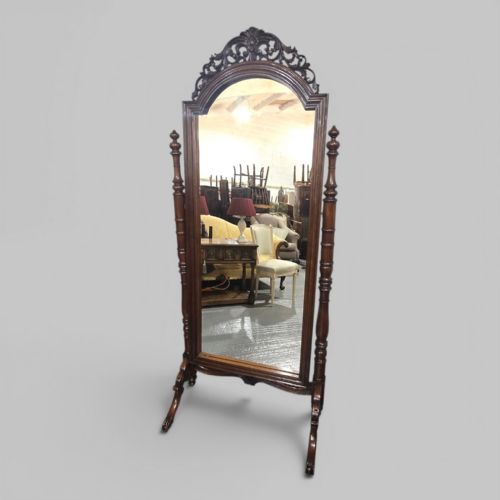
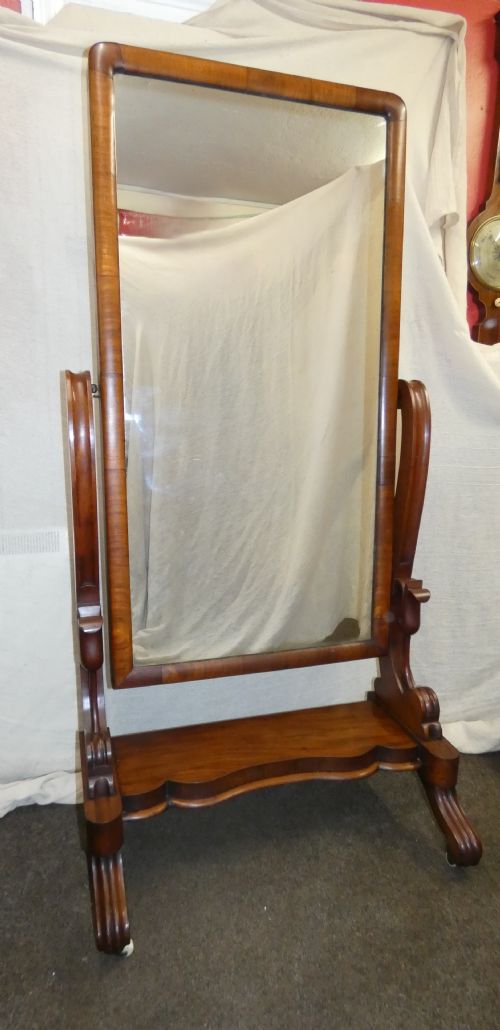
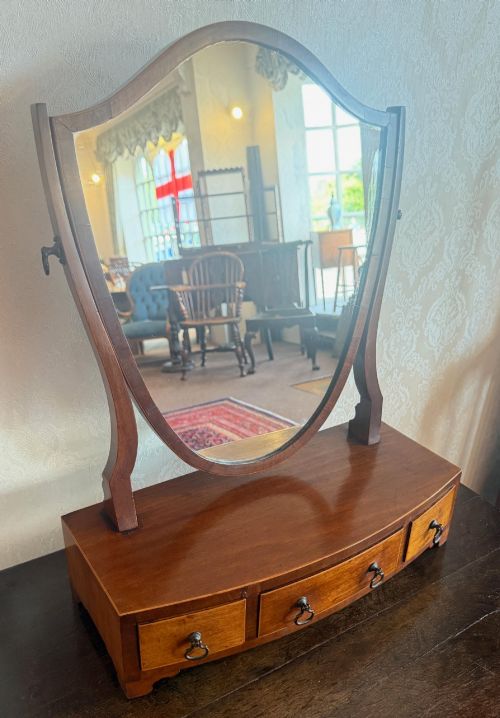
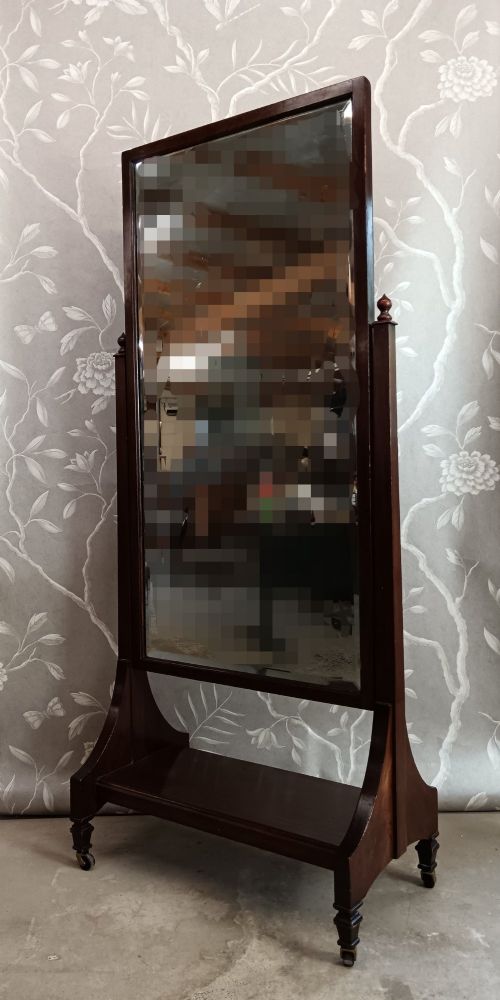
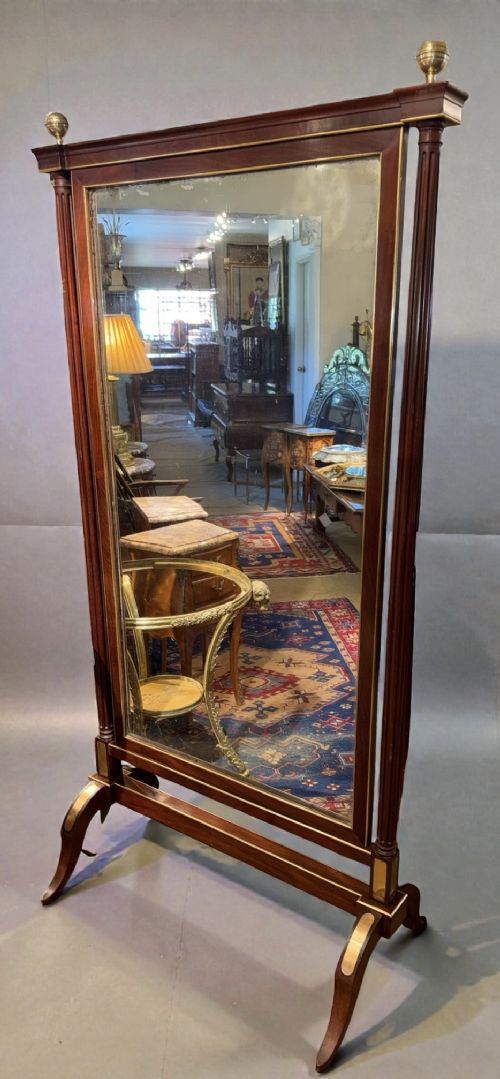
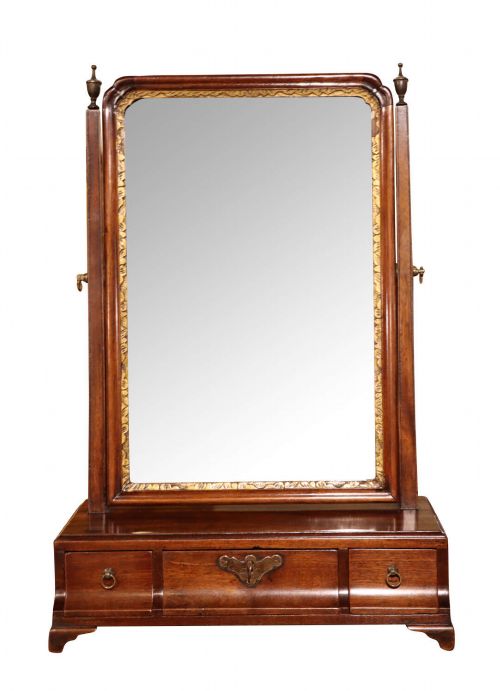
When you search for a vintage mahogany cheval mirror, you are looking at freestanding floor-standing dressing mirrors designed to tilt within a vertical frame. The examples you meet on this page span several eras, from Georgian and Regency pieces through to Victorian, William IV, Edwardian, and later 20th-century variations. They appear as large floor-standing cheval mirrors or smaller table-top dressing and toilet mirrors.
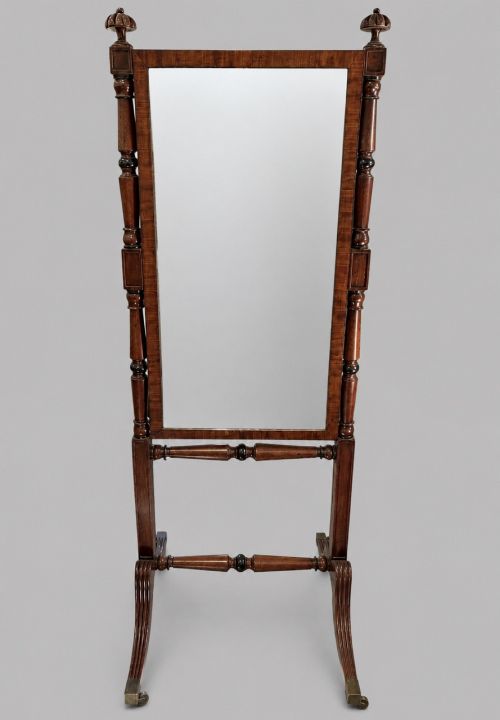
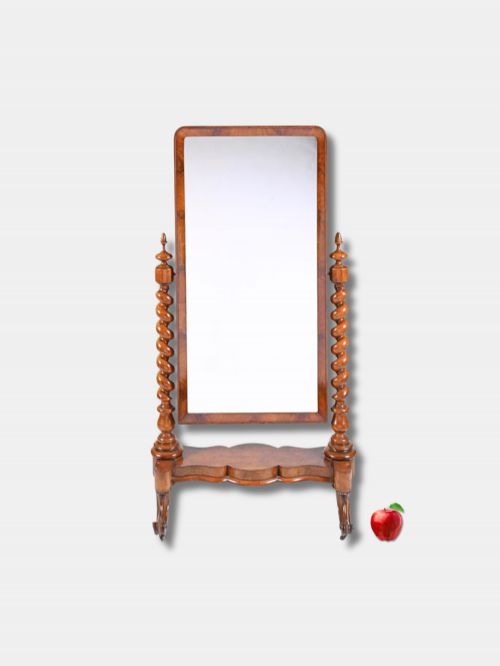
The form is built for utility and presence, often standing on sabre legs, barley twist supports, or solid bases sometimes fitted with drawers. Many pieces use Cuban mahogany or flame mahogany, occasionally enhanced with satinwood, marquetry inlay, bone, or brass mounts. They bring practical scale and traditional cabinet-making into a bedroom or dressing room.
How they were made
Cabinet-makers relied on solid mahogany and rich veneers like Cuban mahogany and flame mahogany to build the structural frames and swinging mirror housings. These timbers were selected for deep grain patterns and finished with a polished surface that highlighted the natural red-brown tones.
Metal and glass components completed the construction, utilising mirror glass held within adjustable pivots, alongside brass sabots, castors, and decorative bone details. Structural supports ranged from simple turned columns to elaborate barley twists and sabre legs designed to bear the weight of the pivoting glass.
Vintage Mahogany Cheval Mirror Retail Price Guide 2026
Typical asking prices for vintage mahogany cheval mirror among the pieces listed under this phrase on Sellingantiques today, from the lower quarter to the upper quarter. They describe what is for sale here now, not the wider market.
Listings feature mahogany, glass, brass, satinwood, Cuban mahogany, bone, and marquetry inlay.
What varies in quality
The distinction between standard examples and the finest pieces lies in the choice of timber and the depth of the cabinet-maker's skill. Superior items feature highly figured Cuban or flame mahogany, crisply carved details, and substantial proportions rather than basic veneering over secondary woods.
Hardware and stability also define the upper tier of the range, visible in heavy brass castors, well-cast sabots, and smooth pivoting mechanisms that hold the glass firmly at any angle without sagging.
P & MA Nicholson
The Vintage Mahogany Cheval Mirror Glossary
- Cheval mirror
- A freestanding full-length dressing mirror mounted on a vertical frame with pivots that allow the glass to swing. The term originates from the French word for horse.
- Toilet mirror
- A smaller dressing mirror designed to sit atop a table or chest of drawers, frequently featuring small drawers in the base.
- Cuban mahogany
- A dense, richly figured timber harvested in the Caribbean, highly prized for fine British cabinet-making from the 18th century onwards.
- Sabot
- A metal sleeve or cap fitted to the foot of a furniture leg, commonly cast in brass on Regency and William IV pieces.
- Barley twist
- A turned wooden column carved in a helical screw pattern, popular on Victorian supports and framing.
Vintage Mahogany Cheval Mirror: Frequently Asked Questions
What is a cheval mirror?
A cheval mirror is a tall, freestanding dressing glass that swings on pivots within a secure wooden frame.
It allows a person to check their entire outfit from head to toe without needing wall fixings.
Where should I place a cheval mirror?
These mirrors work best in bedrooms, dressing rooms, or large hallways where floor space permits freestanding placement.
Positioning them near a light source helps maximise the reflection and brightens the surrounding room.
Are these mirrors stable?
Most floor-standing cheval mirrors use wide splayed legs, heavy bases, or substantial side supports to stay balanced.
Many period examples also feature original brass castors that make repositioning easy while maintaining a grounded stance.