
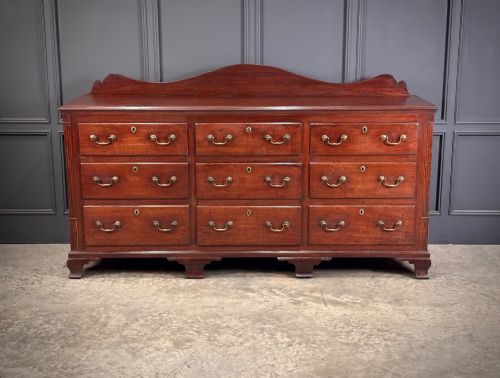
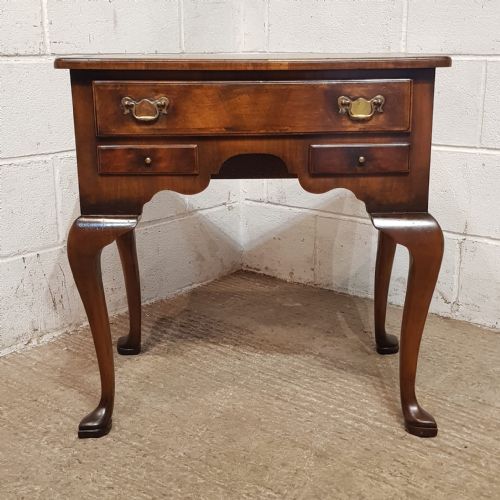
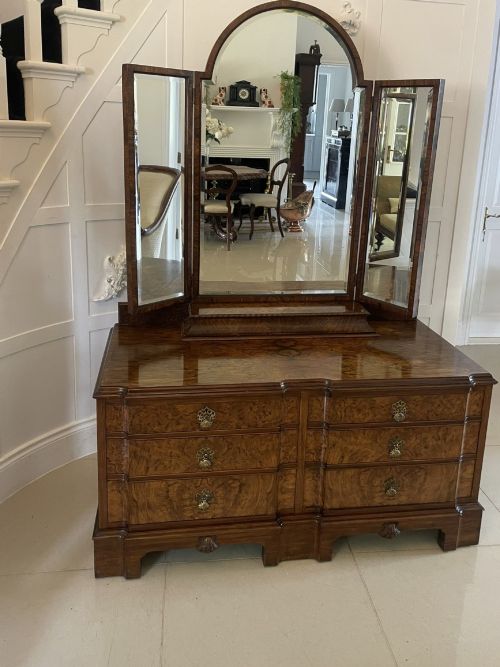
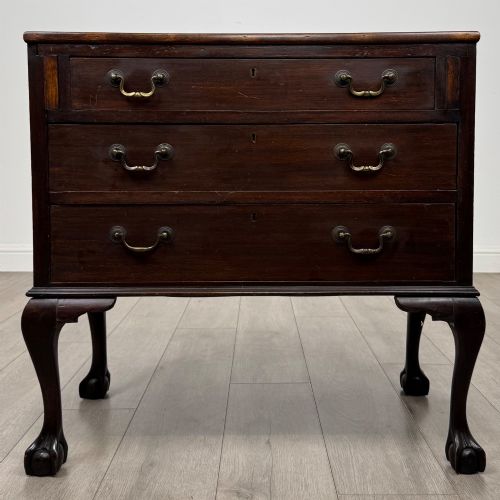


Vintage Lowboy Chest
These vintage lowboy chest pieces offer low-slung, practical storage shaped by centuries of cabinet-making tradition.
Vintage Lowboy Chest
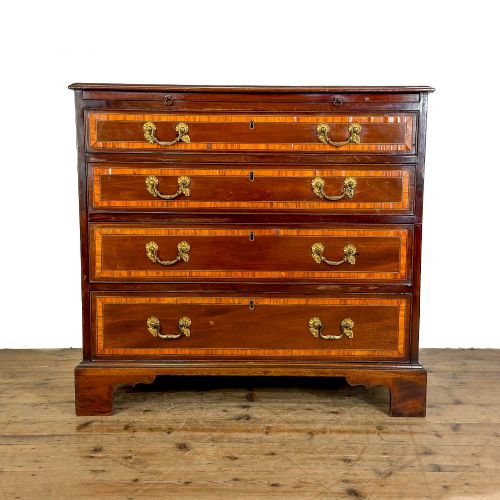
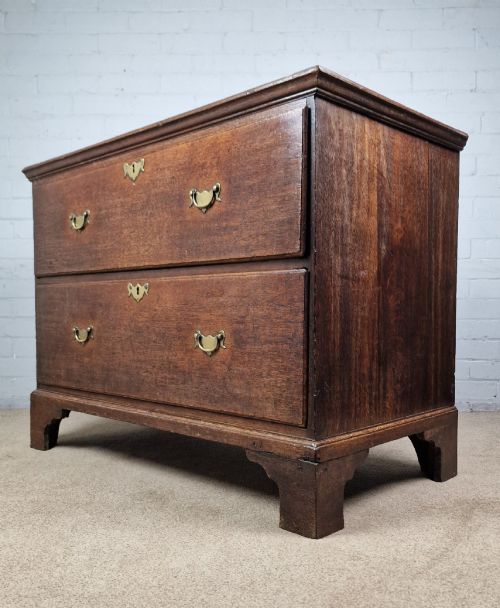
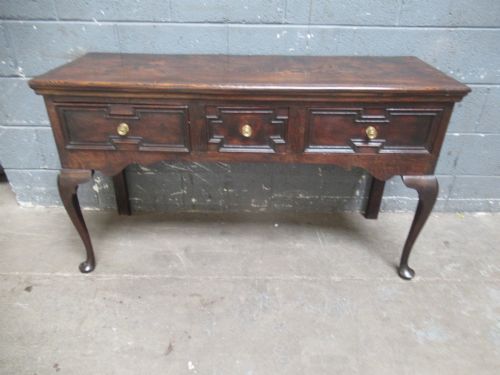
A vintage lowboy chest combines compact proportions with deep drawers, taking forms such as side tables, dressing tables, and dresser bases. These items emerge from periods spanning the eighteenth century through the twentieth century, encompassing Georgian, Edwardian, and Art Deco eras.
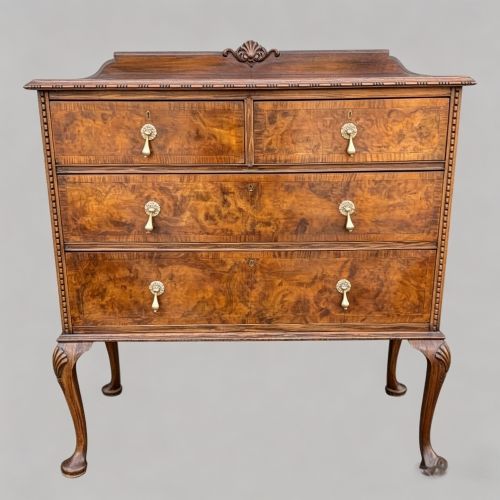
The version most commonly met on this page is a low-standing walnut or oak piece, often styled in the Queen Anne or Georgian revival manner. Such items function flexibly as hall tables, side cabinets, or low chests of drawers within domestic spaces.
How they were made
Cabinet-makers constructed these pieces using solid timbers like oak, mahogany, and walnut, frequently applying burr walnut veneer to create decorative surface patterns. Brass hardware, including handles and escutcheons, secures the drawer fronts and adds functional detail.
Joinery methods rely on traditional framing and dovetailing techniques appropriate to each period, from eighteenth-century country house carpentry to twentieth-century traditional workshop methods. Mirror glass appears on dressing table variations, while painted finishes define oriental style interpretations.
A solitary piece brings an oriental painted finish to the lowboy format, proving that even traditional cabinet makers enjoyed a brush with the exotic.
What varies in quality
The distinction between tiers of quality rests upon the selection of timber figures, particularly the grain matching in burr walnut veneers and the depth of colour in solid mahogany and oak. Finer examples display meticulous attention to proportion, subtle carving, and harmonious integration of brass handles.
Construction integrity also separates standard items from superior pieces, seen in the hand-cut dovetail joints of the drawers and the structural stability of the carcase. The handling of revival styles dictates whether a piece achieves authentic period grace or reads as a simpler commercial execution.
Whytock and Reid
The Vintage Lowboy Chest Glossary
- Lowboy
- A traditional low-standing table or chest fitted with drawers, commonly used as a side table or dressing surface. It sits on relatively short legs.
- Burr Walnut
- Timber taken from the gnarled growth of a walnut tree, sliced into veneer to create swirling, highly decorative grain patterns. It requires expert application.
- Dovetail
- A traditional interlocking joint used in drawer construction, prized for its tensile strength and resistance to being pulled apart. Hand-cut variations indicate older craftsmanship.
- Chinoiserie
- European decorative style reflecting Chinese artistic motifs, often rendered through painted designs on furniture surfaces. It gained popularity across various revival periods.
- Dresser Base
- The lower section of a traditional dresser, comprising cupboards and drawers without the upper plate racks. These form sturdy low storage units.
Vintage Lowboy Chest: Frequently Asked Questions
What is a lowboy chest?
A lowboy chest is a compact, low-profile storage item featuring drawers, functioning as a side table, dressing table, or small cabinet. The form bridges the gap between a table and a chest of drawers.
Such pieces serve well in hallways, living rooms, and bedrooms where floor space is limited but surface display and enclosed storage are needed.
How old are these pieces?
The listings span from the eighteenth century through to the early twentieth century, including Edwardian and Art Deco eras. Revival styles from the 1920s and 1930s frequently replicate earlier eighteenth-century aesthetics.
Examining the construction methods, timber types, and hardware helps distinguish genuine eighteenth-century examples from twentieth-century revivals.
Where were lowboys used?
Historically, lowboys served as dressing tables in bedchambers or as side tables in formal rooms for holding mirrors and personal items. Their modest height made them versatile for multiple household tasks.
In modern interiors, they adapt readily as media units, hallway consoles, or compact drawer chests in smaller rooms.
How do I care for walnut veneer?
Walnut veneer requires protection from direct sunlight to prevent fading and from excessive moisture changes that can cause lifting. Gentle dusting with a dry cloth maintains the polished surface.
Applying occasional appropriate wax preserves the depth of the grain without building up a heavy residue.