


Vintage Leather Writing Table
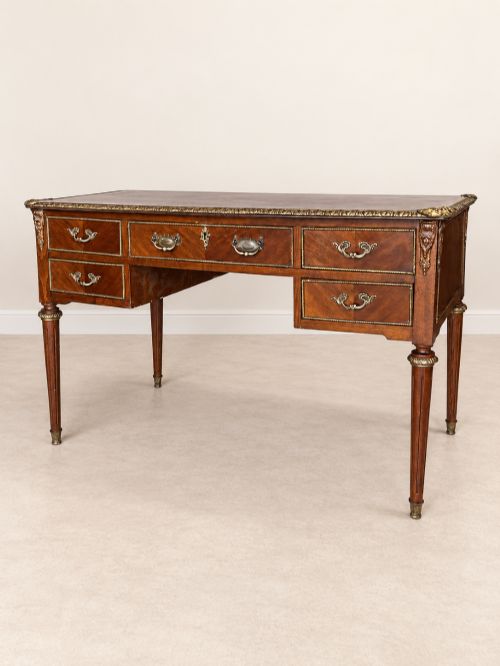
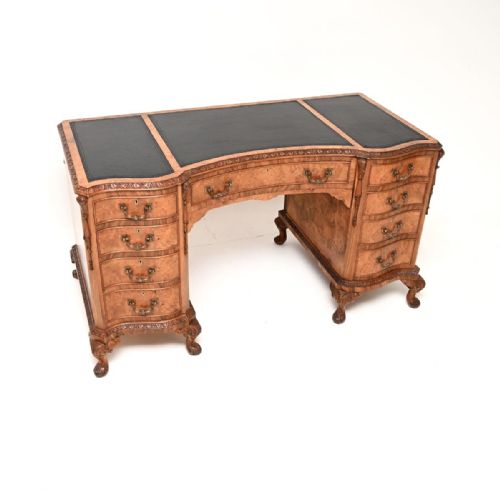
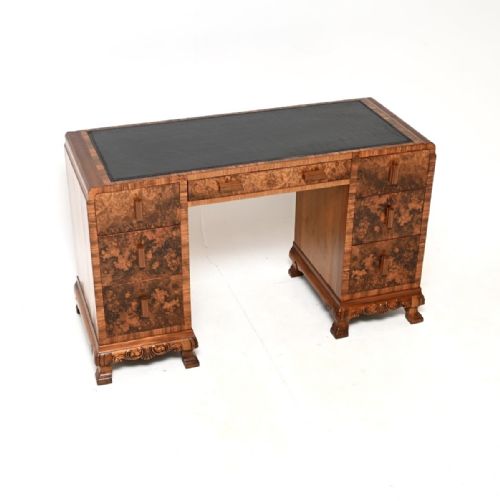
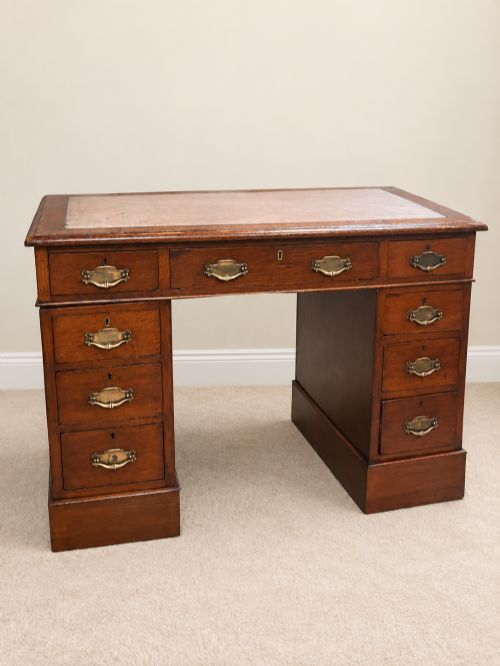
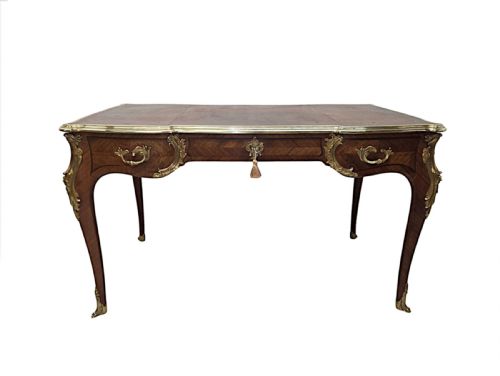
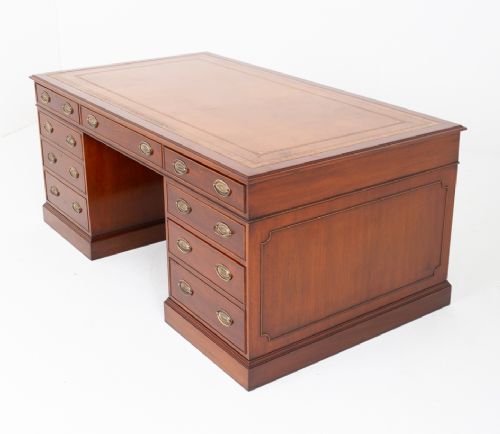
A vintage leather writing table offers a functional workspace set with supple hide, appearing frequently in mahogany, burr walnut, and oak across Victorian and Edwardian periods.
Vintage Leather Writing Table
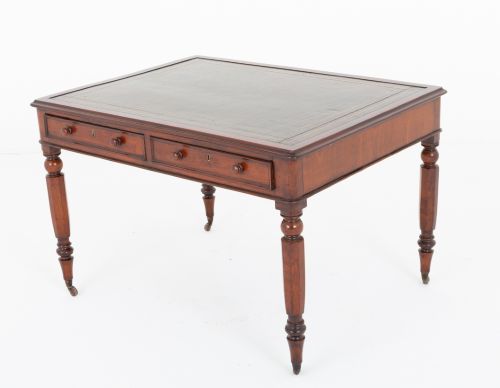
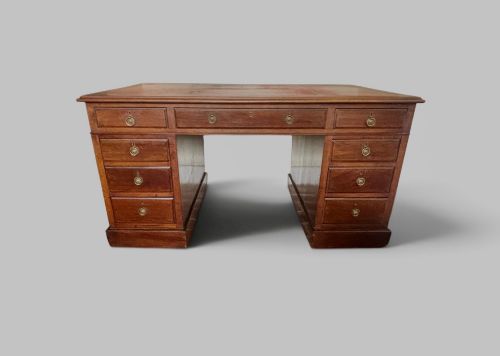
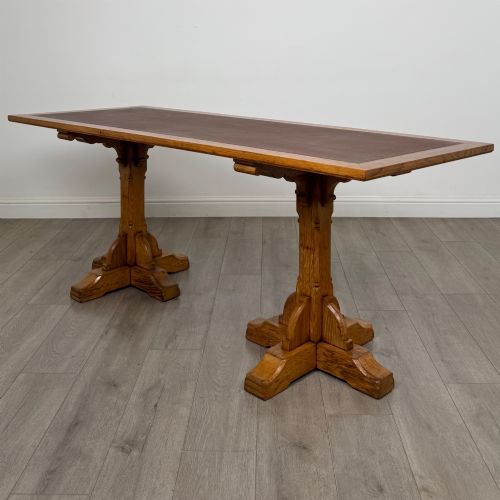
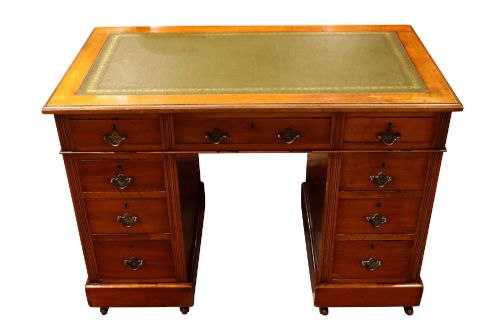
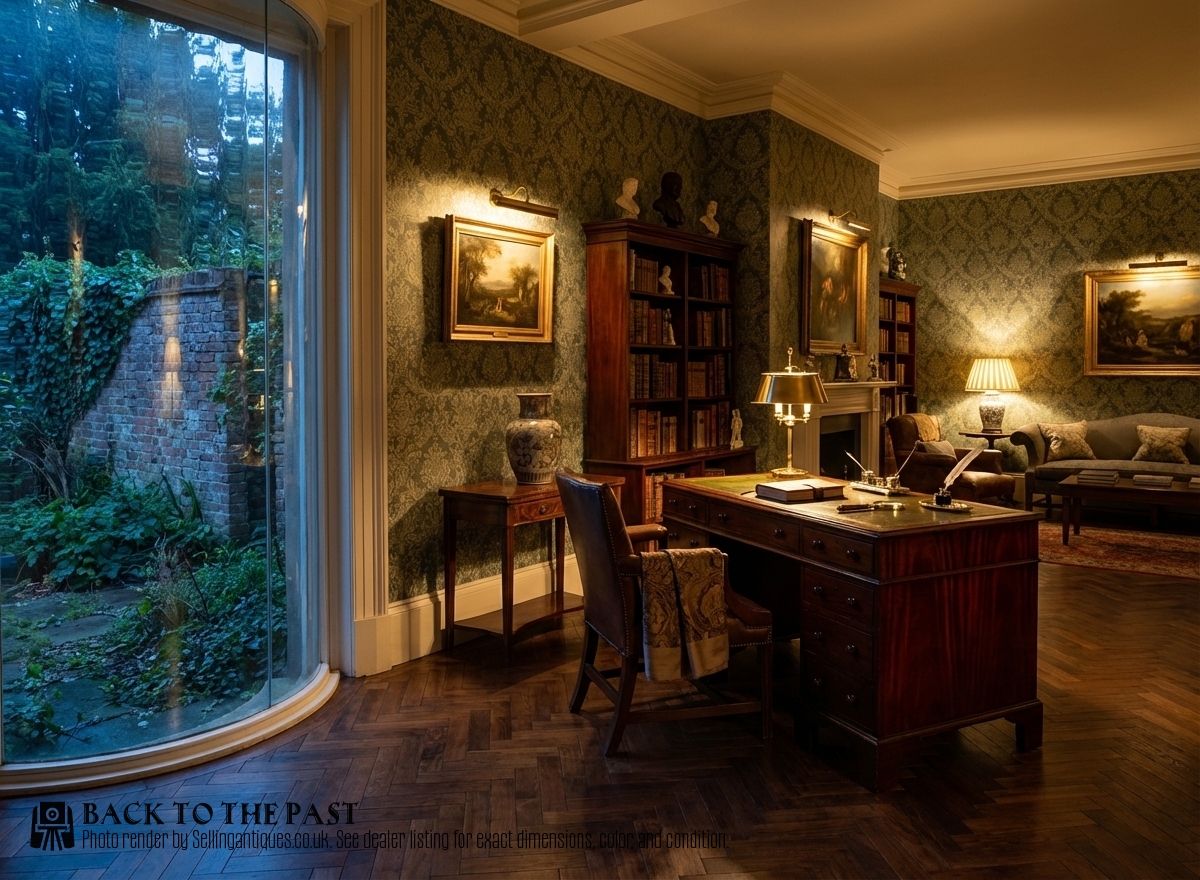
A vintage leather writing table brings structured workspace and traditional craftsmanship into a room, with pedestal desks, partners desks, and library tables dominating the selection. Buyers find pieces ranging from nineteenth-century Victorian designs to early twentieth-century Art Deco and Edwardian examples.
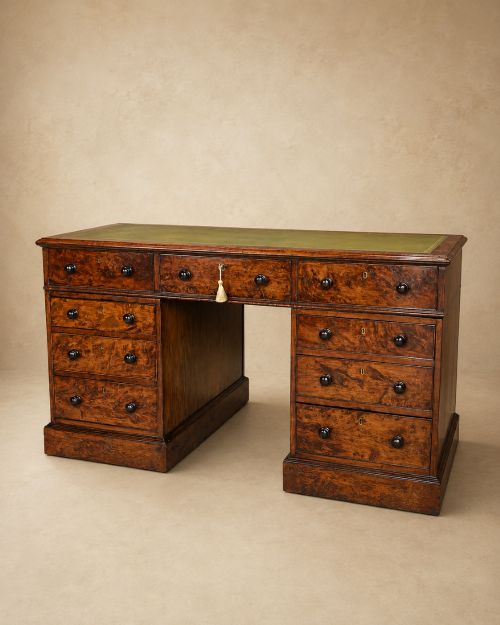
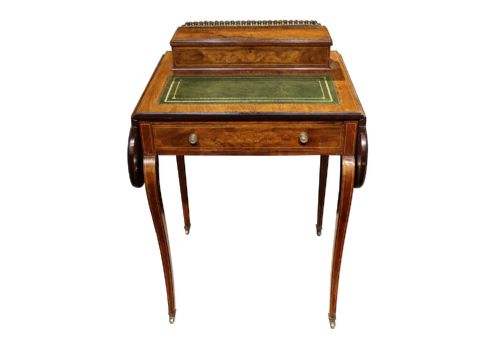
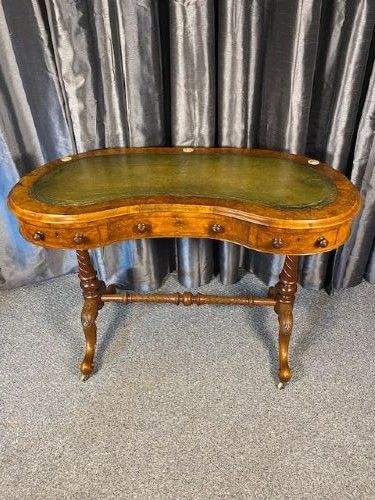
Pedestal desks and writing tables provide the most common forms on this page, often configured with multiple drawers and fitted interiors. Makers utilise diverse timber species, pairing wooden frames with inset leather surfaces suited for daily tasks.
Materials and construction
Construction relies heavily on dense hardwoods such as mahogany, walnut, burr walnut, and oak, providing sturdy carcasses and richly grained exterior surfaces. Cabinetmakers shape these timbers into solid frames and drawer boxes, frequently incorporating satinwood, rosewood, or brass details.
The defining writing surface consists of leather, often tooled with gilt decoration, inset into the top of the timber frame. Drawers are built with traditional joinery, housing fitted interior compartments on specific writing tables and lady's desks.
Listings feature timbers like satin birch, rosewood, and burr walnut across desks spanning the Victorian, Edwardian, and Art Deco periods.
Judging execution
Quality rests upon the selection of timber veneers, such as burr walnut or figured mahogany, and the precision of the cabinetwork in drawer construction and framing. Superior examples display careful grain matching and crisp carving or inlay work.
The treatment of the inset leather top and the integration of brass hardware also separate standard items from finer productions. Workshops known for high-grade output maintain disciplined joinery standards across every concealed drawer lining and back panel.
Trollope and sons·Maple and co·CH Jeanselme and co·Holland and sons·Wylie and Lochhead Glasgow
The Vintage Leather Writing Table Glossary
- Partners desk
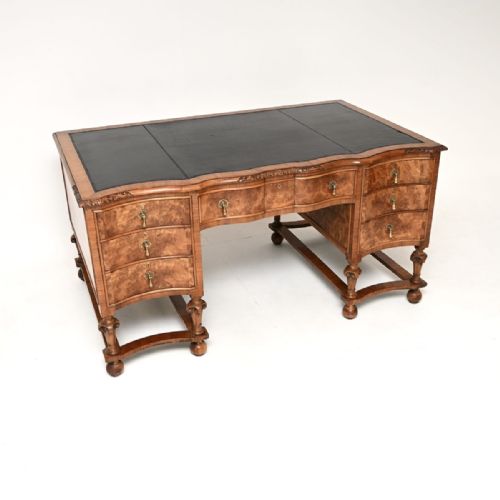
- A double-sided desk designed for two people to work opposite one another, featuring drawers on both longitudinal faces. These large tables often stand free in the centre of a room.
- Pedestal desk
- A heavy freestanding desk supported by two vertical banks of drawers beneath the desktop. The central kneehole area remains open for a chair.
- Tooling
- The decorative pattern pressed into the border of a leather desk insert using heated brass wheels or hand tools. Gilt tooling involves pressing gold leaf into the impressed design.
- Burr walnut
- A prized timber veneer taken from the growth excrescences on walnut trees, yielding a swirling, highly figured grain pattern. Cabinetmakers use this veneer on prominent desk surfaces and drawer fronts.
Vintage Leather Writing Table: Frequently Asked Questions
Where should I place a partners desk?
A partners desk works best positioned in the middle of a room rather than against a wall. Because drawers and kneeholes appear on opposing sides, the piece requires clearance around all edges.
This placement allows two people to sit opposite each other and highlights the finished back panels common to these large library tables.
How do I care for a leather desk top?
Leather desk surfaces benefit from occasional cleaning with a damp cloth followed by a neutral leather cream or wax. Avoid harsh chemical cleaners that strip the dyed finish and tooling.
Keeping the hide nourished prevents drying and cracking, preserving the tactile quality of the writing area during regular use.
What is the difference between a writing table and a pedestal desk?
A writing table typically stands on four legs without banks of supporting drawers beneath the top. Pedestal desks incorporate two solid stacks of drawers reaching down to the floor.
Writing tables offer a lighter visual profile, while pedestal desks provide substantial enclosed storage capacity within their structural bases.
How do I identify an Edwardian desk?
Edwardian desks often feature lighter satinwood or rosewood timbers, delicate inlay work, and refined proportions characteristic of the early twentieth century. Many adopt revival styles inspired by earlier centuries.
Examining the internal drawer construction and secondary woods helps confirm the manufacturing era alongside stylistic clues.