
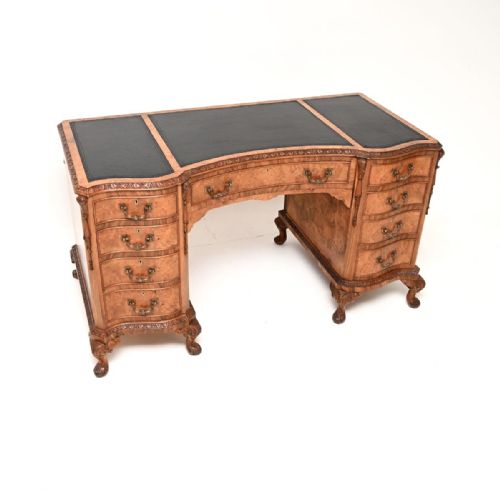

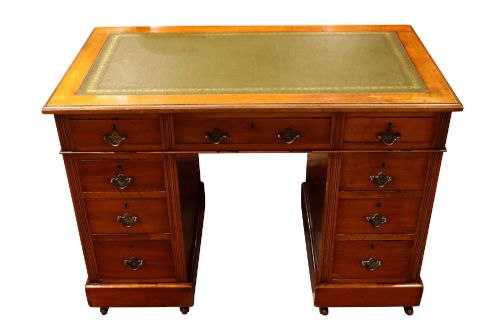
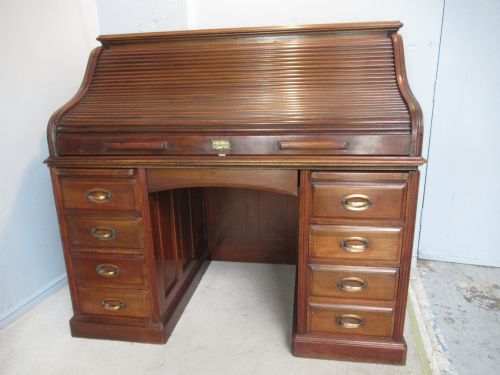
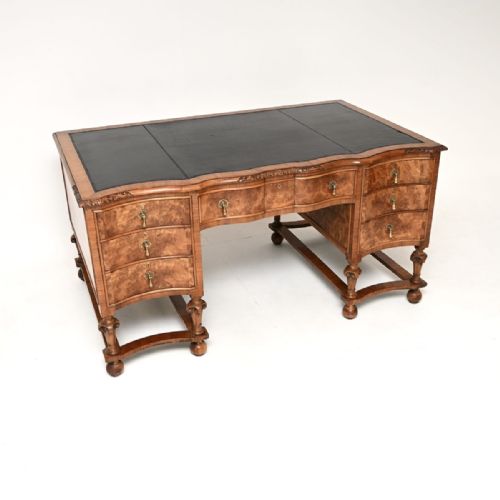
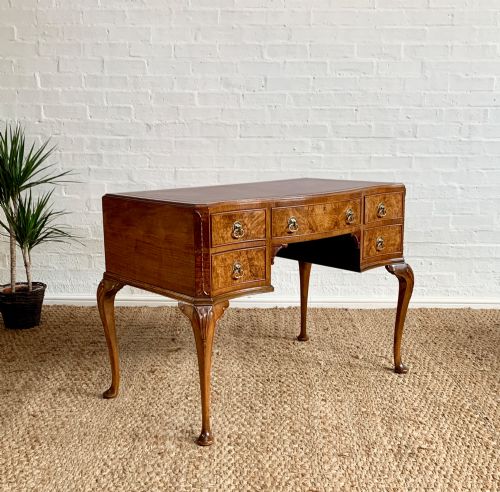
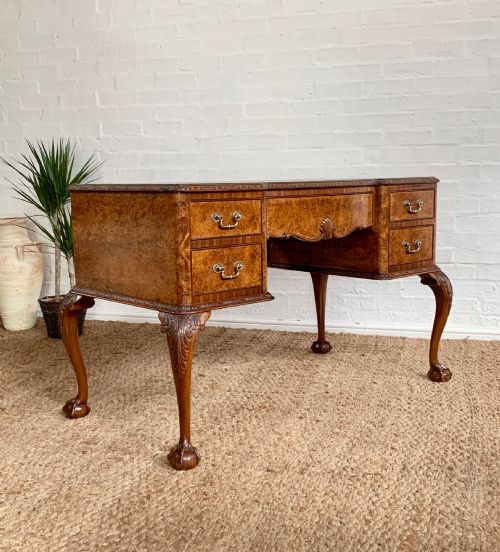
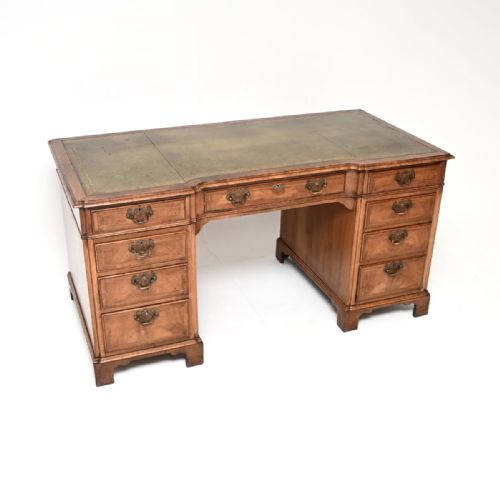
Carved Walnut Study Desk
A carved walnut study desk brings warmth and architectural presence to a room, offering a durable surface built from rich timber.
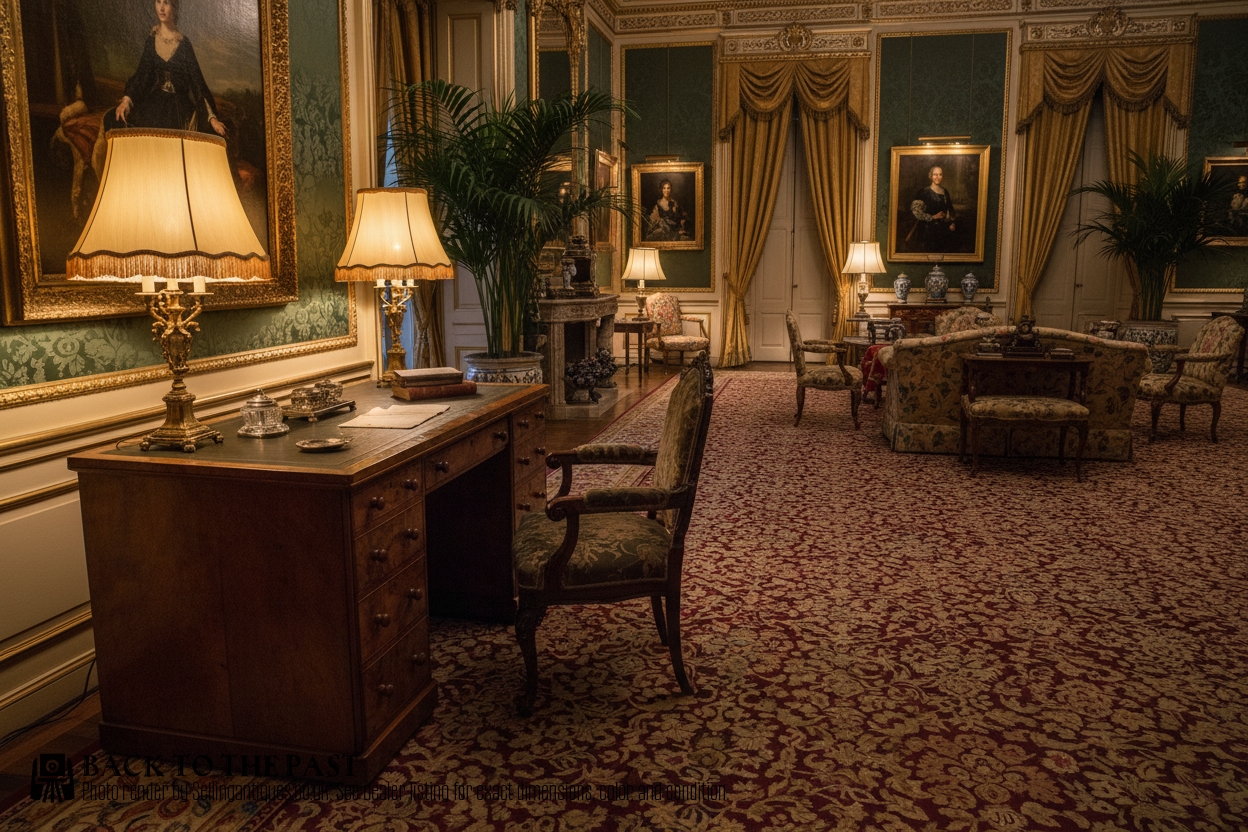
Carved Walnut Study Desk
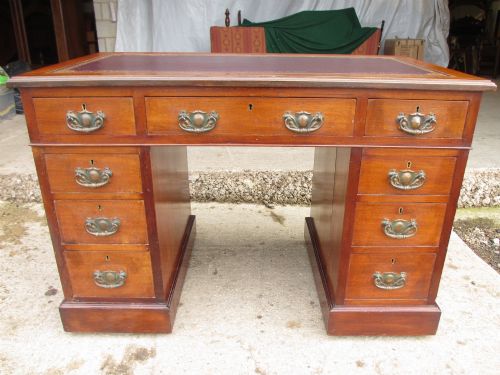
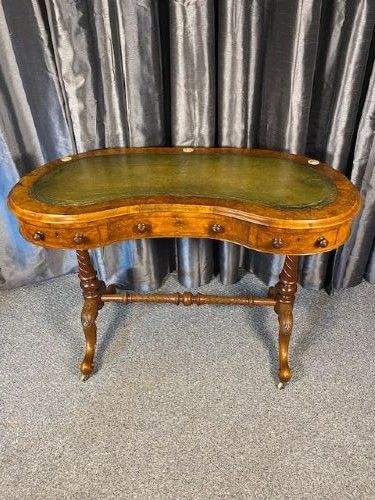
A carved walnut study desk encompasses pedestal forms, partners desks, writing tables, and compact kneehole variations spanning the nineteenth and early twentieth centuries. These pieces emerge in revival designs including Queen Anne, Georgian, and Gothic styles, alongside simpler Victorian and Edwardian iterations.
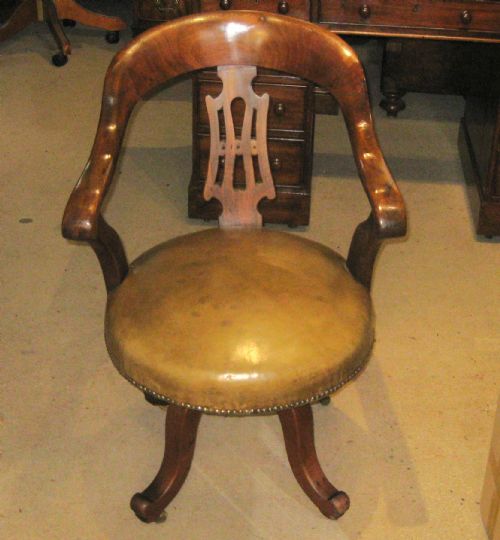
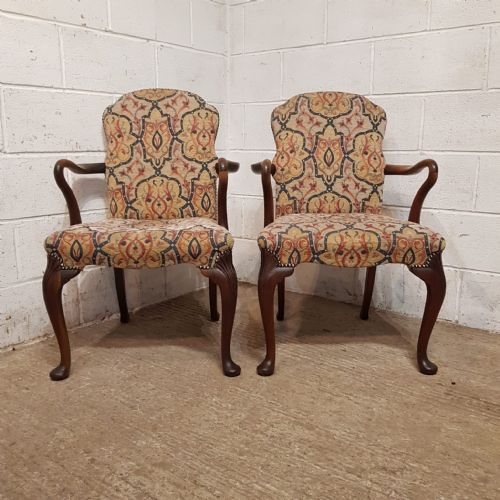
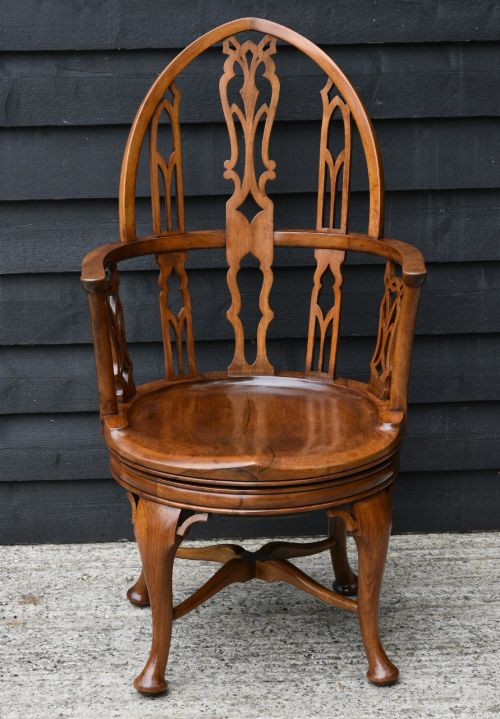
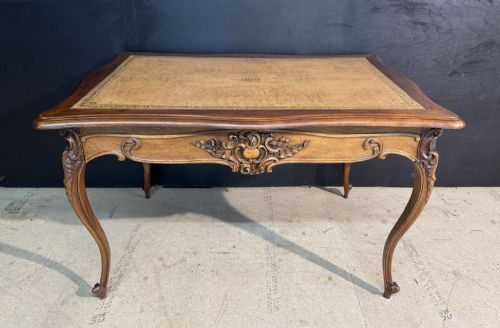
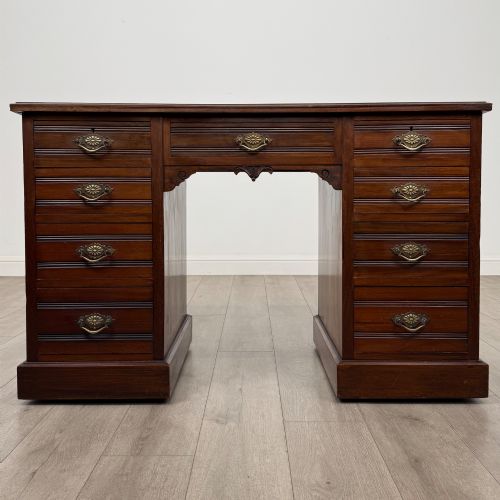
The version most frequently encountered on this page is the pedestal desk or writing table featuring figured walnut or burr walnut veneers, often accompanied by an inset leather writing surface. Companion seating such as revolving desk chairs and library chairs frequently accompanies these forms.
Origins stretch across British workshops as well as Scandinavian and French makers, showing considerable variety in scale from small Davenport desks to large double-sided partners tables. The overarching character remains grounded in the rich grain of walnut and subtle carved detail.
Materials and construction
Cabinet makers utilised solid walnut and decorative burr walnut or figured walnut veneers applied over secondary timbers like oak, building rigid carcases designed to withstand heavy daily use. Surfaces received protective French polish finishes that highlighted the natural figure and deep brown tones of the timber.
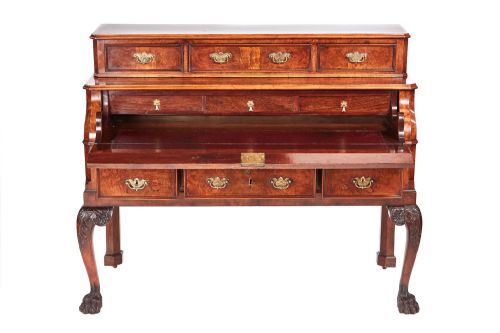
Writing surfaces were typically inset with tooled leather, secured with blind or gilt tooling around the perimeter to provide a durable and tactile writing area. Additional detailing relied on brass drop handles, boxwood inlay, and cast ormolu mounts.
Carving was executed by hand on structural elements such as paw feet, kneehole brackets, and chair frames, showing crisp relief work that differentiated bespoke commissions from simpler factory production.
Materials recorded across these desks include walnut, burr walnut, oak, brass, ormolu, velvet, boxwood inlay, and leather.
Factors influencing quality
The choice of timber veneer establishes the baseline visual merit, with tightly figured burr walnut commanding greater attention than plain stock due to its complex grain patterns. The selection of matching veneers across drawer fronts and desk tops indicates careful planning by the cabinet maker.
Construction methods reveal the distinction between standard commercial output and workshop pieces bearing maker stamps, where dovetailed drawer linings and solid secondary woods provide structural longevity. The integration of high-grade tooled leather and substantial brass hardware further separates finer examples.
The crispness and depth of hand carving on structural components like feet and mouldings demonstrate the artisan's skill, distinguishing sharply profiled ornament from soft or mechanically cast decoration.
Maple and Co·Wylie and Lochhead Glasgow·Edwards and Roberts·Gill and Reigate
The Carved Walnut Study Desk Glossary
- Burr walnut
- A specialised timber veneer taken from the wart-like growths on walnut trees, prized for its swirling, highly decorative grain pattern. It appears frequently on the drawer fronts and primary surfaces of Victorian and Edwardian desks.
- Partners desk
- A large double-sided desk designed for two people to sit opposite each other, featuring drawers and cupboards on both sides. These heavy pieces often include pedestals and leather-lined writing surfaces.
- Kneehole desk
- A compact desk featuring a central recessed space for the legs, flanked by pedestals of small drawers. This form became popular in the eighteenth century and saw revivals through the Victorian and Edwardian eras.
- Ormolu
- Gilded bronze mounts applied to furniture for decorative effect, frequently seen on French-influenced writing tables and high-status Victorian pieces. The metalwork adds metallic contrast to the dark walnut timber.
- Davenport
- A small, compact desk featuring a sloped writing lid that lifts to reveal stationery compartments, supported by a pedestal of side drawers. This form gained widespread favour during the Victorian period for domestic studies.
Carved Walnut Study Desk: Frequently Asked Questions
How do I care for leather desk tops?
Leather writing surfaces require occasional cleaning with a damp cloth followed by a neutral leather cream to prevent drying and cracking. Avoid harsh chemical cleaners or excessive moisture.
Keep the desk away from direct sunlight and heat sources to protect both the leather insert and the underlying walnut timber from warping or fading.
What is a partners desk?
A partners desk is built to be used from both sides simultaneously, featuring matching sets of drawers and cupboards facing outwards in opposite directions. These substantial pieces were traditionally used in libraries and large offices.
They require significant floor space to allow access to both sides and typically serve as the visual centrepiece of a large study.
How do I distinguish Victorian from Edwardian desks?
Victorian desks tend to feature heavier proportions, darker finishes, and robust carving styles such as Gothic revival or heavy scrollwork. Burr walnut veneers on Victorian pieces often display high contrast and deep colouration.
Edwardian desks frequently show lighter structural forms, drawing inspiration from Sheraton or Queen Anne revivals with refined boxwood inlay and more restrained dimensions.
Can I use a revolving desk chair daily?
Antique revolving desk chairs are constructed from solid timber with mechanical swivel actions designed for regular movement. Ensure the central spindle and base mechanism remain lubricated and stable.
While robustly made, these chairs benefit from careful handling of their nineteenth-century adjusting screws and tilt mechanisms during daily office use.