
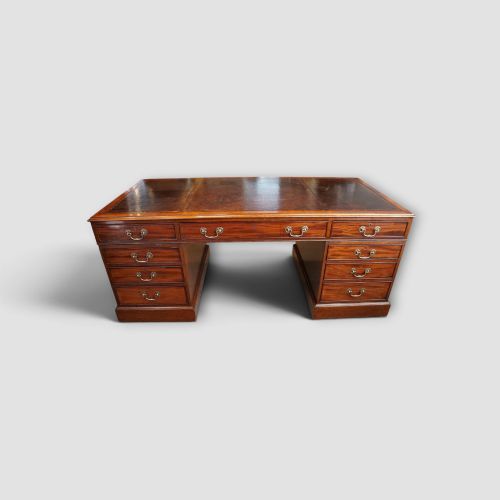
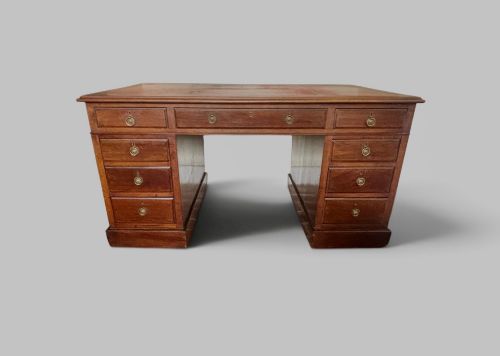
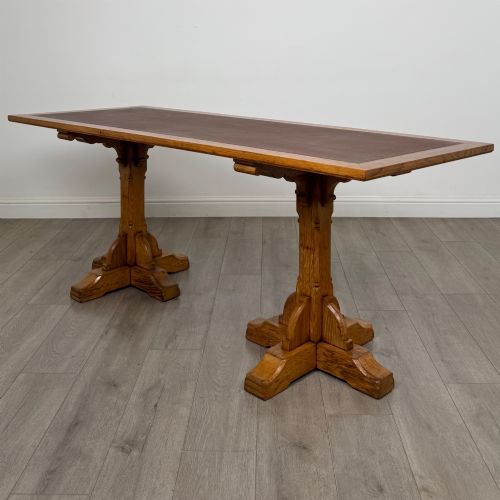
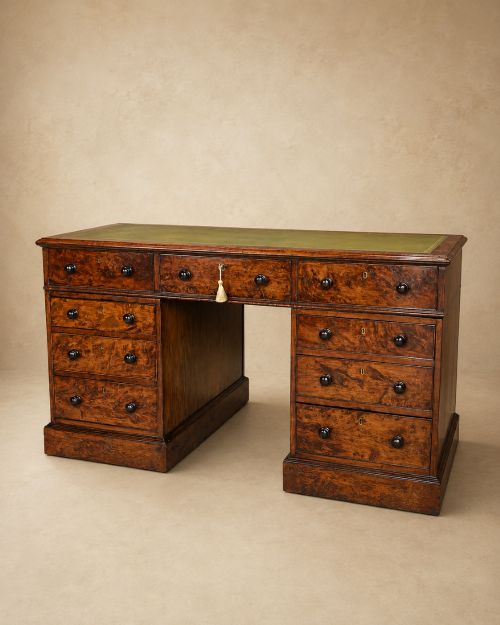
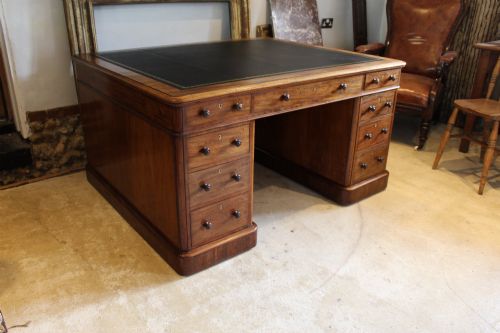
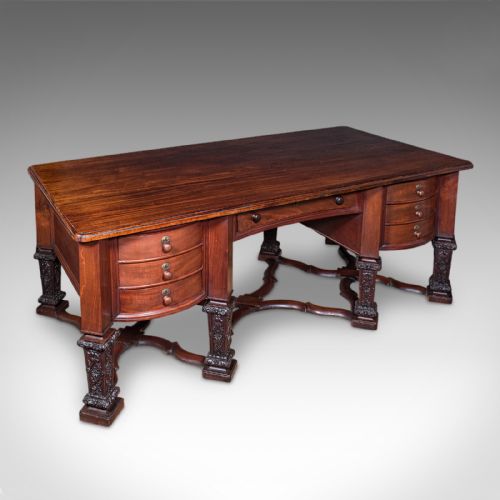
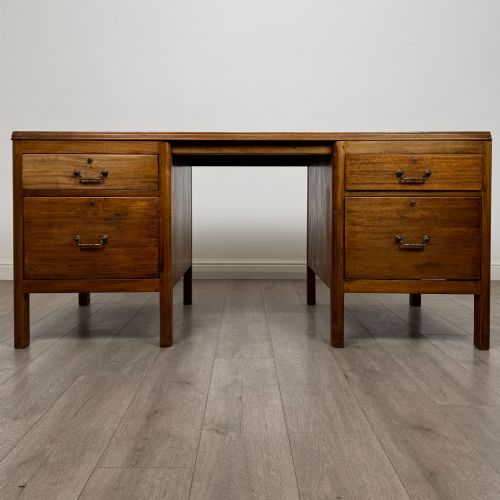
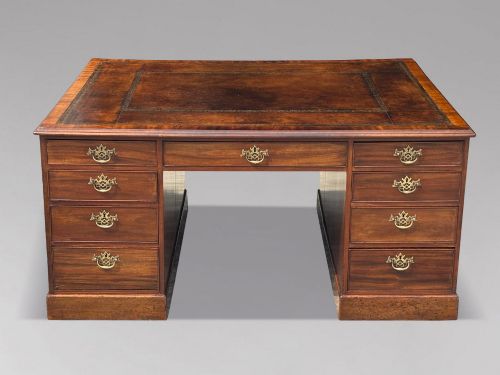

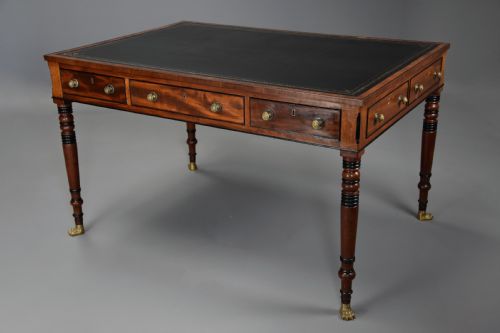
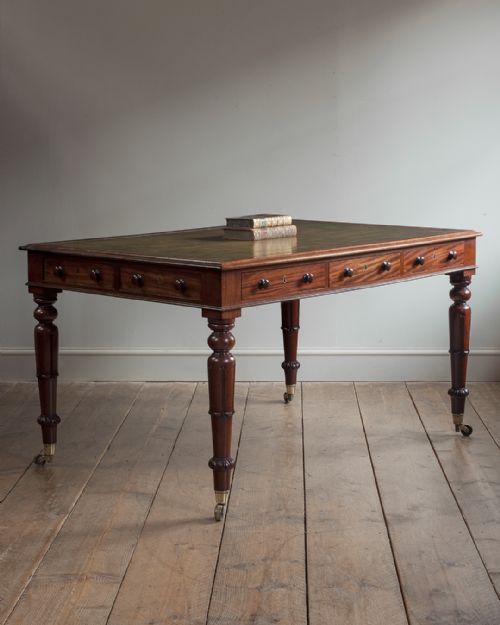

Large Executive Writing Table
A large executive writing table brings substance and deep timber character to a room, offering vast surface space for papers.
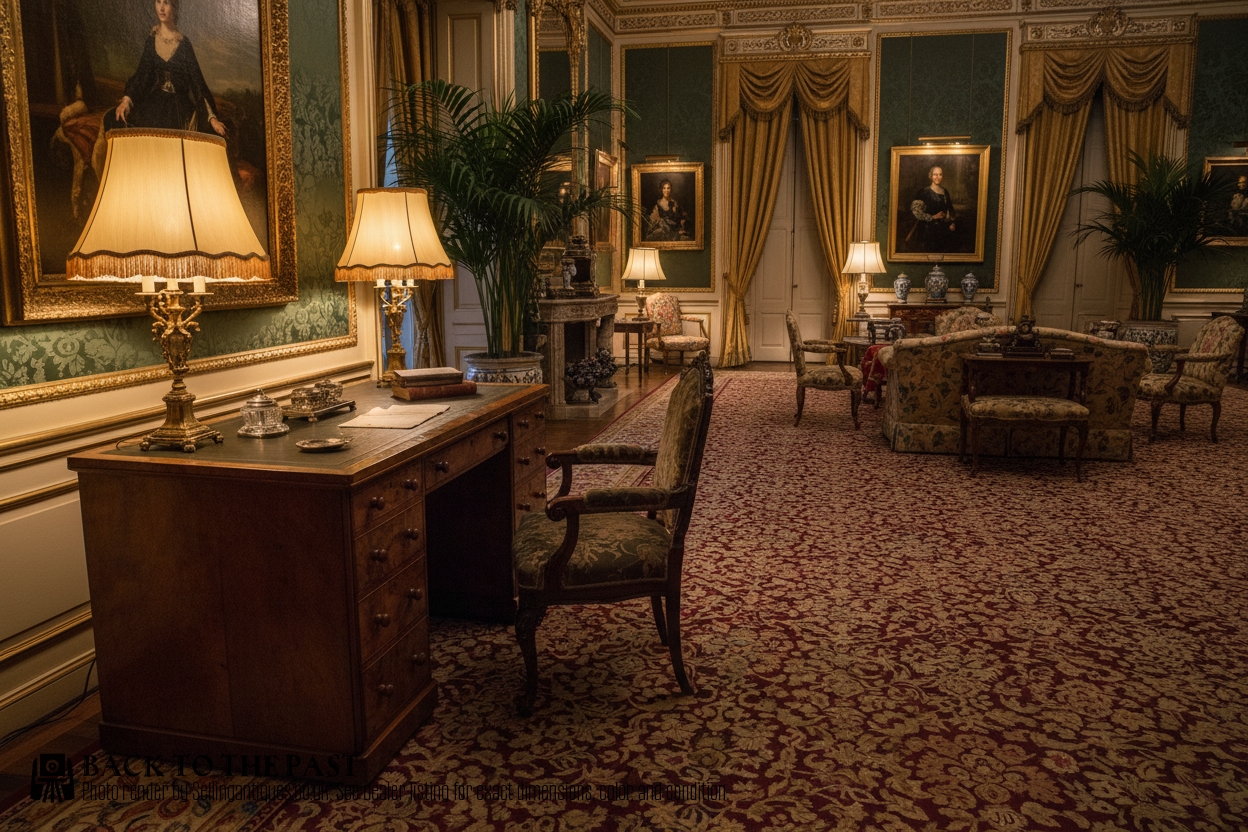
Large Executive Writing Table
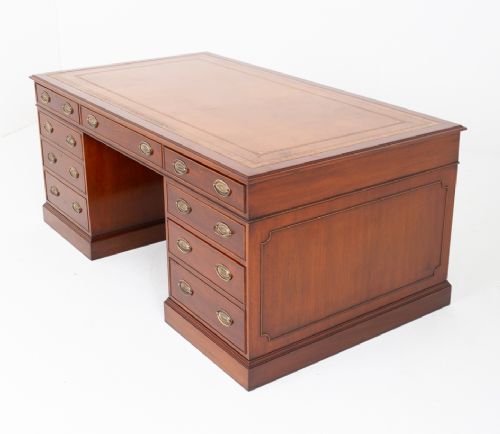
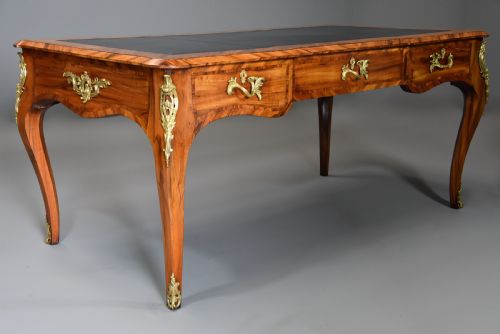
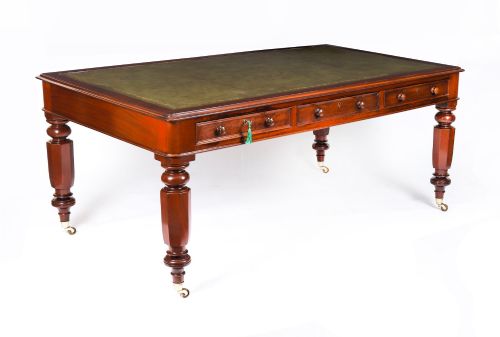
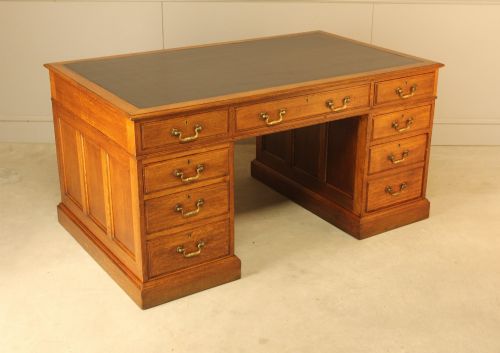
A large executive writing table provides substantial workspace, most commonly found here as double-sided partners desks and library tables spanning the eighteenth, nineteenth, and early twentieth centuries. These pieces were built for studies and offices, offering deep drawers and wide surfaces suited to daily business.
The selection here draws heavily on Victorian and Edwardian examples, alongside earlier Georgian and Regency models. Mahogany and oak dominate the forms, frequently fitted with leather writing surfaces and supported by pedestals or turned legs.
Assessing quality and presence
Quality rests in the selection of figured timbers and the crispness of carved details, such as serpentine shaping or brass mounts. Faded patination developed through age adds considerable character to mahogany surfaces.
Proportion and balance dictate the presence of the table, separating standard office furniture from grand architectural pieces designed for central room placement.
Many partners desks hide secret middle drawers that require sliding panels or specific keys to release their contents.
Cookes of Finsbury London·Charles Andrea Nosotti
The Large Executive Writing Table Glossary
- Partners desk
- A large double-sided desk designed with drawers and cupboards facing both directions so two people could work opposite each other.
- Library table
- A freestanding large table used for reading and writing, generally featuring frieze drawers rather than pedestal cupboards.
- Pedestal desk
- A desk comprising a top surface resting on two separate drawer pedestals or banks of drawers.
- Frieze
- The horizontal band or section immediately beneath the top surface of the desk, often containing drawers.
- Patina
- The surface sheen and softening of colour acquired by timber through age, handling, and light exposure.
Large Executive Writing Table: Frequently Asked Questions
What is a partners desk?
A partners desk is built with drawers and storage on both long sides, allowing two people to sit opposite each other and work.
They were originally designed for banking houses, legal practices, and large libraries where colleagues needed shared access to workspace.
How do I care for a leather desk top?
Leather inserts require gentle cleaning with a damp cloth and occasional application of appropriate leather cream to prevent drying and cracking.
Avoiding direct sunlight helps preserve the colour and the gold tooling often applied around the edges.
Where should a large desk be placed?
Partners desks and library tables are finished on all sides, making them ideal for positioning in the centre of a room rather than against a wall.
Sufficient clearance on all sides is necessary to allow chairs to pull out comfortably and drawers to open fully.
How do I distinguish Victorian from Georgian desks?
Georgian desks typically exhibit restrained classical proportions and fine timber selection, reflecting eighteenth-century design canons.
Victorian pieces often display heavier proportions, richer carved details, and deeper pedestal bases developed for expanding office requirements.