

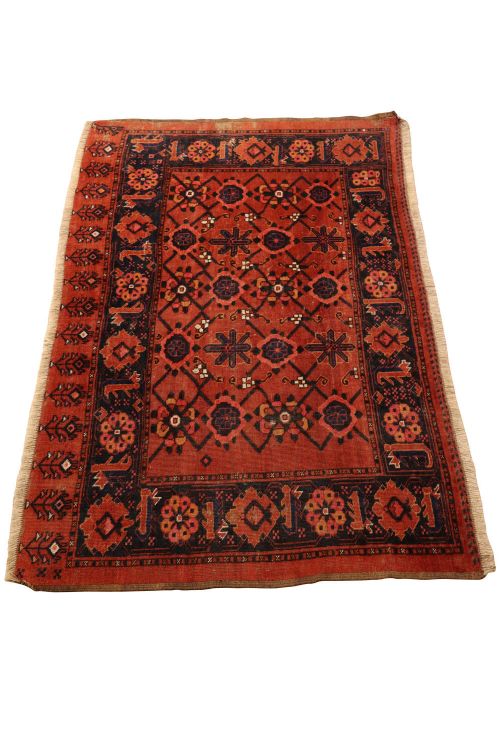


Vintage Kurdish Wool Rug
A vintage kurdish wool rug brings authentic tribal geometry and robust village craftsmanship into modern interiors through enduring hand-knotted textiles.
Vintage Kurdish Wool Rug
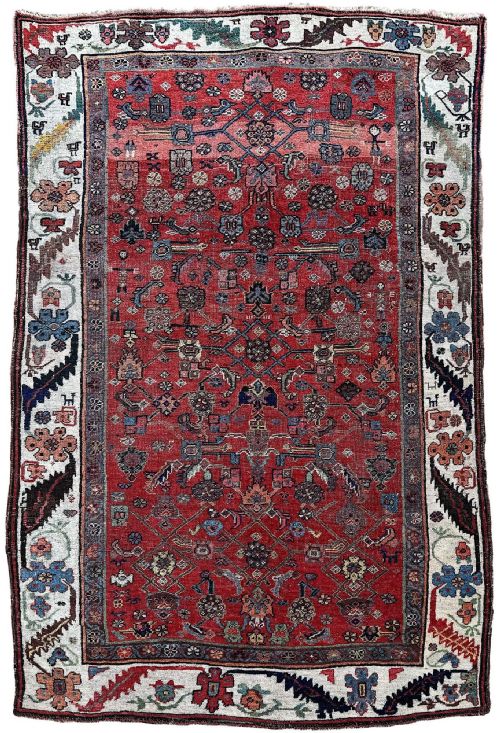
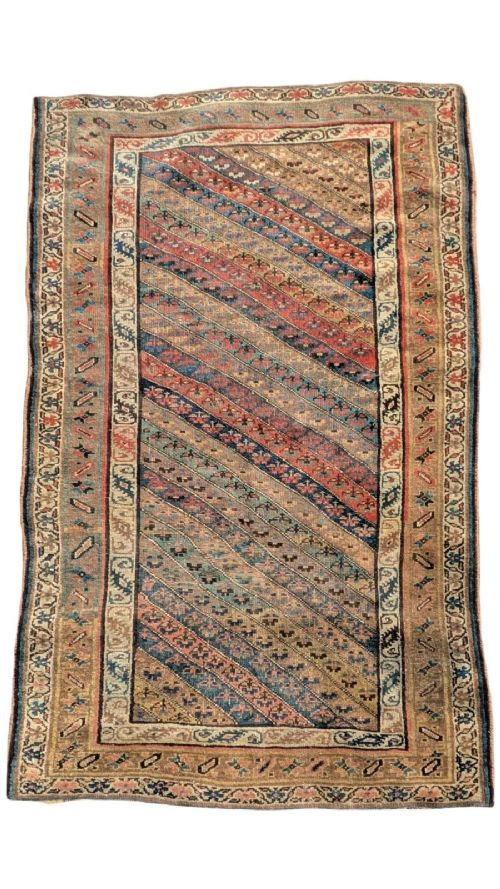
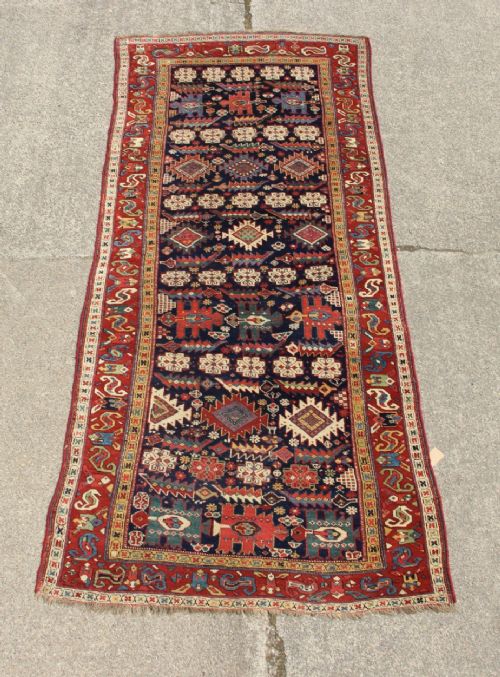
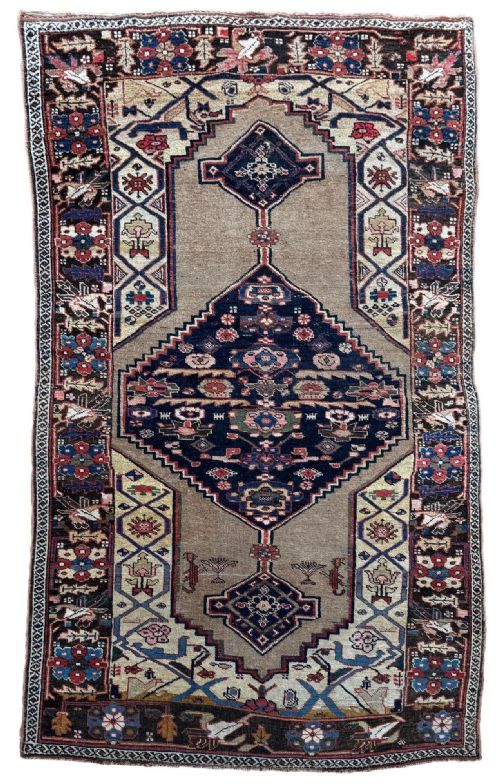
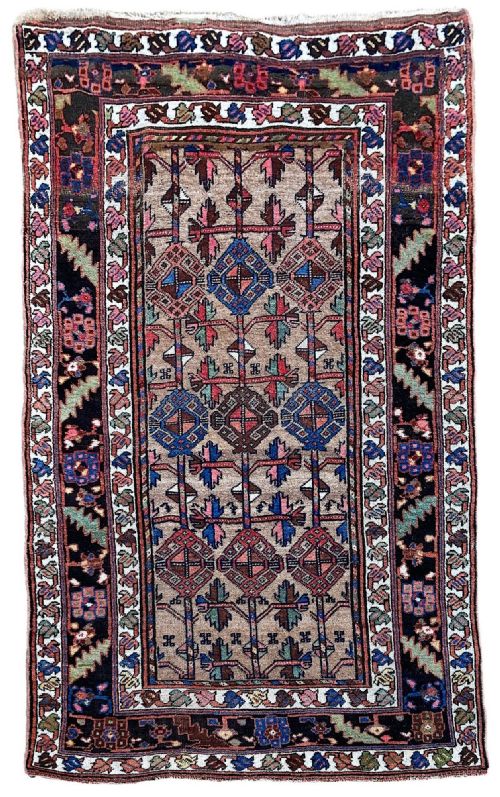
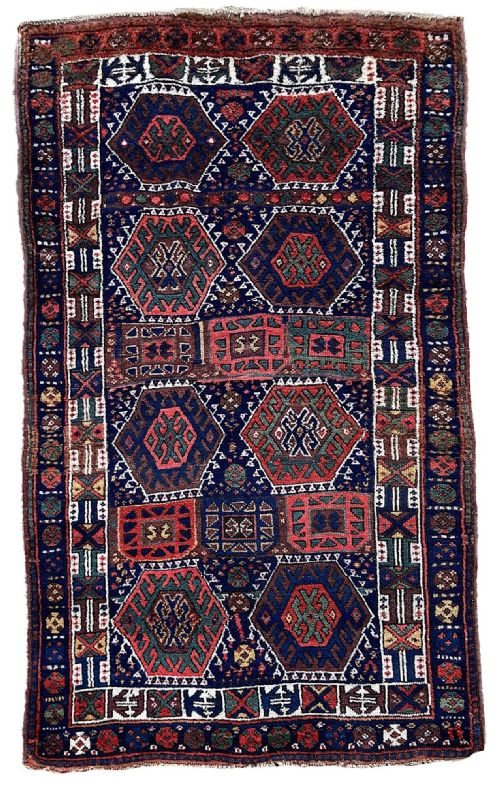
A vintage kurdish wool rug encompasses hand-knotted floor coverings produced by tribal groups across regions such as Bidjar, Senneh, Hamadan, and wider western Persia from the nineteenth century into the twentieth. These textiles display distinct geometric motifs, tribal guls, and field patterns rooted in specific regional weaving traditions.
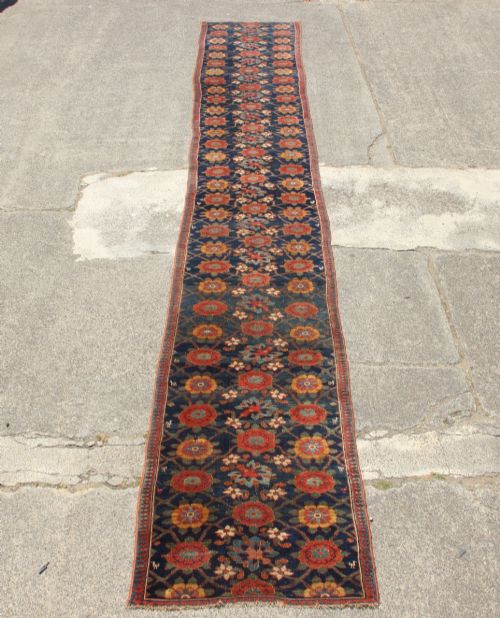
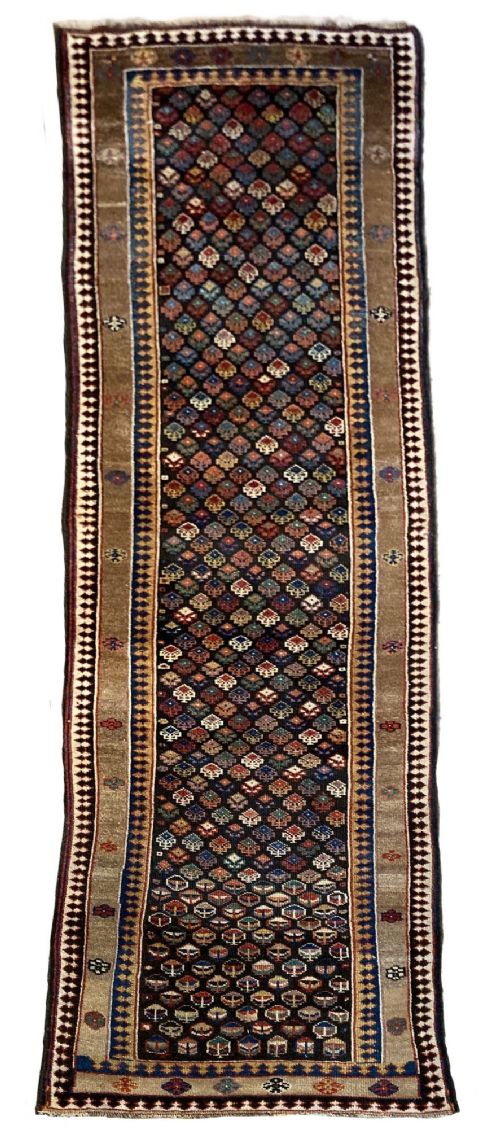
Buyers commonly encounter formats ranging from square area rugs to long narrow runners and kelleh carpets. The selections available on this page date principally from the late nineteenth century up to the 1930s, spanning standard room sizes as well as extended hallway runners.
Beyond standard floor rugs, the grouping includes utilitarian forms such as wheat sacks and specialised tribal cushions. These pieces reflect the daily visual vocabulary of weavers working within Kurdish tribal spheres and surrounding highland communities.
Materials and construction
These textiles rely primarily on hand-spun wool for the pile and structure, often combined with cotton foundations or goat hair elements for added durability. Weavers utilised natural dyes to achieve deep saturated grounds of red, blue, and yellow.
The hand-knotting technique yields a dense, resilient pile capable of withstanding generations of heavy floor use. Sturdy selvedges and tightly packed warps complete the traditional construction methods seen across these regional rugs.
Listings span the late nineteenth century through to the 1930s, featuring wool, cotton, goat hair, and natural dyes across diverse formats.
Judging quality and execution
Quality rests in the tightness of the knotting, the crispness of the tribal design work, and the depth of colour achieved through natural dyeing methods. Finer examples display meticulous symmetry in complex field patterns like Mina Khani or shrub designs.
The integrity of the wool, stability of the foundation, and evenness of the wear across the pile distinguish superior room-size carpets and long runners from simpler village utility pieces.
The Vintage Kurdish Wool Rug Glossary
- Kelleh
- A large format rectangular rug traditionally proportioned longer than a standard room carpet. These elongated pieces suit large open spaces and hallways.
- Gul
- A medallion or repeating octagonal motif used extensively in tribal weaving. Such motifs often denote specific clan affiliations or regional aesthetics.
- Bidjar
- A town and surrounding region in west Persia known for heavy, densely knotted carpets with rigid geometric structures. These pieces earn the descriptor iron rugs due to their robust construction.
- Senneh
- A weaving centre in Kurdistan famous for finely executed geometric rugs and boteh motifs. These textiles often feature delicate detail work on lighter wool foundations.
- Runner
- A long, narrow carpet format designed specifically for corridors, staircases, and hallways. They provide extended linear decoration for domestic thoroughfares.
Vintage Kurdish Wool Rug: Frequently Asked Questions
What is a kurdish rug?
A kurdish rug is a hand-knotted textile produced by tribal and village weavers in western Persia and Anatolia. These pieces feature dense wool piles and traditional geometric or floral motifs.
They reflect generations of nomadic and settled weaving heritage, utilising local materials and natural dyes to create durable floor coverings.
How do I style a runner rug?
Runner rugs suit narrow spaces such as hallways, kitchens, and corridors where linear decoration works best. Their sturdy wool construction handles high foot traffic effectively.
Ensure adequate underlay keeps the runner secure on hard flooring while maintaining its alignment along the passage.
How do I identify a bidjar rug?
Bidjar rugs are characterised by exceptionally heavy, stiff foundations and tight knotting that resists bending. They frequently display Herati patterns or bold central medallions.
This robust construction gives them remarkable longevity compared to finer, more pliable village weaves.
Are natural dyes used in old rugs?
Older tribal rugs predominantly rely on natural dye sources derived from plants, roots, and insects. These materials produce rich, complex tones that mellow gracefully over time.
Subtle tonal variations within the wool often indicate hand-dyeing in small batches before weaving commenced.
How do I care for wool carpets?
Wool carpets require regular gentle vacuuming without a beater bar to protect the hand-knotted pile. Professional cleaning maintains the integrity of natural fibres and dyes.
Rotating the rug periodically ensures even exposure to light and foot traffic across the entire surface.