

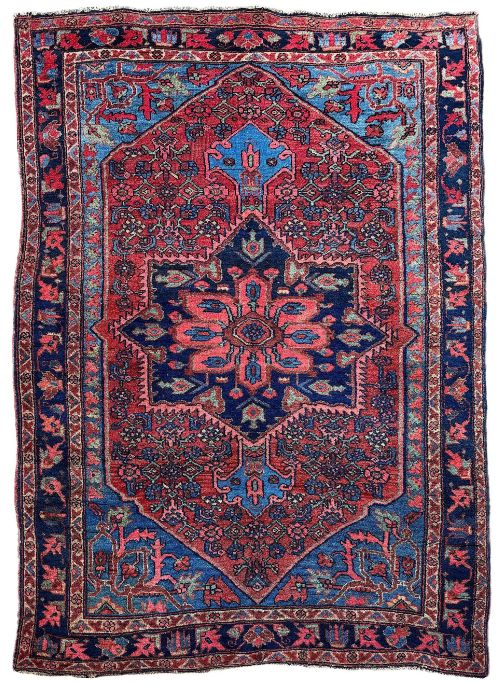
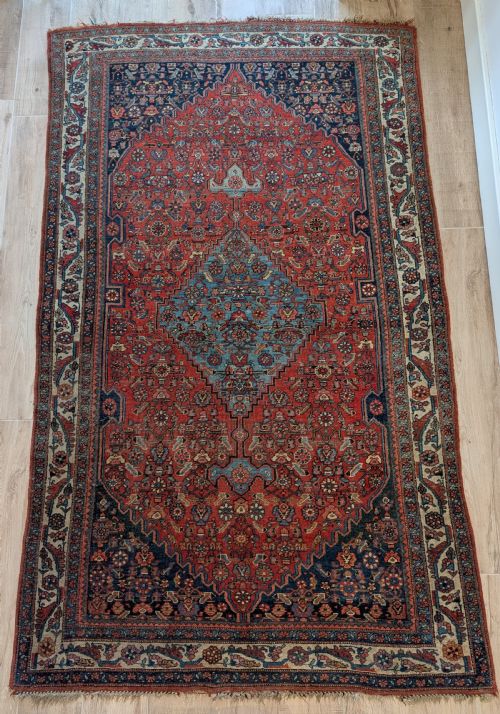


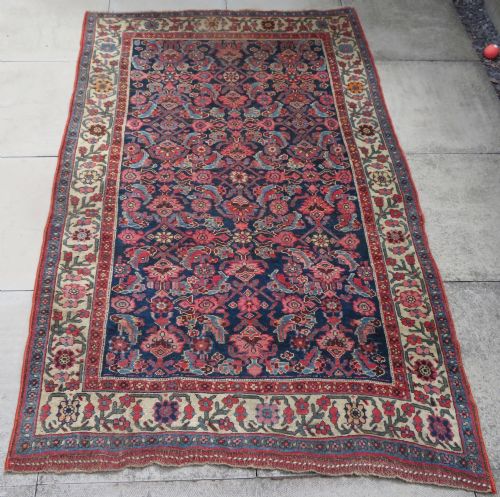


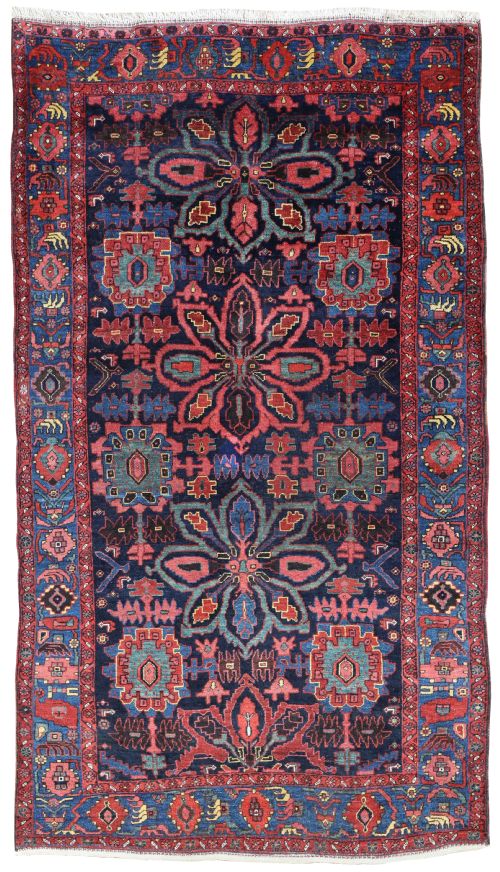


Antique Bijar Floor Rug
These heavy, durable floor coverings are woven by Kurdish weavers in western Persia to withstand generations of daily use.
Antique Bijar Floor Rug
An antique bijar floor rug is a heavily constructed textile originating from the Kurdish tribes and workshops of Bijar in western Persia. These pieces appear on this page in formats ranging from smaller village rugs to room-sized kelleh carpets spanning the late nineteenth and early twentieth centuries.
Buyers encounter traditional Persian styles alongside tribal Kurdish designs within these listings. The forms vary from compact floor rugs to substantial carpets exceeding five metres in length.
How they were made
Weavers construct these carpets using wool for the pile and foundation yarns alongside cotton for the structural warp and weft threads. The dense knotting technique creates a rigid, heavy fabric often known as the iron rug of Persia.
The traditional materials and tight packing of the weft produce a stiff structure that lies flat and resists heavy foot traffic. Artisans rely on sturdy wool sourced from local flocks to build this resilient foundation.
Antique Bijar Floor Rug Retail Price Guide 2026
Typical asking prices for bijar floor rug among the pieces listed under this phrase on Sellingantiques today, from the lower quarter to the upper quarter. They describe what is for sale here now, not the wider market.
Listings span multiple decades from the 1870s to the 1930s, constructed entirely from wool and cotton.
What varies in quality
Quality rests in the tightness of the weave and the precision of the traditional Persian or Kurdish geometric and floral motifs. Finer examples display greater intricacy in pattern execution and superior structural density across the wool pile.
Condition and scale also differentiate the pieces, with larger kelleh carpets and well-preserved nineteenth-century examples representing the more substantial works. The handling of the wool and the crispness of the tribal design set superior pieces apart.
The Antique Bijar Floor Rug Glossary
- Kelleh
- A long, narrow carpet format traditionally suited to the proportions of Persian reception rooms. This rectangular shape often measures significantly longer than it is wide.
- Kurdish
- Pertaining to the ethnic groups of western Persia who traditionally weave these resilient carpets. Their tribal designs often influence the motifs found in Bijar floor coverings.
- Warp
- The vertical threads stretched tightly on the loom that form the skeleton of the rug. Cotton is commonly utilised for this structural element.
- Weft
- The horizontal threads passed through the warp to hold the knots in place. Beating these threads down firmly creates the dense fabric characteristic of these carpets.
Antique Bijar Floor Rug: Frequently Asked Questions
How do I clean an antique bijar floor rug?
Gentle surface vacuuming without the rotating brush active removes loose dust and debris from the dense wool pile. Professional textile cleaning is necessary for deep washing to protect the structural integrity of the cotton foundations.
Avoid harsh chemical treatments or excessive water immersion which can damage the traditional dyes and fibres. Regular rotation helps ensure even wear across the carpet in high-traffic areas.
Where were these rugs made?
These textiles originate from the town of Bijar and the surrounding Kurdish villages in western Persia. Local weavers developed distinct construction methods that produced exceptionally heavy and durable floor coverings.
Production spans tribal household workshops and larger regional centres active throughout the nineteenth and early twentieth centuries. The distinct geography of the region shaped both the materials and the traditional designs employed.
What size do these carpets come in?
The inventory includes smaller floor rugs suitable for compact spaces alongside large kelleh carpets exceeding five metres in length. Proportions vary from standard rectangular room sizes to narrower runner formats.
Buyers find dimensions ranging from standard domestic rug proportions to grand room-sized carpets designed for expansive reception rooms. Each piece reflects the specific scale intended by the original weaver.
How do I date an antique bijar floor rug?
Dating relies on stylistic markers within the Persian and Kurdish design vocabulary combined with structural analysis of the wool and cotton materials. Pieces listed span the nineteenth century through to the early decades of the twentieth century.
Examining the palette, knot density and wear patterns provides further clues regarding the era of production. Comparative study of known nineteenth-century examples helps narrow the period of manufacture.