


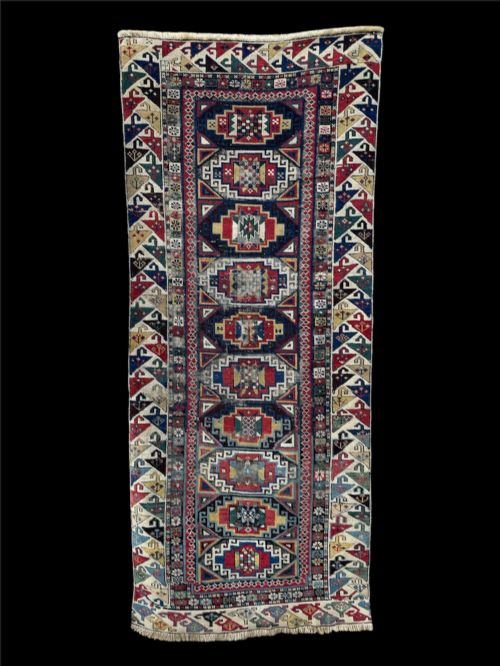
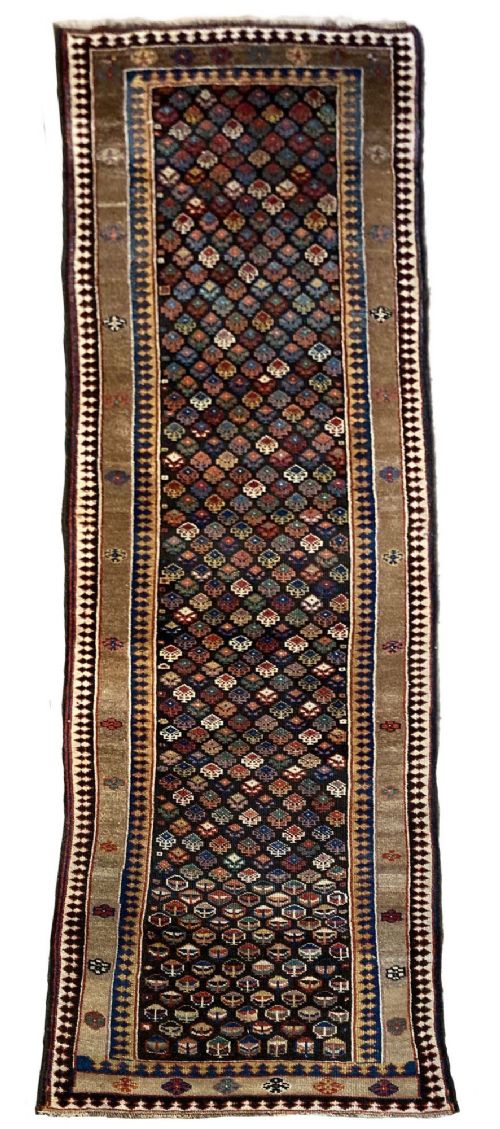


Handwoven Wool Corridor Rug
A handwoven wool corridor rug brings linear warmth and historic pattern to narrow spaces through durable traditional craft.
Handwoven Wool Corridor Rug
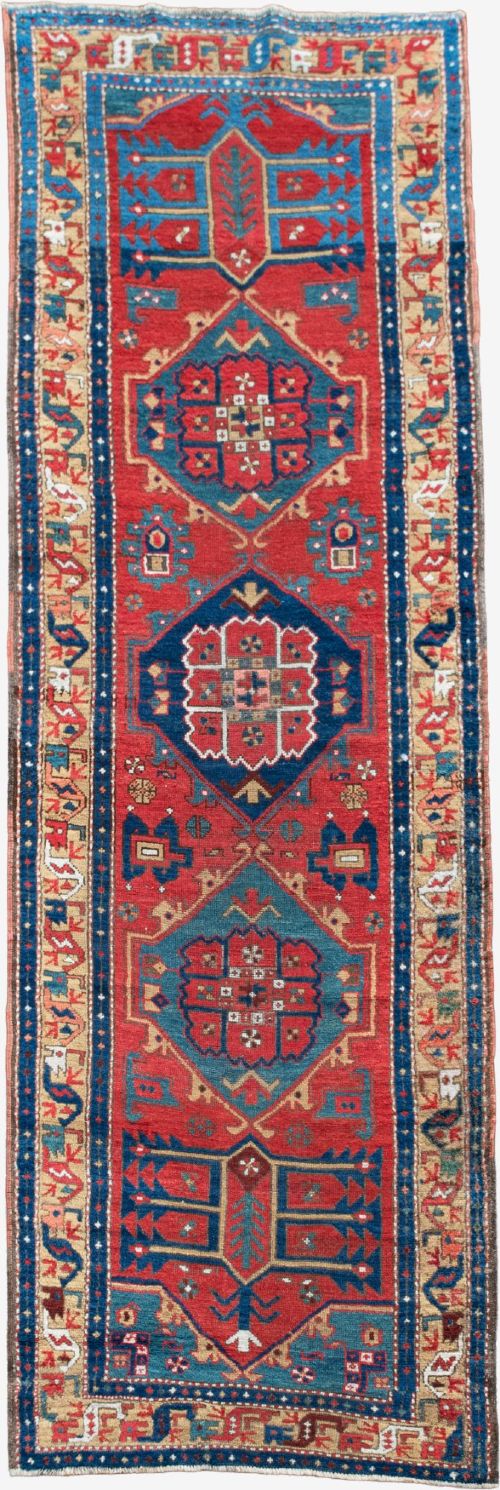
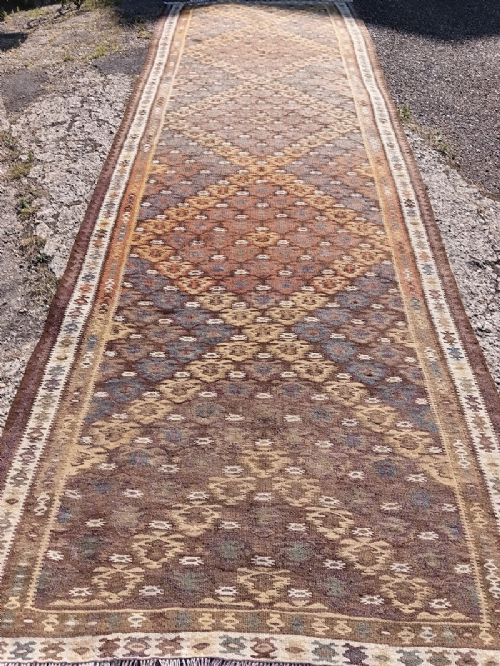
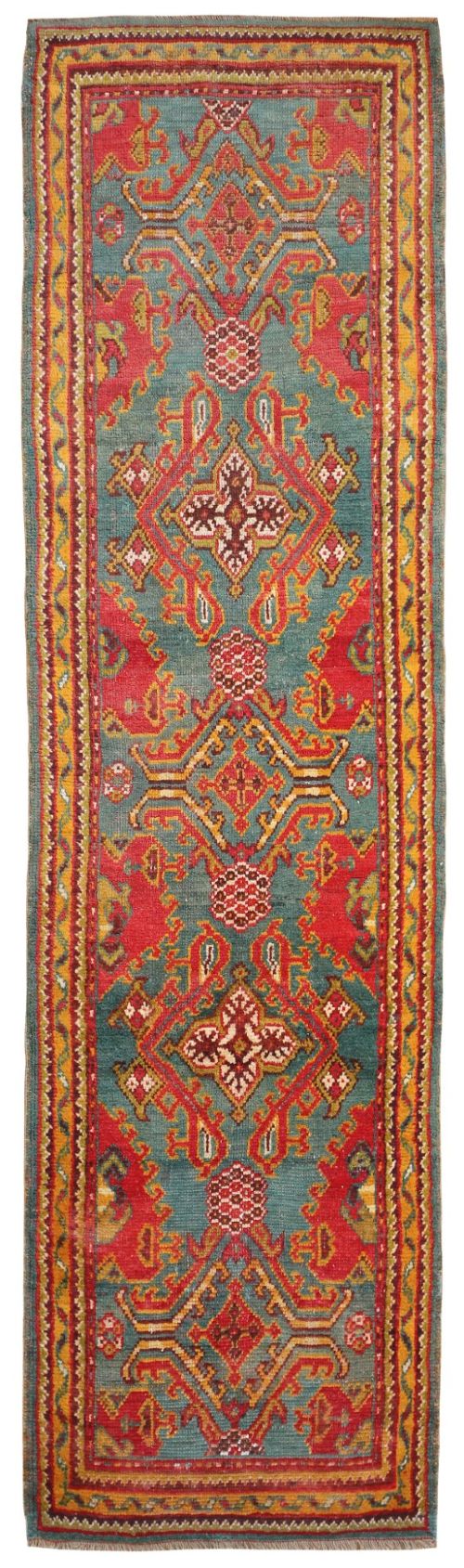
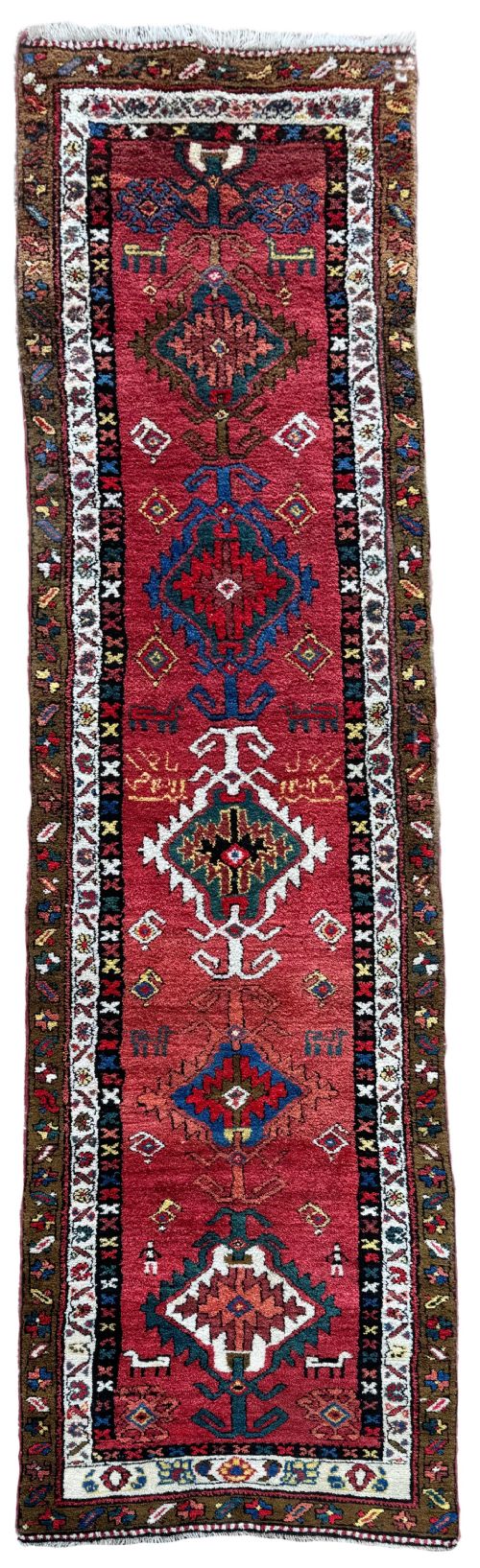
A handwoven wool corridor rug is an elongated floor covering designed specifically for hallways, passages, and narrow entries. When searching for a handwoven wool corridor rug, buyers encounter nineteenth and early twentieth-century examples originating from Persian, Caucasian, Turkish, and Afghan weaving traditions.
The pieces on this page appear primarily as runner rugs and long narrow carpets spanning multiple decades from the late nineteenth century into the 1930s. Regional styles include Heriz, Kurdish, Shirvan, Kazak, and Bakhtiar, each presenting distinct tribal or village geometric motifs adapted for linear spaces.
Materials and construction
These textiles are built primarily from durable natural wool, utilising supplementary materials such as cotton for foundations and occasional additions of camel hair. Weavers tie dense pile knots or construct flatweave kilims over robust warp and weft threads designed to withstand heavy foot traffic in corridors.
Natural dye traditions provide the rich colour palettes seen across these runner rugs, interacting with hand-spun wool fibres to create subtle tonal variations over time. The structural integrity relies on tightly packed hand-knotting and secured selvedges executed by village and tribal workshops.
Handwoven Wool Corridor Rug Retail Price Guide 2026
Typical asking prices for handwoven wool corridor rug among the pieces listed under this phrase on Sellingantiques today, from the lower quarter to the upper quarter. They describe what is for sale here now, not the wider market.
Several runners stretch gracefully beyond five metres in length, ready to tame the longest historical hallway.
Evaluating distinction
The distinction between ordinary and exceptional examples rests in the precision of the knotting, the complexity of the geometric or medallion design, and the integrity of the wool. Finer knot density allows intricate tribal motifs to render with sharper clarity along the narrow format.
Preservation of the original pile depth, balanced proportions, and intact structural borders separate master-woven village pieces from more standardised corridor carpets. The vitality of the natural dye palette further elevates the visual impact of an antique runner.
The Handwoven Wool Corridor Rug Glossary
- Runner
- A long, narrow carpet format intended for corridors, hallways, and stairs. These pieces measure significantly longer than they are wide.
- Kilim
- A flatwoven textile produced without a pile by tightly interweaving warp and weft strands. This technique creates a lightweight, reversible rug with sharp geometric patterns.
- Medallion
- A central ornamental motif set into the field of a rug. These symmetrical designs anchor the visual composition of tribal and village weaves.
- Selvedge
- The finished side edges of a rug formed by wrapping or reinforcing the outer warp threads. Secure selvedges protect the textile from fraying along high-wear corridors.
- Warp
- The vertical foundation threads stretched tightly on the loom before knotting begins. The visible ends of these threads often form the fringe at either end of the rug.
Handwoven Wool Corridor Rug: Frequently Asked Questions
Where should I place a corridor rug?
These narrow textiles fit naturally into hallways, entryways, and narrow corridors where linear floor coverage softens hard surfaces and protects high-traffic flooring.
Their elongated proportions also suit galley kitchens, bedside placements, and bridging spaces between larger rooms.
How do I care for an antique wool runner?
Regular gentle vacuuming without a rotating brush roll prevents dust accumulation in the wool pile. Professional cleaning suited for antique textiles preserves the natural lanolin and dye stability.
Using a quality rug underlay prevents slipping and cushions the foundation against hard corridor floors.
What styles are available in these rugs?
The selection encompasses Persian tribal designs, Caucasian geometric patterns, and Anatolian flatweaves. Common regional identities include Heriz, Kurdish, Shirvan, and Kazak.
Each style employs distinct motifs such as repeated medallions, shield designs, and hooked guls specific to its weaving tradition.
How do I determine the age of a runner?
Age is estimated through structural characteristics, dye types, and traditional motifs recorded across late nineteenth and early twentieth-century production periods. Natural variations in hand-spun wool and regional weaving techniques provide reliable indicators of vintage and antique origins.