





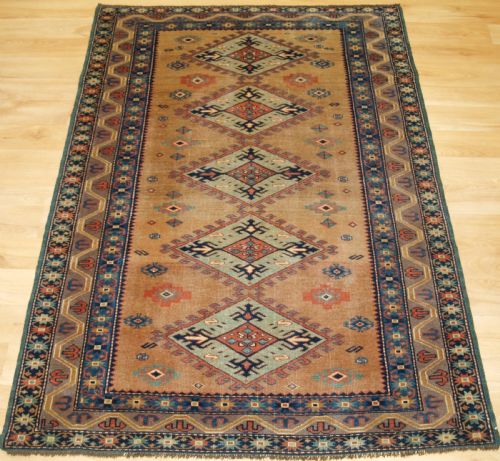
Flat Woven Wool Runner
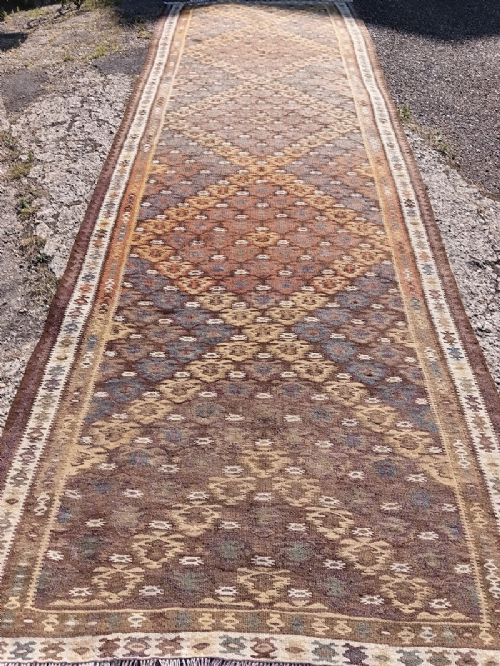
A flat woven wool runner brings tribal geometry and versatile length to a narrow hallway or corridor.
Flat Woven Wool Runner
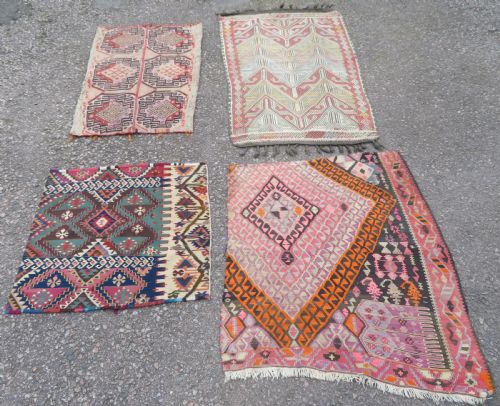
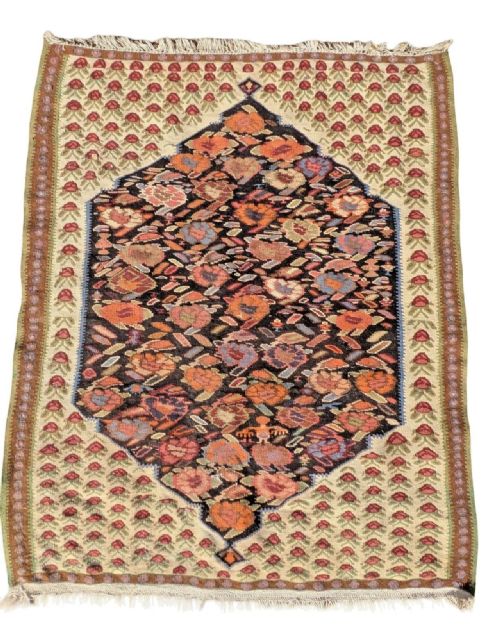
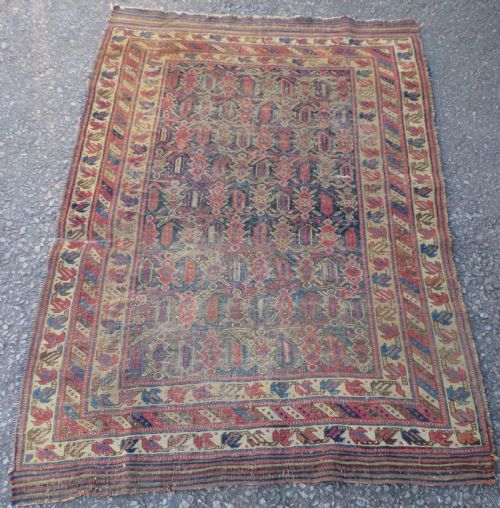
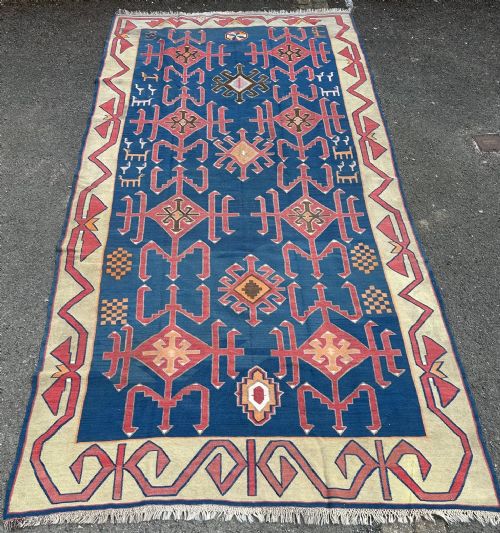
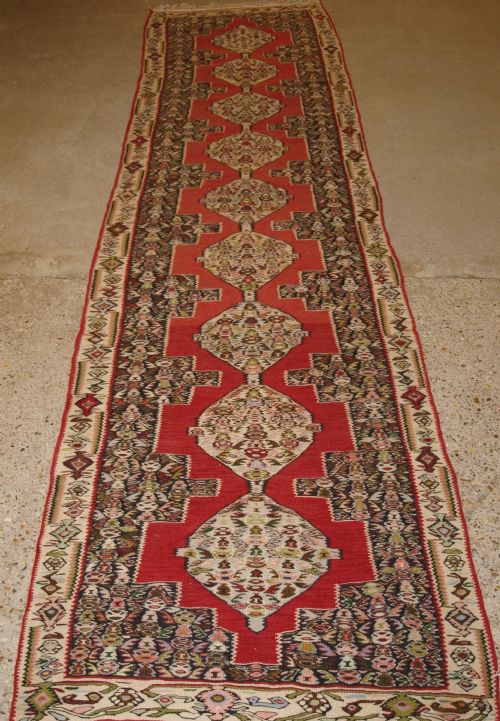
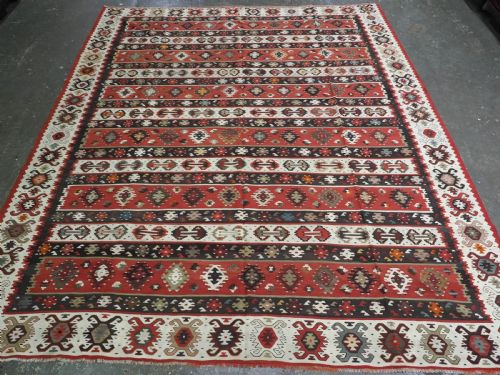
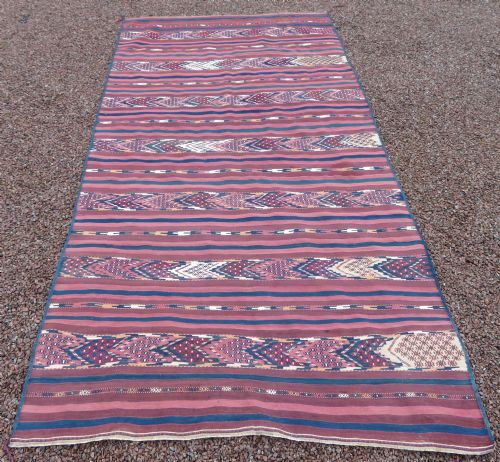
A flat woven wool runner is a long, narrow textile created without a pile, relying instead on interlaced warp and weft threads to form geometric patterns. The listings here comprise pieces originating from Persian, Anatolian, Caucasian, and Central Asian tribal workshops, alongside Bessarabian examples.
Makers in regions such as Malatya, Konya, and Shirvan produced these elongated formats for specific domestic spaces, often utilising banded designs or linked medallions. The selection spans the late nineteenth century through the early twentieth century, capturing diverse nomadic traditions.
Buyers seeking a flat woven wool runner encounter formats that range from narrow corridors to more substantial proportions, including examples woven in two parts or featuring extended kilim ends.
Materials and Techniques
Weavers constructed these textiles using hand-spun wool and cotton, frequently employing natural dyes to achieve soft pastel colours or bold, graphic contrasts. The underlying structures rely on flatweave techniques, including kilim and soumak methods, which yield a durable, pileless fabric.
Certain pieces incorporate specialised structures such as the cicim technique or are constructed in distinct sections before being joined together to form the final runner.
Flat Woven Wool Runner Retail Price Guide 2026
Typical asking prices for flat woven wool runner among the pieces listed under this phrase on Sellingantiques today, from the lower quarter to the upper quarter. They describe what is for sale here now, not the wider market.
Materials recorded across the current inventory include hand-spun wool, cotton, and natural dyes applied to kilim and soumak structures.
Assessing Quality
Quality rests upon the tightness of the weave and the clarity of the tribal motifs, where a finer structure results in crisper geometric lines. The integrity of the wool and the depth achieved through natural dyes dictate the visual character of each runner.
Condition and completeness also govern the standing of a piece, with intact ends, balanced proportions, and well-preserved structural joins distinguishing superior examples from heavily distressed alternatives.
The Flat Woven Wool Runner Glossary
- Kilim
- A flat-woven textile produced by tightly interweaving warp and weft strands to create a smooth surface without pile. These pieces typically display geometric patterns derived from tribal traditions.
- Soumak
- A brocade-like flatweave technique where supplementary weft threads are wrapped around the warp yarns to create a textured, durable surface. This method often appears in Yomut Turkmen and Shahsavan pieces.
- Warp
- The stationary vertical threads stretched onto a loom that form the structural foundation of the textile. Weft yarns are passed through these threads to build the design.
- Weft
- The horizontal threads carried by a shuttle or fingers across the warp to create the visible pattern and colour fields. In flatweaves, these threads constitute the entire surface.
- Cicim
- An embroidery-like supplementary weft technique worked on a plain-weave foundation to produce raised patterns on the surface. It is often identified in specific tribal rugs and flatweaves.
Flat Woven Wool Runner: Frequently Asked Questions
Where should I place a runner?
These narrow textiles suit hallways, corridors, and galley kitchens where floor space is limited yet visual warmth is required. Their flat profile allows doors to swing freely overhead.
Positioning them in high-traffic passageways also showcases their durable pileless construction while protecting wooden floorboards.
How do I clean a flatweave?
Gentle regular vacuuming without a rotating brush prevents dust accumulation within the tight wool weave. Professional specialist cleaning remains necessary for deeper maintenance.
Avoiding excessive moisture and direct, prolonged sunlight preserves the natural dyes and the integrity of the hand-spun wool.
What is an eye dazzler?
An eye dazzler refers to a bold, high-contrast geometric design that creates a vibrant optical effect across the textile. These patterns are particularly associated with specific tribal weaving traditions.
Such layouts draw the eye along the length of the runner, accentuating the rhythm of the repeated motifs.
How do I date these textiles?
Dating relies on stylistic markers, wool characteristics, and the specific palette of natural dyes used in the piece. Pieces from the late nineteenth century often exhibit softer, muted colour harmonies.
Mid-century and later works from the early twentieth century may display bolder graphic choices while retaining traditional tribal structures.