






Traditional Kilim Floor Runner
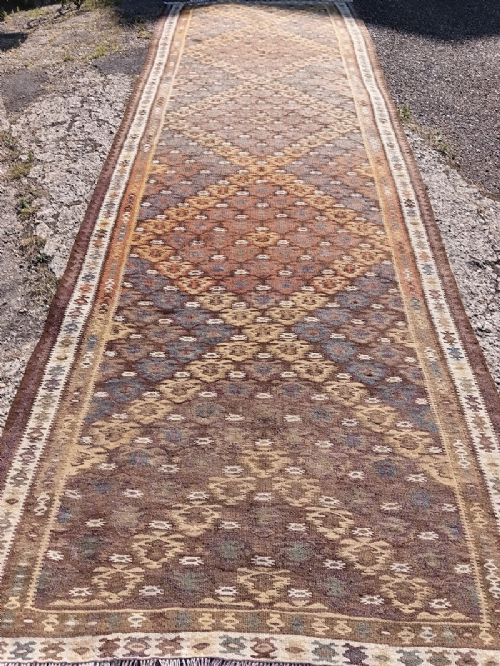
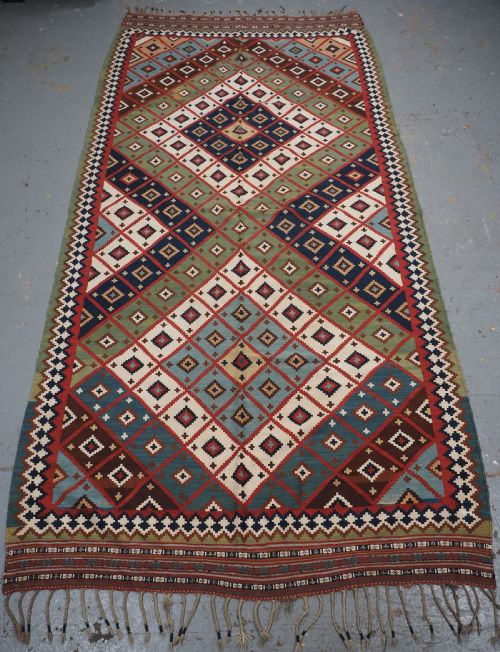
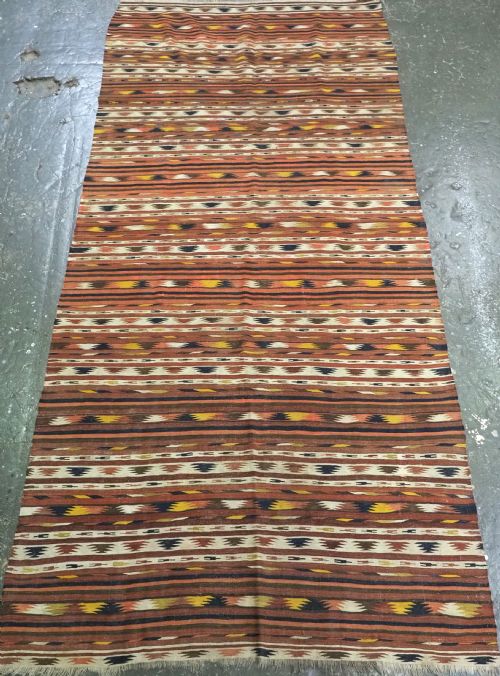
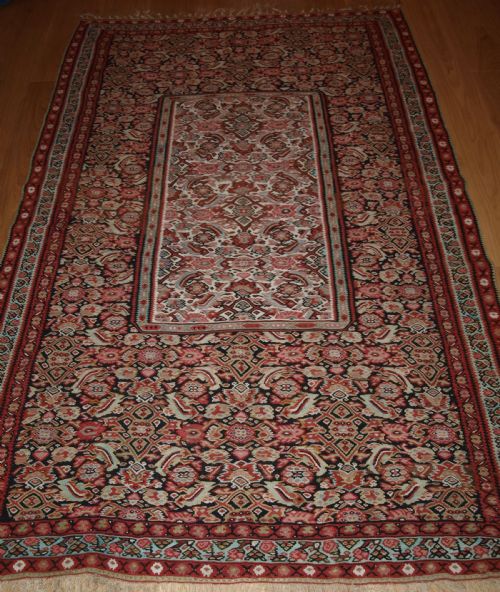
These traditional kilim floor runner examples are flat-woven textiles offering striking geometric motifs and rich historical character for hallway spaces.
Traditional Kilim Floor Runner
A traditional kilim floor runner brings flat-woven nomadic and tribal craftsmanship into long, narrow interior spaces. The pieces appearing here span the late nineteenth century into the early twentieth century.
Buyers encounter regional weaving traditions such as Persian Qasvin, Ushak, Uzbek, Bessarabian, and Turkmen styles. These textiles function primarily as runner rugs and long flat-woven carpets suited for corridors.
The aesthetic centres on geometric patterns, striped band designs, and repeat motifs executed in flat-weave structures. Each piece reflects the specific cultural heritage of its weaving community.
Materials and construction methods
The construction relies entirely on wool and cotton foundation materials combined with natural dyes. Weavers utilise traditional flat-weaving techniques without pile, creating durable textile surfaces.
Certain pieces incorporate specialised methods such as soumak wrapping or multi-strip construction joined together. Natural dye sources produce the soft faded reds and varied colour palettes seen across the inventory.
Traditional Kilim Floor Runner Retail Price Guide 2026
Typical asking prices for traditional kilim floor runner among the pieces listed under this phrase on Sellingantiques today, from the lower quarter to the upper quarter. They describe what is for sale here now, not the wider market.
Some nineteenth-century weavers cleverly joined multiple narrow strips together to form wide runners, solving the loom width limit with style.
Distinctions in quality
Quality differences emerge in the tightness and fineness of the weave structure across individual examples. Pieces featuring very fine weaves demonstrate superior technical proficiency by the maker.
The complexity and scarcity of the design layout separate standard examples from exceptional ones. Preserved length at the kilim ends and structural integrity further define the standing of each textile.
The Traditional Kilim Floor Runner Glossary
- Kilim
- A flat-woven carpet or rug produced without a pile by tightly interweaving warp and weft strands. This technique creates a lightweight textile with identical patterns visible on both sides.
- Soumak
- A flat-weave technique involving wrapping weft threads over and under warp threads to produce a textured surface. This method adds structural strength and durability to the finished runner.
- Palas
- A traditional flat-woven rug or cover often associated with tribal and nomadic weaving traditions. These textiles serve utility purposes as floor coverings or utilitarian hangings.
- Warp
- The vertical threads stretched lengthwise on a loom before weaving begins. These foundational threads support the entire structure of the textile.
- Weft
- The horizontal threads passed through the warp to create colour patterns and pictures. They form the visible design surface of the flat-weave.
Traditional Kilim Floor Runner: Frequently Asked Questions
What is a traditional kilim floor runner?
It is a flat-woven textile produced by nomadic or tribal weavers to serve as a durable floor covering in corridors and hallways.
These pieces lack a pile, relying instead on interlocking weft techniques to display geometric patterns and traditional motifs.
How should I clean my runner?
Gentle regular vacuuming without a rotating brush helps remove embedded dust and debris from the flat-woven wool surface.
Professional specialist cleaning is recommended for any deeper maintenance to protect the natural dyes and historical fibres.
Are these runners durable for hallways?
The dense flat-weave construction provides strong resistance to everyday foot traffic in narrow domestic spaces.
Using an appropriate underlay beneath the textile prevents slipping and reduces friction against hard flooring.
How do I date an antique kilim?
Dating relies on examining the specific natural dye palettes, structural weaves, and regional design characteristics recorded in each piece.
Stylistic markers often point to specific decades between the late nineteenth century and the early twentieth century.