



Vintage King Bed Frame
A vintage king bed frame brings nineteenth-century grandeur into a modern bedroom, combining generous proportions with robust metal or timber construction.
Vintage King Bed Frame
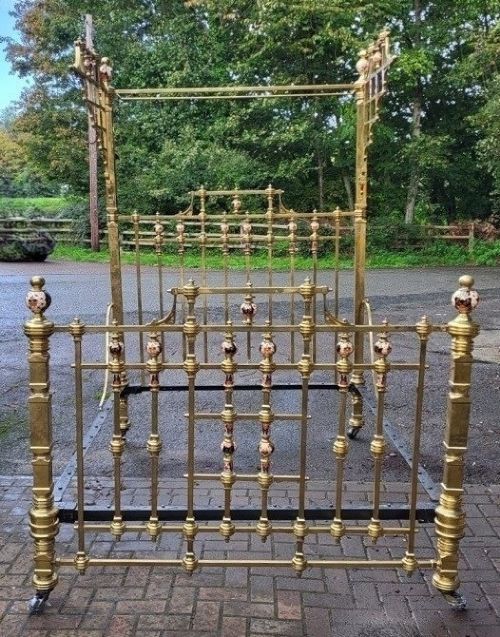
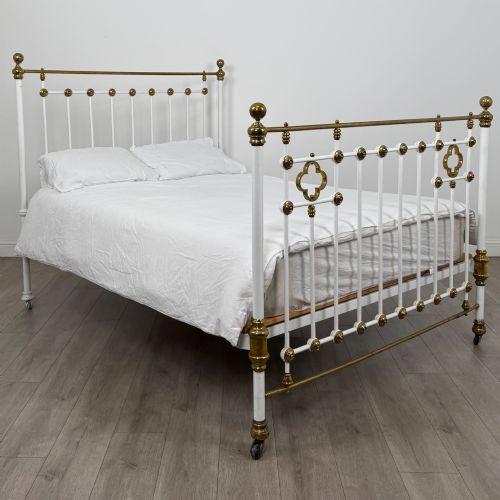
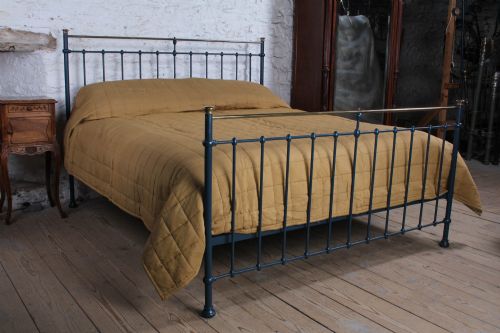
A vintage king bed frame encompasses substantial sleeping furniture primarily originating from the Victorian and Edwardian eras, alongside continental French workshops. These pieces appear as brass, iron, and timber bedsteads designed to accommodate large mattresses while anchoring the bedroom layout.
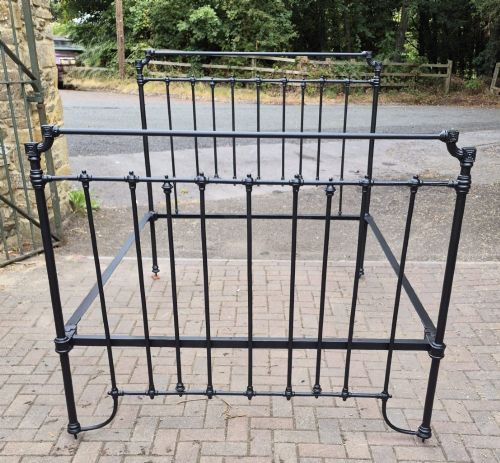
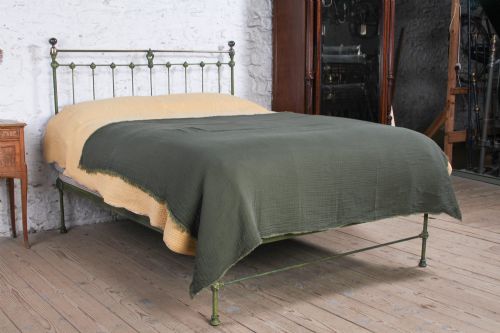
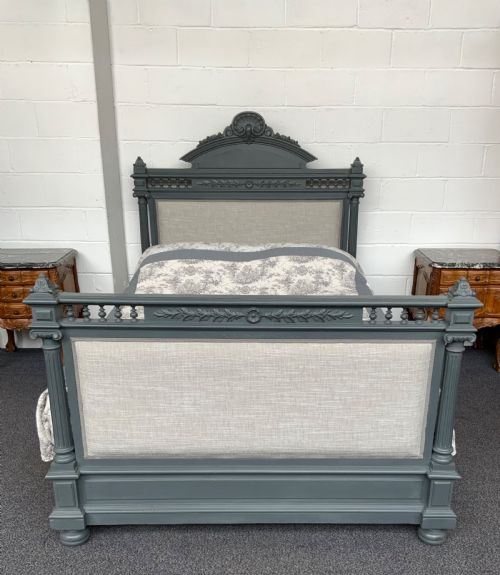
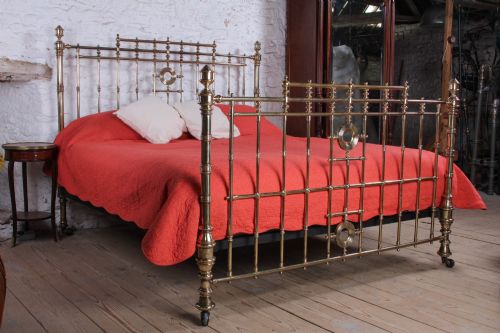
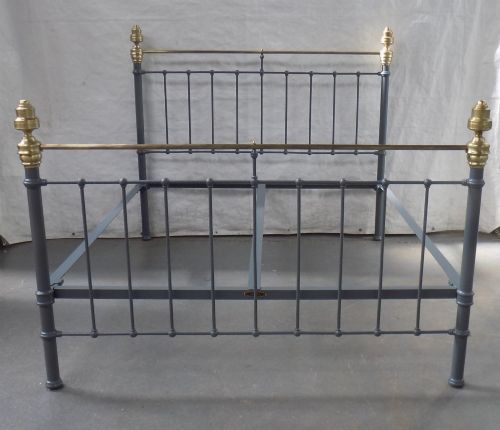
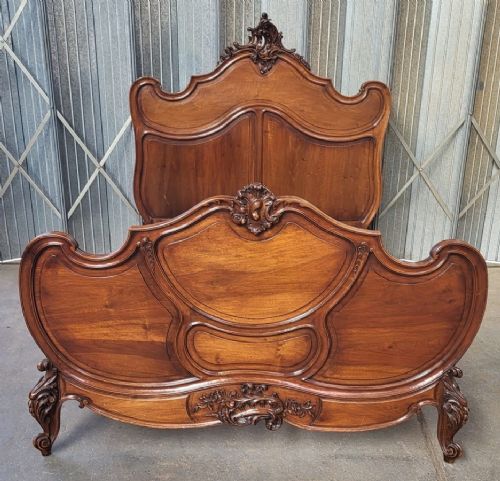
The most frequent examples on this page are Victorian and Edwardian brass and iron combinations, often featuring decorative castings, arched rails, or dip-rail profiles. Alongside these metal frames, buyers encounter French walnut and kingwood pieces bearing regional styling such as Louis XV or Louis XVI influences.
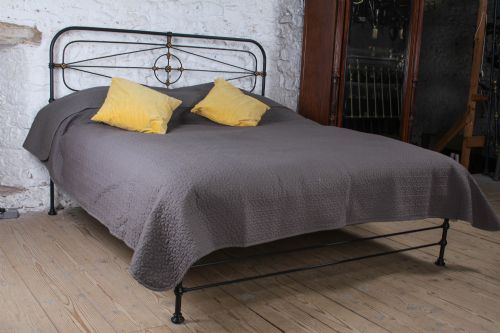
Variations in form include half tester tester beds, standard head and footboard assemblies, and no-end configurations that suit contemporary interior arrangements. The overarching category spans robust industrial cast iron through to ornate exhibition quality brass work.
Materials and construction
Construction relies heavily on structural metals including cast iron, wrought iron, and polished brass, frequently paired with timber components like walnut, maple, and mahogany. Metal frames utilise bolted joints and robust side rails to support the heavy proportions demanded by king size dimensions.
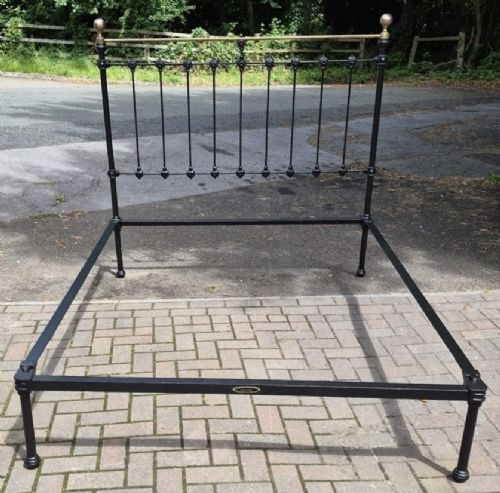
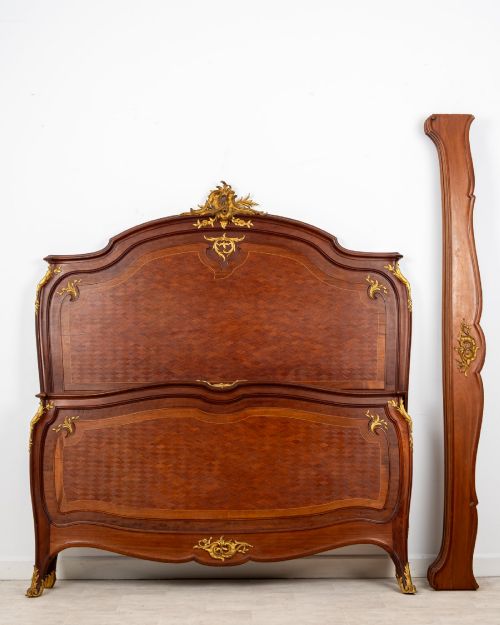
Decorative detailing on metal frames involves intricate brass castings, applied ormolu mounts on continental pieces, and hand-painted finishes on timber or iron surfaces. Makers such as Winfield employed specialised techniques for tapering posts and forming distinctive black iron finishes.
Cabinetmakers working in French styles utilised carved walnut and parquetry veneers, incorporating curved rails and moulded panels that demonstrate traditional woodworking joining methods from the nineteenth century.
Listings feature periods spanning the Victorian and Edwardian eras alongside nineteenth-century French walnut and mahogany forms.
Standards of craftsmanship
Quality in a vintage king bed frame is distinguished by the crispness of the brass castings, the weight and thickness of the ironwork, and the integrity of the original joints. Superior pieces exhibit refined detailing such as tapered posts, elaborate ornamentation, and intact maker marks.
The execution of decorative elements separates standard production from exhibition quality pieces, where hand-finishing, ormolu mounts, and complex parquetry demonstrate high artisanal skill. Material selection also dictates grade, with solid brass components and figured walnut commanding greater presence than standard painted iron.
Originality of components, including matching side rails and authentic castors or fixings, determines the structural coherence of the bedstead. Pieces retaining their complete original hardware and untwisted frames represent the upper tier of surviving examples.
Maple and Co·RW Winfield·James Shoolbread and Co
The Vintage King Bed Frame Glossary
- Bedstead
- A framework of a bed consisting of headboard, footboard, and side rails designed to support a mattress and base. It distinguishes the physical structure from modern standalone divan bases.
- Dip rail
- A headboard or footboard rail that curves downward in the centre. This style is frequently observed on Edwardian and Victorian iron frames.
- Ormolu
- Gilded bronze or brass mounts applied as decorative ornaments to furniture. It is commonly found on French revival pieces from the nineteenth century.
- Half tester
- A bedstead featuring a partial canopy extending from the headboard over the upper portion of the bed. This form often accommodates drapery.
- Parquetry
- Geometric patterns inlaid using various wood veneers on a surface. This technique appears on French walnut and kingwood frames.
Vintage King Bed Frame: Frequently Asked Questions
Will a vintage king bed fit modern mattresses?
Many nineteenth-century frames were built to historical sizing conventions that differ slightly from contemporary standard dimensions. Buyers often check internal rail lengths and widths against modern mattress sizes before purchase.
Adjustments to slats or interior support systems are frequently utilised to ensure contemporary bases sit securely within older iron or timber side rails.
How do I assemble a metal bed frame?
Most antique metal frames utilise a wedge-and-socket corner locking system where side rails slot directly into the headboard and footboard castings. A gentle tap with a mallet secures the joints without requiring complex fixings.
Care must be taken to keep original side rails paired with their corresponding head and footboards to maintain proper alignment and structural stability.
How should I clean brass and iron frames?
Routine maintenance involves dusting with a soft dry cloth to prevent the accumulation of particles on ornate castings and painted surfaces. Avoid harsh chemical cleaners that can strip protective lacquers or vintage patina from the metal.
For unlacquered brass, mild metal polishes applied sparingly maintain the lustre without harming the surrounding iron or painted finishes.
What distinguishes Victorian from Edwardian bed frames?
Victorian frames typically display robust proportions, heavy brass ornamentation, Gothic revival motifs, or elaborate cast iron scrollwork. They prioritise strong vertical presence and complex decorative castings.
Edwardian examples often exhibit lighter scaling, simpler dip-rail profiles, and more restrained geometric or aesthetic movement influences, reflecting changing domestic tastes at the turn of the century.