
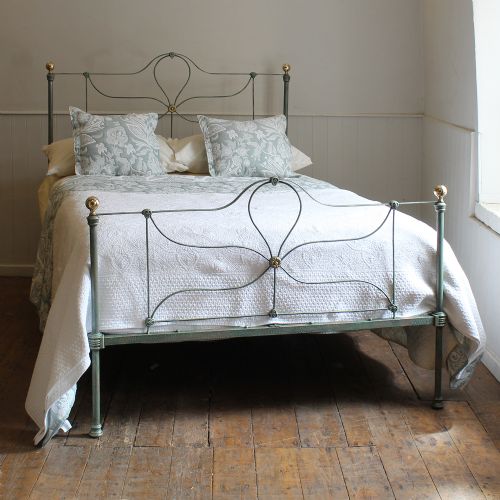
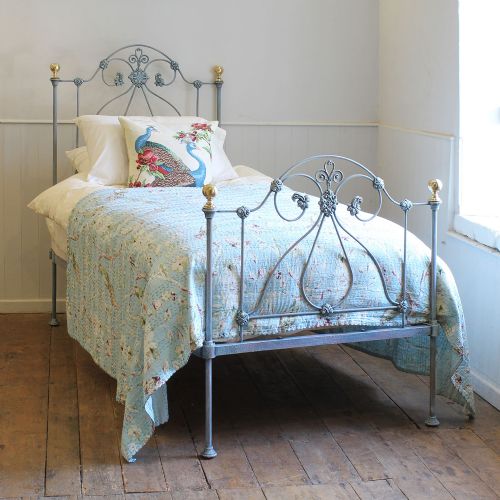
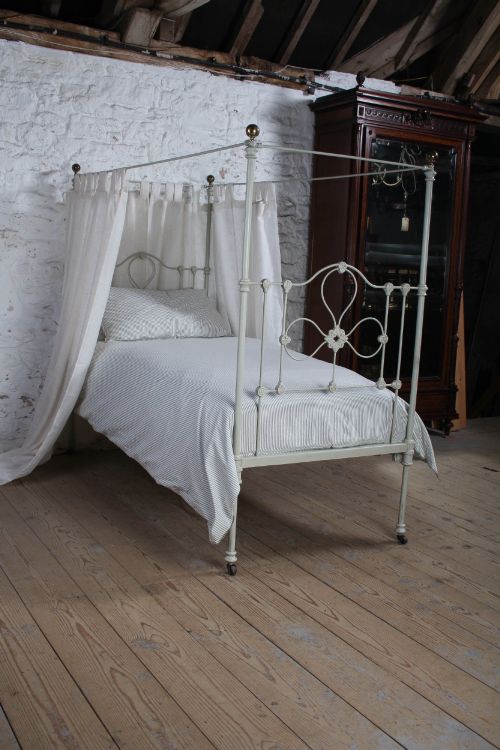
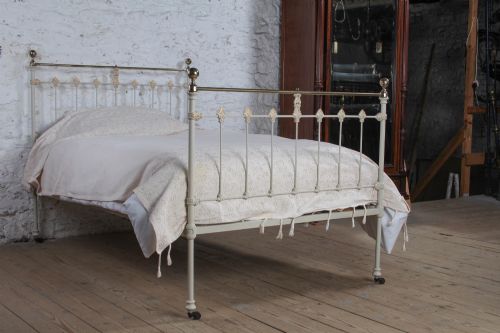


Brass Painted Iron Bedstead
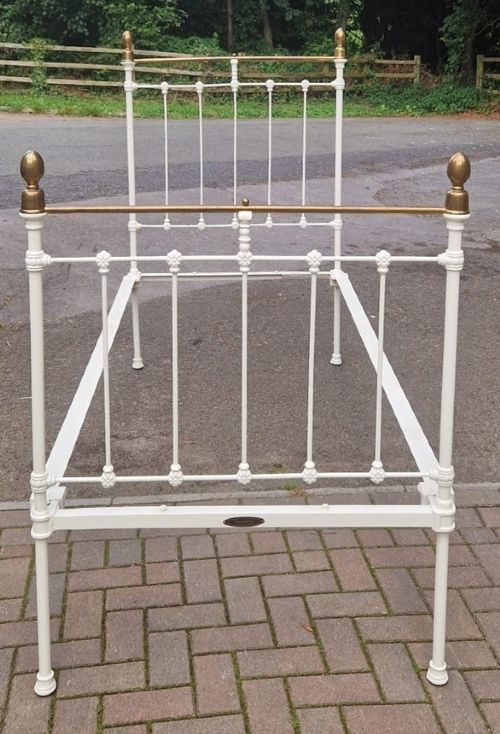
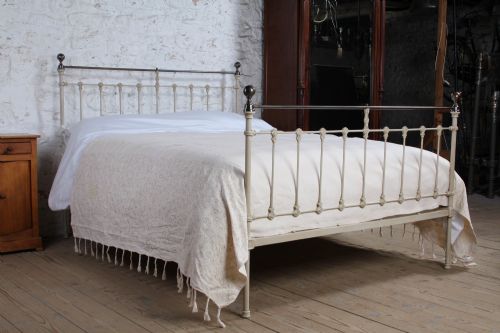
A brass painted iron bedstead brings sturdy nineteenth-century metalwork and gleaming brass mounts into a bedroom.
Brass Painted Iron Bedstead
When you search for a brass painted iron bedstead, you encounter nineteenth-century and early twentieth-century sleeping frames that combine cast and wrought iron with polished brass components. These pieces originate from Victorian and Edwardian workshops, alongside occasional continental examples.
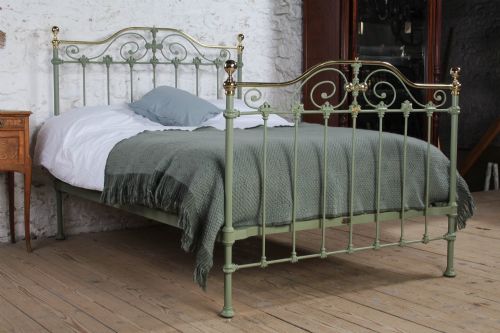
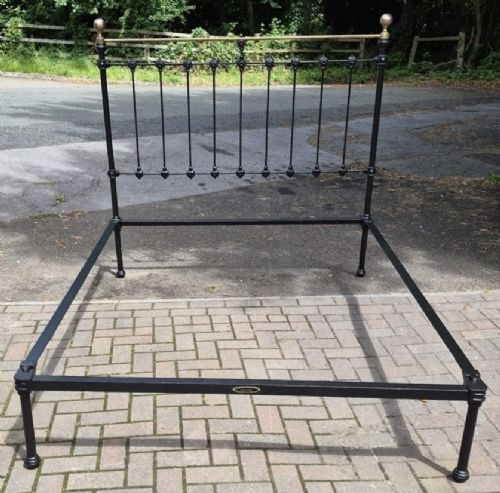
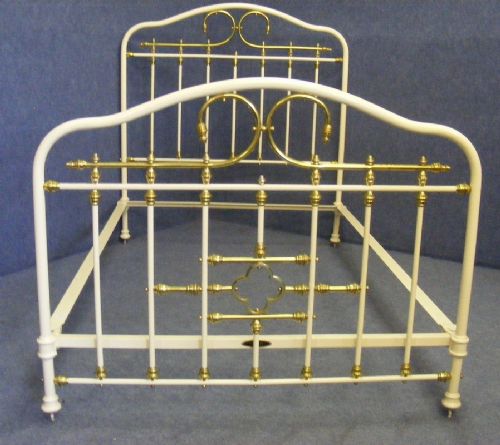
The version you are most likely to meet on this page is a double or king size Victorian bedstead featuring painted iron framework, straight rails or shaped ends, and brass finials. Single beds and pairs also appear regularly across the listings.
Makers such as R W Winfield and Heals contributed to this tradition, producing robust frames designed to last generations. Surviving examples often retain their original paint finishes in cream, black, green, or white.
How they were made
Foundries cast molten iron into decorative scrolls, bed posts, and structural brackets, while wrought iron provided sturdy side rails and internal supports. Craftsmen applied protective paint layers directly to the metalwork, using colours such as ivory, black, and verdigris.
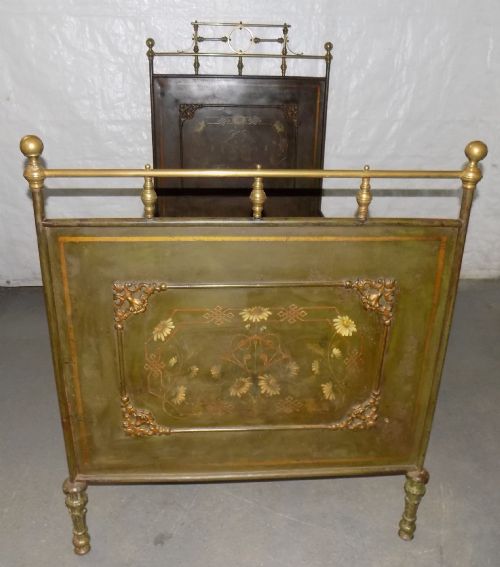
Moulders attached polished brass fittings, including knobs, rails, and decorative castings, by means of mechanical joints or brass casing over iron cores. Enamel and toleware techniques also appear on select continental frames from the nineteenth century.
Several single beds come in matching pairs that can be joined together, perfect for indecisive sleepers who enjoy modular historic furniture.
What varies in quality
Quality rests upon the crispness of the iron castings and the substantial weight of the brass components used on the framework. Finer pieces display intricate detailing on the junctions and well-proportioned rails that remain rigid when assembled.
The preservation of original painted surfaces distinguishes superior examples from those that have undergone modern repainting. Well-cast joints and intact brass detailing indicate a higher standard of original manufacture.
R W Winfield·Heals
The Brass Painted Iron Bedstead Glossary
- Cast iron
- Iron poured into a mould to create decorative shapes and structural bed posts. This material gives nineteenth-century frames their substantial weight.
- Wrought iron
- Iron beaten and worked into shape to form strong, durable structural rails. It provides the hidden strength behind decorative bed frames.
- Toleware
- Painted or enamelled metalware originating from continental workshops. These pieces showcase distinctive surface decoration.
- Half tester
- A bed frame featuring a partial canopy projecting from the headboard. This style creates a focused overhead structure above the pillow.
- Dip rail
- A headboard or footboard rail that curves downward in the centre. This profile lightens the visual mass of large iron beds.
Brass Painted Iron Bedstead: Frequently Asked Questions
Do these beds take standard mattresses?
Many antique iron and brass frames were built to nineteenth-century dimensions, which can differ slightly from modern metric sizes. Checking the internal length and width specifications ensures a correct fit for contemporary mattresses.
Some frames accommodate standard modern slats or custom bases placed inside the original side rails. Careful measurement of the platform prevents sizing issues upon delivery.
How do I assemble an antique bedstead?
Most frames use standard iron side rails that wedge or bolt directly into the cast iron headboard and footboard sockets. Tapping the joints gently with a rubber mallet settles the tapered wedge fittings securely into place.
Ensuring the frame sits square on a level floor before tightening any bolts keeps the structure stable. Two people make assembly straightforward due to the heavy cast iron components.
Can painted iron beds be repainted?
Original painted surfaces are valued by collectors, so many owners choose to preserve existing patination and wear. Cleaning with mild soap removes surface grime without disturbing the underlying finish.
When repainting is necessary to match a room scheme, stripping back unstable layers and applying a durable metal paint ensures longevity. Preparation prevents bubbling over older iron surfaces.
How do I care for the brass details?
Brass knobs and rails develop a natural oxidation over decades of exposure to air and handling. Gentle dusting with a dry cloth maintains the surface without stripping away historic character.
Harsh chemical polishes can damage surrounding painted iron surfaces if applied carelessly. Using a soft cloth protects both the polished brass and the adjacent paintwork.