





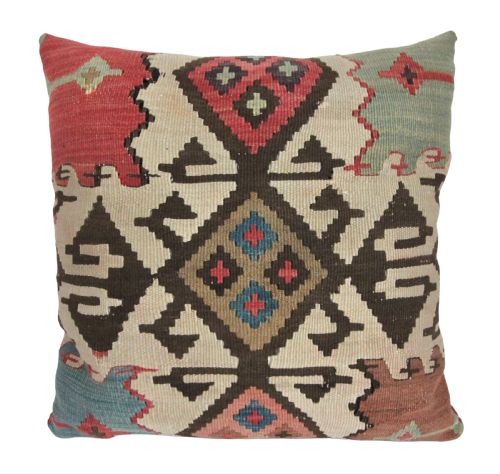
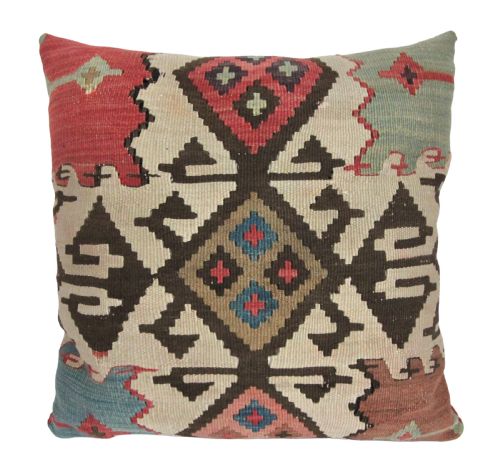
Vintage Kilim Cushion
These vintage kilim cushion pieces are woven from old tribal textiles to bring authentic nomadic pattern and texture into modern spaces.
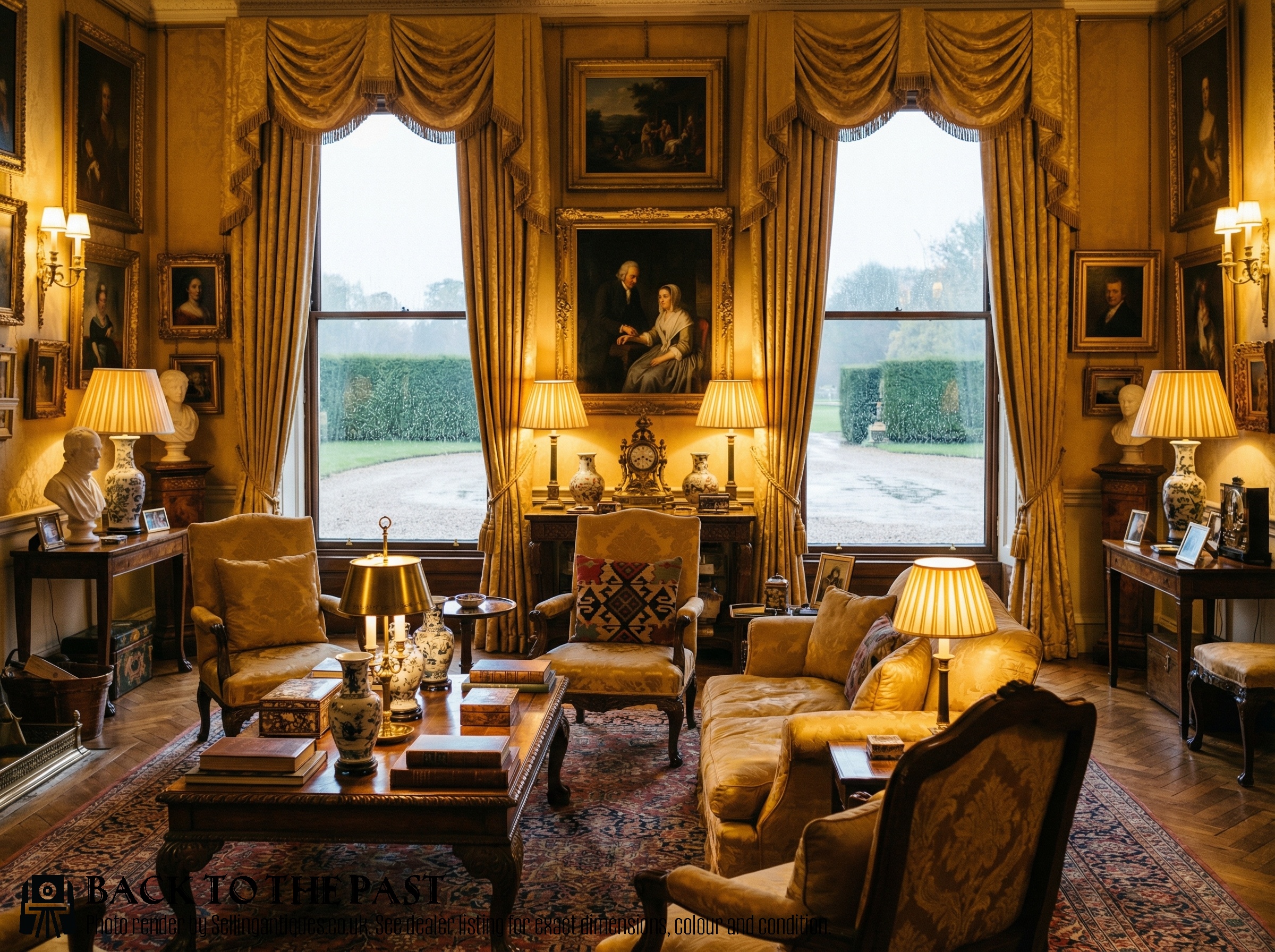
Vintage Kilim Cushion
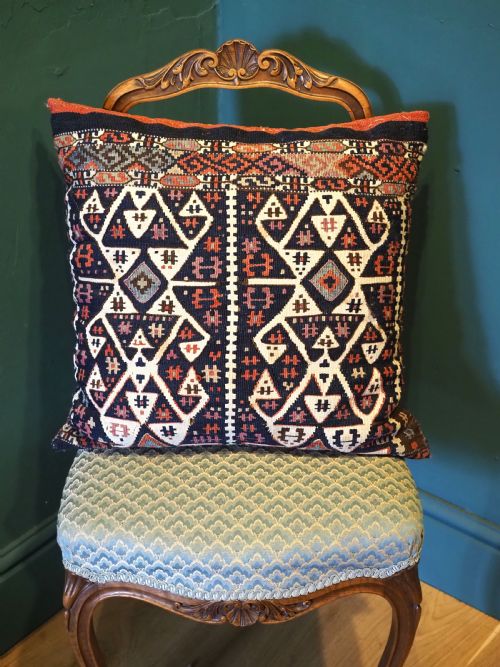
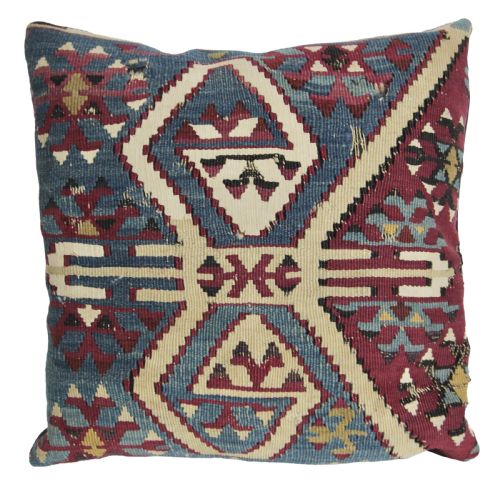
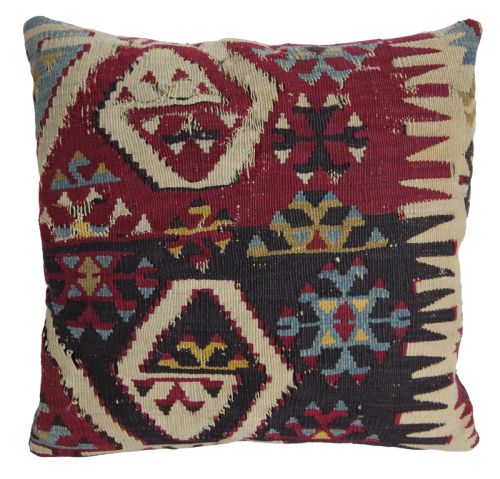
When you search for a vintage kilim cushion, you encounter flat-woven textiles that originate from nomadic and tribal cultures across Anatolia, Persia, and Central Asia. These items transform older utilitarian pieces such as saddle bags, grain sacks, and storage bags into soft furnishings suitable for contemporary interiors. Most examples on this page draw from nineteenth- and early twentieth-century traditions, spanning the 1850s to the 1920s.
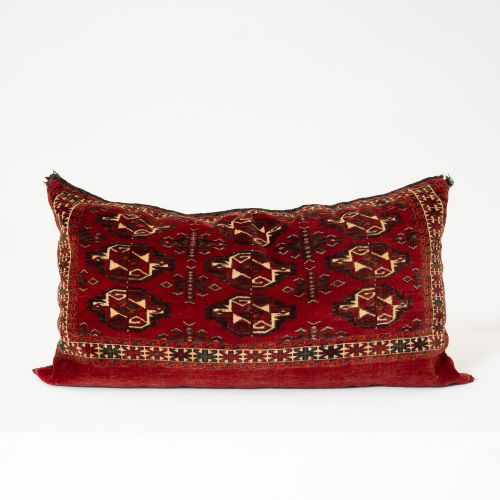
The forms encompass Anatolian tribal fragments, Turkmen chuval and juval panels, Baluch storage bag faces, and Persian tacheh wheat sacks. Makers construct these cushions by repurposing genuine hand-woven textile faces and backing them for domestic use. Buyers find both square scatter sizes and rectangular formats that preserve the original geometric compositions of the nomadic weavers.
Materials and construction
Weavers relied on hand-spun wool and goat hair to create durable flat-woven surfaces that could withstand daily nomadic life. Natural dyes provided the deep reds, blues, and earth tones characteristic of these textiles, yielding subtle tonal variations across each surface. Cotton frequently appears in the foundational warps or supplementary structures of the pieces.
The production technique relies on interweaving warp and weft threads without a knotted pile, producing a flat, tapestry-like fabric. Artisans often incorporated banded weft work designs and supplementary webbed structures into bag faces like the Uzbek tartari or Persian tacheh. These dense weaves ensure the fabric holds its structural integrity when fashioned into cushions.
Listings feature pieces dated between the 1850s and the 1920s, originating from Anatolian, Persian, and Turkmen nomadic traditions.
Assessing quality and character
Quality in a vintage kilim cushion depends primarily on the integrity and fineness of the original weave. Finer hand-spun wool creates a crisper handling textile that displays the geometric motifs with greater definition. The complexity of the tribal design and the depth achieved through natural dyes also elevate certain examples above simpler utility pieces.
Condition and the authenticity of the textile source differentiate the upper tier of pieces. Items retaining original backs or sourced from intact nineteenth-century bag faces command interest from collectors of tribal art. The balance between maintaining historic character and providing domestic usability dictates the success of each finished cushion.
The Vintage Kilim Cushion Glossary
- Kilim
- A flat-woven carpet or textile produced without a pile by tightly interweaving warp and weft strands. This technique creates a lightweight fabric traditionally utilised for rugs, bags, and blankets.
- Chuval
- A large tent storage bag made by Turkmen tribes to store household goods and bedding. The decorative face of a chuval frequently supplies the textile used for larger cushions.
- Warp
- The stationary vertical threads stretched on a loom before weaving begins. The weft threads pass over and under these foundational cords to build the fabric.
- Weft
- The horizontal threads passed through the warp to create the pattern and structure of a flat-weave textile. Hand-spun wool wefts give these cushions their tactile quality.
Vintage Kilim Cushion: Frequently Asked Questions
How do I care for my cushion?
These antique textiles require gentle treatment to preserve the natural wool fibres and vegetable dyes. Professional specialist cleaning is recommended when necessary to protect the historic weave.
Avoid placing them in direct sunlight for extended periods to prevent the natural dyes from fading over time.
Are these cushions made from old rugs?
Many cushions utilise repurposed fragments from nineteenth- and early twentieth-century nomadic items such as saddlebags, grain sacks, and storage pouches rather than cut-down floor carpets. These bag faces often feature tighter, more intricate geometric weaving suited to smaller formats.
Each piece retains the structural characteristics of its original tribal context, from Baluch storage bags to Turkmen chuval panels.
How can I tell the age of a cushion?
Dating relies on examining the materials, dye methods, and tribal weaving structures visible in the textile face. Hand-spun wool, specific natural dye palettes, and traditional Anatolian or Persian motifs point towards nineteenth- or early twentieth-century origins.
Construction details such as original banded weft work help experts place these pieces within periods spanning the 1850s to the 1920s.